Introduction
A clinic-management game asks the player to balance a place, its schedule, and the people moving through it. If you want to make a game like Two Point Hospital, begin with those broad management choices, then design a different pressure that makes your clinic distinct. This guide uses a fictional prototype called Harborlight Clinic, where the player routes visitors through a compact set of rooms while protecting staff break time and keeping the waiting area calm.
Every condition and care step in this article is fictional game-design material. It is not real medical information or advice, and Harborlight Clinic has not been built or tested.
Start with management decisions, not copied rooms
The official Two Point Hospital listing describes designing hospitals, treating unusual fictional illnesses, and managing staff (official Steam listing). That broad description provides context for a management game. It does not make the original rooms, conditions, characters, interface, progression, art, or exact scenarios a template for your own project.
Choose one decision that can connect layout and daily operations. Harborlight Clinic focuses on visitor flow: each visitor needs a short sequence of fictional service stations, but a limited staff roster also needs breaks. The player decides which rooms to open, when to add a staff member to a station, and whether to accept a longer wait or pause a service for a break. The loop is about visible capacity and routing rather than a copy of another hospital’s jobs.
Define the loop before adding more departments
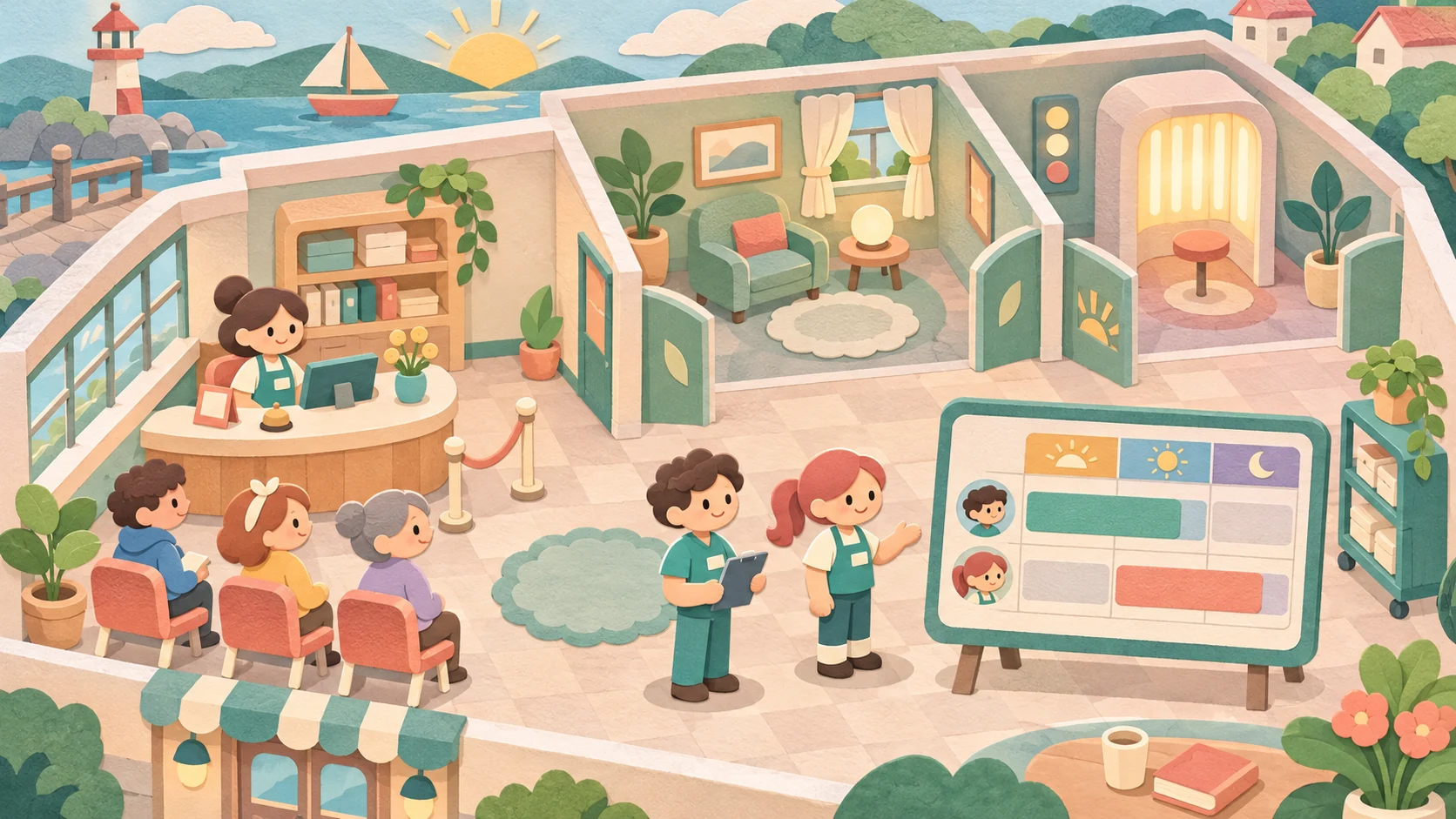
A first prototype should fit into one short shift. The player reviews arrivals, opens a few stations, watches visitors move, then adjusts the schedule for the next shift.
| Phase | Player choice | Visible result | What the game should explain |
|---|---|---|---|
| Plan | Open two of three service rooms | Visitors have different route lengths | Which room each visitor needs |
| Staff | Assign two fictional staff roles | Open stations gain capacity | Who is working and who is resting |
| Run shift | Let a small visitor wave move through | Queue length and room load change | Why a visitor waits or changes route |
| Review | Open one station or schedule a break | Next shift begins with a changed plan | Which choice improved flow and what it cost |
This loop helps you distinguish a layout problem from a staffing problem. If too many visitors queue at one station, the player needs a way to tell whether the cause is room availability, staff capacity, or route order.
Make room flow readable at a glance
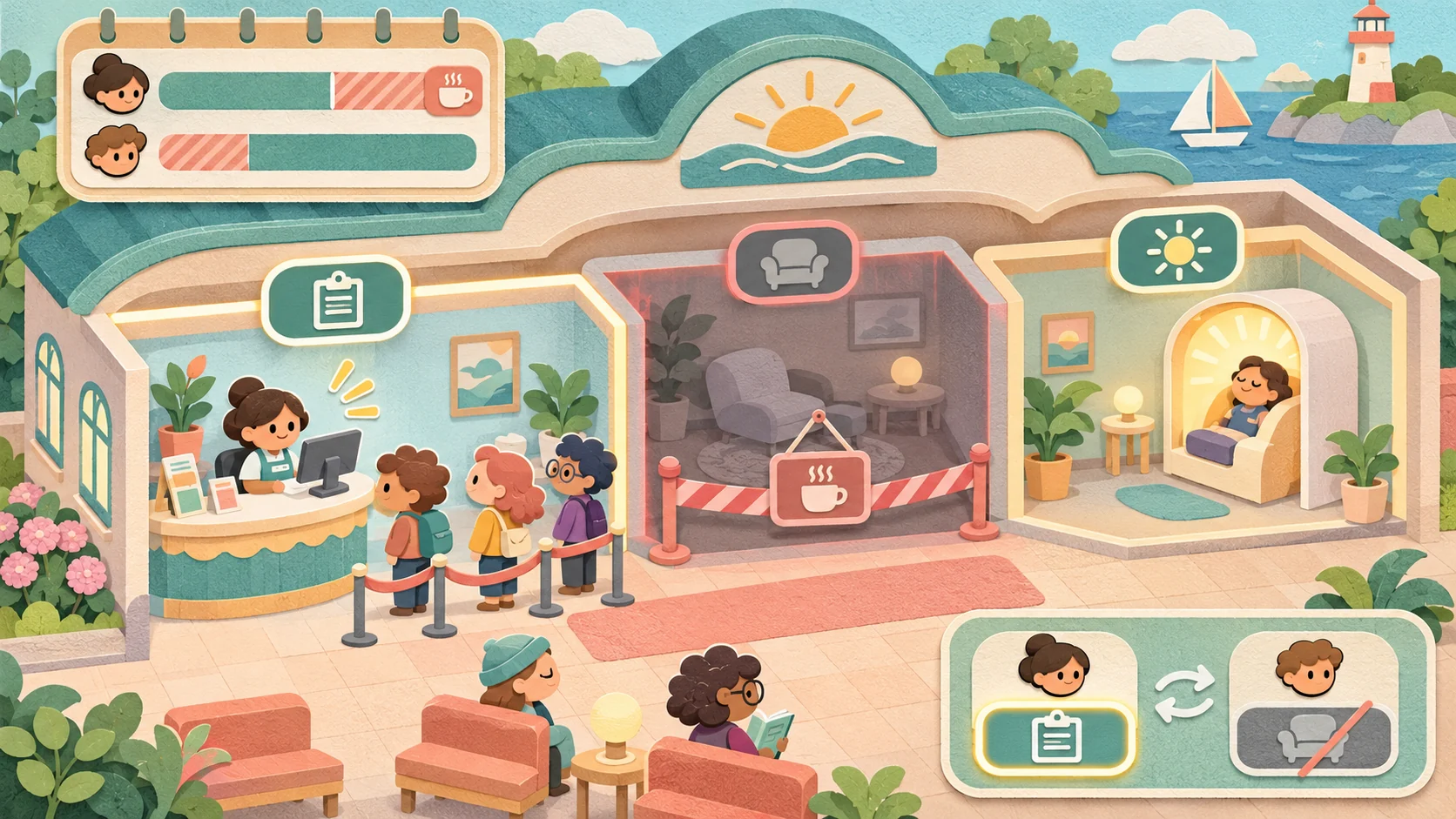
Use a simple floor plan with an entrance, waiting area, three rooms, and an exit. For the fictional first shift, visitors may need a check-in desk followed by either a quiet room or a light booth. These names refer only to made-up game stations and conditions, not real healthcare.
Give each visitor a small route card that shows the next station using a unique shape and color. If a room is closed for a break, show that before the visitor joins the queue. This lets the player predict a bottleneck before the shift runs.
Keep the first version small: three rooms, two staff roles, and one short visitor wave. If you add hiring, upgrades, research, multiple buildings, finances and emergencies at the same time, a player may not know which decision caused a delay.
Use tradeoffs that the player can see
A meaningful schedule should have a cost on both sides. Keeping every station open may shorten queues but leave staff without breaks. Closing a room for a break may lengthen one line while preventing the rest of the shift from becoming overloaded. The report should show the tradeoff rather than label one choice as universally best.
For example, Harborlight’s fictional staff member Mira can cover either check-in or the quiet room during one part of the shift, but not both. If the player assigns Mira to check-in, more visitors start their route promptly; if Mira covers the quiet room, that later station clears faster. This is a teaching example, not a result from a real simulation.
Build the smallest useful prototype
- Draw the entrance, waiting area, three rooms and exit on one screen.
- Give each fictional visitor a visible two-step route.
- Add one staff member who can cover one room at a time.
- Display queue size and room capacity before the shift begins.
- Run a short wave and show why each visitor waited.
- Let the player change one schedule choice and replay the same wave.
SEELE’s current capability catalog describes a prompt-led game studio and playable-game creation, so it can be a place to explore a starting point for a management-game idea. It does not establish that Harborlight Clinic has been generated, balanced or tested. You can use the free AI game maker with a prompt that specifies the rooms, staffing limit, visitor routes and feedback.
Create an original small clinic-management game prototype called Harborlight Clinic. Use a compact floor plan with check-in, a quiet room and a light booth. Each fictional visitor has a visible two-step route. Give the player two fictional staff roles with limited availability, a short shift, a queue indicator for each room, and an end-of-shift report. Let the player schedule one staff break and show how it affects waiting. Use invented nonmedical conditions only, and do not offer real diagnosis or treatment advice. Make room capacity, routes and staff assignments easy to inspect and change. Use original placeholder art and do not copy another game’s rooms, characters, interface, illnesses, art or text.
Diagnose a queue before changing the whole hospital
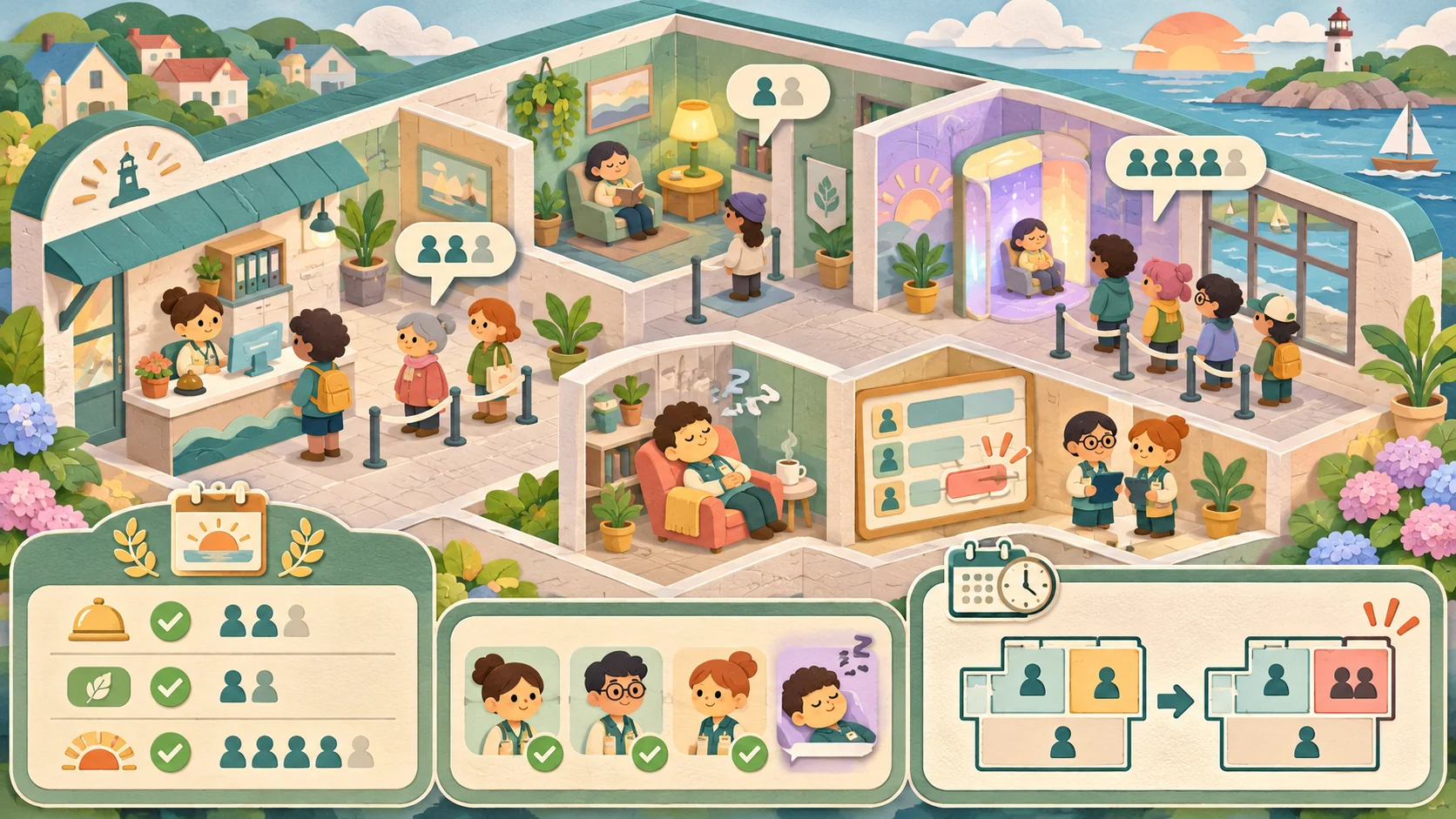
When a line grows, pause the simulation and look at its cause. A closed room, a route that sends everyone to one station, or a staff member assigned elsewhere can all produce a queue. The player should be able to identify which one happened from the map or report.
| What you observe | Possible design issue | First adjustment |
|---|---|---|
| Visitors wait at check-in before starting | Entry capacity is too low or arrivals are too concentrated | Reduce the wave or add a second arrival interval |
| One room fills while another is empty | Routes or room labels are unclear | Show the next station on each visitor route |
| Every station closes for a break at once | The break schedule is hidden or too rigid | Stagger breaks and preview room coverage |
| Player keeps opening every room | Capacity costs are not visible | Show staffing requirement and queue effect before opening |
| Report shows only a final score | The cause of delays is hard to trace | List wait time by station and the relevant schedule change |
These are hypotheses for a fictional prototype. Change one factor at a time and run the same visitor wave again. If you change layout, staffing and arrival timing together, you will not know which adjustment made the queue easier to understand.
Test if the report helps the next decision
Before adding more rooms, ask a player to point to the busiest station and explain why it filled. Then ask what one schedule or layout change they would try next shift. You are checking whether the game communicates its system, not whether a particular fictional clinic earns a high score.
Try a few repeatable cases: start with check-in as the only open station; assign one staff member to the quiet room; schedule a break during the busiest part of the shift; then reopen the same room with a different schedule. Keep the visitor wave consistent so the player can compare the outcomes. These are proposed tests, not results from an actual prototype.
Conclusion
To make a game inspired by Two Point Hospital while keeping your project original, select a management decision and make its effects visible. Harborlight Clinic connects room availability, visitor routes and staff breaks in one small shift. Start with a few rooms, show the reason for each queue, and add more systems only after players can explain how their schedule changed the flow.
FAQ
What should I build first in a hospital-management game?
Build one short shift with a small floor plan, a few visitor routes, limited staff, and a report that explains delays. This reveals whether the core management choice is understandable before you add departments or upgrades.
How can I make a game like Two Point Hospital without copying it?
Use the broad idea of managing a healthcare-themed place, then create a different layout, characters, fictional conditions, art, and core pressure. This article’s visitor-flow and staff-break example is invented for teaching.
Should I use real illnesses in a management game?
You do not need real medical conditions to test a management loop. Fictional conditions keep the prototype focused on room flow and staffing without making real healthcare claims.
How many rooms does the first prototype need?
A few rooms are enough to show a route choice and a possible bottleneck. Add more only when they introduce a decision that the player cannot already make.
Can AI make and balance the clinic automatically?
A prompt can describe a starting idea, but this example has not been generated or tested. Inspect the visitor routing, staff coverage and queue explanation, then use repeatable test waves to decide what to adjust.