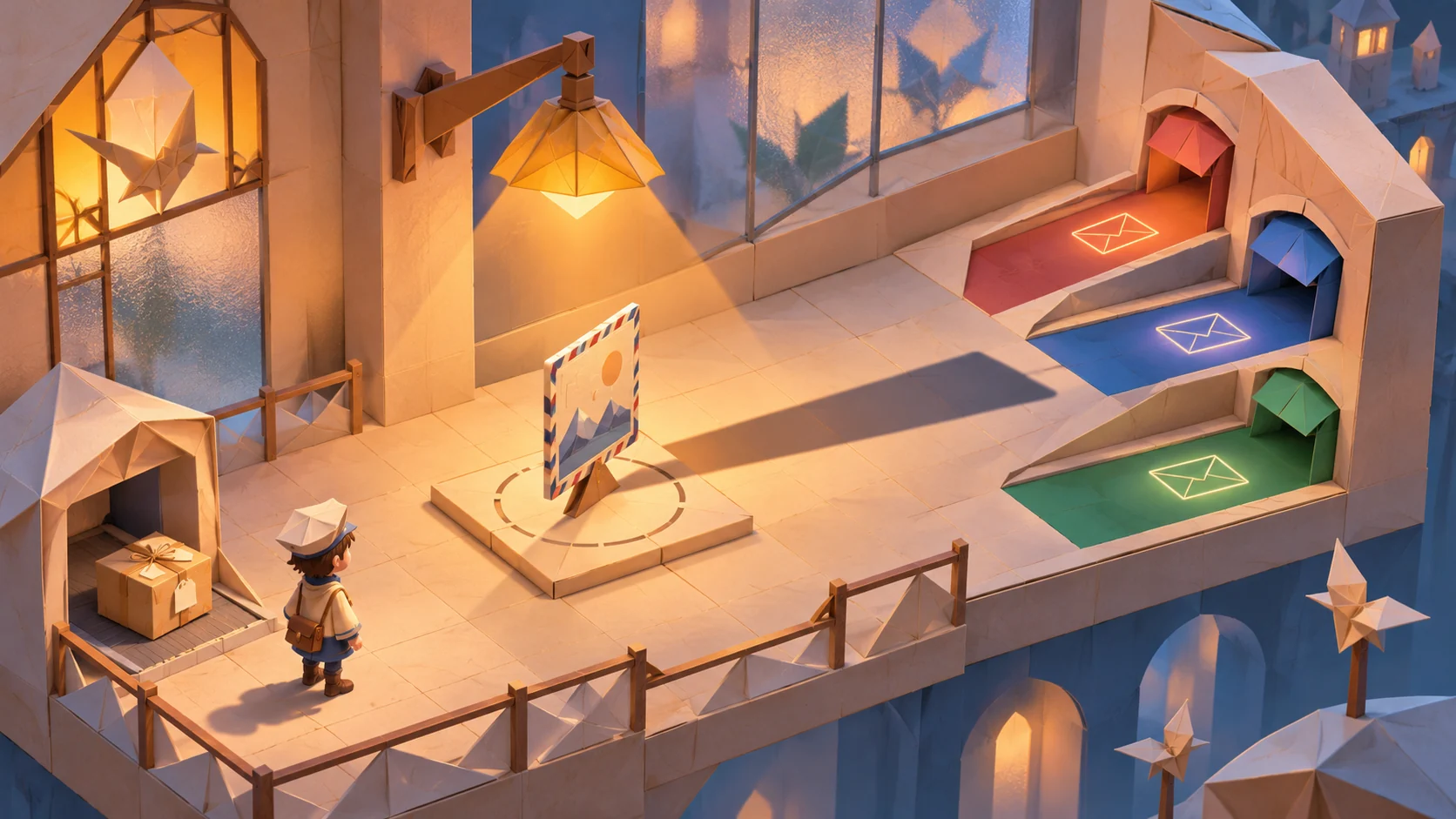
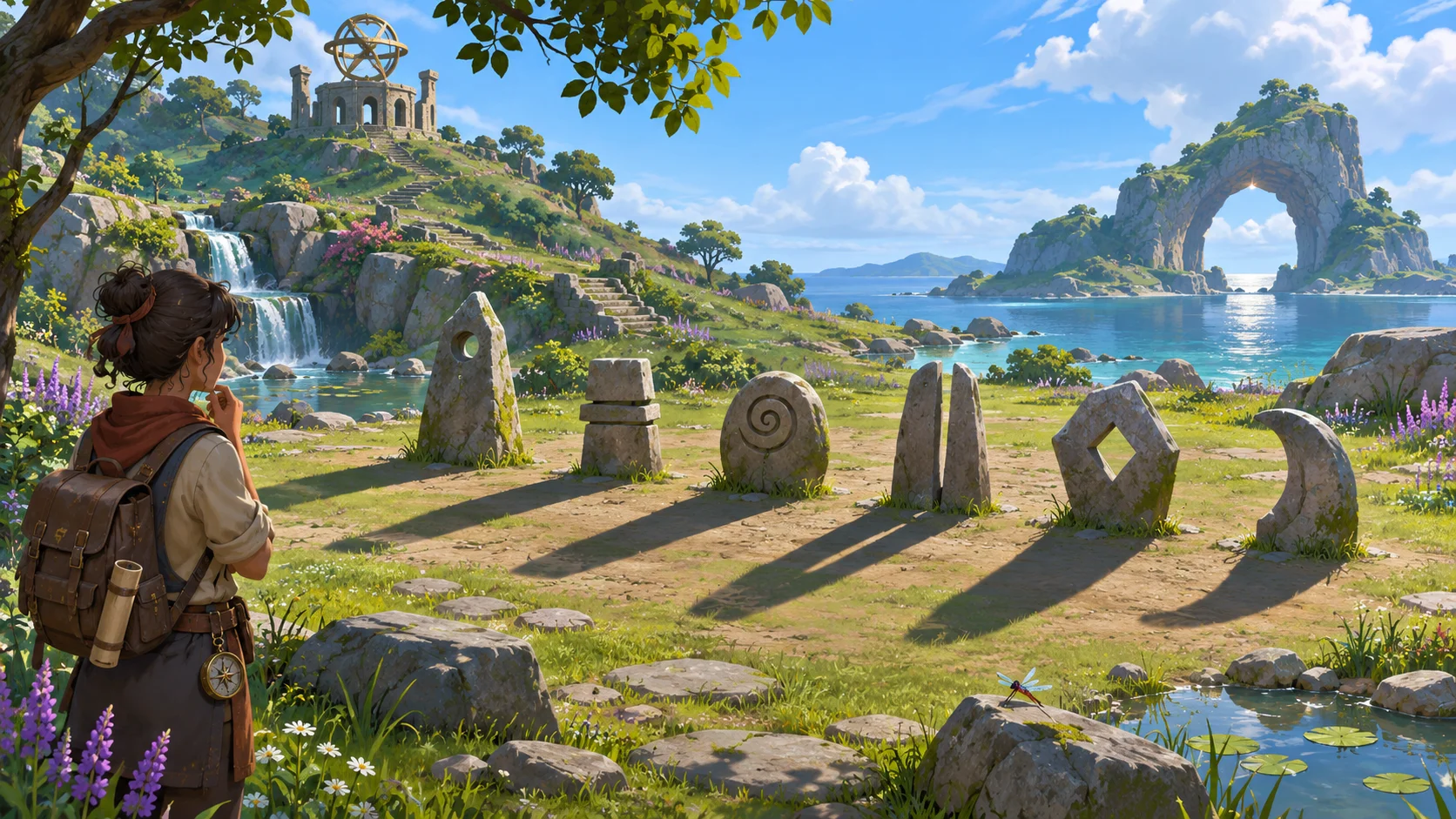
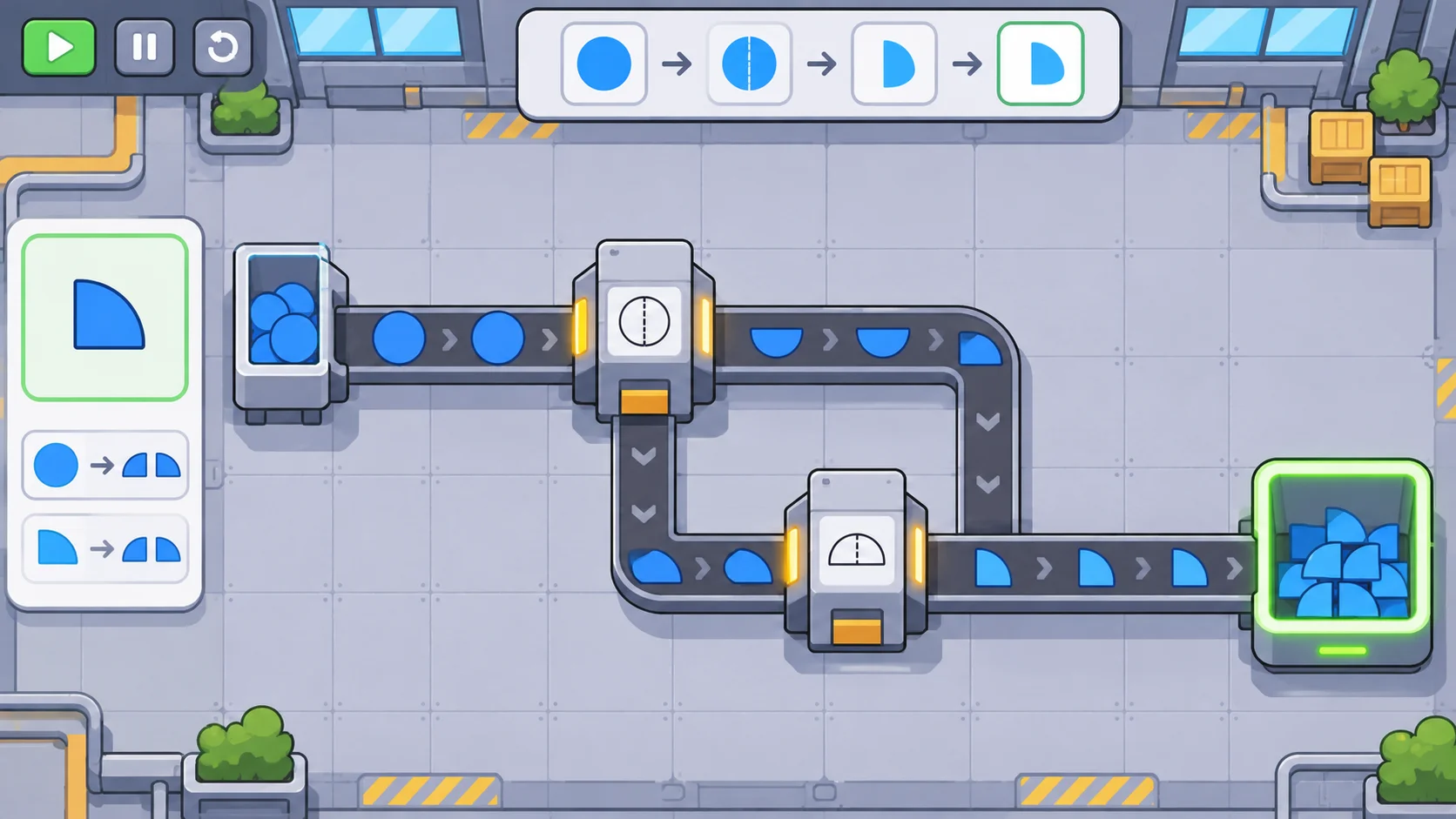
Perspective-based environmental interactions let players use what they see as part of the puzzle rule. Pillow Castle’s official Superliminal Steam listing describes a surreal first-person puzzler built around ambiguity of depth and perspective. That broad context is the only reference fact used here; the objects, state rules, and examples below are original.
Choose objects that visibly respond to viewpoint
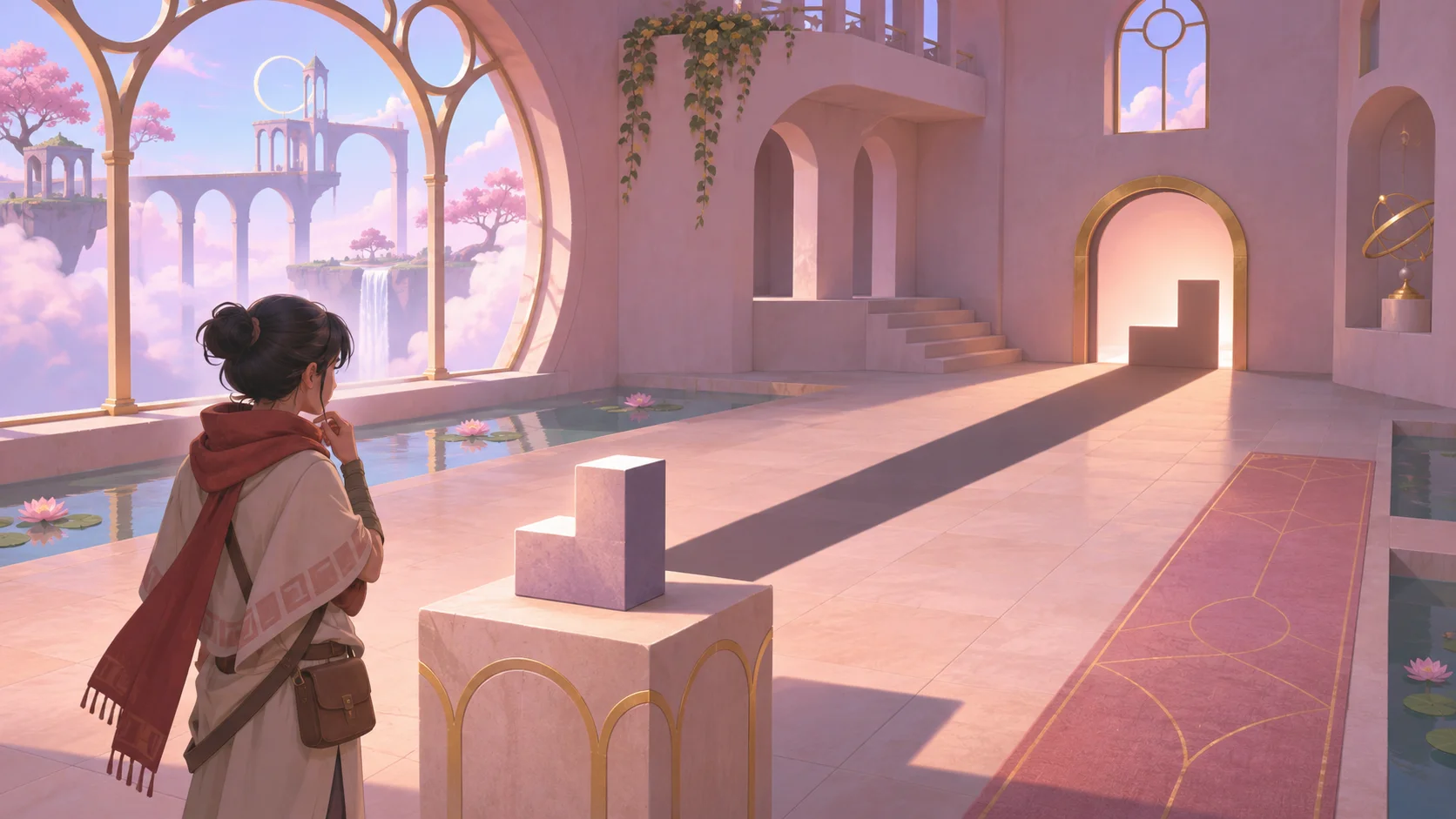
Start with one object and one environmental response. An original block might cast a long shadow that points toward a doorway. The player can move around the room, compare the shadow with a mark on the wall, and test whether alignment changes access. The relationship should be visible before the player commits to a solution.
Make the object distinct from scenery. Use a consistent outline, color, or interaction cue for pieces the player can move. If every prop can change the room, players may not know where to experiment. A small number of responsive objects makes a puzzle easier to understand and gives each one a clear purpose.
Keep visual and gameplay effects separate when needed. An object may appear larger from one viewpoint without changing its physical size; another object may become an interaction key when aligned with a target. Decide which rule applies and provide feedback. Do not mix apparent-scale changes and physics changes unless the game deliberately teaches both.
Define how viewpoint changes interaction
Specify when the interaction is evaluated. The system might check alignment when the player releases an object, when it enters a marked region, or continuously while the player looks from a valid position. The player should be able to tell when the condition is nearly satisfied and when it has activated.
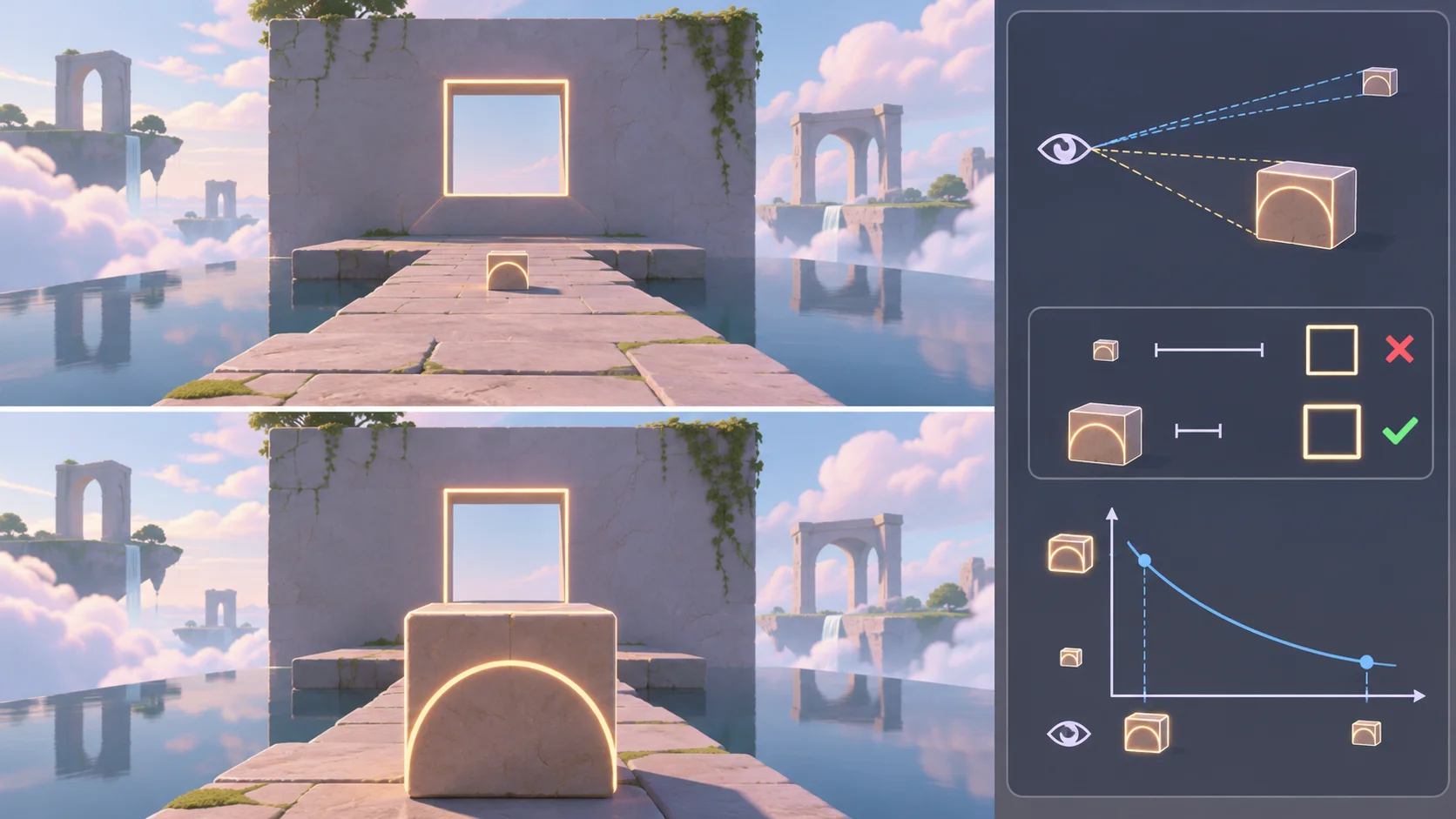
Use a consistent transformation rule. If moving an object closer changes its apparent scale, make that relationship predictable across the scene. If an object must line up with a wall opening, show enough of the opening and object silhouette for players to compare them. Avoid a hidden snap point that works only at one pixel-perfect angle unless precision is the intended challenge.
Give the player a low-risk place to learn the rule. An early room can demonstrate one transformation without a timer or failure. Later puzzles can combine the same rule with a new location, a second object, or a different route.
Connect the interaction to a readable world change
Make the consequence visible near the interaction. A doorway can open, a platform can move, a light can switch on, or a route can become passable. If the effect happens in a different part of the room, show a brief cue or let the camera reveal it. The player should connect the action to the environment change without searching the whole level for a subtle difference.
Allow experimentation to be reversed when possible. An object can be moved back, a door can close again, or the player can return to the previous vantage point. Reversibility makes it easier to test a hypothesis and reduces the cost of an incorrect alignment.
Playtest clarity, recovery, and alternate solutions
Before a test, ask players what they expect the object to do from the current view. Watch whether they try a meaningful action or wander until something happens. Record camera positions, repeated alignment attempts, and whether they notice the environmental response.
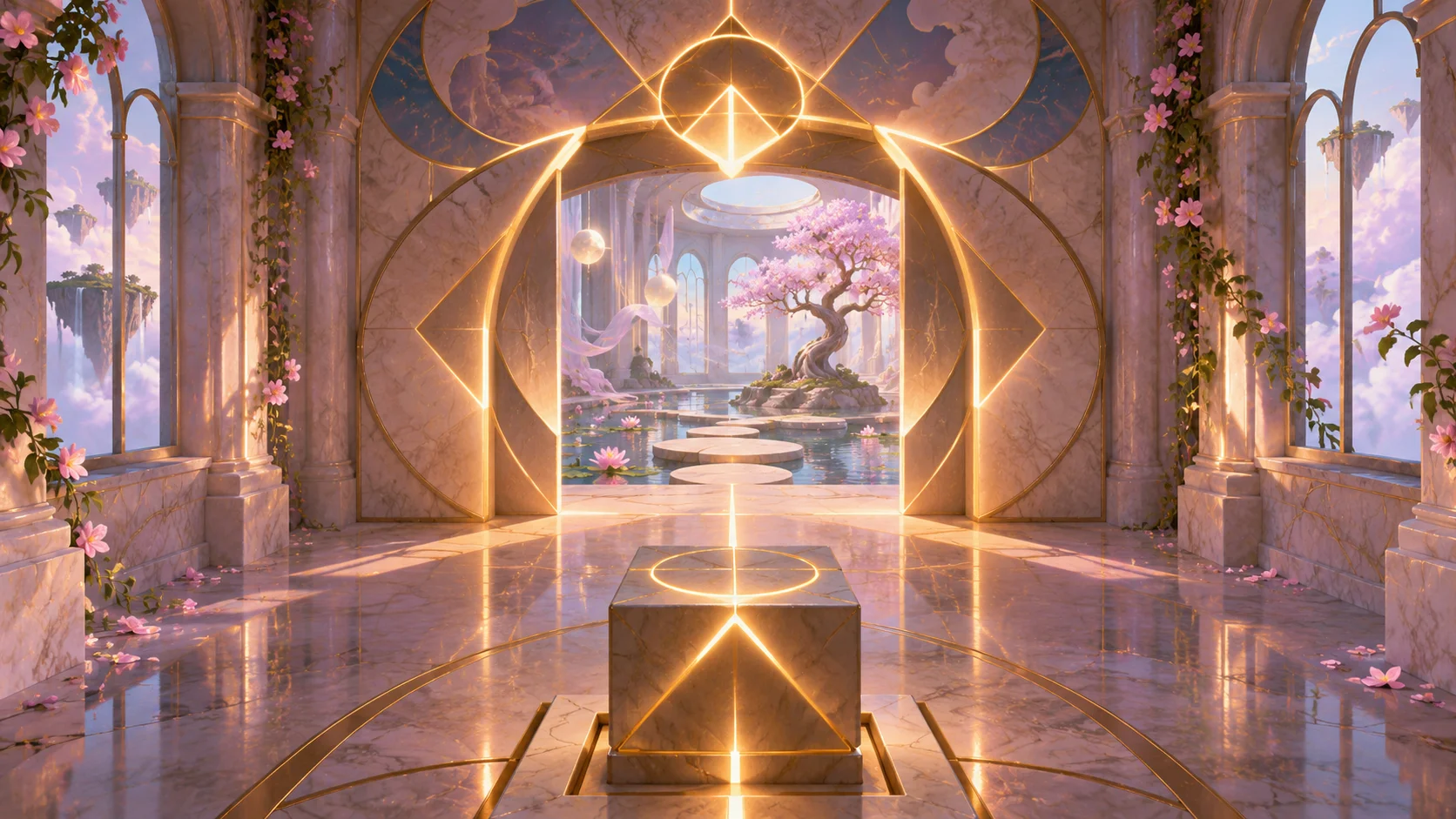
Test from different angles and with different player heights or movement speeds if those vary. A puzzle that works only from one exact position may need a broader valid range or a stronger alignment cue. If multiple solutions are intended, ensure each one produces clear feedback. If one solution is required, teach why it works before adding time pressure.
Use SEELE AI to draft an original perspective puzzle, then test the object transforms and environmental response in the actual prototype. A concept image does not guarantee that perspective interactions work. For a broader premise guide, see the original perspective-puzzle guide. Prototype an original perspective puzzle.
FAQ
How do you build environmental interactions in a perspective puzzle?
Choose an object, a viewpoint condition, and an environmental response. Make the object’s state visible and let the player test the relationship with a simple action. A block might align with a doorway from one view, while another object responds to a different spatial cue. Keep the rule consistent across the puzzle.
How should viewpoint change an object interaction?
Define what the viewpoint changes, such as apparent scale, alignment, visibility, or access. State when the rule is evaluated and keep the same condition stable while the player experiments. Show the changed state clearly so players can distinguish a perspective effect from a physics or collision issue.
How can perspective puzzles make cause and effect clear?
Keep the object and the environmental response visible together when possible. Use a brief animation or state change when the condition is met, then let the player observe the result. Avoid changing several objects at once unless the puzzle explains their connection, because players need to know which action caused the world to change.
What should you test in an environmental interaction?
Ask testers to predict what will happen before they move an object, then observe whether the result matches their prediction. Record repeated alignment attempts, missed cues, and recovery after an incorrect idea. Test from different camera positions and verify that the rule behaves consistently rather than only from one exact viewpoint.