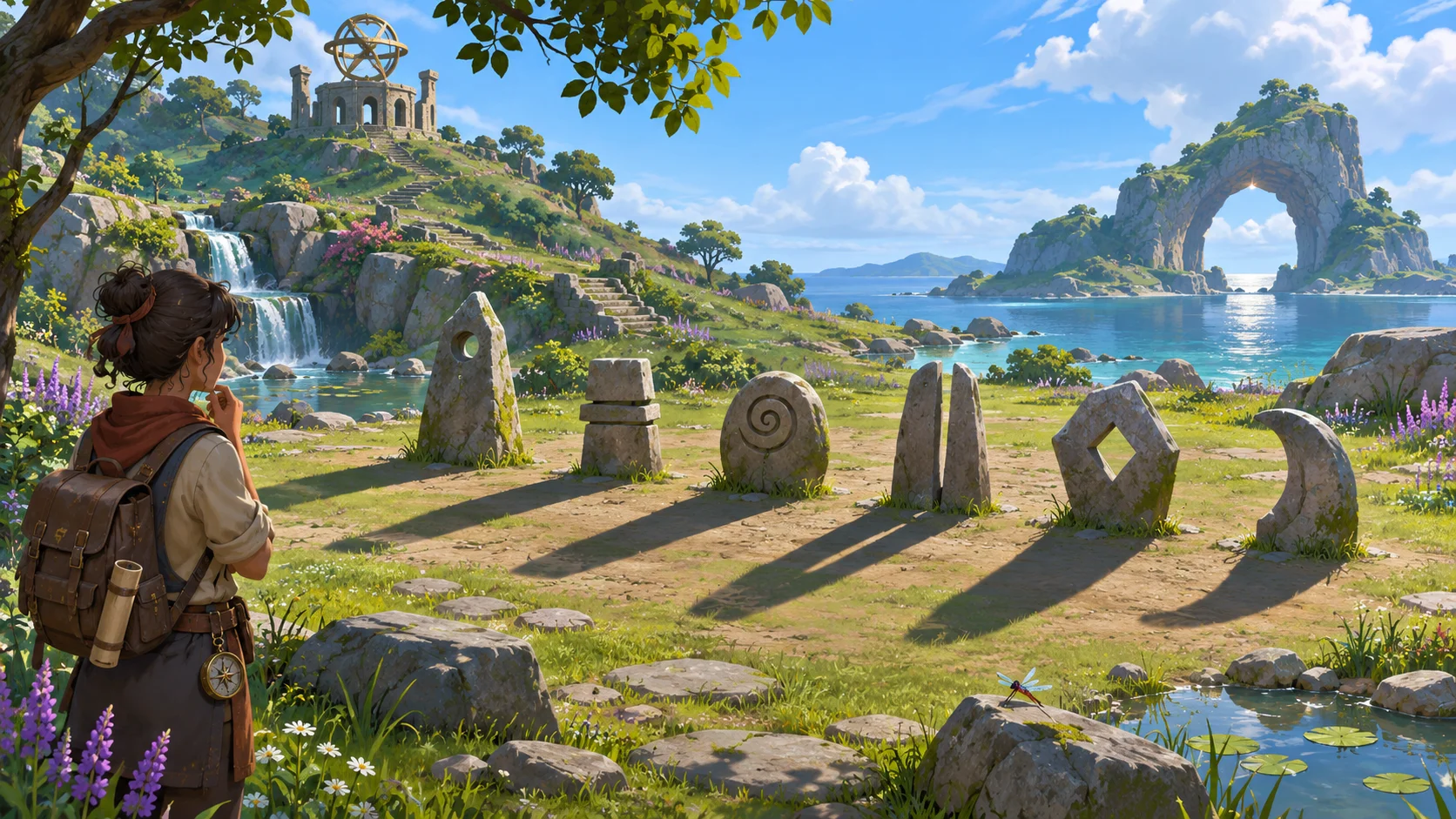
Environmental clues let a place carry information without stopping the player for a long explanation. Mobius Digital’s official Outer Wilds Steam listing describes an open-world exploration mystery in a solar system caught in a time loop. That broad premise is the reference context here; every symbol, clue chain, and implementation example below is original.

Connect a striking clue to a place and question
Start from a question that can lead to action: why is a beacon silent, where does a power line go, or what opened the sealed observatory? Place a visible clue near the relevant context. A repeated three-pronged symbol beside a dead beacon might suggest a relationship, but not explain it. The player should have a reason to inspect, compare, or travel.
Use contrast to help players notice important details. A symbol can have a distinct silhouette, material, sound, or lighting pattern. Keep the presentation coherent with the environment so clues feel like part of the world rather than floating tutorial markers. If a clue is easy to overlook, give players another route to notice it.
Make the clue’s physical context part of its meaning. A symbol etched near a power conduit suggests a different question than the same symbol carved above a doorway. Place objects where their relation can be observed: an empty socket, a cable that ends at a locked panel, or a mural repeated near a distant structure.
Build a clue chain players can infer
Plan a chain as a sequence of evidence, not a sequence of dialogue. In an original example, the player sees the three-pronged symbol beside a silent beacon, then finds it on a mural pointing toward a ridge, then notices the same mark on a control panel inside an observatory. Each discovery adds context: the symbol may identify a route, a power source, or a group of linked sites.
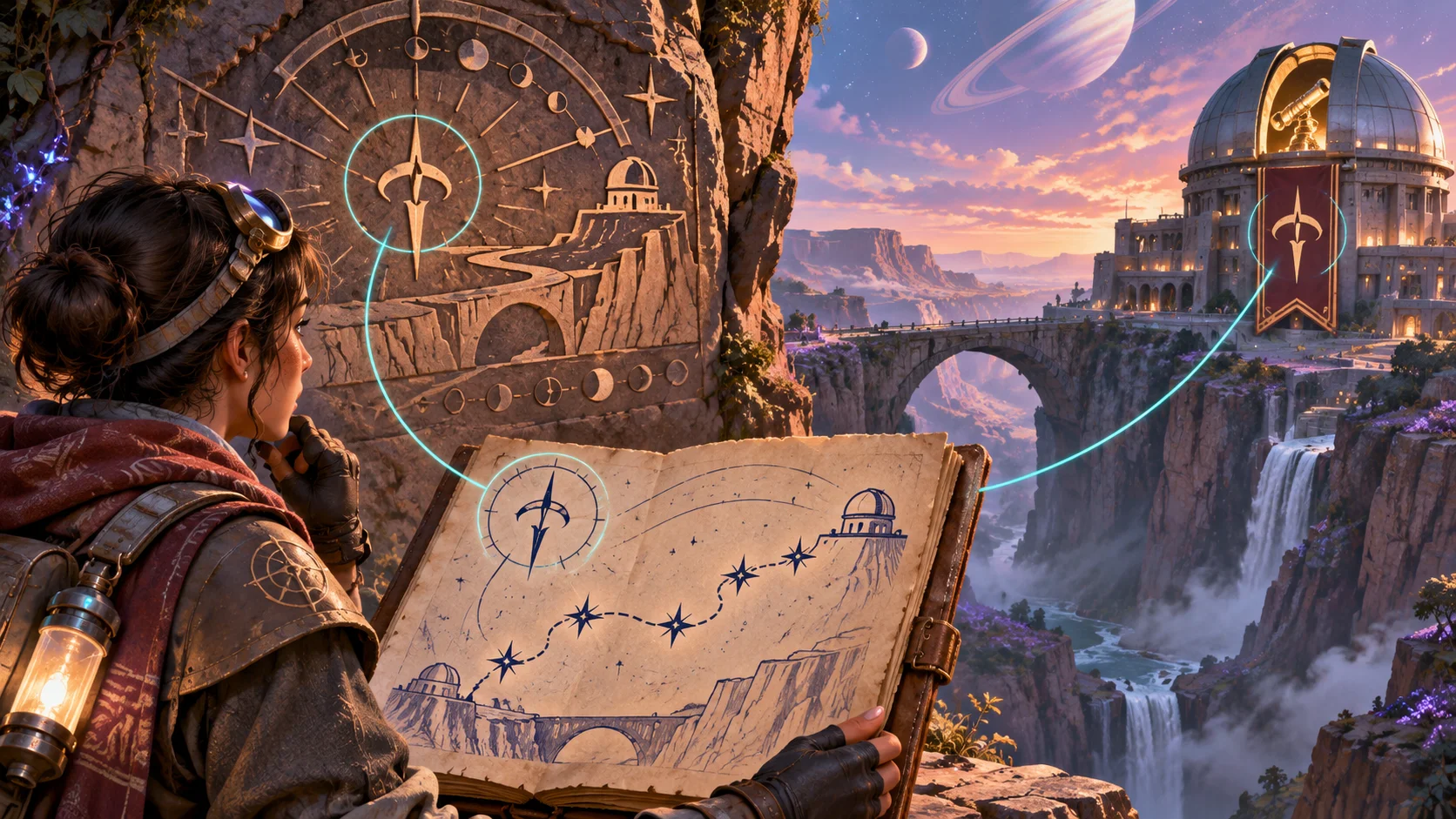
Let each clue support more than one early hypothesis. The mural could mark a path or a destination. A later observation can rule out one interpretation. This keeps discovery active while ensuring the answer is grounded in evidence. Avoid placing a single cryptic mark that only makes sense after an unrelated exposition dump.
Give players space to revisit information. A notebook can record a sketch or location, but should not solve the connection automatically. A map can mark discovered sites while leaving the relationship for players to infer. If the game is short, a few clear locations may work better than a large journal system.
Give discoveries mechanical and narrative value
A discovery can open an alternate route, activate a tool, change a location, reveal a past event, or create a new question. Connect the clue to a consequence players can observe. If learning a symbol changes nothing in the world, make sure the narrative revelation itself is strong enough to justify the attention it requires.
Separate evidence from interpretation. The game can show that a panel matches the mural without stating what the civilization intended. That distinction preserves mystery while confirming that the player has found a useful relationship. Let players test their hypothesis through an action and see the result.
Playtest discovery without a single forced route
Give testers access to more than one clue location and observe where they go first. Ask them to describe what they believe before and after each discovery. A useful clue can be noticed but misunderstood; that may be productive if later evidence changes the hypothesis. A clue that is never seen or cannot be connected to an action may need clearer placement.
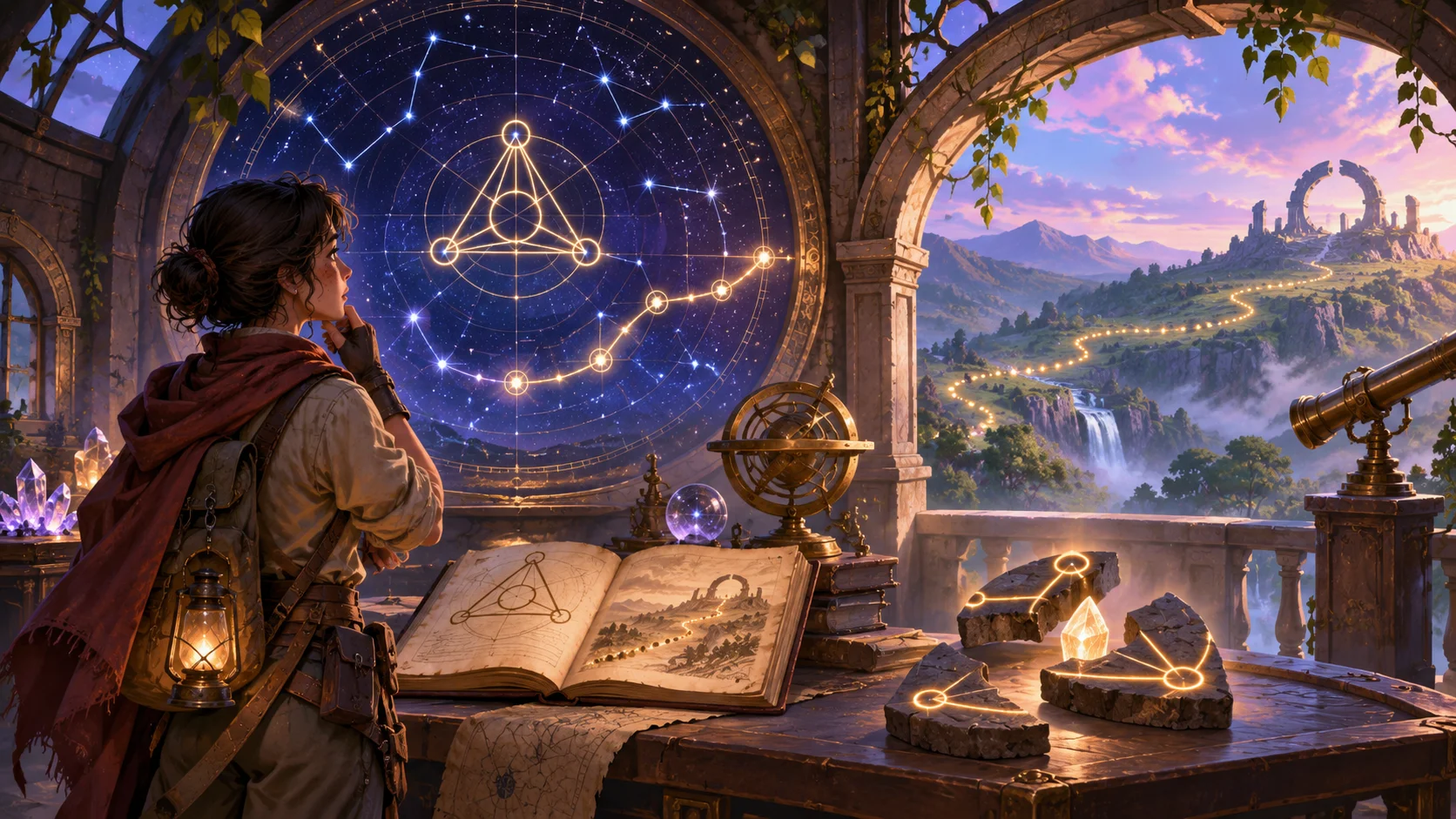
Test whether players can recover when they miss one piece. Add a second route to the same conclusion, a contextual hint, or a way to return to the site. Compare interpretations across players instead of enforcing one exact phrase. If everyone jumps to an unintended answer, the evidence may support that reading more strongly than the intended one.
Use SEELE AI to draft an original exploration mystery, then inspect clue placement and the actions each discovery enables in the actual prototype. Do not assume a generated map contains a coherent inference chain. For a broader premise guide, read the original exploration-mystery guide. Prototype an original exploration mystery.
FAQ
How do you build environmental clues in an exploration game?
Start with a question the player can act on, then place a visible clue in a meaningful location. Connect its shape, sound, or change in the environment to another clue or a usable action. Test whether a new player notices it and can form a plausible hypothesis without the designer explaining the answer.
How many clues should support one discovery?
Use enough clues to make the inference feel earned without turning it into a checklist. A small discovery might use two independent observations; an important conclusion can be supported by several clues in different contexts. Each clue should add evidence or correct a likely misconception rather than repeat the same information.
How can a player solve a mystery without finding clues in order?
Create clues with partial context and multiple entry points. A player can encounter a later location first and still understand a symbol or question, then gain a richer interpretation from earlier discoveries. Avoid making one clue a hard gate unless its location and relevance are communicated clearly.
What should you observe in an environmental-clue playtest?
Record which clues players notice, the hypotheses they form, where they travel next, and whether new evidence changes their interpretation. Ask them to explain a discovery in their own words. If a clue is consistently missed or produces an unintended conclusion, revise its placement, contrast, or relationship to other evidence.