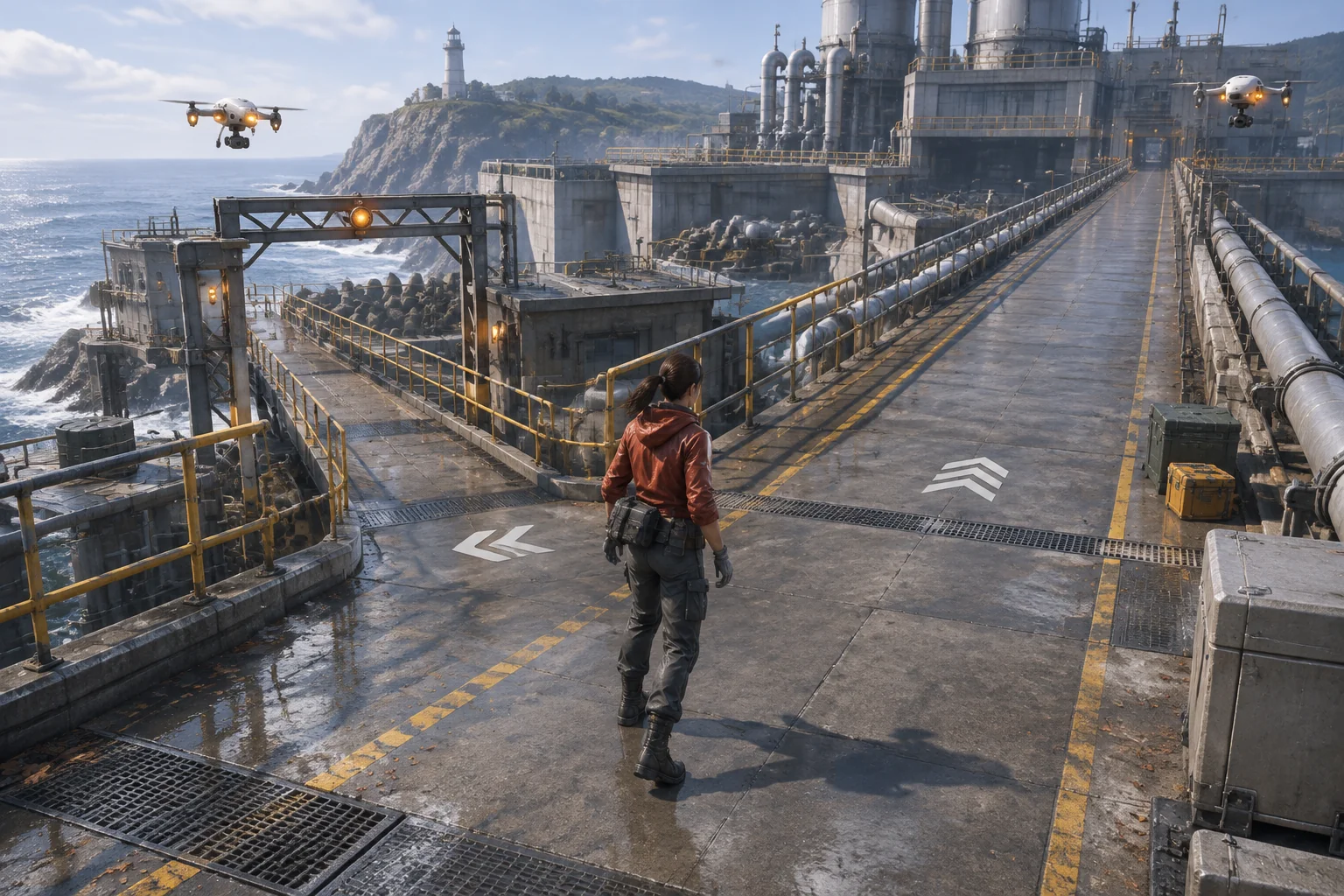
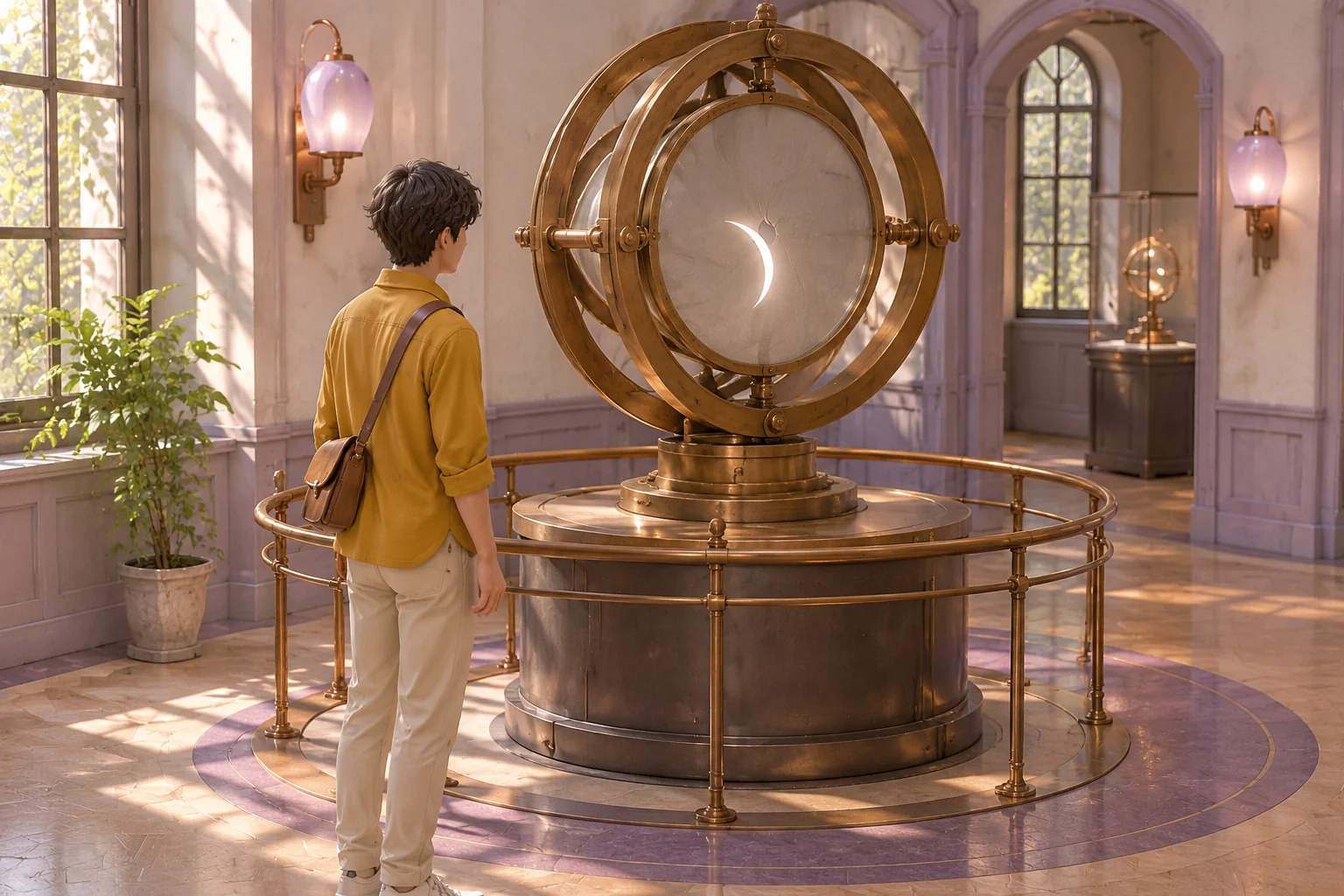
To make an original time-loop mystery inspired by Outer Wilds, give the player one thing to learn that changes where they go next. In the fictional Lumen House museum, a shutter reveals a shape in one room. A reader in another room accepts that shape during a short window. The player can learn the answer on the first pass, then head straight to the reader on the next.
Reset the rooms and the clock while keeping the clue in a notebook. That makes a repeat useful even when the player arrives too late to complete the puzzle.
Build a mystery around knowledge that survives
Mobius Digital’s game catalogue describes Outer Wilds as first-person exploration of a solar system in a time loop. In a PlayStation post from the studio, producer Kelsey Rice explains that places change over time and what the player learns carries between loops.
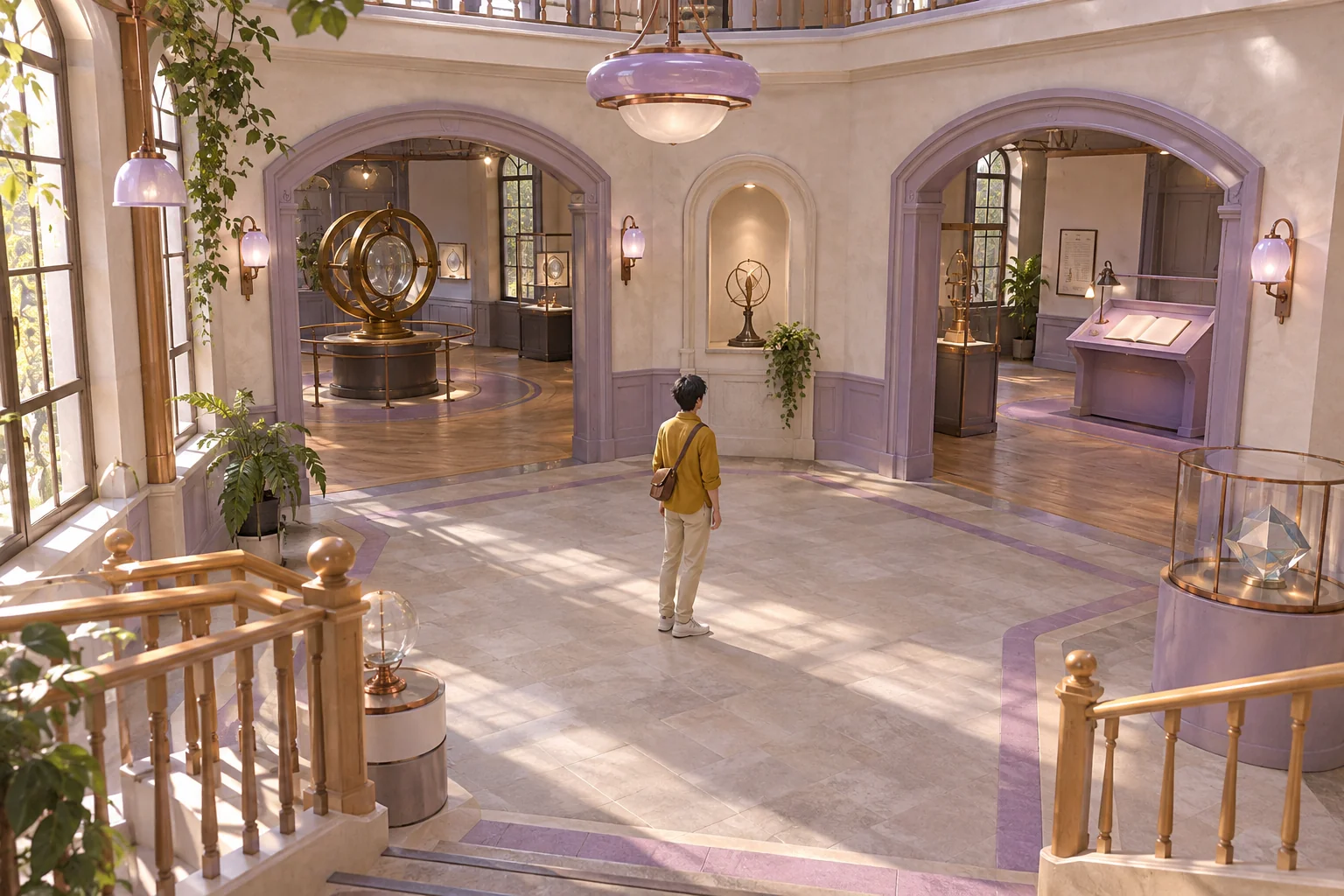
Use that general relationship between timing and knowledge in a place of your own. Lumen House has a Lobby, an Observation Bay, and a Reader Alcove. Each exhibit room connects to the Lobby. Traveling from one exhibit room to the other takes two moves through the Lobby.
Decide what the current beat can reveal
Start in the Lobby at beat zero with an empty notebook. Move to an adjacent room, Wait anywhere, Observe in the Observation Bay, or Submit Arc or Submit Dot in the Reader Alcove. Each valid action advances the clock one beat, then resolves using the new beat. A wrong-room command or a move between unconnected rooms leaves the clock and the room unchanged.
| Action | When it resolves | Feedback or effect |
|---|---|---|
| Observe | Beat 2 | Reveal Arc and record it once. |
| Observe | Other beats | Report a closed shutter. Add no note. |
| Submit Arc or Dot | Beat 3 in the baseline | Arc completes the run. Dot reports an incorrect answer. |
| Submit Arc or Dot | Other beats | Report a closed reader. Consume the beat and leave the answer unjudged. |
Apply the action, then check for completion. If the run is still open at the end of beat five, reset to the Lobby at beat zero. Restore both room schedules, keep the note, and increment the loop number. Keep the final action’s feedback in a separate previous-loop recap. The current reader state can reset while the recap still explains what happened. New Session clears the notebook and recap and returns to loop one.
Follow the clue in one loop and use it in the next
In the first loop, take the route that reveals the answer. In the second, start with what you learned and go straight to the reader.
| Beat | Loop one | Loop two |
|---|---|---|
| 1 | Move to Observation Bay. | Move to Reader Alcove. |
| 2 | Observe. The shutter reveals Arc and the note records it. | Wait. |
| 3 | Move to Lobby. | Submit Arc at the open reader. Complete. |
| 4 | Move to Reader Alcove. | Complete. |
| 5 | Submit Arc. The reader is closed. Reset to Lobby with Arc and a closed-reader recap. | Complete. |
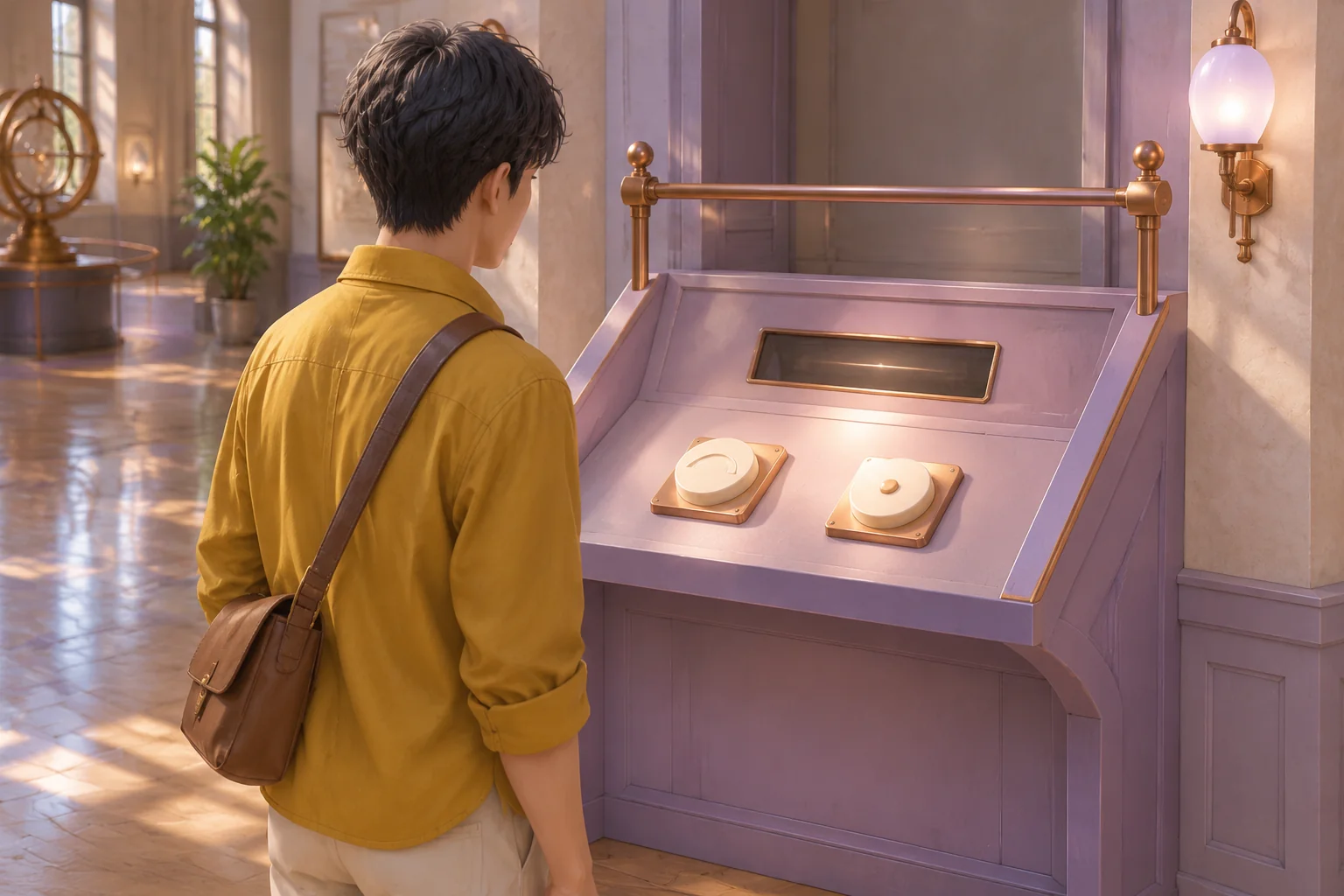
The notebook makes Arc easy to remember, and the reader accepts the correct shape even with an empty notebook. A player who already knows Arc can take the direct route on the first loop and complete at beat three. Keep the current beat, the room’s window state, and the notebook visible as separate information.
Give AI one repeatable exhibit and a reset order
Specify the rooms and what happens on each action. Use a small debug clock while you check the transitions.
Build an original two-exhibit time-loop puzzle in Lumen House.
Lobby connects separately to Observation Bay and Reader Alcove.
Start in Lobby at beat 0, loop 1, with empty notebook and recap.
Move one link, Wait, Observe in Bay, or Submit Arc or Dot in Alcove.
Reject wrong-room and nonadjacent inputs before advancing time.

Advance one beat for a valid action, then resolve it on that beat.
Observe at beat 2 records Arc once. Else report shutter closed.
The reader judges a submission at beat 3. Arc wins, Dot is wrong.
On any other beat report reader closed and leave the answer unjudged.
Allow Arc to win even with an empty notebook.

Check completion before auto-reset after beat 5. On reset return
to Lobby at beat 0, restore schedules, and increment the loop number.
Keep the notebook and save the last action feedback in a separate recap.
The recap is display-only. New Session clears note and recap,
restores loop 1 and starts fresh. Freeze after completion.
Check that a wrong-room action spends no beat and that an observation on beat three reports a closed shutter. Compare Dot at the open reader with Arc at the closed reader. Then run the five-beat discovery route and verify that both the note and the separate feedback survive the reset.
Move only the reader’s window
Change the reader’s acceptance beat from three to five. Repeat the first-loop actions from the table. The shutter still reveals Arc on beat two, but submitting Arc on beat five now completes the run before the automatic reset. Learning and using the clue can happen in the same loop.
The old direct route now reaches a closed reader on beat three. A player who already knows Arc can wait until beat five and still finish. The worksheet isolates one timing change. In a working build, check whether players can read the closed-reader recap and plan their next attempt. The guide to replaying a build after one change can help you compare both versions.
Make one repeat change the player’s plan
Start with one clue, two rooms, and a reset the player can understand. Start your original time-loop mystery with SEELE’s AI game maker and use the two traces to check what survives.
Frequently asked questions
How is a remembered clue different from an inventory key?
A remembered clue helps the player choose an action. The player can act on it whenever they know it. An inventory key requires the game to verify possession before opening something. Try the direct route with an empty notebook to confirm that knowledge alone is enough.
What should a closed reader tell the player?
Say that the reader is closed and show the current beat. Preserve that feedback in a recap if the loop ends on the same action. A wrong answer deserves a separate message so the player can decide whether to revisit the clue or arrive at another time.
Which should happen first at the end of a loop?
Resolve the current action and check for completion before resetting the world. Otherwise a correct action on the last beat can disappear during the reset. Run the final-beat variation to confirm that the success state remains visible and the loop number stays the same.
When should I add a second clue?
Add one after players can explain what the first clue changes and when to act on it. Give the second clue a different purpose or schedule so it changes a plan. Replay the first mystery after adding it to catch accidental changes to the reset rules.