Give the player two weapons and a reason to take a different route with each. In a small action roguelite, one route can favor a heavy hit before an enemy counters, while another rewards enough reach to land two lighter hits. Build that fork first so the weapon choice changes what the player does next.
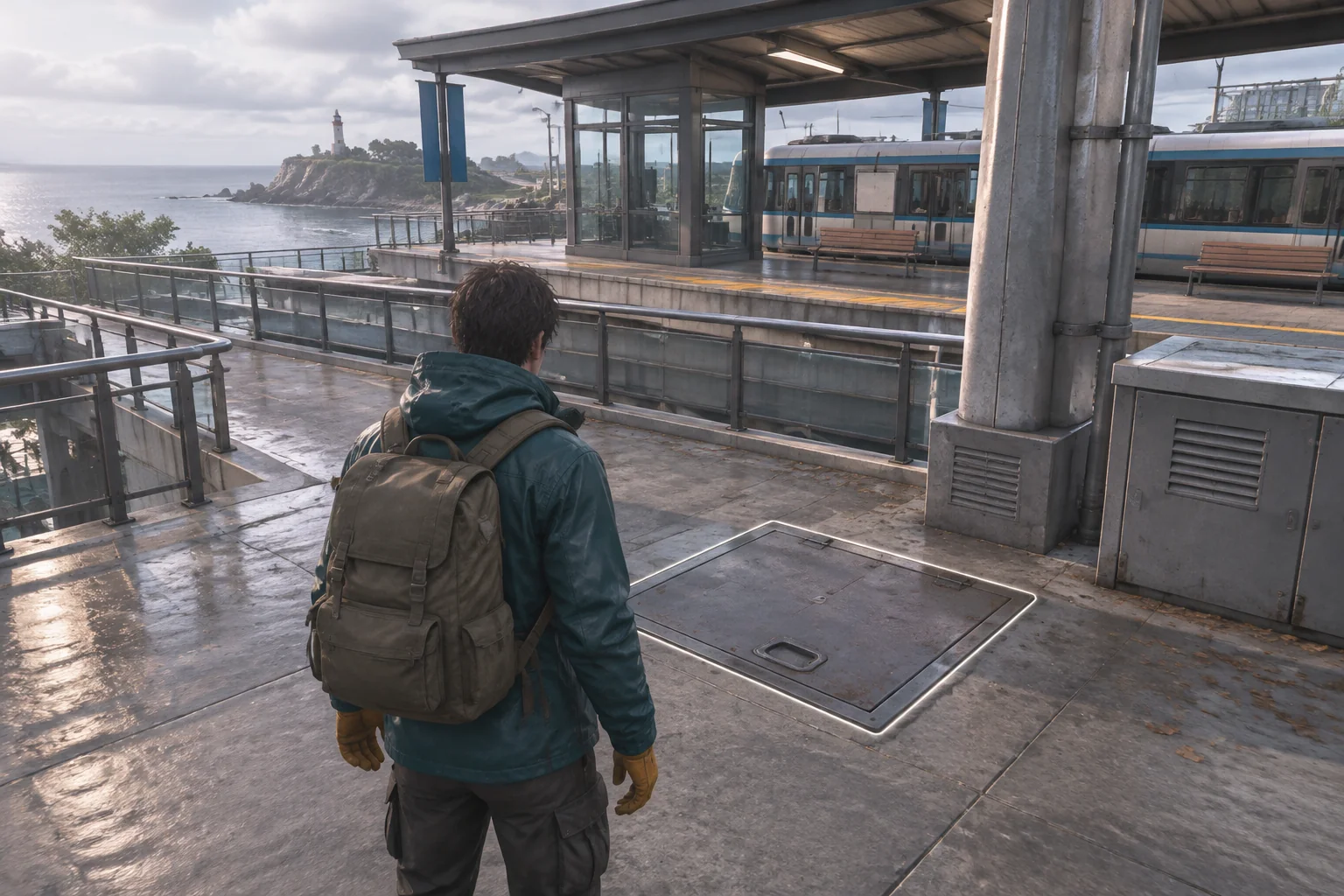
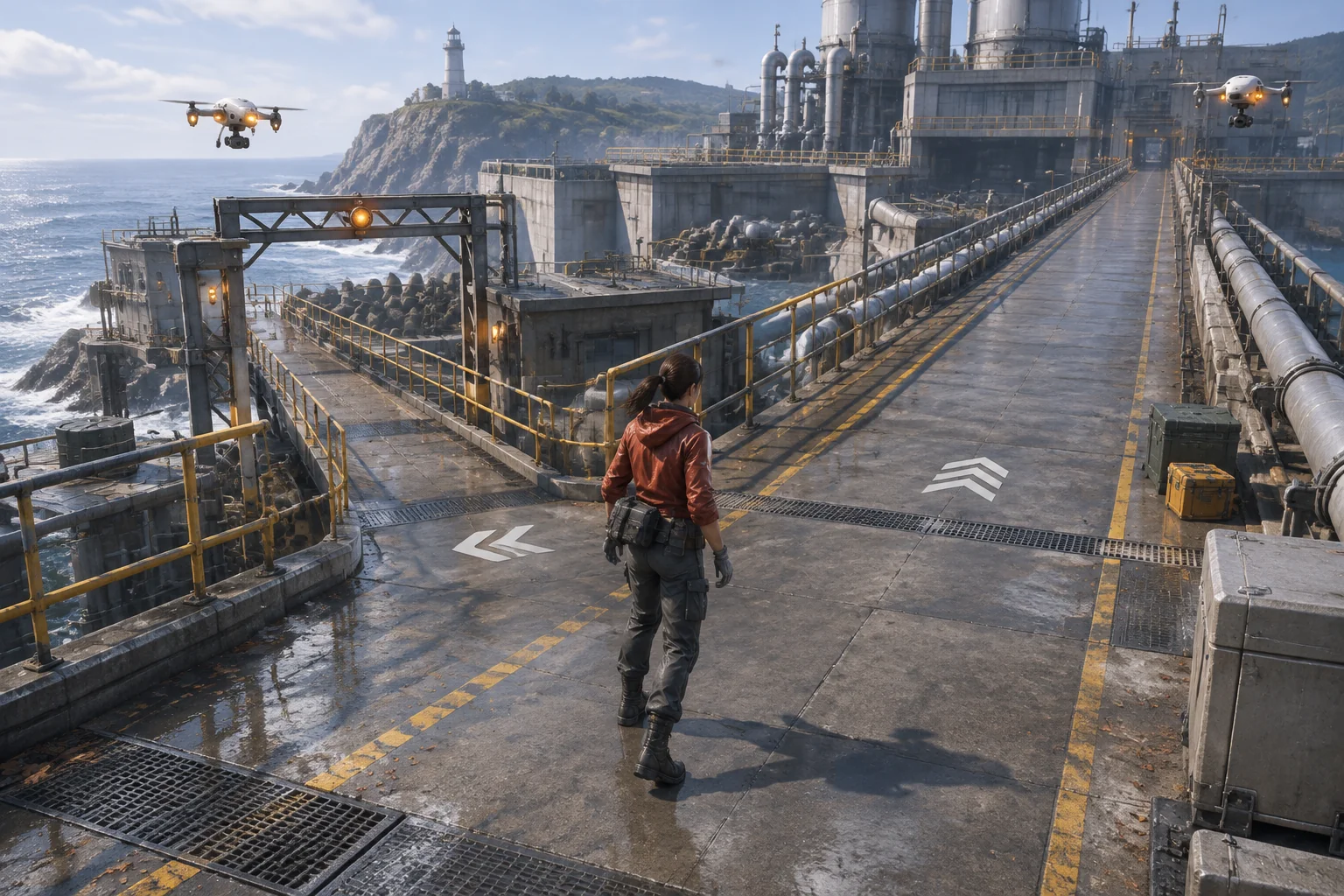
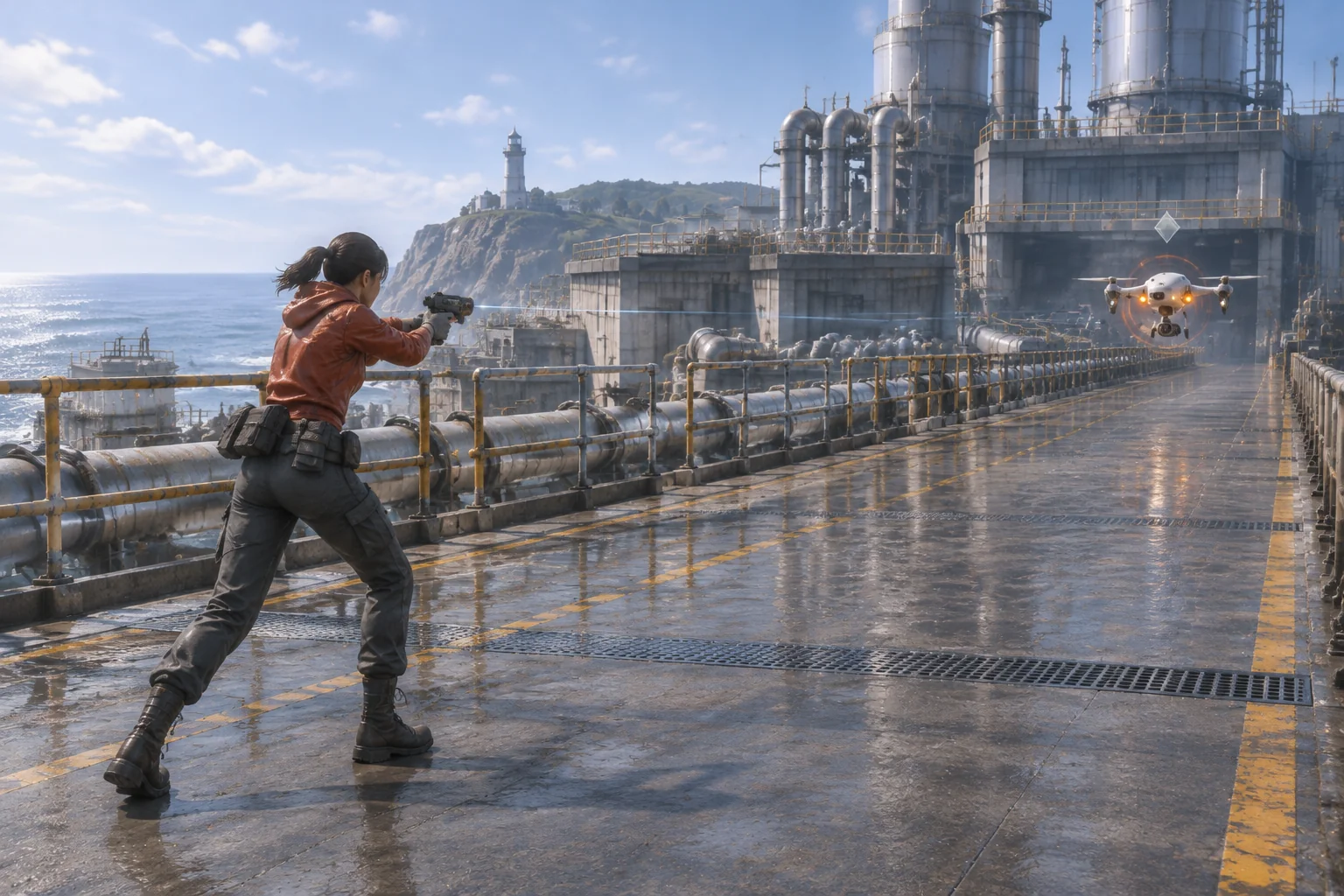
In the fictional Breakwater Circuit, a maintenance runner enters a coastal pump station with one weapon. Two passages lead to separate encounters, and either one can earn the same relay pass. The pass opens a shared exit. The first prototype needs only the fork, one drone per encounter, and a reset.
Let the loadout inform the route
Motion Twin’s Dead Cells press kit describes weapons and spells with distinct behavior and routes players can choose to suit their current build. The official Dead Cells overview also describes pattern-based enemies and nonlinear progression.
Turn that relationship into a design question. What does this weapon let the player do before the encounter changes? Breakwater Circuit gives one tool enough impact to finish during a short opening and the other enough reach to land hits from farther away. The pump station, drone, equipment and exit rules belong to this original fixture.
Put the tradeoff in reach and impact
At the start, equip one tool. Both route panels show the drone’s distance and the number of attacks available before it counters. After choosing a route, the player’s distance is fixed. Each valid Attack spends one beat, including a miss. The encounter ends if the drone counters. The player can reset and replay either weapon with either route.
| Choice | Rule | What the player needs to read |
|---|---|---|
| Short ram | Range 1, impact 2. | One hit can clear the drone at close reach. |
| Dart launcher | Range 3, impact 1. | It can reach either drone. It needs two accepted attacks to clear one. |
| Gantry | Distance 1, one attack beat. | The drone counters after the first attack if it still has armor. |
| Conduit | Distance 3, two attack beats. | The longer opening only helps a weapon that reaches the drone. |
Give the drone two armor on either route. A hit subtracts impact down to zero. If armor reaches zero, grant the pass and open the exit before checking whether the attack spent the final beat. The player can then select Exit to finish. If the drone still has armor on that beat, its counter ends the attempt.

Replay all four weapon and route pairs
Reset to weapon selection between rows. Keep drone armor the same so each result has a clear cause. The following outcomes follow from the rules above.
| Loadout and route | Armor after each attack | Expected result |
|---|---|---|
| Ram on Gantry | 2 → 0 | Clear on beat 1. Exit unlocks. |
| Launcher on Gantry | 2 → 1 | The shot lands, then the drone counters. No pass. |
| Ram on Conduit | 2 → 2 → 2 | Both attacks are out of range. The counter ends the attempt. |
| Launcher on Conduit | 2 → 1 → 0 | Clear on beat 2 before the counter. Exit unlocks. |
Show an out-of-range message for a ram miss and an armor change for a launcher hit. Those cues tell the player whether to rethink the route’s distance or its attack window. A generic failure message would hide why two apparently similar attacks ended differently.
Give AI one complete encounter fixture
Describe the scene and rules together. A prompt-led first pass in SEELE can start from the controls and the clear or failure condition. Keep the first version small enough to step through each attack and inspect its result.
Make an original small browser game called Breakwater Circuit.
The runner starts at weapon selection with no relay pass.
Equip one weapon. Short Ram has range 1 and impact 2.
Dart Launcher has range 3 and impact 1.

At the fork, show both routes before the player commits.
Gantry has distance 1 and a budget of one accepted attack.
Conduit has distance 3 and a budget of two accepted attacks.
The drone starts with two armor on either route.
Fix distance and weapon throughout the encounter.

On Attack, spend one beat.
If distance is within range, subtract impact down to zero.
Otherwise show Out of range and leave armor unchanged.
If armor is zero, clear the encounter, grant one pass once,
and unlock the shared exit. Stop processing the attack there.
If armor remains when the budget ends, trigger a counter and
finish the attempt with no pass. Use Exit to finish after clearing.

Reject weapon swaps and retreat in the encounter. Reject Attack
after clear or failure, and Exit without a pass. Rejected inputs
change no state. Reset restores weapon selection, both route
choices, the starting armor and budget, and the locked exit.
Show the route, distance, remaining beats, armor and result.
Check the final-beat clear first, then try Exit with no pass and a weapon swap after choosing a route. Those rejected actions should preserve the current state. After a clear, try Attack again to check that the pass count stays at one. Use SEELE’s guide to building and revising a first game if you need a way to isolate a change before adding another encounter.
Change one attack window
Raise only the Gantry budget from one attack to two. Replay Launcher on Gantry from the same starting state. The first shot still leaves one armor. The second now clears the drone before the counter. Ram on Gantry still clears in one hit, and neither Conduit result changes.
Use that modeled change to decide what the fork should do. An extra beat makes Gantry usable with either weapon. A short opening keeps the heavy impact relevant. Once you have a build, show players the route panels and check whether they can explain their choice before entering.
Start your original weapon-build prototype with SEELE’s AI game maker.
Frequently asked questions
What makes a weapon tradeoff readable?
Give each weapon a useful advantage that the player can connect to a route. Show reach and impact before commitment, then show why an attack misses or leaves the drone active. Both outcomes should be understandable from the same information the player had at the fork.
How can I telegraph a counter?
Show the remaining attack beats before an input and update the cue after every accepted attack. Make the final beat recognizable while the player still has a choice. Use separate feedback for a miss, a hit that leaves armor, and a counter that ends the attempt.
Why use a deterministic first run?
Fixed distances and armor make it easier to tell why a build succeeds or fails. You can replay the same weapon and route after changing one rule, then add variation once the attack order, exit condition, and reset behave as the design specifies.
When should I add weapon drops?
Add drops when the fixed fork already gives each weapon a useful route and readers of the route panel can explain their choice. Start with one optional pickup before a new fork so you can observe how it changes the next decision without rebuilding the first encounter.