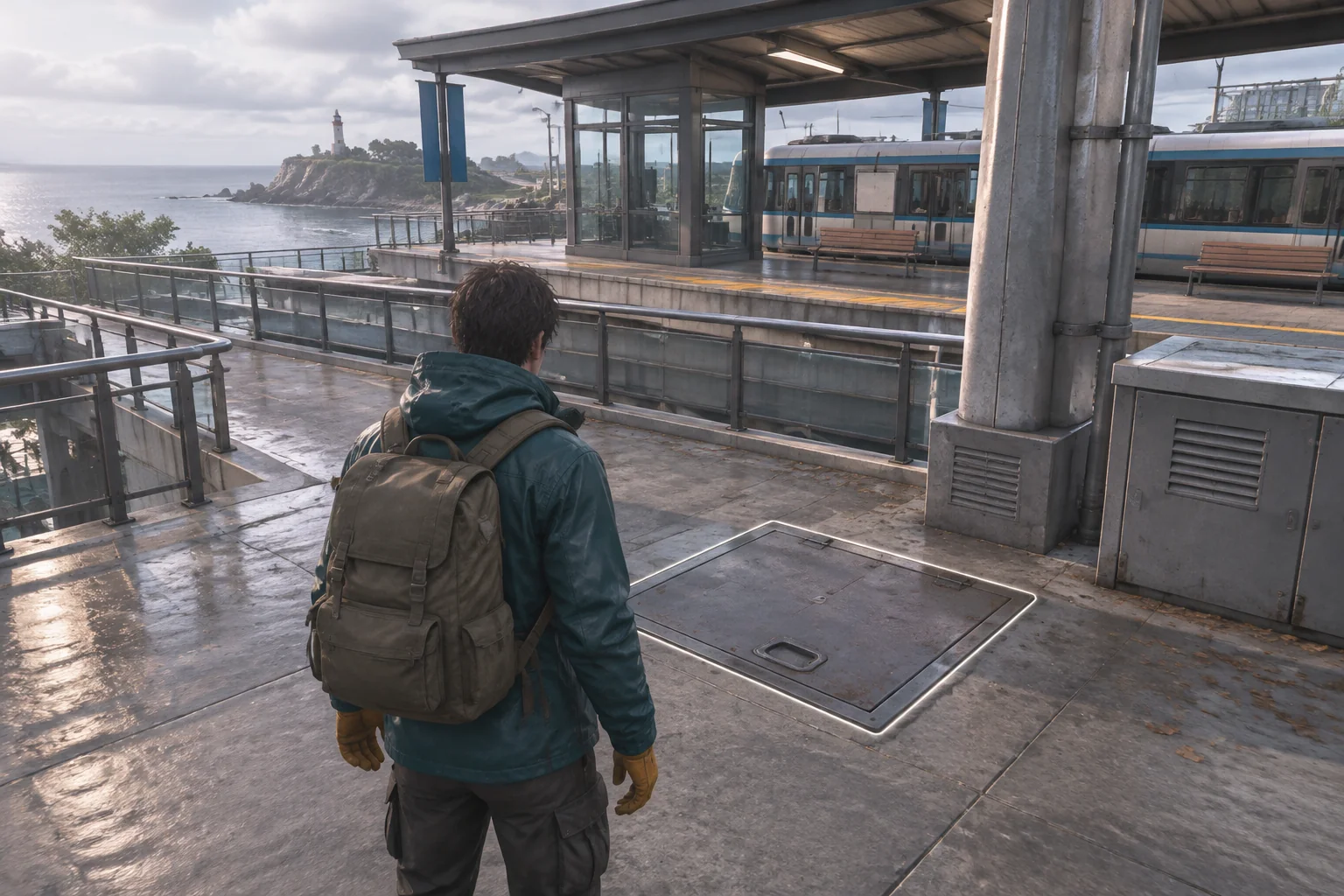
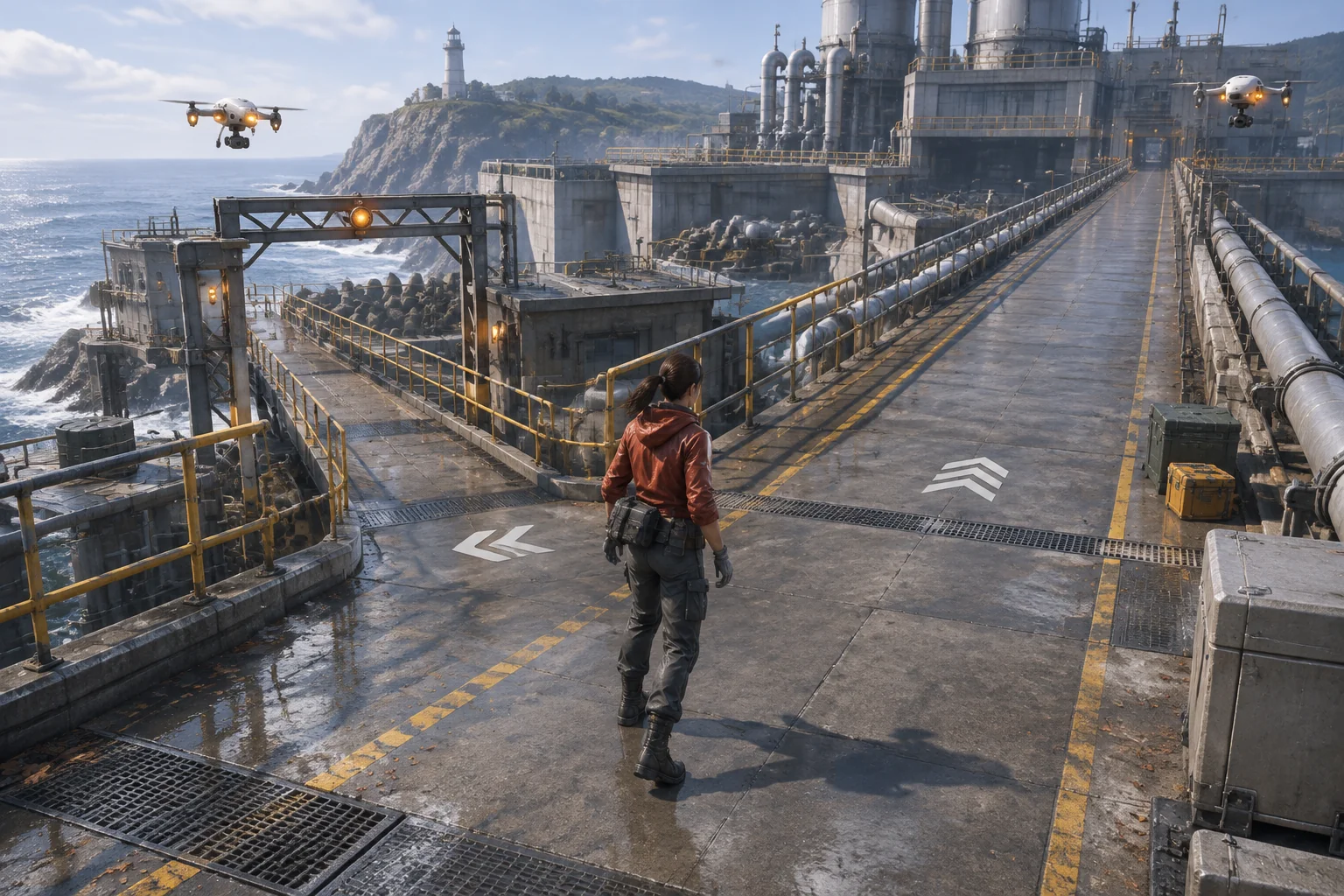
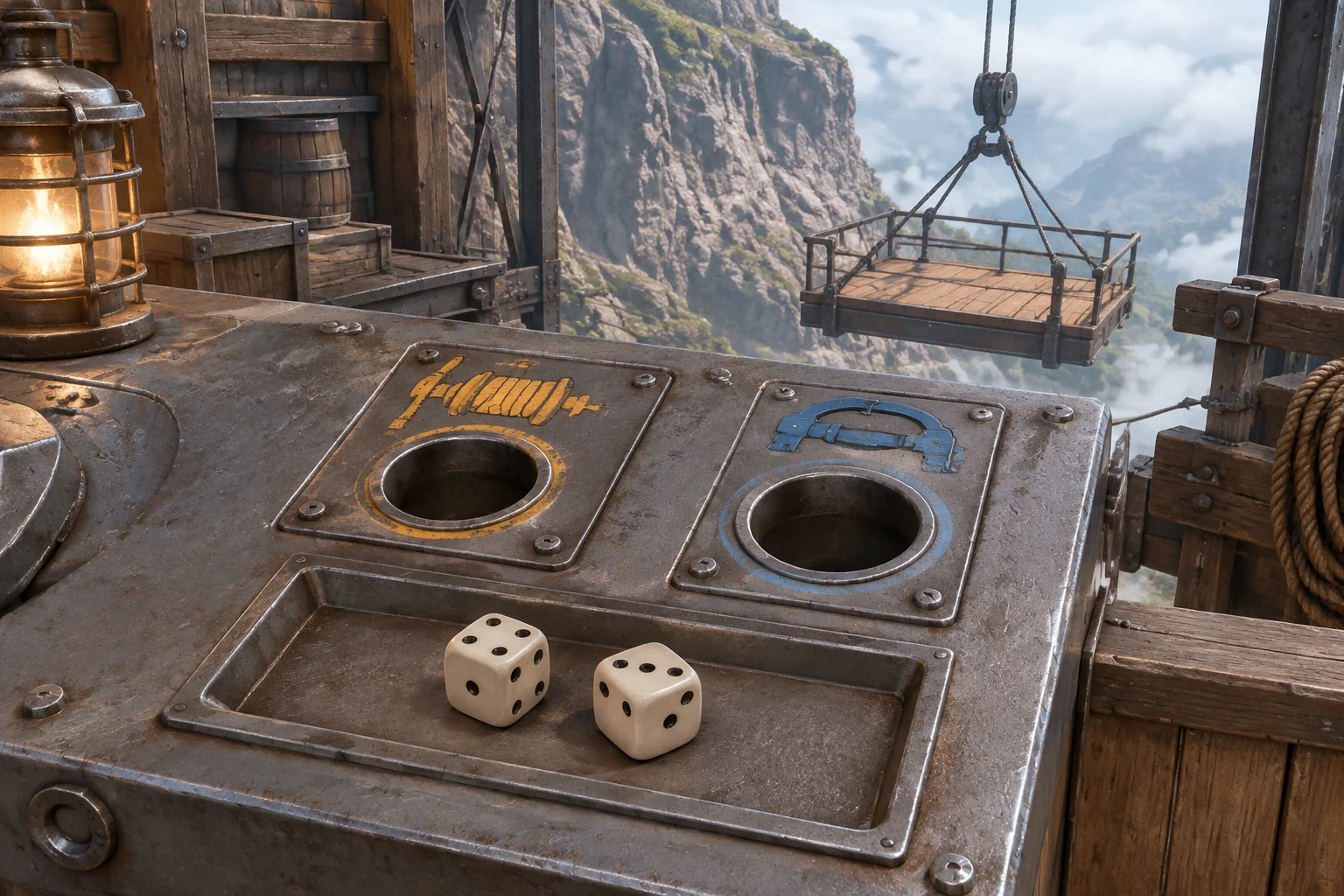
Build a fishing adventure around one decision the player makes before sailing home. Give the boat three cargo pieces that fit in more than one arrangement. Put a route fixture in the same hold. If the player leaves its socket open, they can attach it and take the shortcut. If they cover it, they can still bring the same cargo home by a longer route.
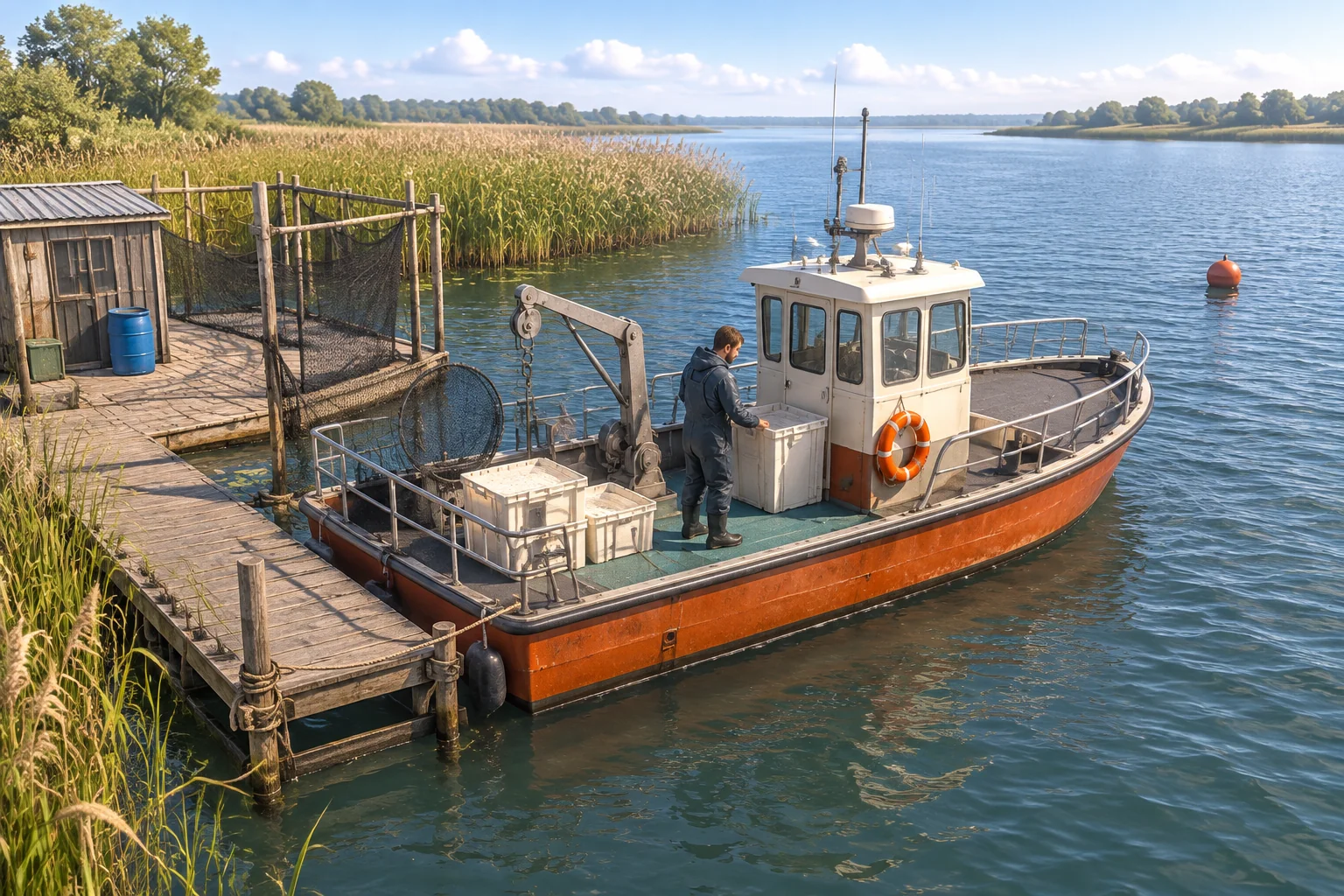
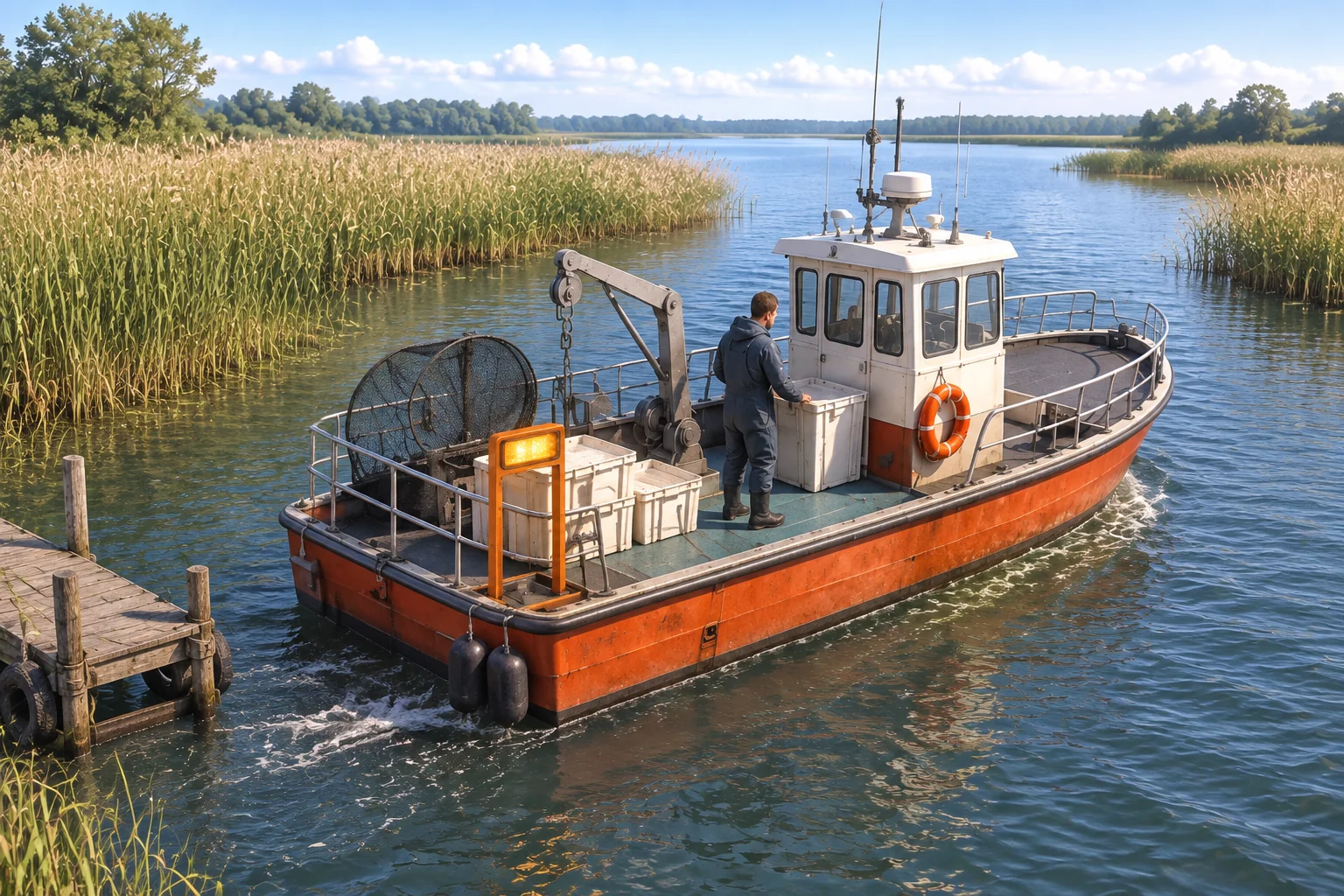
In the fictional Tidebox Run, a survey workboat collects a specimen case at a floating net station. The first prototype starts with the case and two other pieces staged for packing. The goal is to deliver all three pieces to Harbor. A cargo grid makes the return choice visible while the boat is still at Station.
Make packing matter before departure
The official DREDGE overview describes fishing, packing catches into a cargo hold, and selling them. The game’s press kit also describes exploring islands and bringing catches back.
A useful design question is what a packed hold lets the player do next. Tidebox Run makes the hold share space with a route fixture. The survey boat, cargo shapes, guide, routes, and delivery order are specific to this original design.
Give the hold three shapes and one socket
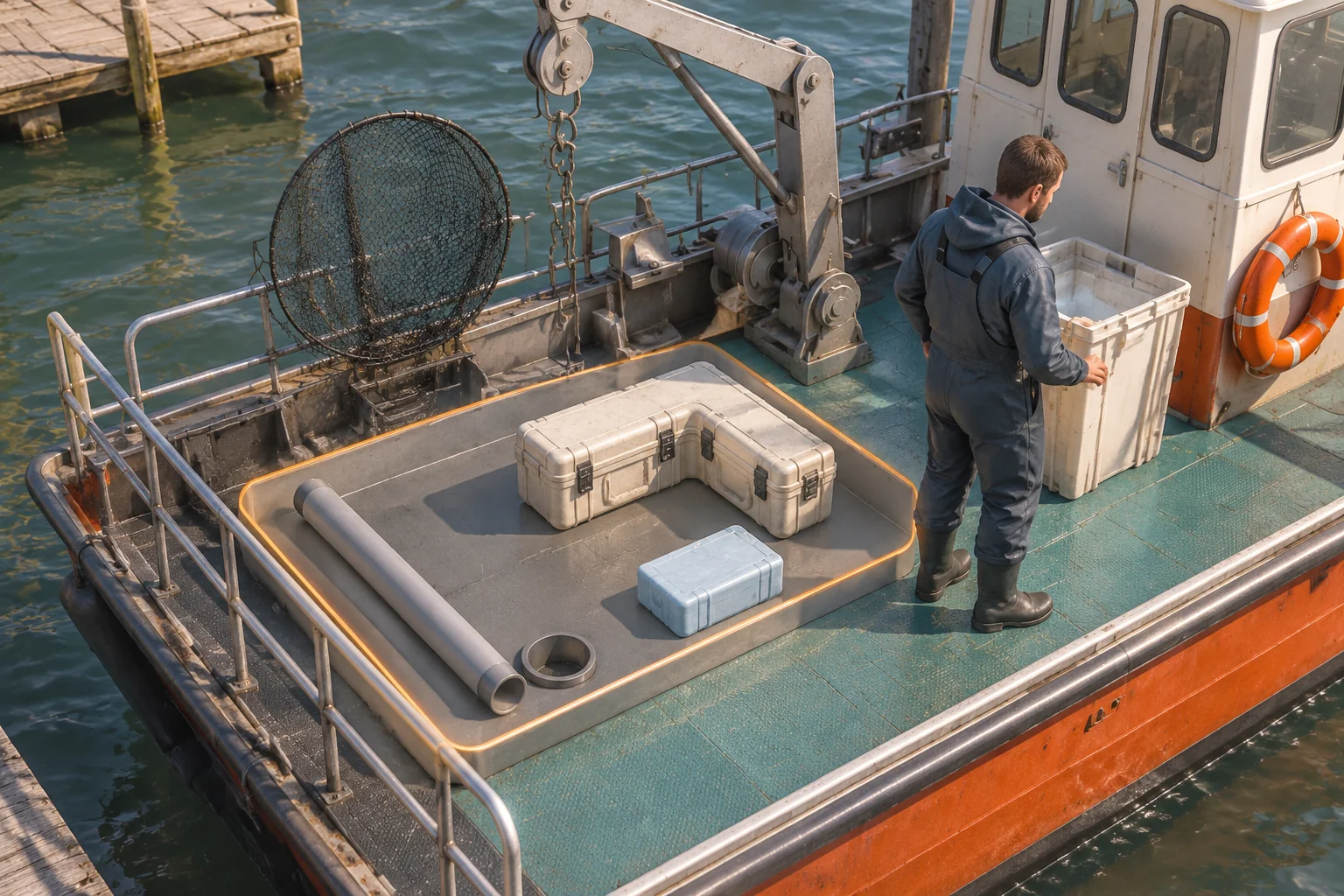
Use a 3 × 3 grid with columns A through C and rows 1 through 3. The specimen case is an L made of three connected cells. The rail tube takes three straight cells. The cold block takes one. Slide and rotate the shapes by 90 degrees while at Station. An overlapping or out-of-bounds drop leaves the previous layout intact.
All three pieces are required to depart. They use seven cells in any valid complete layout. The guide is separate and takes exactly one cell. Install it at B2 while packing if that socket is empty. While installed, the guide reserves that cell. Reject a drop onto it just as you would reject a drop onto cargo.
Replay two equal loads on different routes
Put the tube along row 1 and the block at C3 in both replays. Only the case changes position. Try attaching the guide after placing all the cargo.
| Layout | Tube | L-shaped case | Cold block | Guide at B2 |
|---|---|---|---|---|
| Open socket | A1 B1 C1 | A2 A3 B3 | C3 | Attaches. The socket is empty. |
| Blocked socket | A1 B1 C1 | A2 B2 B3 | C3 | Rejected. The case covers B2. |
With the guide attached, take Reed Cut directly to Harbor in one accepted Move. With B2 blocked, try Reed Cut and check that the boat remains at Station with packing still open and zero Moves counted. Then take Outer Channel without repacking. It reaches Harbor via Channel Buoy.
| Return route | Route requirement | Accepted travel |
|---|---|---|
| Reed Cut | All three pieces packed and the guide attached. | Station → Harbor. One Move. |
| Outer Channel | All three pieces packed. Guide optional. | Station → Channel Buoy → Harbor. Two Moves. |
Lock the hold after the first accepted Move. At Harbor, the player still needs to select Deliver. That action removes the three pieces and completes the run once. Packing, attaching the guide, and delivery are actions the player takes, but the route counter records only accepted Moves.
Give AI a complete packing and return fixture
Describe the hold and the sailing graph together. SEELE’s prompt-led creation offers a starting point for a small prototype with controls, a clear goal, and a repeatable check.
Build an original browser game called Tidebox Run.
Start at Station in packing mode. Stage one three-cell L case,
one straight three-cell tube, and one single-cell cold block.
Use a 3 by 3 hold with columns A-C and rows 1-3.

Allow translation and 90-degree rotation while packing.
Reject overlaps and out-of-bounds drops without moving the piece.
Attach Guide reserves B2 only if the cell is empty. Keep cargo
unchanged on a rejected attach. Reject drops onto a reserved cell.

Require all three cargo pieces to depart. Reed Cut connects
Station directly to Harbor and requires the attached guide.
Outer Channel connects Station to Channel Buoy, then Harbor.
It works with or without the guide. Each accepted Move counts
once. Rejected departure leaves Station and packing mode unchanged.
Lock the hold after the first accepted Move.

Deliver only at Harbor and only once. Remove all three cargo pieces
and record the sailed route and Move count. Reset restores Station,
all pieces off-grid, an empty hold, no guide, and a zero Move count.
Check both layouts from Reset. After a rejected attach, compare all seven cargo cells to their prior positions. With the guide installed, attempt to drop a piece over its socket. Then check that a successful departure disables packing and that a second Deliver cannot duplicate the result. If you change one rule, follow the same action sequence using SEELE’s guide to revising a first build.
Move the socket and keep the load
Change only the guide socket from B2 to C2. Keep the blocked layout exactly as written. C2 is empty, so Attach Guide now succeeds and Reed Cut becomes available. Outer Channel still takes two Moves. This predicted change follows from the fixture. It shows how a different socket can change the route decision while the shape, count, and position of every cargo piece stay fixed.
Start your original fishing adventure with SEELE’s AI game maker.
Frequently asked questions
Why use different cargo shapes?
A straight piece and an L can use the same number of cells while leaving different spaces open. That makes shape useful when the player needs to reserve a particular socket. Choose each footprint for the decision it creates in the hold.
How can I show why a route is blocked?
Show the required fixture beside the route choice and highlight its socket in the hold. If cargo occupies that cell, keep the existing layout and explain the conflict. The player can then decide whether to move the cargo or take the other route.
Should packing count as travel?
Keep the two counters separate if the comparison is about route length. Track every accepted Move from Station to Harbor and treat loading, attaching, and delivery as separate actions. If you later price those actions, label that new measure so the reader knows what changed.
When should I add more cargo?
Add a new piece when the current layouts, route checks, and delivery can be replayed from Reset. Give it a footprint that creates a new tradeoff rather than filling more cells for its own sake. Replay the two original layouts after changing the hold.