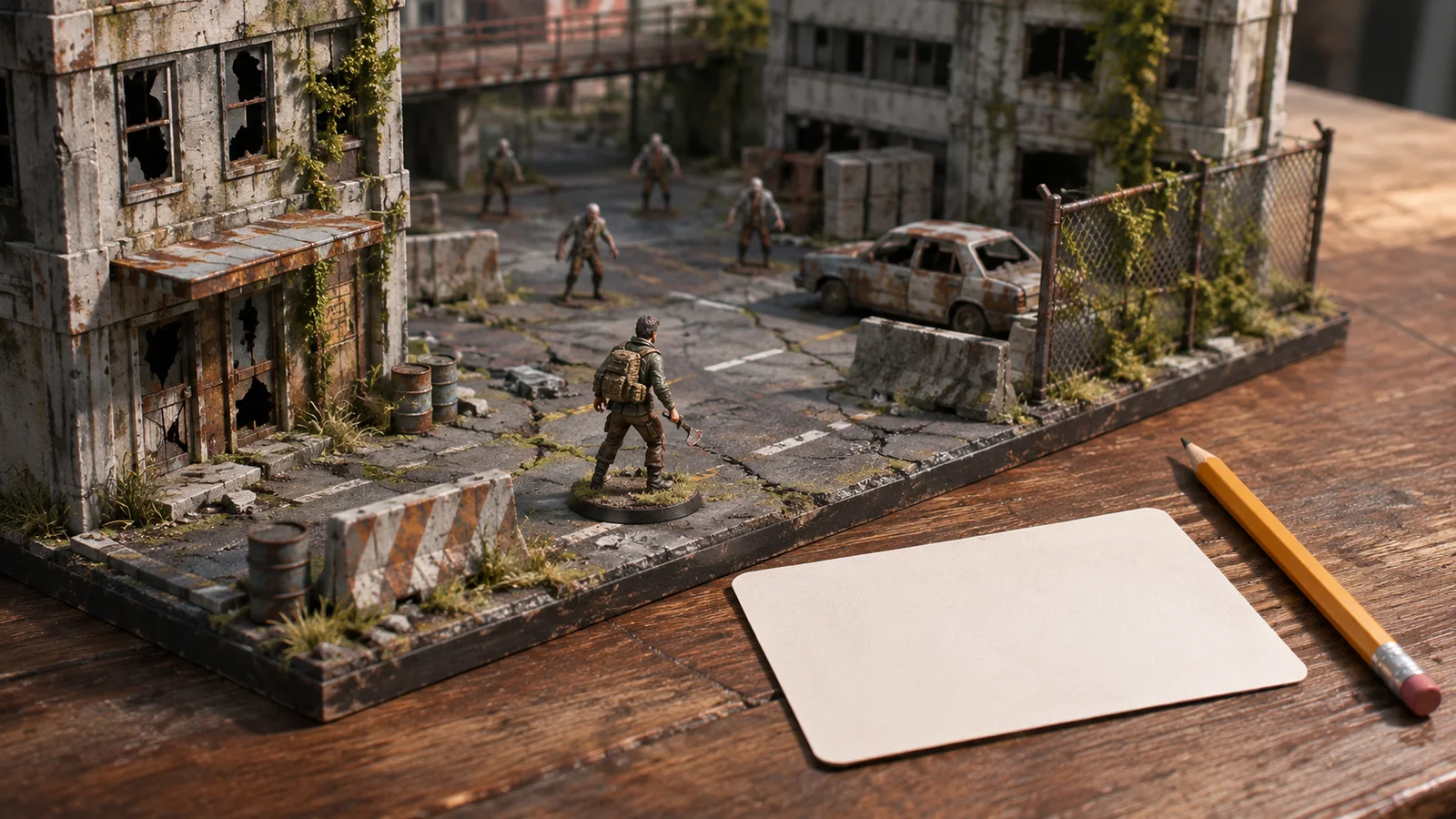
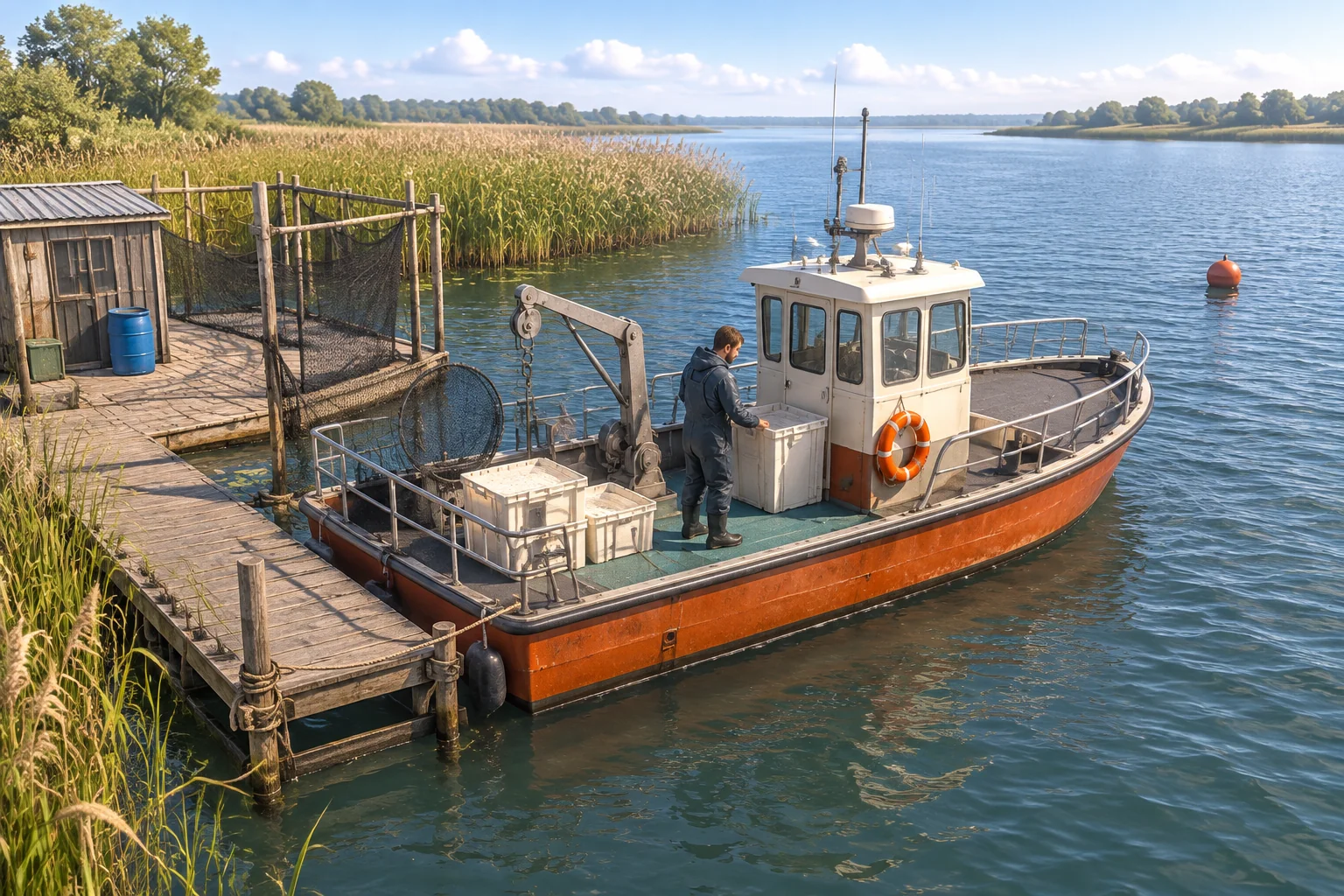
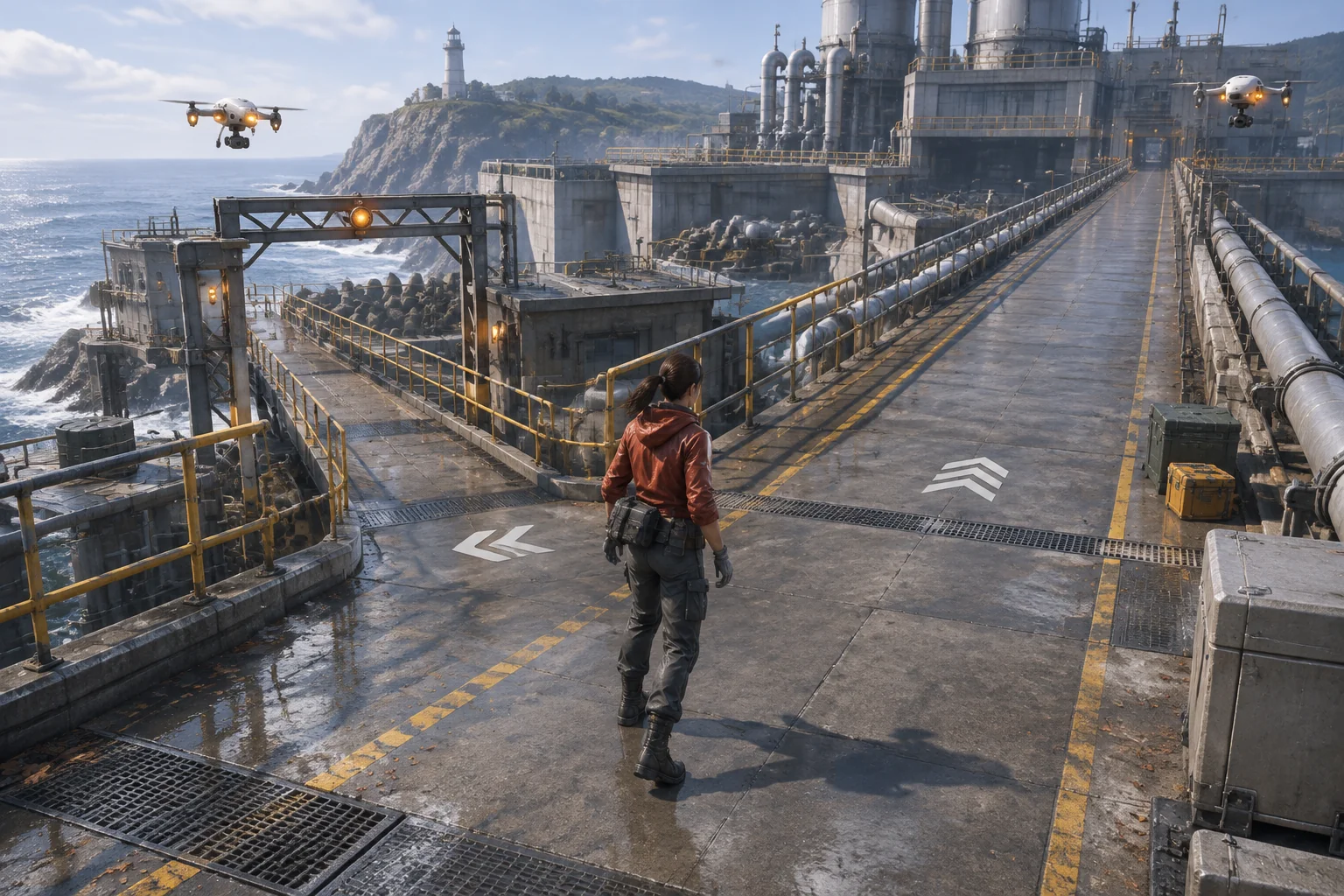
Give the pack one rule that changes what the player can do on the route. A tool can fit and still sit out of reach. If a player has to spend energy reorganizing at a shelter, getting a better layout comes at a cost.
In the fictional Fogline Relay, a courier packs three objects and carries a sealed sample through two coastal service gates. Each gate needs a different tool. Two energy points are enough to open both gates if the player can reach the right tools in the right order.
Use the placement idea in a different game
The official Backpack Hero listing credits Jaspel and describes an inventory roguelike where placement can change item power. The developer’s itch.io page documents rotating held items in the version described there.
Use that reference to ask what a position means in your own design. In Fogline Relay, the top row stands for an accessible pocket. Placement decides whether the courier can use a tool at all. The courier chooses each action, and the station stays still while the player thinks.
Separate fit from access
Use a three-by-three pack. The filter occupies two horizontal cells and cannot rotate. The probe occupies three cells in a straight line and may lie horizontally or vertically. The sealed sample occupies one cell and must stay packed. Reject overlapping items, objects outside the grid, missing items, and illegal rotations. Before departure, the player can rearrange the pack for free.
In the baseline, a tool is accessible if any part of its footprint touches the top row. A vertical probe can share that row with the filter. A horizontal probe takes the whole row if placed there, so the two tools cannot both be accessible in that orientation.
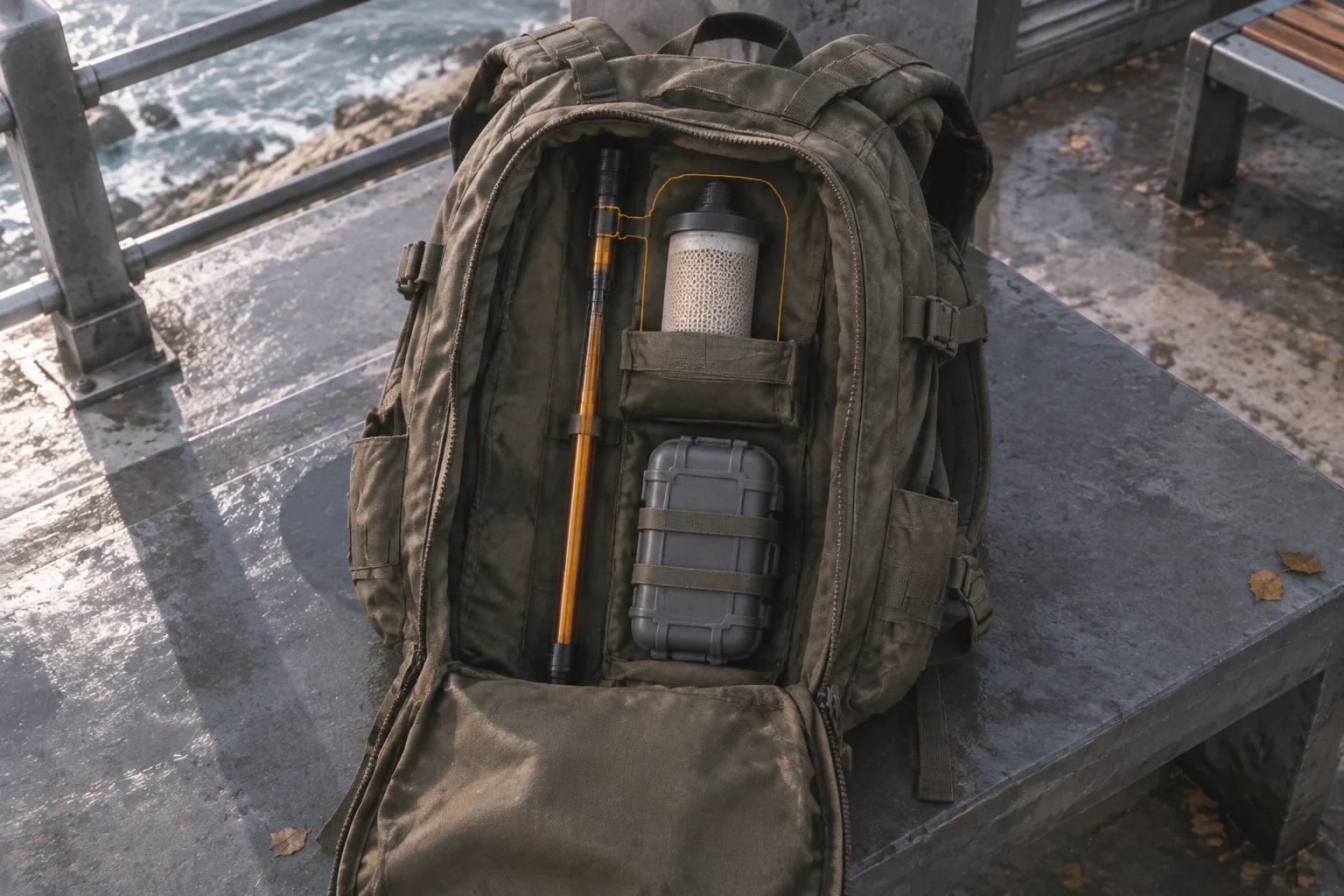
| Layout | Top row | Middle row | Bottom row | Accessible tools |
|---|---|---|---|---|
| Vertical probe | P F F | P S . | P . . | Probe and filter. |
| Horizontal probe | F F S | P P P | . . . | Filter only. |
P stands for the probe, F for the filter, S for the sample, and a dot for an empty cell. Both layouts carry the same objects. That keeps capacity constant while access changes.
Spend energy at two gates
Start with two energy. At gate one, manually use the accessible filter for one energy and enter the shelter. At the shelter, a valid repack costs one energy and can happen once. Proceeding to gate two costs nothing and closes the route back to the shelter. The pack stays fixed at either gate. A successful probe use costs one energy and delivers the sample. Check for a delivery before evaluating a zero-energy failure.
| Packing choice | Gate one | Shelter and gate two |
|---|---|---|
| Vertical probe | Use the filter. Energy falls from two to one. | Proceed and use the probe. The delivery succeeds at zero. |
| Horizontal probe without repacking | Use the filter. Energy falls from two to one. | Proceed. Probe use is rejected because it is out of reach. Energy remains one. |
| Horizontal probe followed by a shelter repack | Use the filter. Energy falls from two to one. | Repack vertically and spend the last point. The probe is accessible, but opening the gate still costs one energy. The run ends without delivery. |
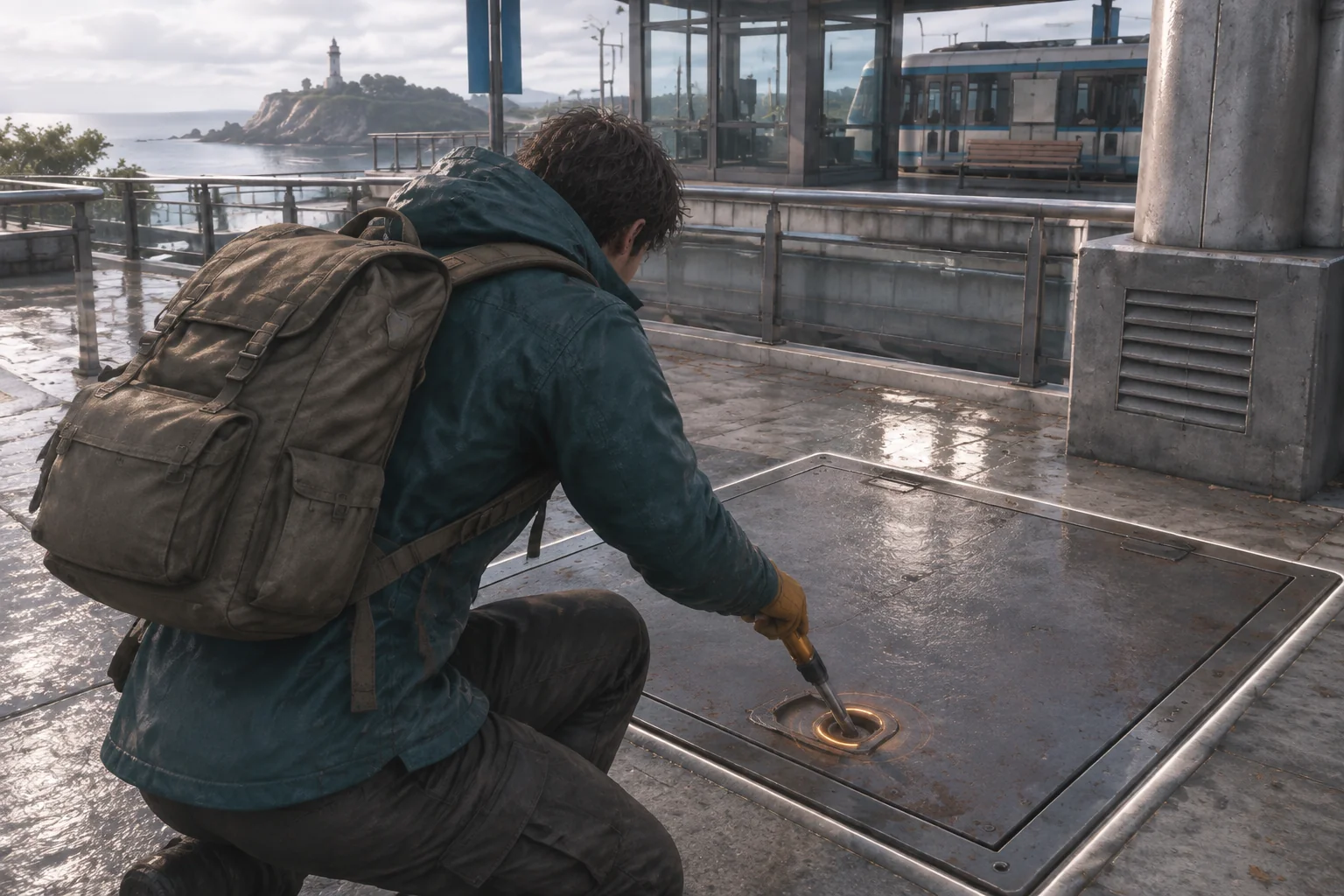
The unsuccessful routes give the player different reasons to reset. One leaves energy but buries the probe. The other makes the probe reachable after the energy has been spent. If both show the same message, the player cannot tell which choice to change.
Give AI one complete expedition to build
Use the pack geometry, tool checks, and route states as the first prompt. SEELE’s prompt-led creation offers a starting point for building a small prototype. Compare the resulting behavior with the two pack layouts before adding more rooms or objects.
Create a browser inventory adventure called Fogline Relay.
The courier must carry a sealed sample through two gates.

Start with 2 energy and a 3 by 3 pack.
Include a rotatable straight 3-cell probe, a fixed horizontal 2-cell
filter, and a 1-cell sealed sample. Require all three.
Reject overlaps, illegal rotations and out-of-bounds cells.
Initial packing is free. A tool is accessible if any occupied cell
touches row 1. Keep the sample packed.

Gate 1 needs manual use of the accessible filter and costs 1 energy.
Success opens the shelter. Allow one valid shelter repack for 1 energy.
Proceed to gate 2 for free. This movement is one-way.
Gate 2 needs manual use of the accessible probe and costs 1 energy.
On successful use, deliver the sample, even if energy is now 0.

Reject inaccessible tools, wrong tools and actions without enough
energy. Do not spend energy or move the courier on a rejection.
At 0 energy without a delivery, end the run as stranded.
Show the access region, tool requirements, energy and result.
Reset both gates, energy and the item set and return to packing.
Keep the station, field pack, equipment and interface original.
Test an overlapping layout, a correct layout, the wrong tool at a gate, and a valid probe use with one point left. Then replay the horizontal layout with the shelter repack and check that no energy is charged for a rejected action. Reset after both outcomes and confirm that the gates and the item set return to their starting states.
Move the access boundary and replay
Make the top two rows accessible and leave the rest of the rules unchanged. Replay the horizontal layout without repacking. The filter still opens gate one. The probe in row two can now open gate two, and the delivery finishes at zero energy. The vertical layout still works.
The broader pocket gives players more room for an initial packing mistake, but it takes away this route’s reason to rotate the probe. Decide which choice belongs in your first level and compare both builds from reset. The guide to revising one game rule at a time gives you a way to keep that replay focused.
Start with one item you can fit two ways
Make one placement choice matter to a later action. Start your original inventory adventure with SEELE’s AI Game Maker and check that the tool’s position changes the route before expanding the pack.
Frequently asked questions
Should I check fit before checking tool access?
Yes. Validate the whole footprint before accepting a placement. Then check whether any occupied cell is in the accessible region. That separation lets the interface tell players whether they need to fix an illegal layout or move a legal item closer to reach.
When should rearranging the pack cost energy?
Charge for a confirmed layout change when you want it to compete with a route action. Let players plan freely before departure and show the cost before they commit at the shelter. Reject invalid changes without taking energy so the cost follows the choice.
Can a delivery use the last point of energy?
Yes in this example. Check whether the courier can pay before using the probe. Once a valid use opens the second gate, record the delivery before checking for a depleted reserve. This lets the player finish on the last point without making unpaid actions legal.
When should I add another route?
Add one when the first route makes players compare more than available space. Choose a new tool order or a different place to repack. Run both routes from the same starting energy so you can see whether the new branch calls for a different loadout.