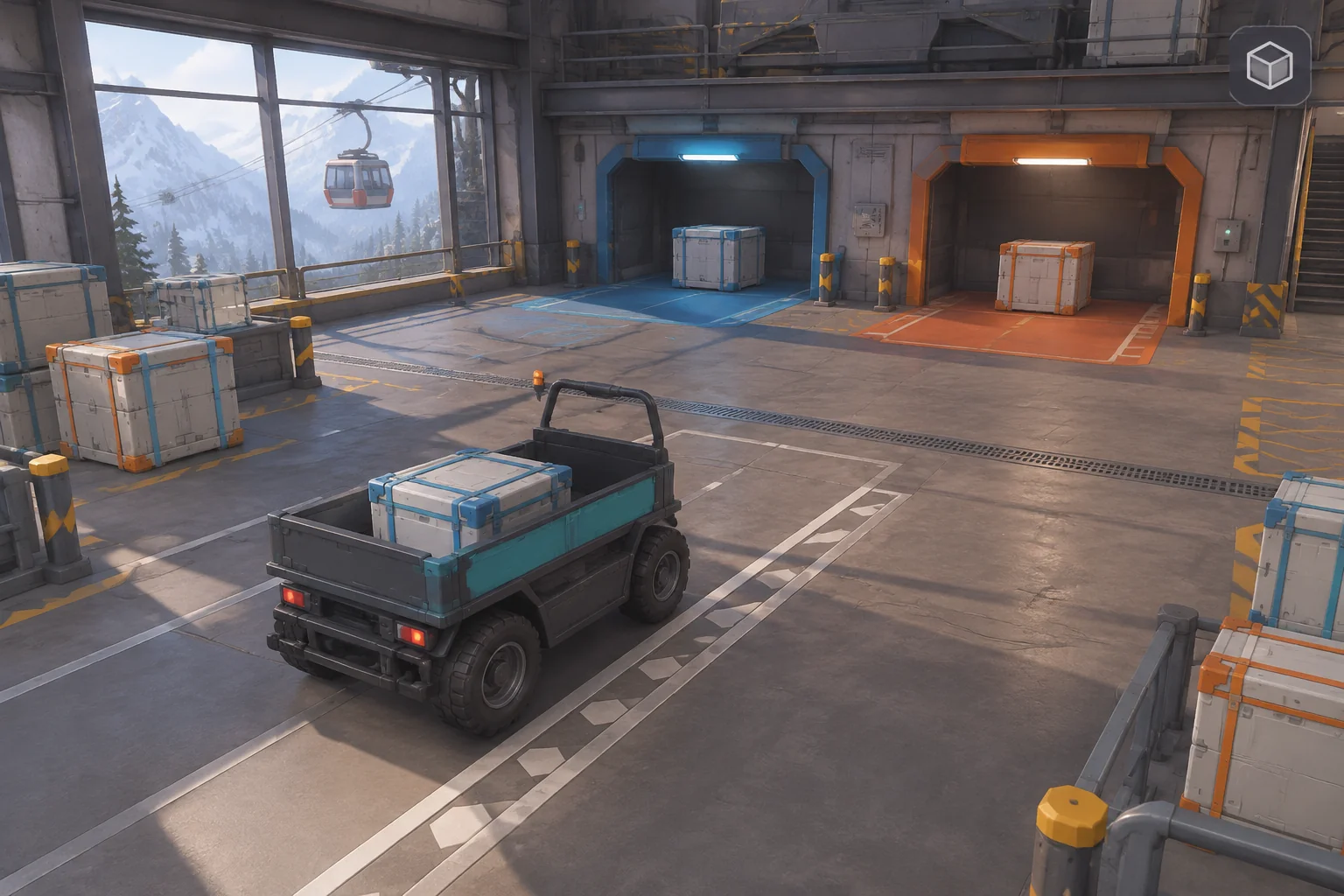
To make an original game inspired by Dicey Dungeons, give each roll more than one possible use. In this fictional cliff station, two dice power a cargo lift. One die goes to the hoist to move the cargo. The other goes to a brake to protect the platform from the next gust.
Use two fixed rolls to check the rules. The first has one legal pairing. The second lets you choose between more progress and more stability. You can compare those assignments without changing the roll.
Take the allocation idea into a new setting
In Dicey Dungeons, players roll dice on their turns and use them in pieces of equipment. The available rolls shape what they can do with that equipment. See the official gameplay summary and Terry Cavanagh’s Dicey Dungeons listing for the reference mechanic.
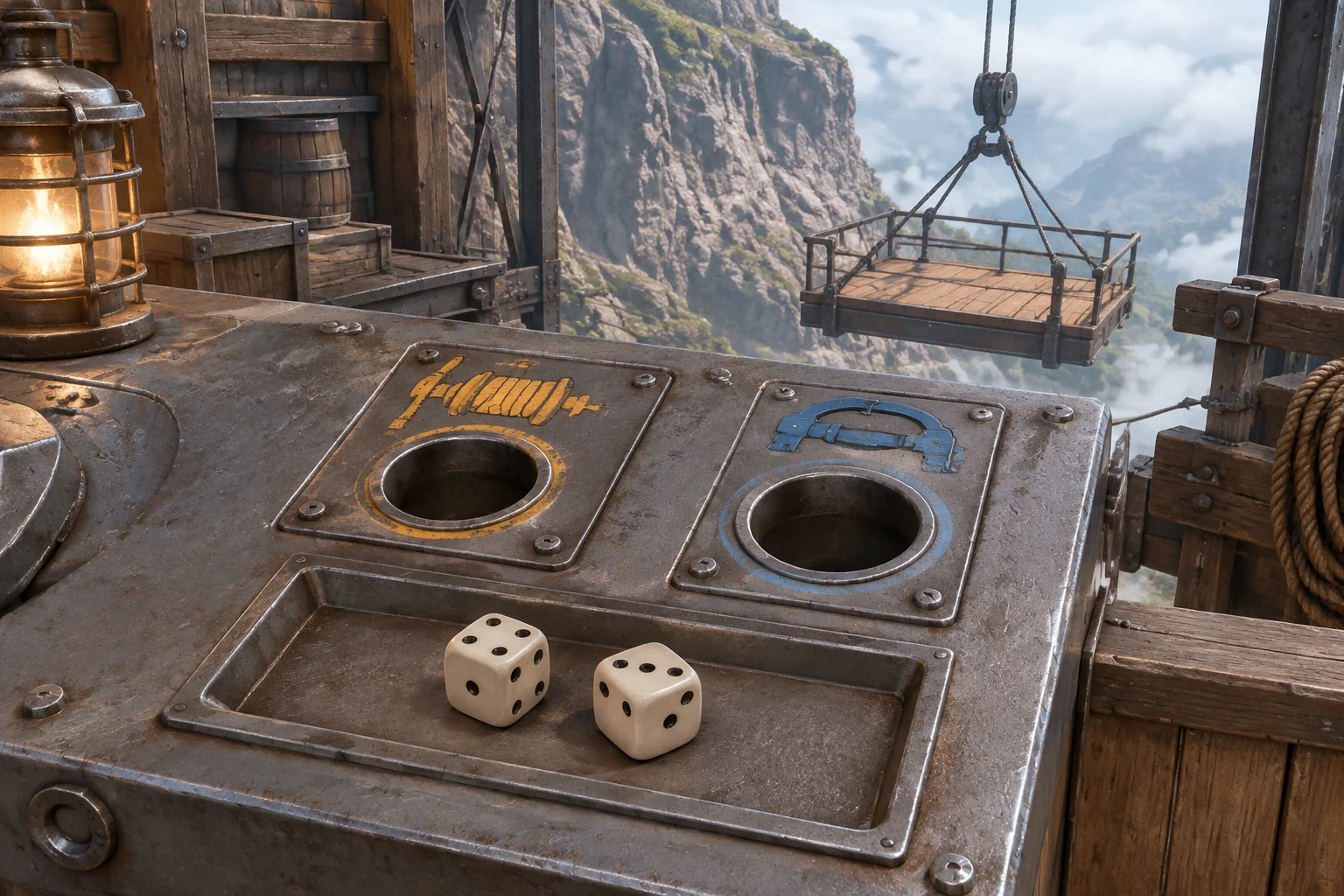
For your own game, give the same allocation decision a different reason to matter. The cliff lift uses an original console, cargo, and two equipment rules. It asks how much cargo movement you can afford while leaving enough stability to finish.
Give the hoist and brake different ranges
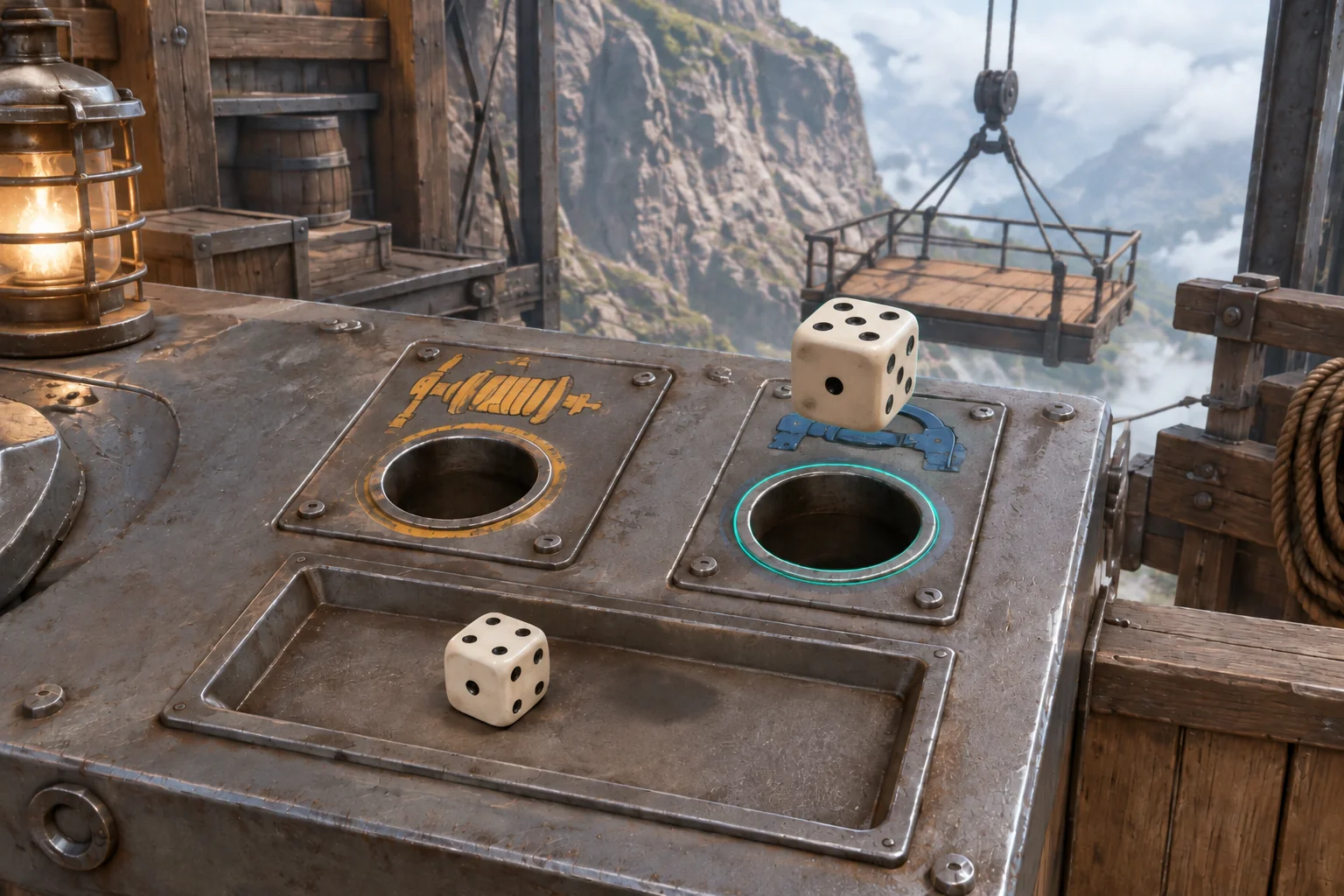
Start with zero progress and three stability. Roll two dice per turn, using the fixed values below while you check the first build. The hoist accepts faces three through six. The brake accepts faces one through four. A three or four can therefore go into either slot.
| Slot | Eligible face values | Effect on commit |
|---|---|---|
| Hoist | 3–6 | Add that face value to cargo progress. |
| Brake | 1–4 | Subtract that face value from the current gust, down to zero. Any remaining gust reduces stability. |
Give every die an ID. A player can place one die in an empty eligible slot, remove it to the tray, or change their plan before pressing Commit. Reject a die already assigned elsewhere, an occupied slot, or an ineligible face. Require one distinct die in each slot before applying either effect. A rejected placement or commit spends nothing.
On commit, add the hoist’s progress and subtract the remaining gust from stability. Consume both dice. Stability of zero or less ends the attempt, even if the cargo reaches its goal. Otherwise advance to turn 2 or check the final goal. In the first version, the cargo needs nine progress by the end of turn 2.
Compare both legal placements on the second turn
| Turn and roll | Hoist / Brake | Gust that gets through | End progress / stability | Result |
|---|---|---|---|---|
| 1, roll 5 and 2 | 5 / 2 | 3 − 2 = 1 | 5 / 2 | Continue. |
| 2, roll 4 and 3 | 4 / 3 | 4 − 3 = 1 | 9 / 1 | Finish with enough progress. |
| 2, same roll | 3 / 4 | 4 − 4 = 0 | 8 / 2 | Miss the progress goal. |
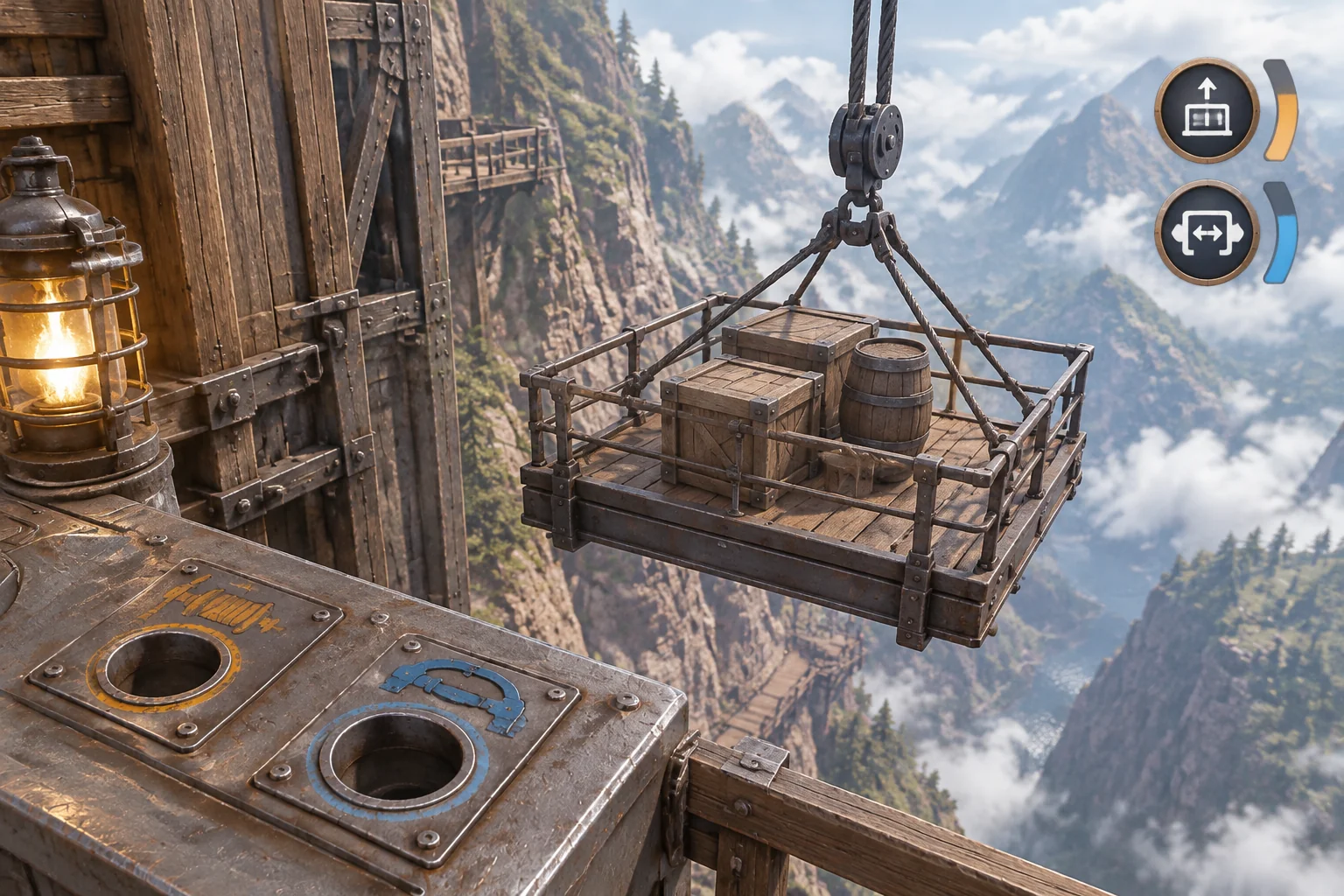
Both turn-2 placements are allowed. The stronger brake keeps one more stability, and the smaller hoist gain leaves the cargo one point short. Show a missed goal differently from an invalid placement. One describes what happened after a legal choice. The other gives the player a chance to revise before anything is spent.
Ask AI for one reproducible lift puzzle
SEELE’s puzzle game maker offers a starting point for defining a rule, the clue players can see, and an action to check. Give it the station and exact fixture. Keep the rolls and arithmetic fixed while the draft establishes the console and feedback.
Build one original browser dice puzzle about a cliff cargo lift.
Start with progress 0 and stability 3. Use fixed rolls 5 and 2
on turn 1, then 4 and 3 on turn 2. Gusts are 3 and 4 respectively.

Show two empty equipment slots and two uniquely identified dice.
Hoist accepts 3–6. Brake accepts 1–4. Allow placing a die in an
empty eligible slot and removing it before commitment. Reject
occupied slots, duplicate IDs and ineligible faces.

Commit requires both slots with distinct current dice. Reject an
incomplete or invalid commit without spending a die or advancing.
On success add the hoist face to progress. Reduce stability by
max(0, gust minus brake face). Consume both dice once.

Fail at stability 0 or lower. Otherwise advance after turn 1.
At the end of turn 2 win with progress at least 9 and positive
stability. Show missed progress separately from a rejected move.
Restart clears the slots and restores the first roll and state.
Try putting five in Brake and two in Hoist on the first turn. Try committing with one slot empty. On turn 2, try using the same die in both slots, then remove it before reassigning. Confirm that each invalid request leaves progress and stability untouched. Run both turn-2 choices and restart after each. The guide to checking an AI game in small steps can help you turn a failed check into one focused change.
Change the goal without changing the roll
Try lowering the cargo goal from nine to eight. Replay the second turn from five progress and two stability. Assign three to Hoist and four to Brake. The result is still eight progress and two stability, but now the run finishes. The other pairing still succeeds with nine progress and one stability.
Use that comparison to check whether the new goal gives players the choice you want. Keep the gust and roll fixed while watching whether they can explain the trade-off. The worksheet shows which assignments satisfy each goal. A built version can reveal whether players understand why.
Make one roll worth thinking about
Build the lift around the second roll and the choice it creates. Check both legal assignments before adding equipment, rerolls, or character abilities. Start your original dice puzzle with SEELE’s AI puzzle game maker and keep the two-turn table nearby when you check the first draft.
Frequently asked questions
Why use fixed rolls in the first build?
A fixed sequence lets you repeat the same choice after changing a rule. If the output changes, you can inspect the placement or the equipment effect without accounting for a different roll. Add random rolls after the known cases behave as expected.
Why give each die an ID if I can see its face?
Two dice can show the same face and still be separate objects. Track which one occupies each slot so the player can use both without assigning either one twice. In a debug check, try two matching faces and verify that only distinct IDs can fill both slots.
What should happen if one equipment slot is empty?
Keep Commit unavailable or explain which slot still needs a die. Leave the assigned die and the turn in place so the player can finish or revise the plan. When you test the rule, make sure the gust and progress have stayed where they were.
When should I add a third piece of equipment?
Add one after the player can explain what the hoist and brake trade. Give the new tool a different job or eligibility range so it creates another decision. Test one known roll with and without the tool before adding a larger equipment pool.