Map combat jobs around projectile patterns
Start from the problems a team must solve: maintaining damage, controlling space, protecting a partner, or recovering after a mistake. Choose a small number of roles that answer different needs. A role can be defined by its ability and decision rhythm, not only by a permanent class label or a larger damage number.
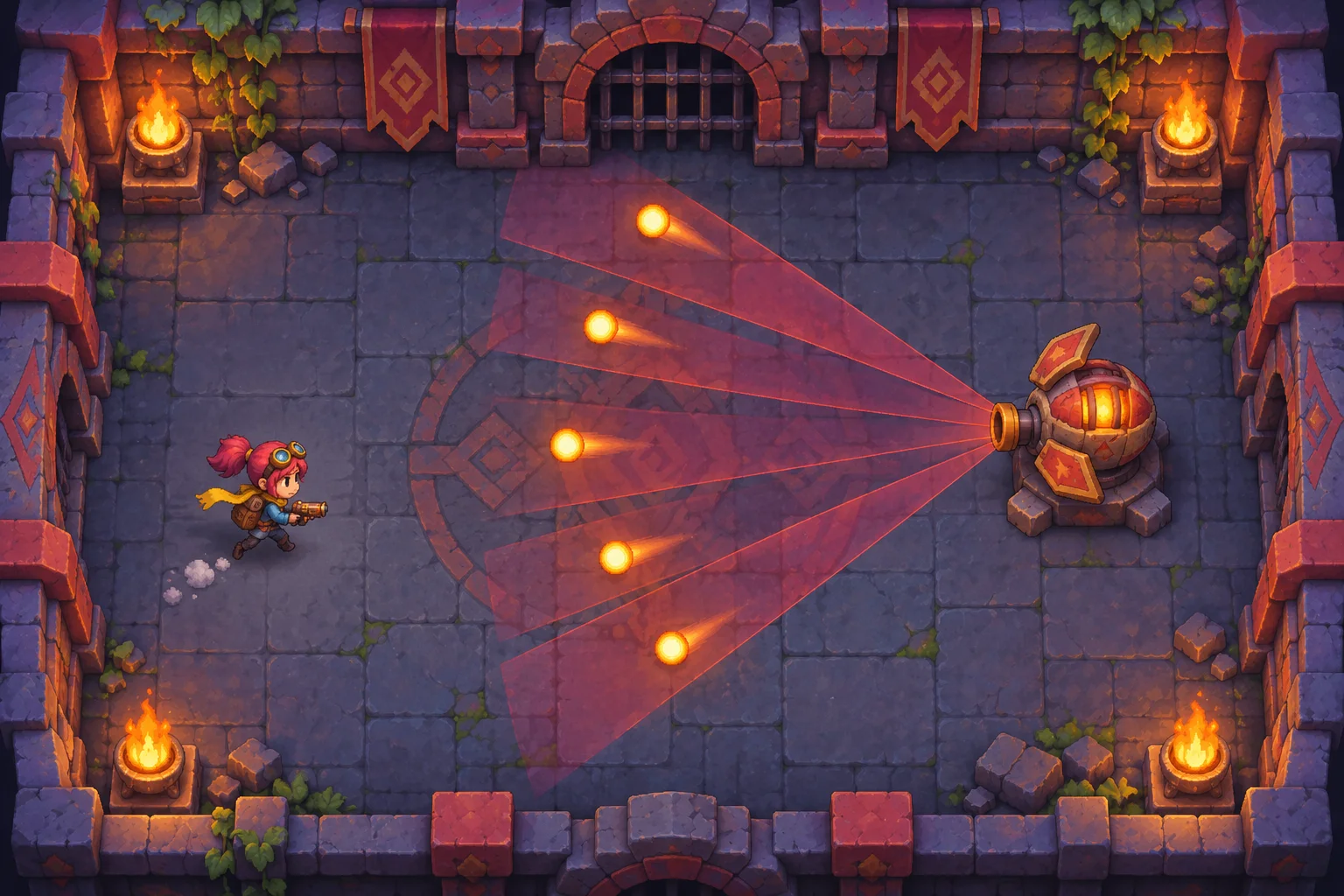
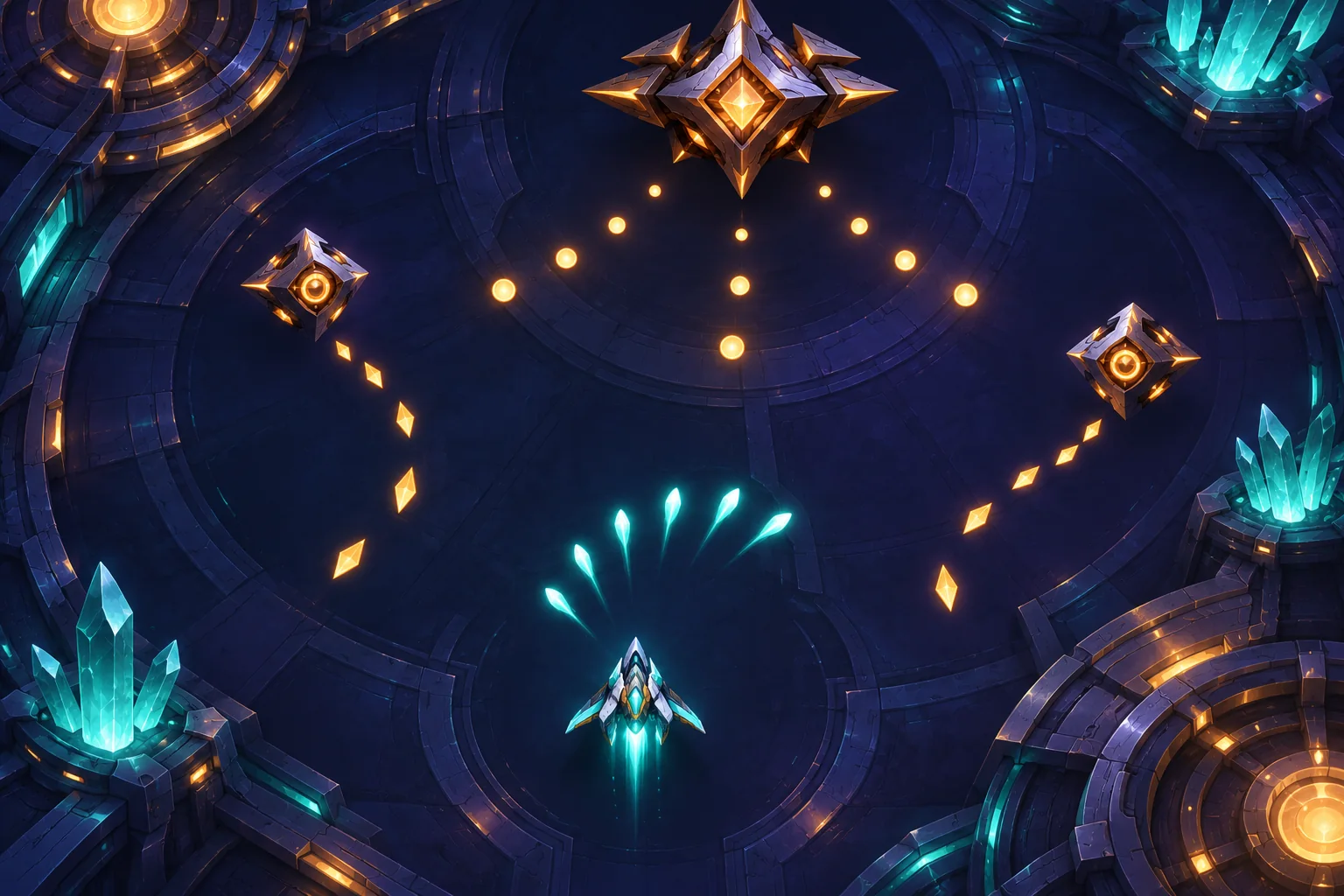
Cyberlamb Studios’ official DEATHPIT 3000 listing describes co-op bullet-hell arena combat and abilities that support offensive or defensive styles. Use this as broad genre context only; the role interactions and readability rules here are original. Map common projectile patterns and note where a support action could create a safe crossing or a useful opening.
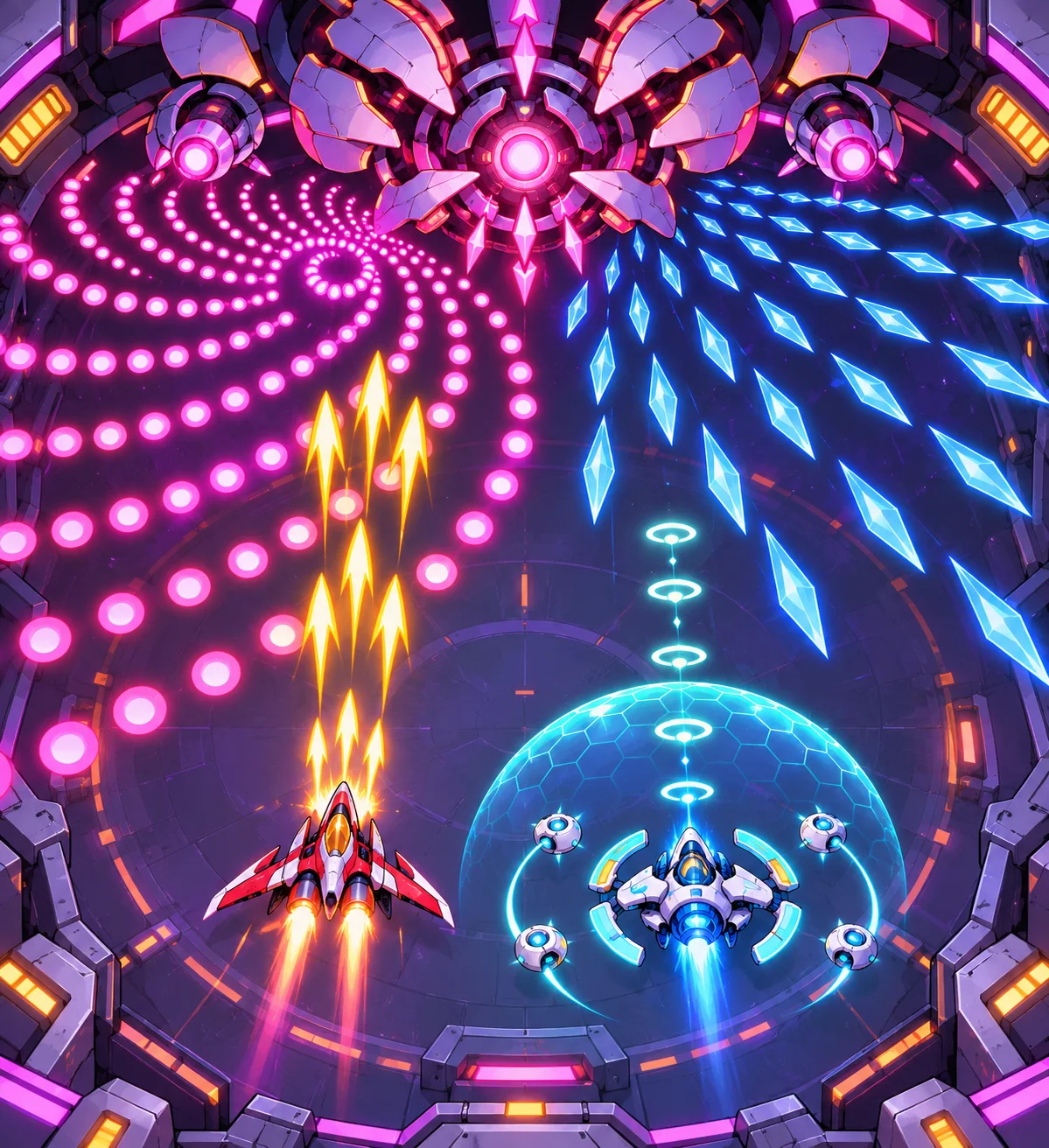
Give each role a clear contribution and at least one way to participate when its signature ability is unavailable. A defensive tool might reduce pressure for a short time, while a damage role clears a threat. The cover image emphasizes two ships with distinct but coordinated functions.
Make abilities complement rather than compete
A strong combination asks players to coordinate without demanding frame-perfect timing. A slow field may help a partner cross a lane, a temporary shield can create a recovery window, or a focused effect can clear one part of a pattern. The benefit should be readable to both players and useful in more than one situation.
Provide a solo fallback and alternate pairings. If an ability only works with one exact partner, matchmaking and group composition become brittle. Let tools overlap enough that two players can adapt, while preserving distinct strengths that make coordination rewarding. Test whether a pair can recover if the setup is mistimed or a player uses the ability early.

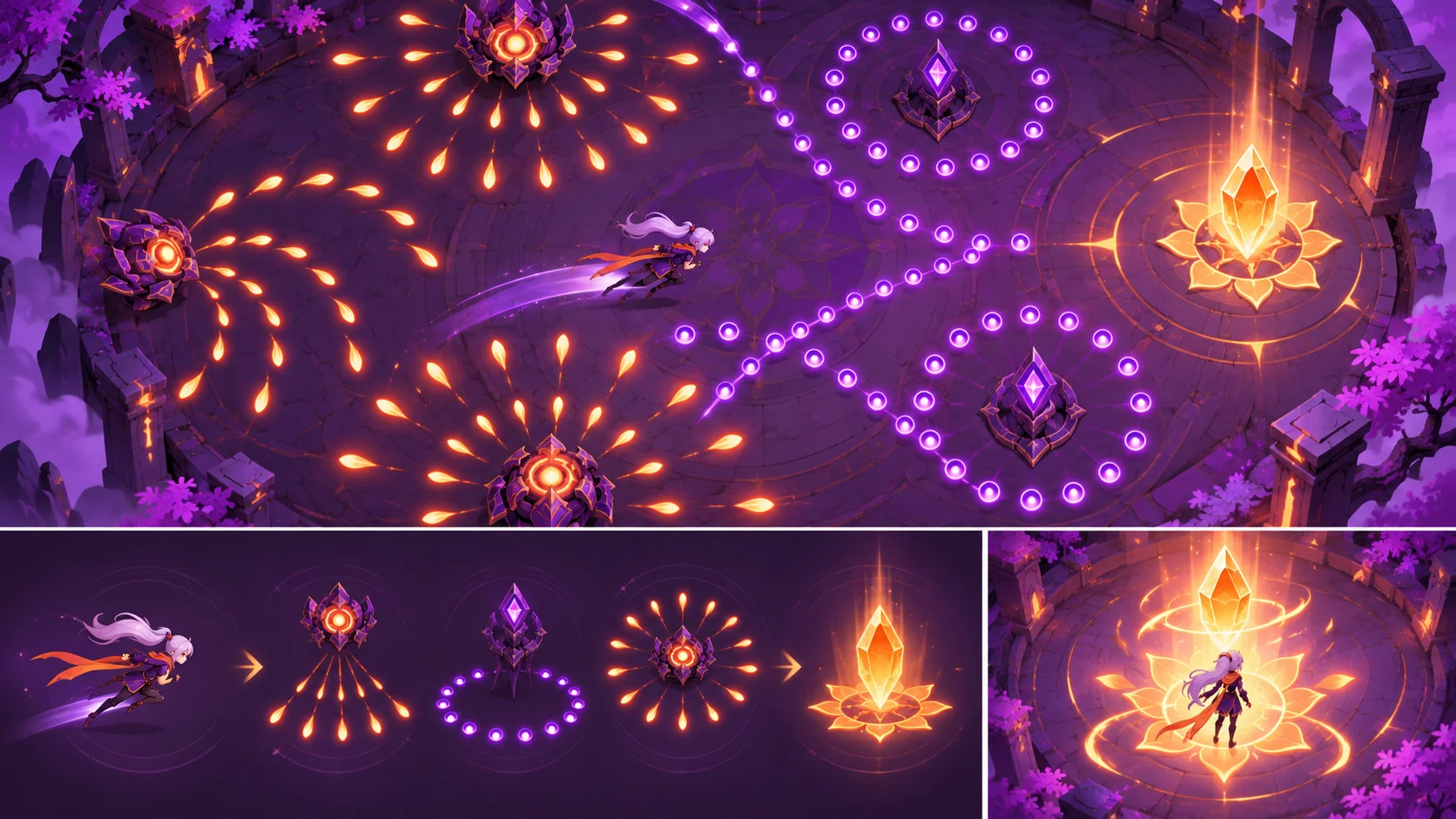
Prevent support effects from hiding threats. Limit screen coverage, use clear outlines, and keep enemy hazards visually distinct from ally actions. Add a reduced-effects setting and check it during real patterns. The mechanism figure shows a protected lane while the partner prepares an attack.
Protect projectile readability
Bullet-hell play depends on quickly reading shape, direction, speed, and safe space. Give enemy projectiles consistent visual families and reserve contrasting colors or silhouettes for player effects. Avoid layering several bright trails or large explosions over the same part of the arena during a dangerous pattern.
Use contrast, shape, and motion together rather than relying on color alone. Provide palette options and test with color-vision differences, lower brightness, and small displays. Keep the hitbox and visible art aligned closely enough that players can understand a near miss instead of assuming the game behaved unpredictably.
When a co-op ability changes the field, show its duration and boundary clearly. A shield, slow field, or cleared lane should not be mistaken for permanent safety. Add a brief transition or edge cue as it expires, then verify that the cue survives effects settings and crowded play. Keep enemy hazards prominent.
Balance role combinations and team sizes
Run the same encounter patterns with different role pairings and player counts. Track survival time, damage, ability use, screen clutter, and how often one role’s effect invalidates another player’s decision. If the same composition dominates, adjust ability overlap or pattern demands rather than simply reducing every tool’s power.
Test failures and recovery too. A downed player, missed cooldown, or late join should not cause a spiral with no response. Offer a limited rescue action, safe regrouping opportunity, or score tradeoff where appropriate. Ensure players understand what support is available and when it returns.
Accept the system when each role contributes, multiple pairings can succeed, and enemy patterns stay readable. Use the projectile-pattern guide for a bullet-hell game to check the base movement and projectile loop. SEELE AI can help compare role concepts, but cooperation, accessibility, and combat balance need implementation and real playtests. The outcome illustration shows a pair completing the pattern together.

FAQ
How do you design cooperative roles for a bullet-hell shooter?
Start with the encounter’s team needs, such as damage, space control, defense, or recovery. Give each role a distinct strength and a useful fallback action. Test different pairs to confirm that no role combination is mandatory for surviving the same pattern.
What makes co-op roles work together?
Roles work together when one player’s action creates a useful opportunity for another without removing their choices. Keep timing forgiving enough to coordinate, make the benefit visible, and provide alternate combinations when one partner or ability is unavailable. Repeat with crowded effects and accessibility options enabled.
How can abilities avoid obscuring enemy projectiles?
Give ally effects distinct shapes and outlines, limit screen coverage, and preserve contrast for enemy hazards. Test reduced-effects settings, color-vision options, and crowded scenes. Players should still identify projectile direction, safe gaps, and changing ability boundaries. Repeat with crowded effects and accessibility options enabled.
What should you test across different role combinations?
Use the same patterns with different pairings and team sizes. Track survival, damage, ability overlap, screen clutter, and recovery after a missed cooldown. Ask players whether they could read enemy hazards and understand how a partner’s ability helped. Repeat with crowded effects and accessibility options enabled.