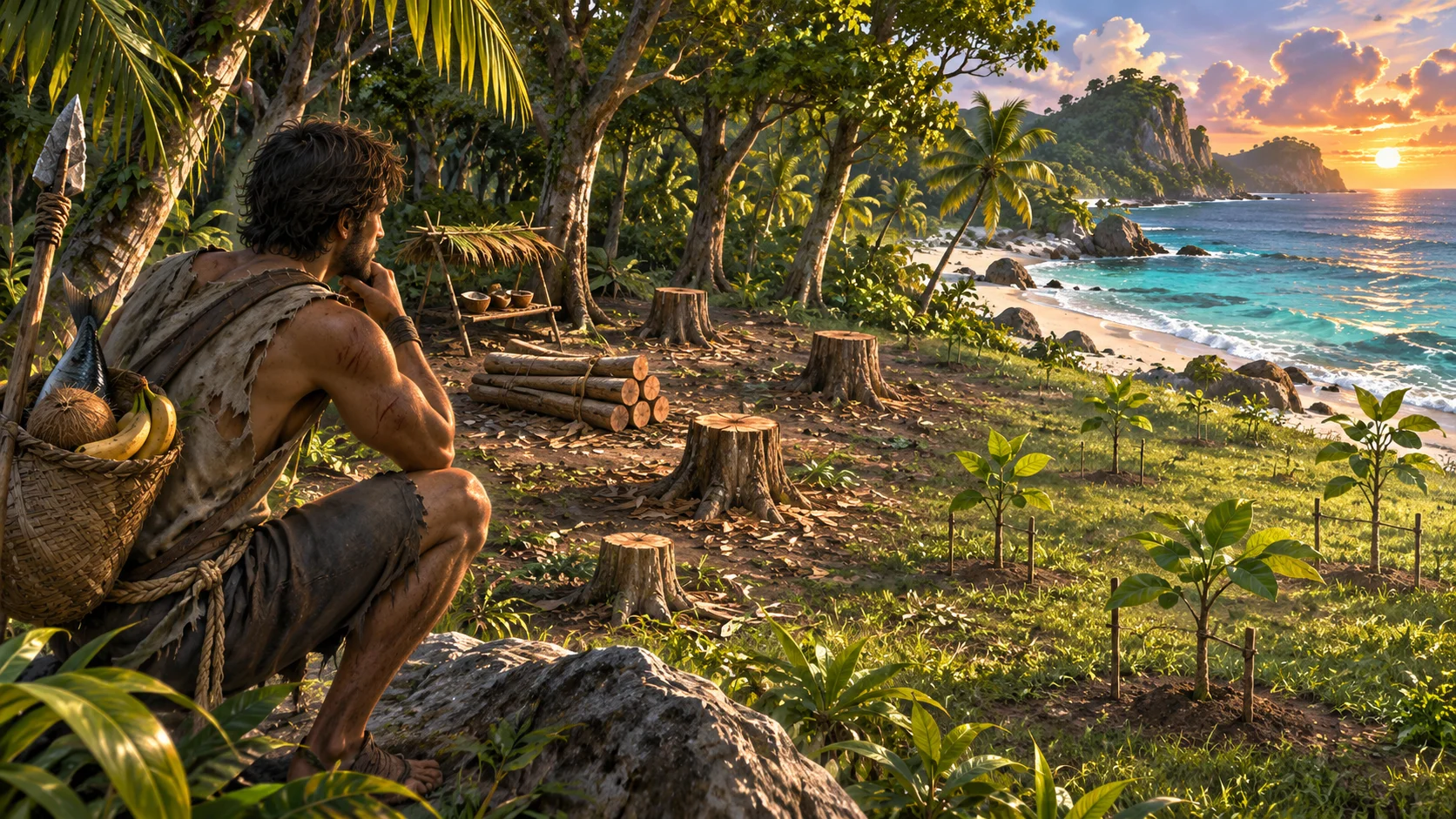
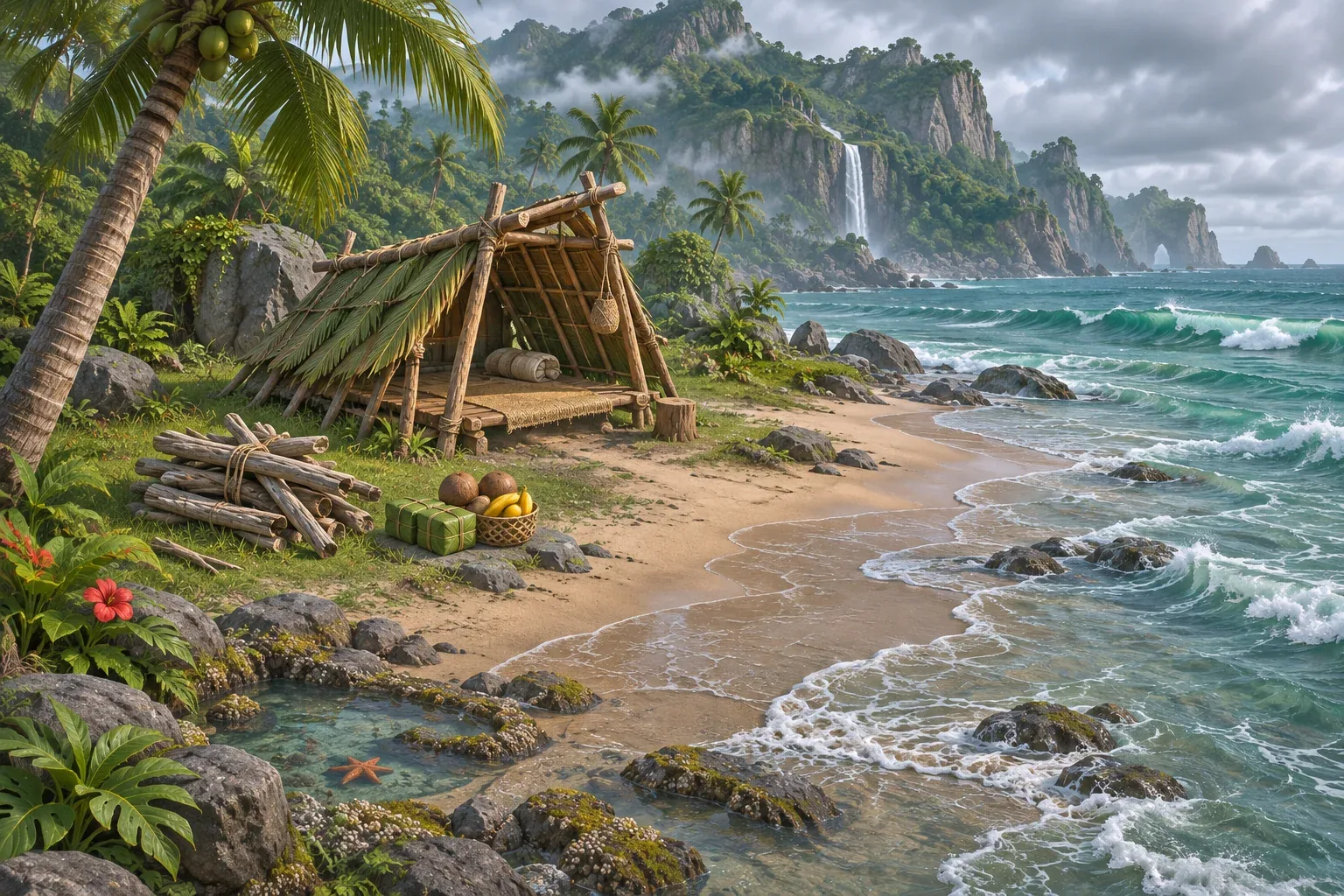
Persistent world progression can make an island survival game feel meaningfully changed by the player, but it can also affect scarce resources, shelter building, exploration, weather, and save compatibility. Separate permanent world milestones from temporary survival state before adding fields. Start with one visible change, preserve the existing save layer, and test it across reloads and returns to the island.
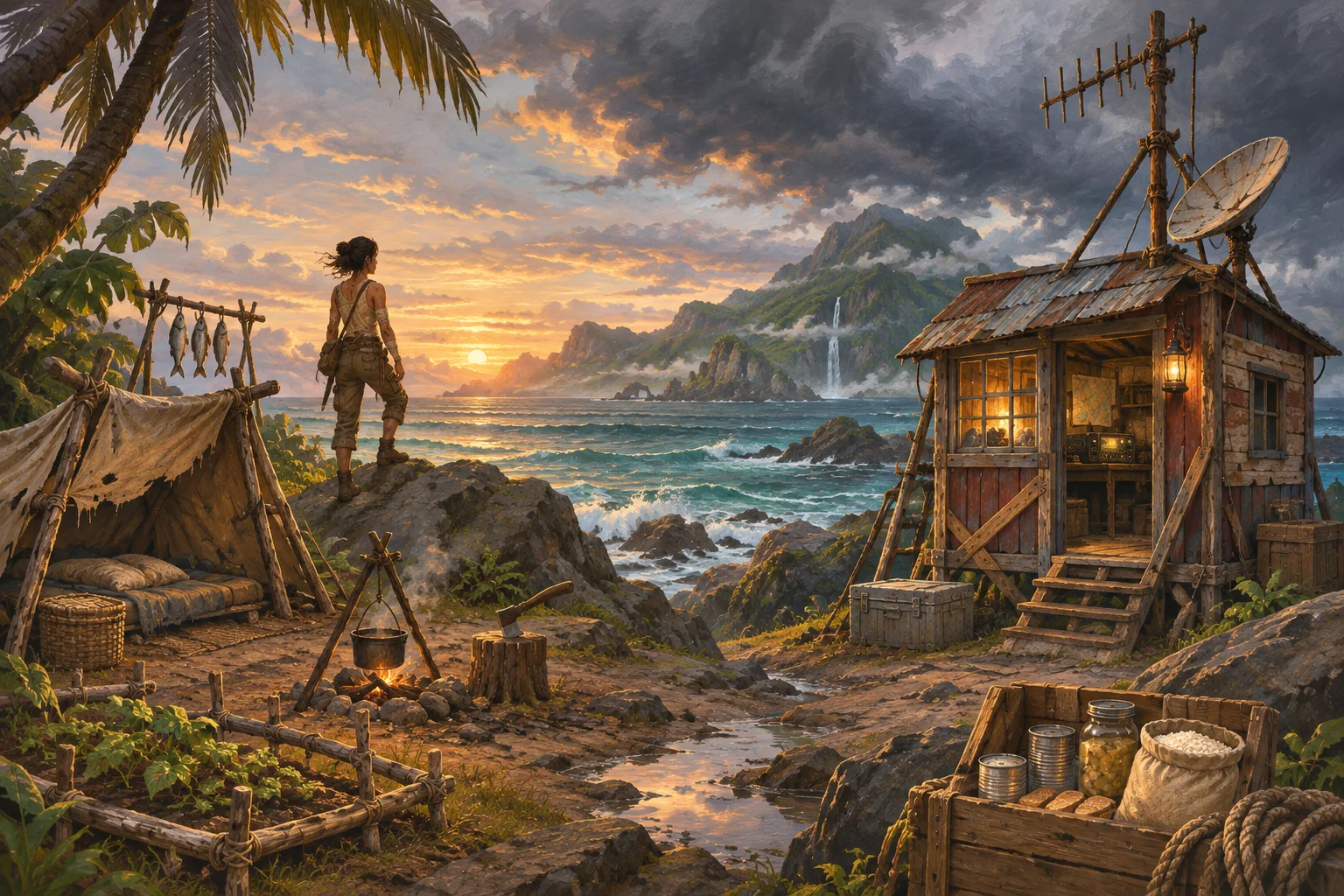
This guide is about continuing an existing project. The island, survivor, repaired landmark, resources, save data, and outcomes are invented. No codebase, save file, build, or playtest was available. The steps describe a proposed implementation and test plan, not completed evidence.
Define what lasts and what resets
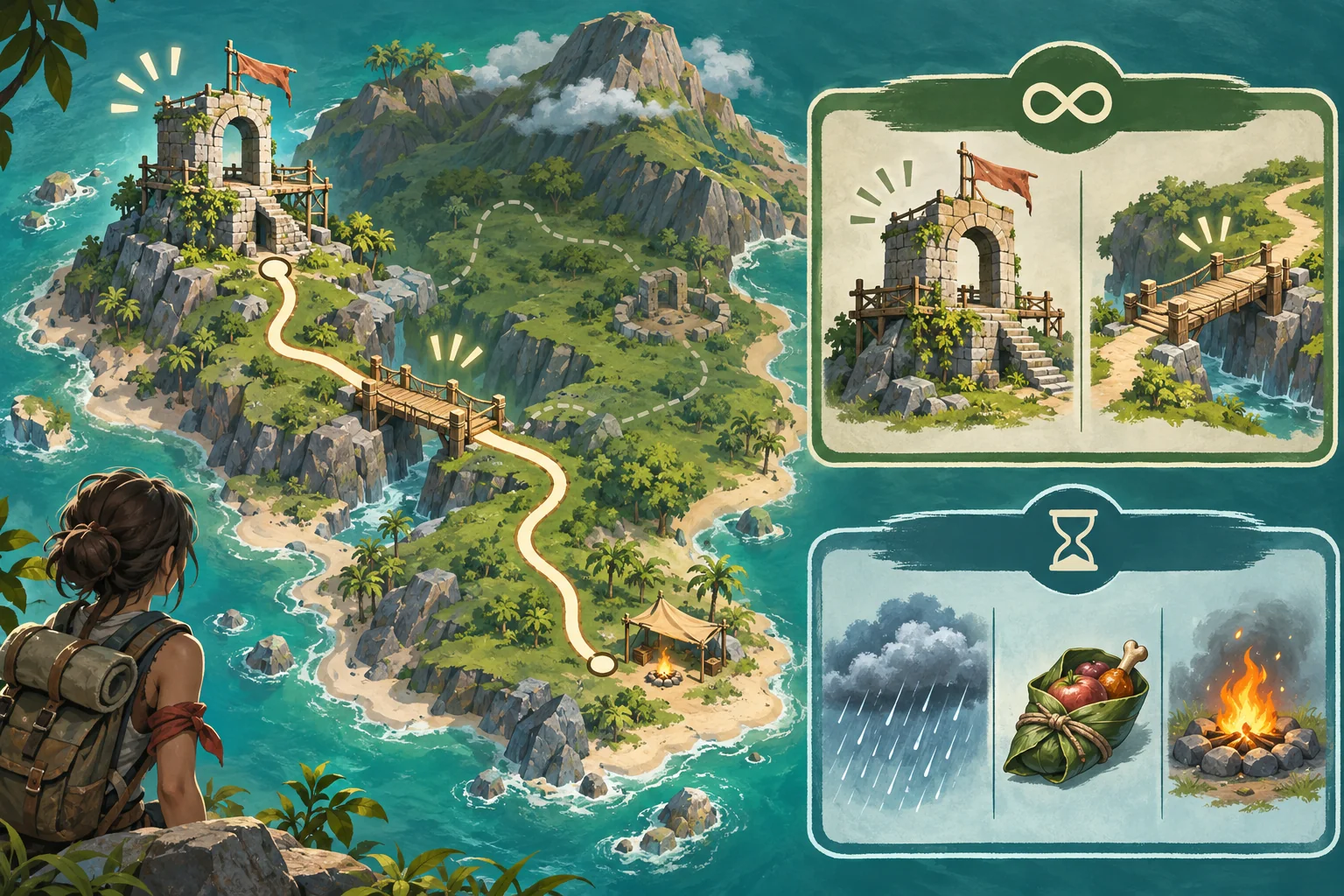
Trace how the current game stores world state and how a run or day resets. List each candidate field and its lifetime: permanent, per-run, per-day, per-room, or currently unknown. A repaired bridge may be a lasting world change, while carried food, a lit fire, weather, or a temporary buff may follow existing reset rules. Confirm this from the actual project before writing a migration.
In the fictional Driftwood Cay example, repairing the signal hut opens a route to a tide pool. The route stays open after reload, but the carried berries and campfire state follow their existing rules. This is a teaching scenario, not a tested game. The real project may define these lifetimes differently.
| State candidate | Lifetime question | Baseline to preserve |
|---|---|---|
| Opened route | Does it remain open after a reload? | Current exploration and unlock rules |
| Repair milestone | Is construction complete permanently? | Existing shelter costs and stages |
| Carried supplies | Do items persist through death or day end? | Scarcity and inventory behavior |
| Weather and fire | Does this reset by time or location? | Survival pressure and shelter logic |
| Quest/reward | Can a reward be collected again? | Existing quest completion state |
Capture the current survival loop
Make a clean commit or copy of the project. Record how gathering, crafting, shelter upgrades, health, day transitions, death, and return to a previous location work. Note which objects write save data and which system owns world unlocks. If the game does not run, record source inspection separately from behavior that remains unverified.
Godot’s saving tutorial demonstrates selecting persistent fields and serializing them in an engine-specific example. It is not a universal survival-state model. Its data-path documentation describes user:// as a writable location for persistent user data in exported Godot projects. Those sources support only the engine’s example and path convention; they do not establish how this fictional world stores a repair milestone.
Add one durable milestone through the existing save layer
Prefer a stable world flag such as a landmark ID or route key over saving a copied scene snapshot, if that matches the project’s architecture. Keep the change small: one milestone identifier, one existing save/load path, and one visible world response. On load, reconstruct the milestone through the current world-state owner rather than creating duplicate objects every time the scene opens.
Define idempotent behavior: completing the same repair twice should not grant duplicate materials or rewards. Re-entering the island area should show the same durable result. If the route is unlocked by a quest, keep the quest completion flag and route state in sync using the existing source of truth. Avoid adding two fields that can disagree about whether the bridge is repaired.
Keep resource scarcity intact. The milestone should consume the materials the current crafting system expects and should not award them again after save/load. If an older save lacks the new key, choose a documented fallback based on the existing world state. Do not infer “completed” or “uncompleted” from an unrelated field without evidence.
Plan a small patch and old-save fallback
Ask AI to inspect the supplied save and world-state files and propose a file-by-file change before modifying them. A narrow patch might add one world-state key, update the existing save serializer, connect one repair action, and add a focused migration test. The shelter system, inventory rules, day clock, death reset, and unrelated island regions should remain untouched by default.
Use an allowlist and review every changed file. If the solution replaces the save format or rewrites all world scenes, stop and reduce scope. Preserve a clean baseline commit and a copied save from before the new field existed. Run any migration on a duplicate first, then compare both the parsed data and visible world state before touching real player data.
| Change area | Possible minimal edit | Keep stable |
|---|---|---|
| World state | One durable milestone key | Existing route and world ownership rules |
| Save path | Add key to current serialization | Old fields and file format |
| World scene | Show repaired landmark on load | Unrelated island objects |
| Crafting | Use existing repair cost | Scarcity and resource drops |
| Tests | Reload, re-entry, migration fixture | Original survival loop |
Test migration, reload, and resource behavior
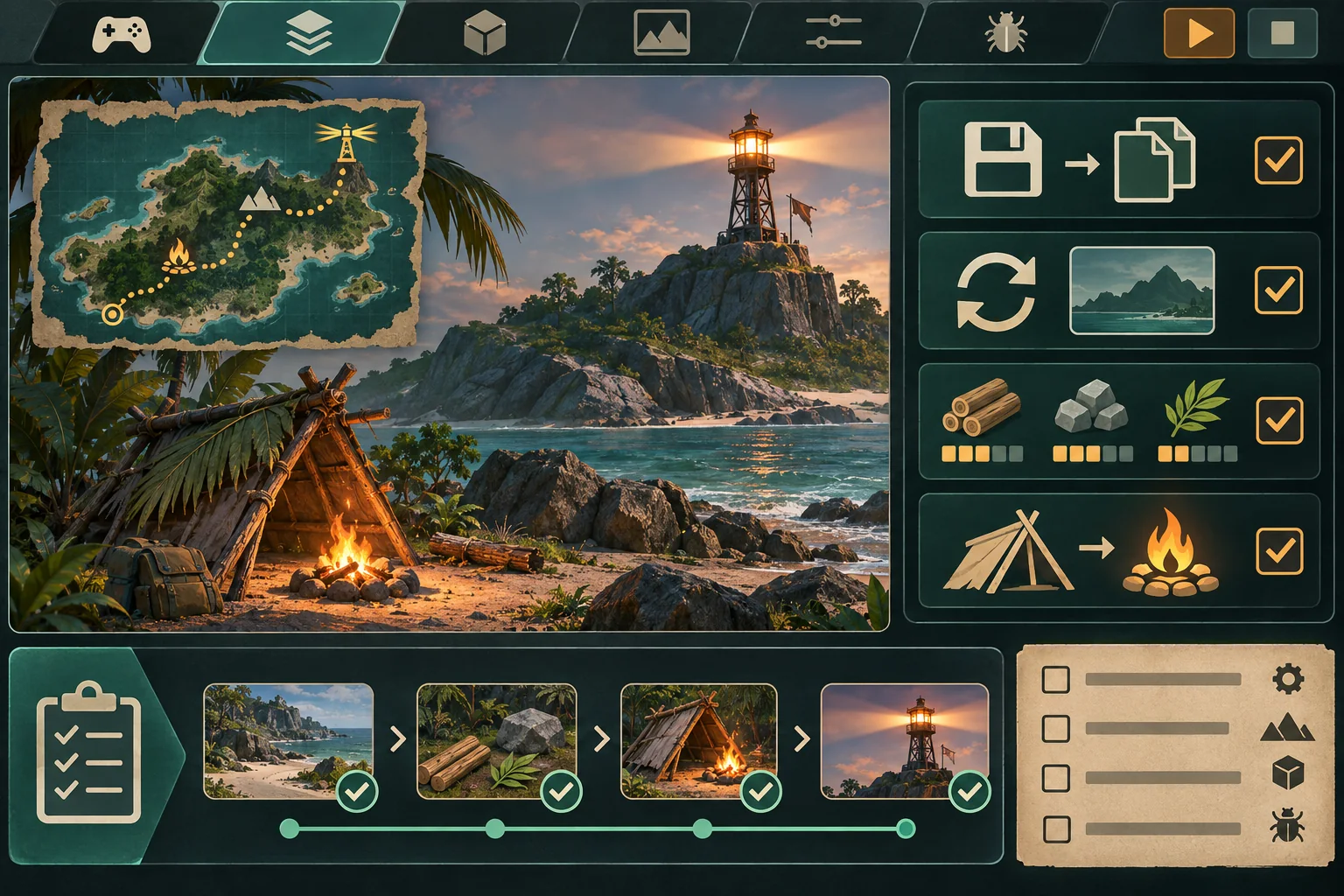
Start with a copied old save. Load it with the new field absent, inspect the default, perform the repair once, save, reload, and return to the location. Confirm that the landmark remains in the intended state and the materials are not charged or awarded again. Also test a fresh save, a partially completed shelter, and a failed repair if the game allows it.
| Proposed check | Action | Evidence to record |
|---|---|---|
| Old save | Load a copy without the new field | Fallback and preserved inventory |
| Milestone write | Complete the repair once | Materials before and after |
| Reload | Save and reopen the copied file | Landmark and route state |
| Re-entry | Leave the region and return | No duplicate or missing objects |
| Reward replay | Repeat the repair interaction | No duplicate resource reward |
| Rollback | Restore baseline commit and save copy | Original world still loads |
This is a plan, not reported test evidence. Record build version, save copy, world flag, inventory counts, shelter state, expected behavior, actual behavior, and any warnings. If a generated diagram implies that a route persists, it is still illustrative; only an executed save/reload test can establish what the real game does.
Preserve the cost and meaning of shelter building
World progression should build on the game’s existing survival tension. A repaired shelter can unlock a route or a safe interaction without making food, warmth, or construction costs irrelevant. Avoid resetting unfinished repairs or permanently consuming resources on a failed save write. If the project supports checkpoints or autosaves, verify when the durable flag is committed relative to the resource deduction.
Keep permanent milestones separate from temporary comfort bonuses. A warm room may be rebuilt after a storm, while the player’s discovery of a route might remain. Communicate these differences in the UI and save format so the player does not mistake a temporary effect for permanent progress.
To explore a separate island survival concept, try SEELE AI Game Maker. It is a concept tool, not an existing-project editor.
Frequently asked questions
What world progress should persist in an island survival game?
Persist milestones that define a lasting change, such as opening a safe route or repairing a landmark, if the game’s design treats them as permanent. Keep carried food, active weather, and temporary shelter conditions separate unless the existing rules say they survive a reload.
How can persistent progress preserve scarce resources?
Make each milestone’s costs and rewards explicit and keep the current gathering, crafting, and shelter systems authoritative. Do not grant recurring supplies just because a landmark flag is saved. Test that completing a project once does not duplicate rewards after reload or re-entry.
Should a repaired shelter remain fixed after loading a save?
Decide which shelter changes are durable and which are temporary before changing the save schema. A repaired wall might persist while a fire, stored food, or weather effect follows existing rules. Verify the distinction on a copied save and after leaving and returning to the site.
How do I add a persistent milestone without breaking old saves?
Capture a baseline save and add a documented fallback for any new field that older files lack. Keep the migration small, test it on a copy, and preserve the original file until loading and saving succeeds. Never infer that a missing milestone means the world was completed.
Can AI safely add world persistence to my existing survival game?
AI can inspect supplied save and world-state files, propose a limited change, and draft reload tests. It cannot verify the project without real saves and an executed build. Provide a file allowlist, expected milestone state, old save copy, and rollback commit, then inspect every diff.
Keep lasting progress separate from survival state
Capture the current save and shelter loop, define which milestones truly persist, and add one stable world flag through the existing save path. Preserve scarcity, temporary conditions, and old data with an explicit fallback. Test migration and repeat visits on copies, then retain a clean rollback commit. Treat the entire plan as unverified until the real project has been exercised.