Give each habitat need a clear threshold
Planet Zoo is a zoo management simulation focused on building habitats and caring for animals. Meadow Reach is a separate fictional management game. Its meters, thresholds and keeper rules are original prototype values, not claims about Planet Zoo's simulation.
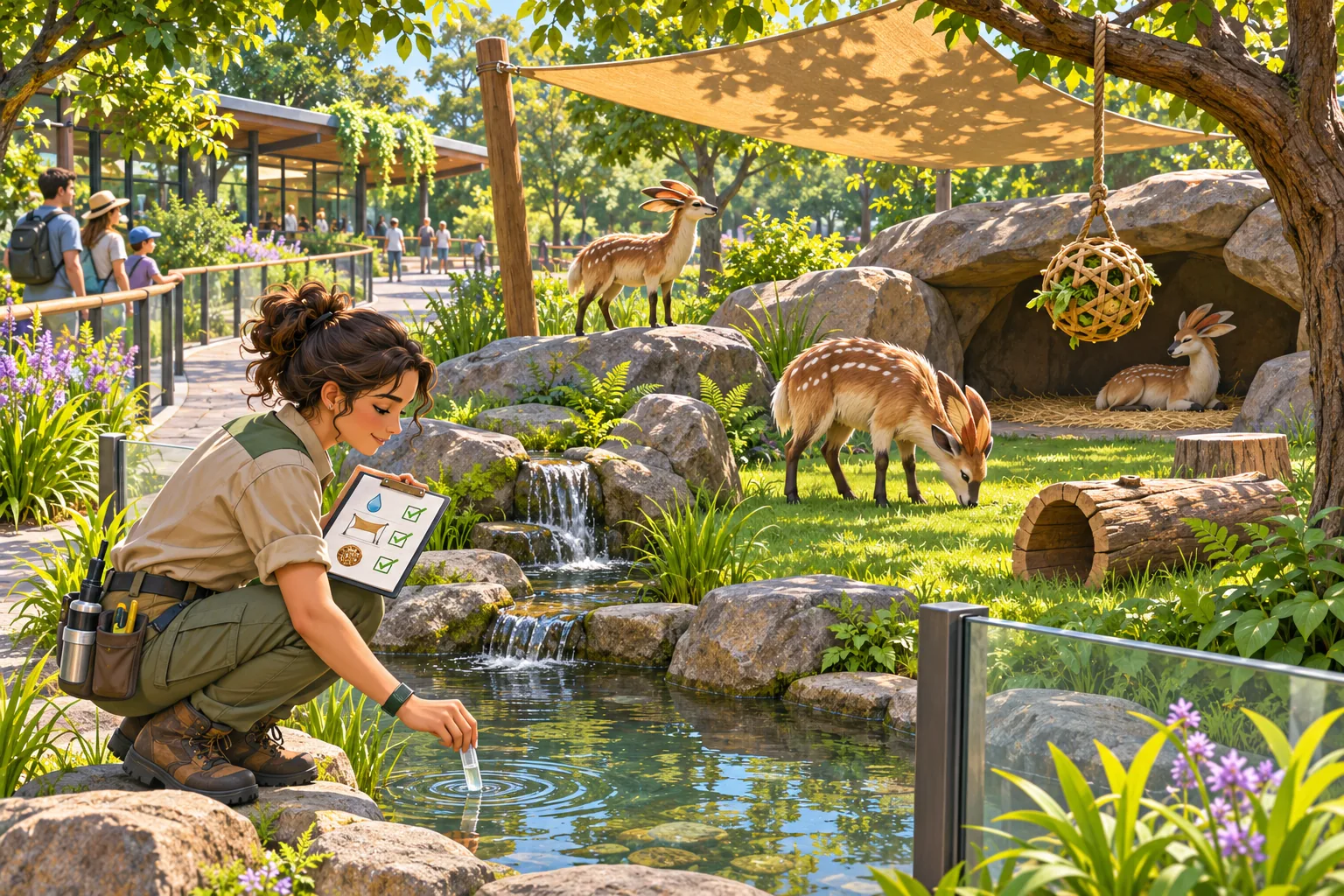
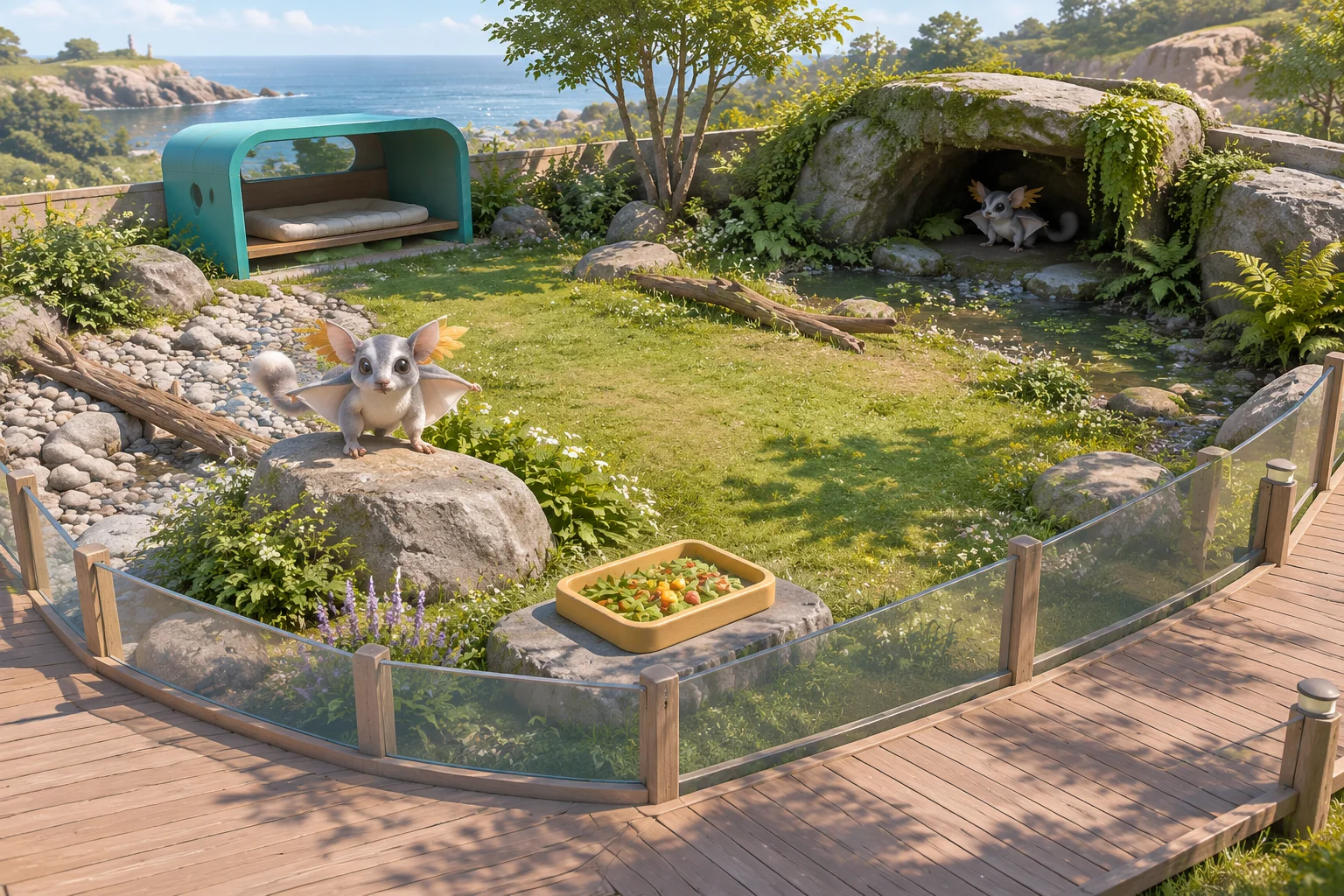
Track three habitat meters from 0 to 100: water, shade and enrichment. The keeper acts once per tick when any meter exceeds its threshold: water 60, shade 70 and enrichment 50. Choose the task with the largest amount above threshold. Break equal scores by water, shade, then enrichment. Completing a task lowers that meter by 30, to a minimum of zero.
Choose one task from the largest need gap
Calculate urgency as current meter minus its threshold. Ignore zero or negative scores. Select the highest remaining score, then use the fixed tie order so identical states always produce the same task. After the keeper acts, recalculate on the next tick. This prevents one keeper from silently completing several jobs at once.
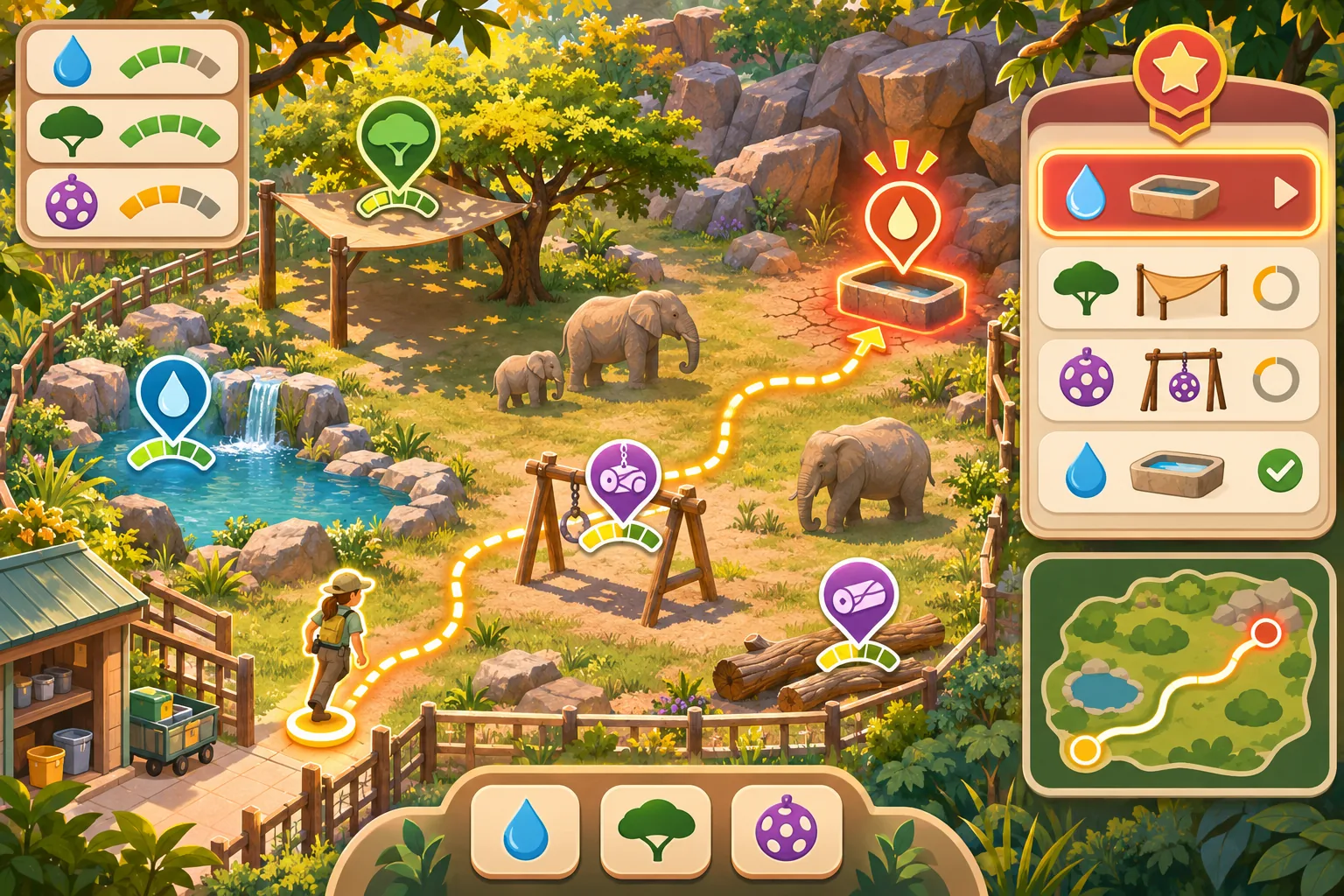
The test gives water 80, shade 90 and enrichment 45. Water and shade are both 20 above threshold, so the tie rule selects water. It falls to 50; on the next tick, shade is selected and falls to 60. When all meters are at or below threshold, no task is scheduled. These checks validate fictional task ordering, not real animal-care standards.
Show why the keeper chose a task
Display each meter, its threshold and the difference used for priority. Show the selected task and the keeper's one-action-per-tick limit. A player can then add another keeper or change a habitat before the next update. Label these numbers as prototype gameplay values so they are not mistaken for actual husbandry advice.
Test task selection before adding more species
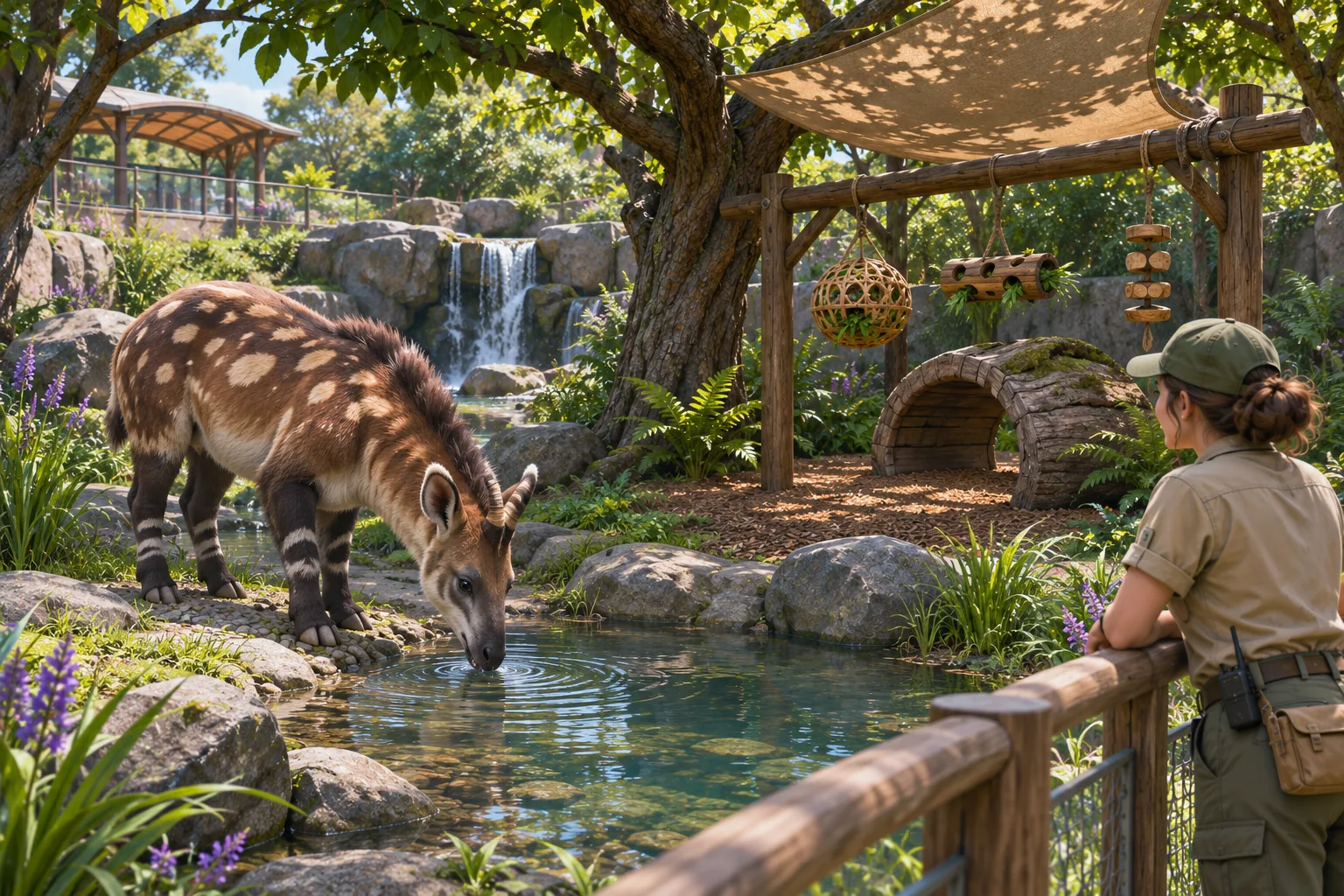
Store each habitat meter and threshold separately from the keeper queue. Resolve ties with an explicit rank list, then apply one task effect per tick. Godot Resource can store original habitat definitions; SEELE AI Game Maker is a starting point for a prototype. Planet Zoo gives broad genre context only and does not validate Meadow Reach's fictional thresholds.
Build an original zoo simulation with water, shade and enrichment meters from 0 to 100. Use thresholds 60, 70 and 50. Each tick, select the largest positive value above threshold; break ties water, shade, enrichment. One keeper performs one task and lowers that meter by 30, clamped at zero. Schedule no task when all meters are within threshold.
Create an original zoo game in SEELE · Planet Zoo on Steam
Frequently asked questions
How should a zoo game prioritize care tasks?
Compare each need with its own threshold, then select the largest positive gap. Meadow Reach uses water, shade and enrichment with explicit thresholds and a fixed tie order. Showing the gap explains why a keeper chose one task and gives players a way to adjust the habitat or staffing.
Why should a keeper complete one task per tick?
A visible action limit makes the schedule predictable. In this prototype, one keeper handles one task, then the system recalculates needs on the next tick. If the keeper could finish several tasks at once, players would need a separate rule for ordering and duration.
Are these habitat thresholds real animal-care recommendations?
No. The thresholds and meter values in Meadow Reach are fictional game-balancing inputs. They only define a deterministic prototype loop. A real zoo or animal-care decision needs qualified husbandry guidance and species-specific information; this example should not be used for that purpose.