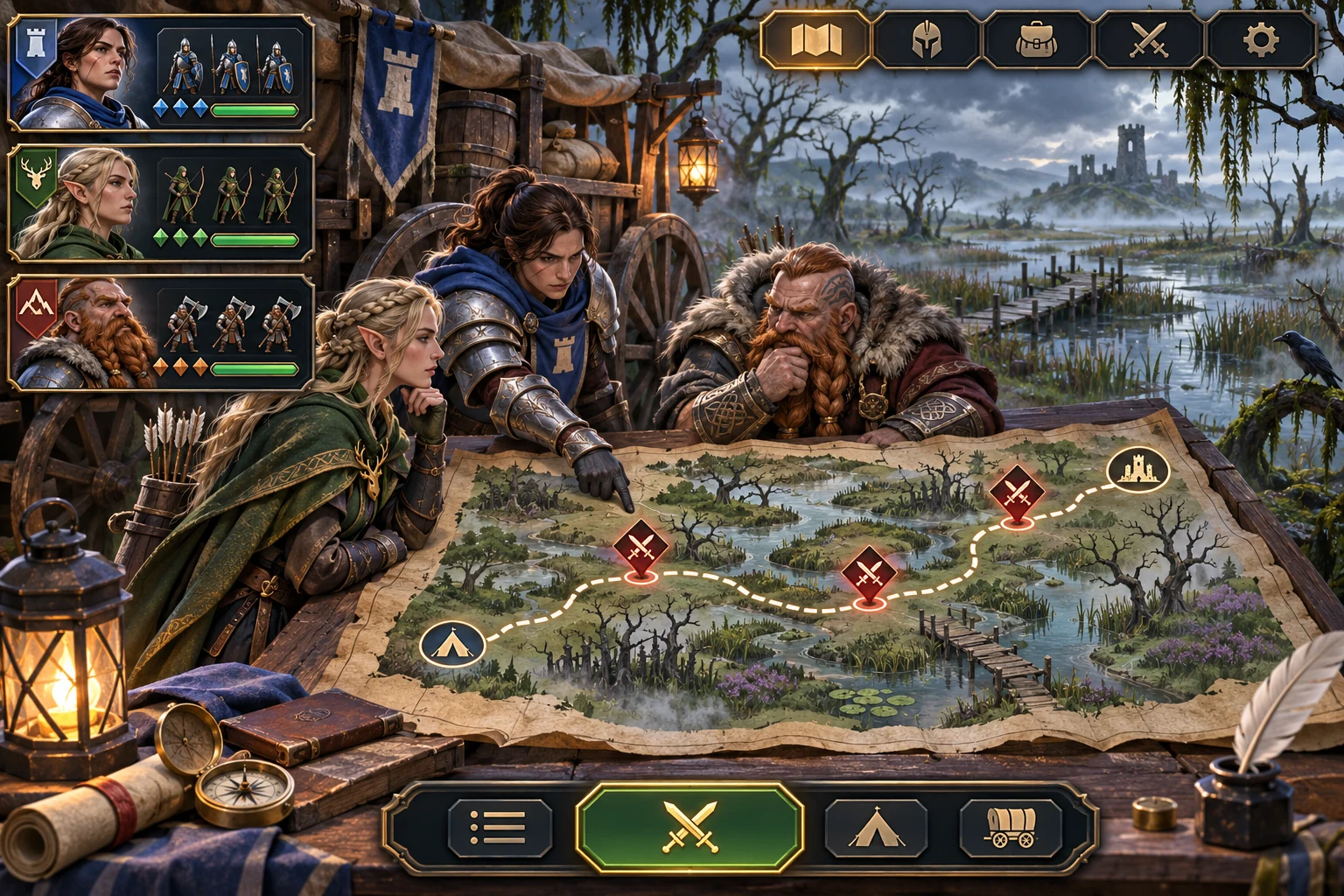
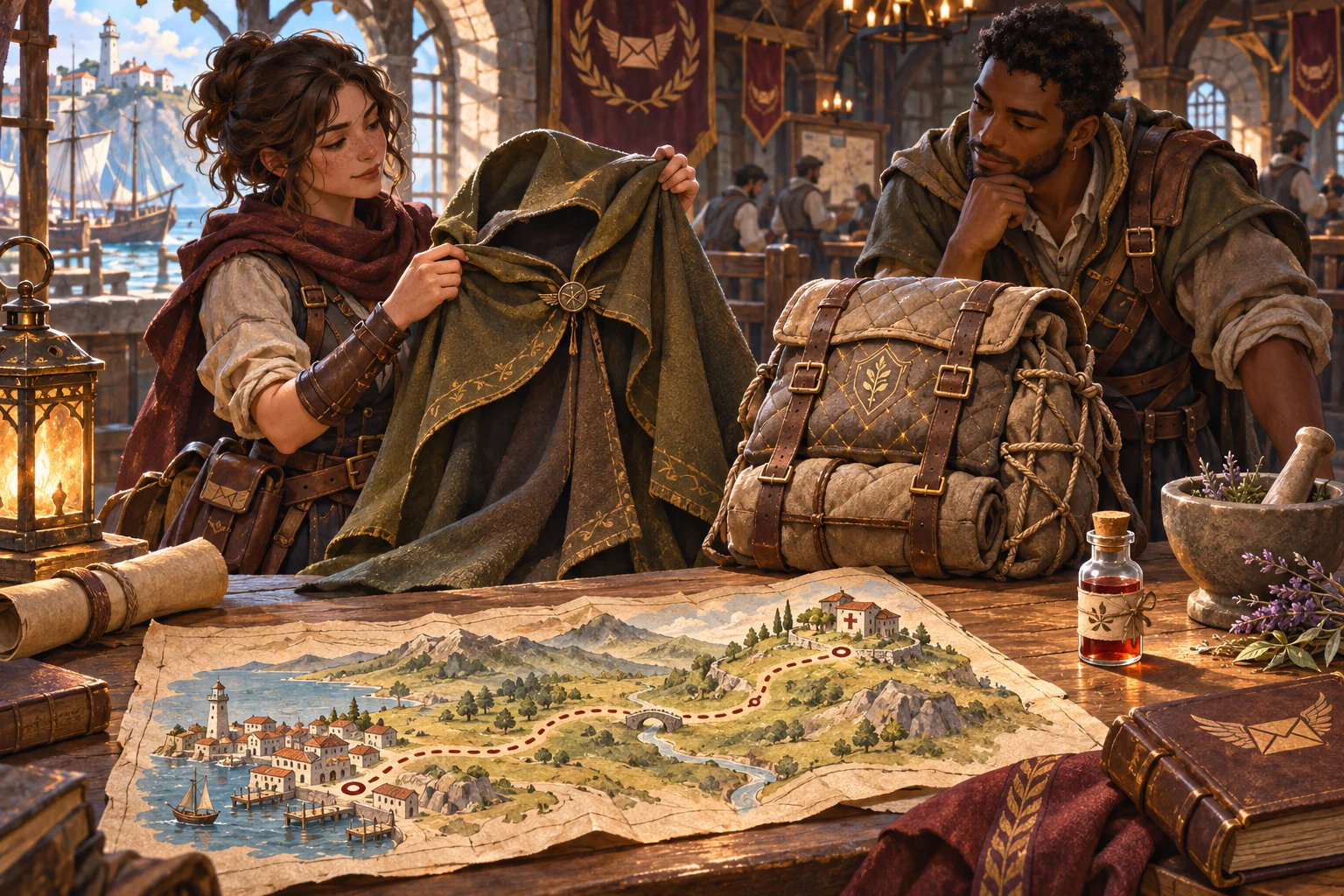
A creature-collection RPG can let assigned companions continue useful work while the player is away. Instead of granting a single reward after a timer, give each mission stages that use the creatures' roles: a scout finds a lost herb, then a carrier brings it to a village. Progress feels connected to the world and to the team the player chose.
Start with one two-stage quest and a fixed amount of elapsed world time. Test whether work that crosses a stage boundary is carried into the next task. This deterministic model checks progress accounting only; it does not show whether offline missions improve retention or feel fair to players.
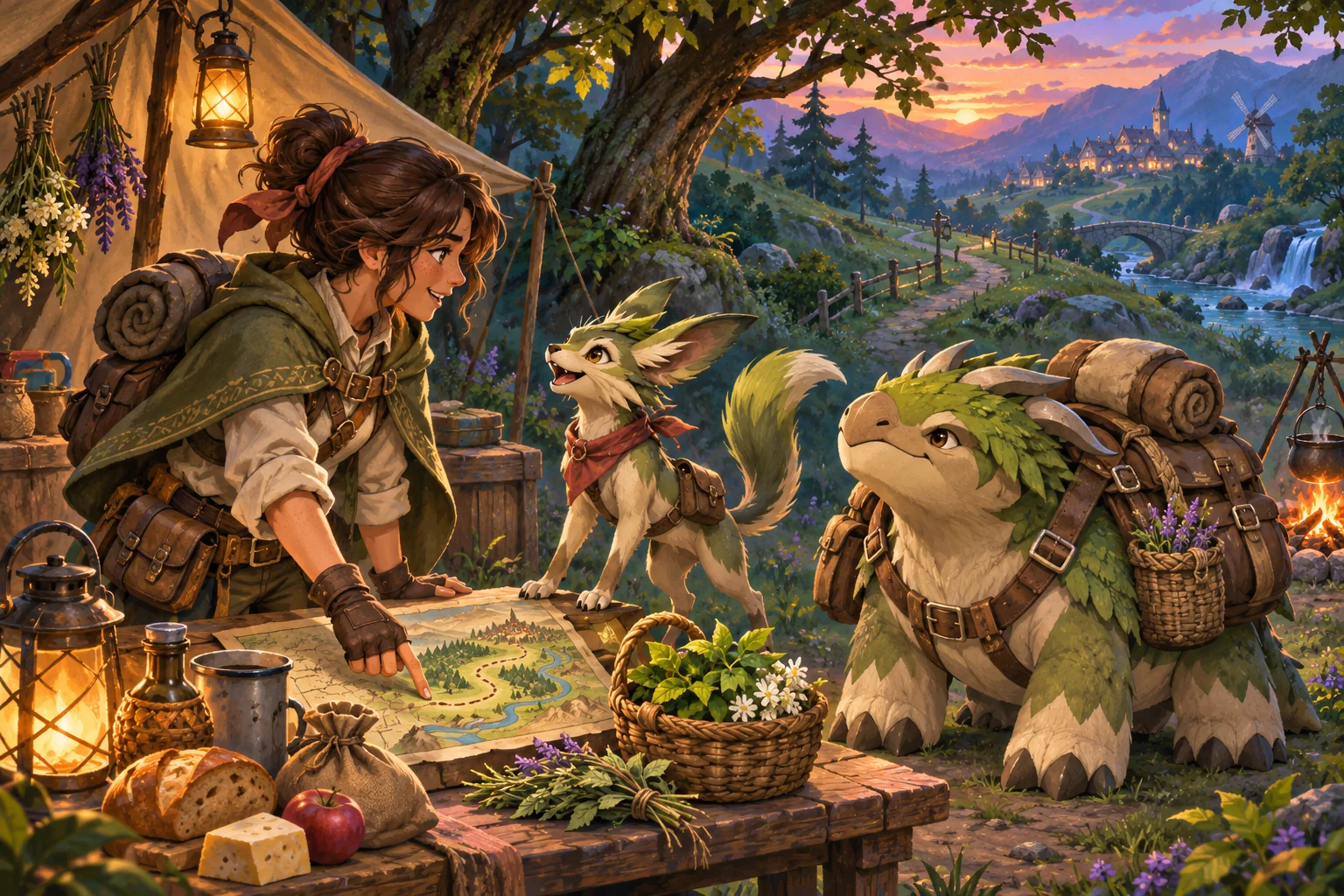
Let creature roles move a quest through visible stages
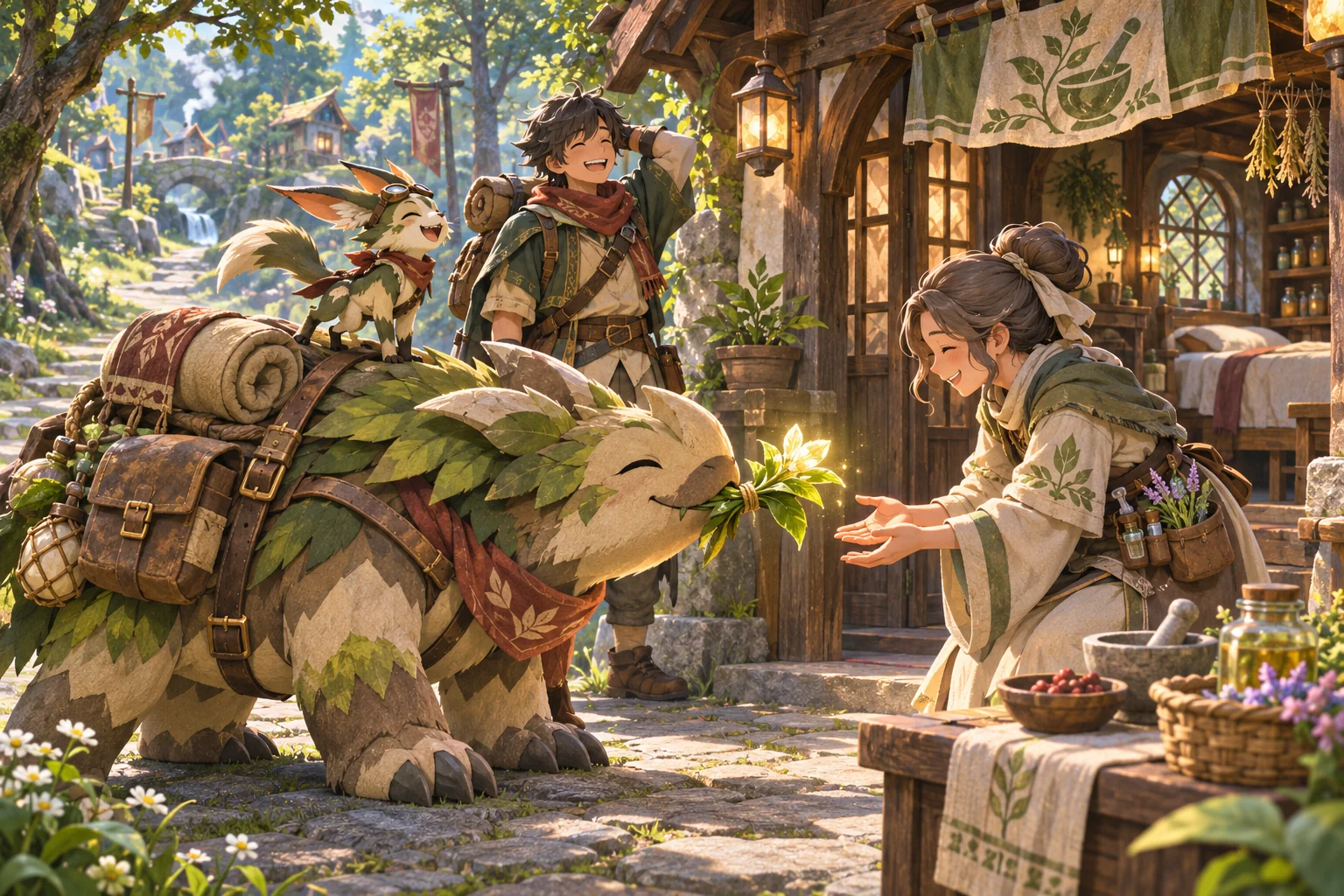
Give each recruited creature a practical mission trait. A trailfin scout can locate a herb, while a packhorn carrier can transport it. A quest card lists its current stage, required work and assigned companions, so players can understand what their team will do while they are gone.
Advance the mission in discrete world steps. The first stage takes one step to locate the herb; the delivery stage takes two more. When the player returns, show completed stages, remaining work and any event that needs a new decision. Avoid hiding the entire outcome behind a countdown timer.
For the first prototype, keep creature roles and stage costs fixed and simulate a short absence. Preserve unused work when one stage completes so the next stage can begin during the same absence. Add branching events or risk only after the basic stage report is reliable.
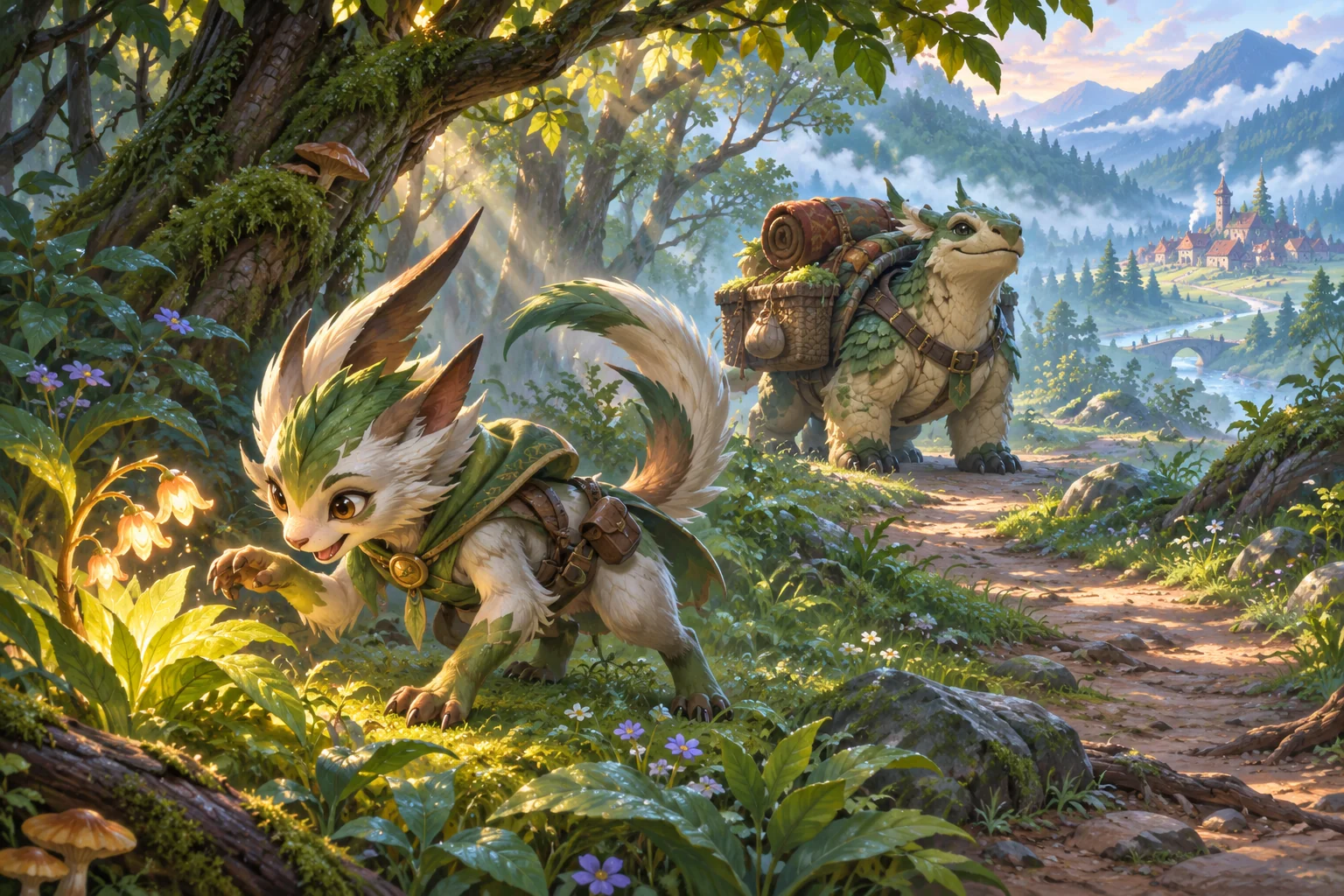
Carry progress across a stage boundary
Assign a scout and carrier to a quest. Finding the herb takes one work step; delivering it takes two. The player leaves for three steps. In the first implementation, all three steps are applied to the current stage. Finding finishes, but two surplus steps are discarded and delivery stays at zero of two.
Change only the progress loop: when a stage finishes, carry any remaining work into the next stage. The same three steps now complete one step of discovery and both delivery steps. The village receives the herb before the player returns. Keep the crew, mission and elapsed time unchanged.
This deterministic simulation verifies that elapsed work is accounted for across stage changes. It does not test how absence feels, whether mission rewards are balanced or whether players understand the report. Playtest short and long absences before adding risk or more complex quest chains.
Ask AI to prototype a creature quest that keeps moving
Show assigned creature roles, current stage, work completed and remaining work after return.
Change only whether surplus work carries across stage boundaries while keeping elapsed time fixed.
Create an original creature-collection RPG with offline multi-stage quests. Assign a trailfin scout and packhorn carrier to find and deliver a herb. Discovery requires 1 work step; delivery requires 2. Simulate 3 elapsed world steps while the player is away. Compare a flawed stage update that discards surplus work after discovery with a corrected sequential update that carries the remaining steps into delivery. Keep creatures, quest and elapsed time fixed. Show the report on return. Do not claim the model proves retention or player fairness.
Make away-time progress readable when the player returns
Offline quests work best when a player can trace what companions did and why a mission advanced. Begin with a small crew, visible roles and a short stage chain. Once progress accounting survives stage changes, playtest different absence lengths and reward outcomes before adding failure risk or branching events.
Prototype a creature-collection RPG with SEELE's AI game maker
Frequently asked questions
How can creature quests continue while the player is away?
Assign companions to a mission with visible stages and advance those stages using elapsed world steps. A scout might locate an item before a carrier delivers it. Report what finished, what remains and whether another player decision is needed. Keep the progress report visible when the player returns.
Should offline quests be only countdown timers?
A timer can indicate duration, but stages make the work more understandable. Show which creature trait helps each task and how much progress remains. This gives the return report useful context beyond simply announcing that time passed. Report stage status on return.
Does an offline-progress model prove the system improves retention?
No. It verifies how elapsed work updates quest stages under fixed rules. It cannot show whether players return more often, find rewards fair or understand the report. Those are product and player questions that need usability research and measured outcomes. Measure those outcomes separately before tuning mission length.