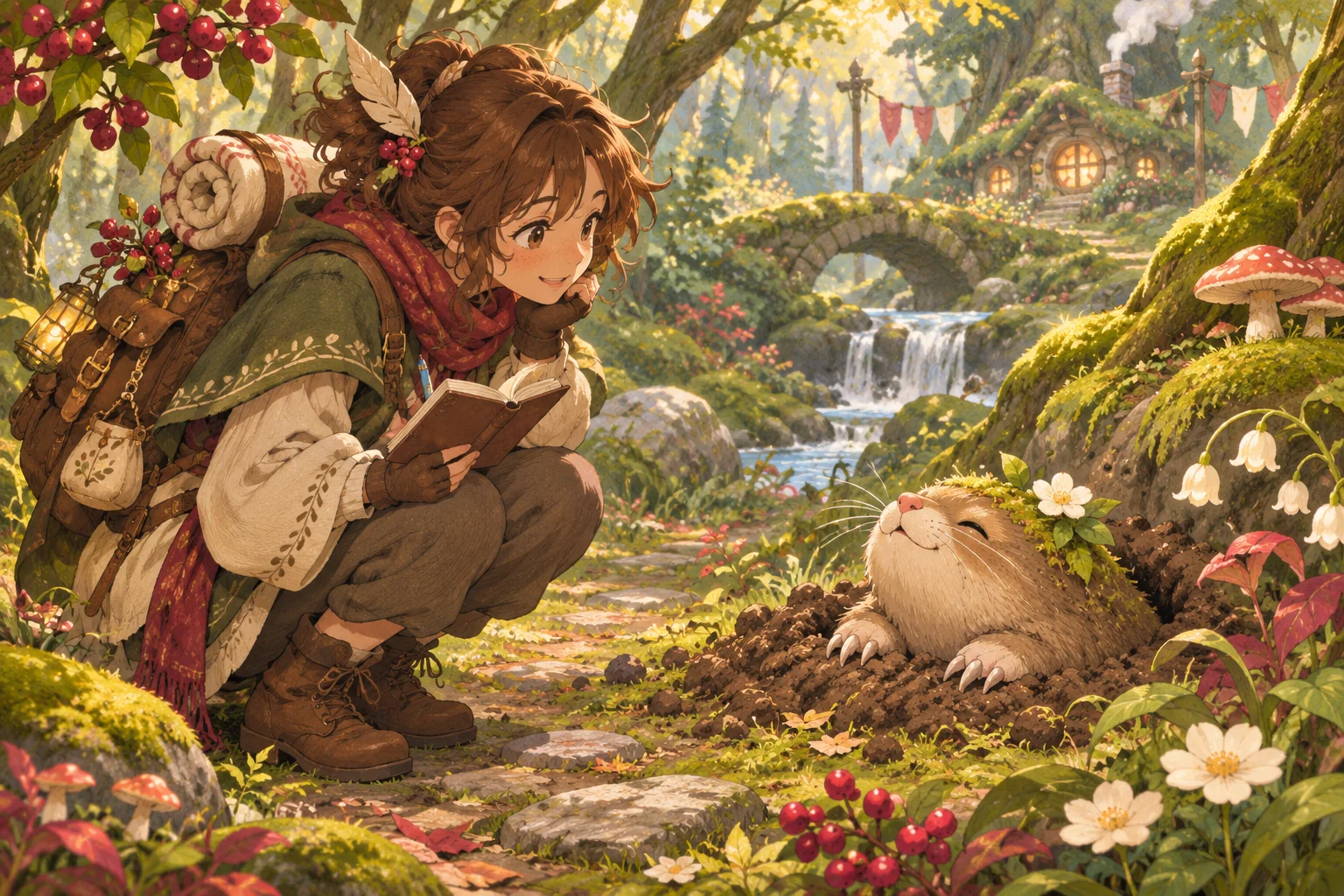
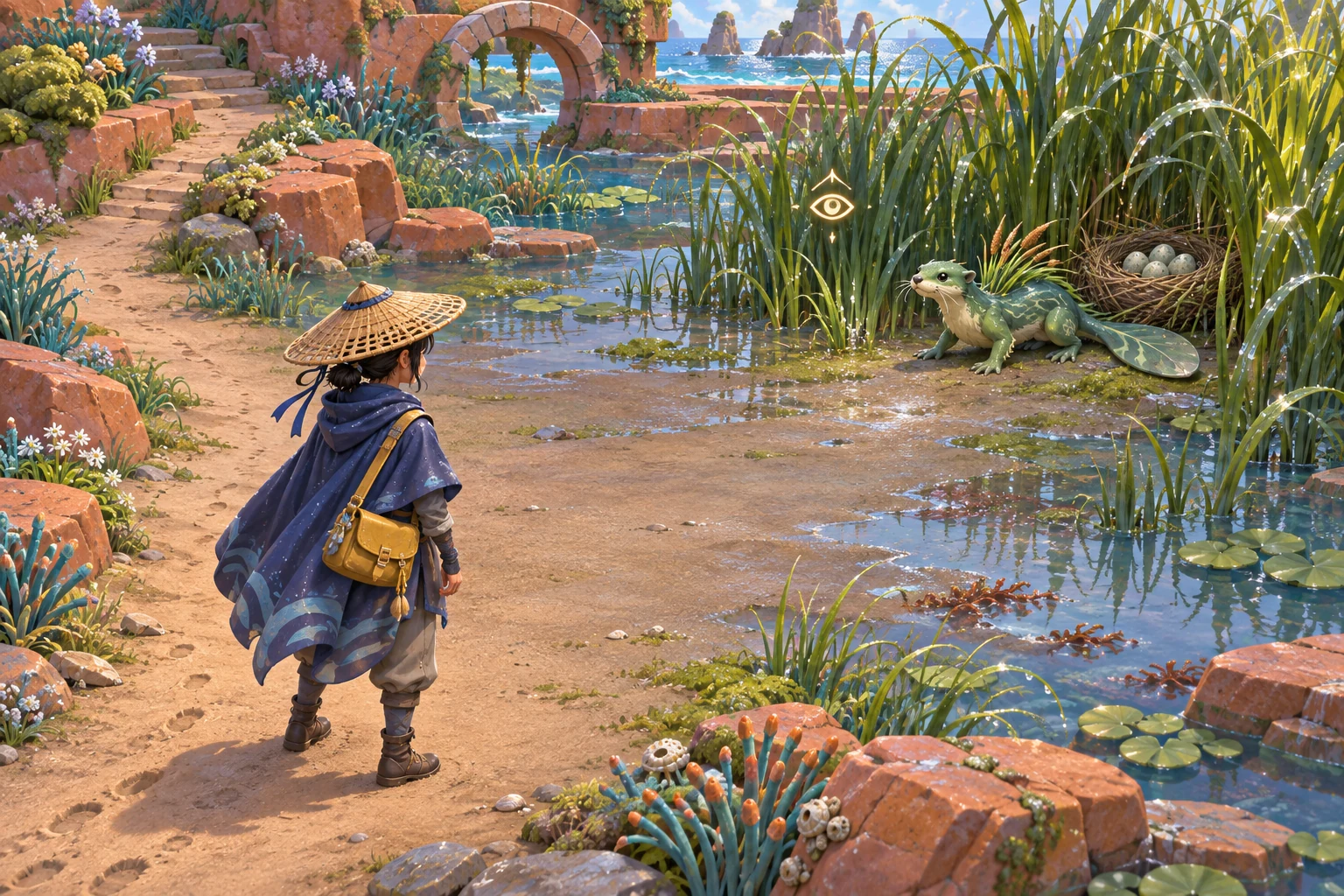
A creature-collection RPG can turn encounters into field research. Players observe how a wild creature attacks or retreats, record the behavior and teach a related ability to a companion. The collection then reflects what the player has learned about the world rather than only which creatures they captured.
Start with one wild creature, one companion and one behavior clue that transfers into a learnable skill. Keep the observation condition explicit and let the player attempt the transfer at a safe camp. This deterministic model checks the clue-to-inheritance rule, not collection balance or whether players understand the behavior.
Connect wild behavior to a companion ability
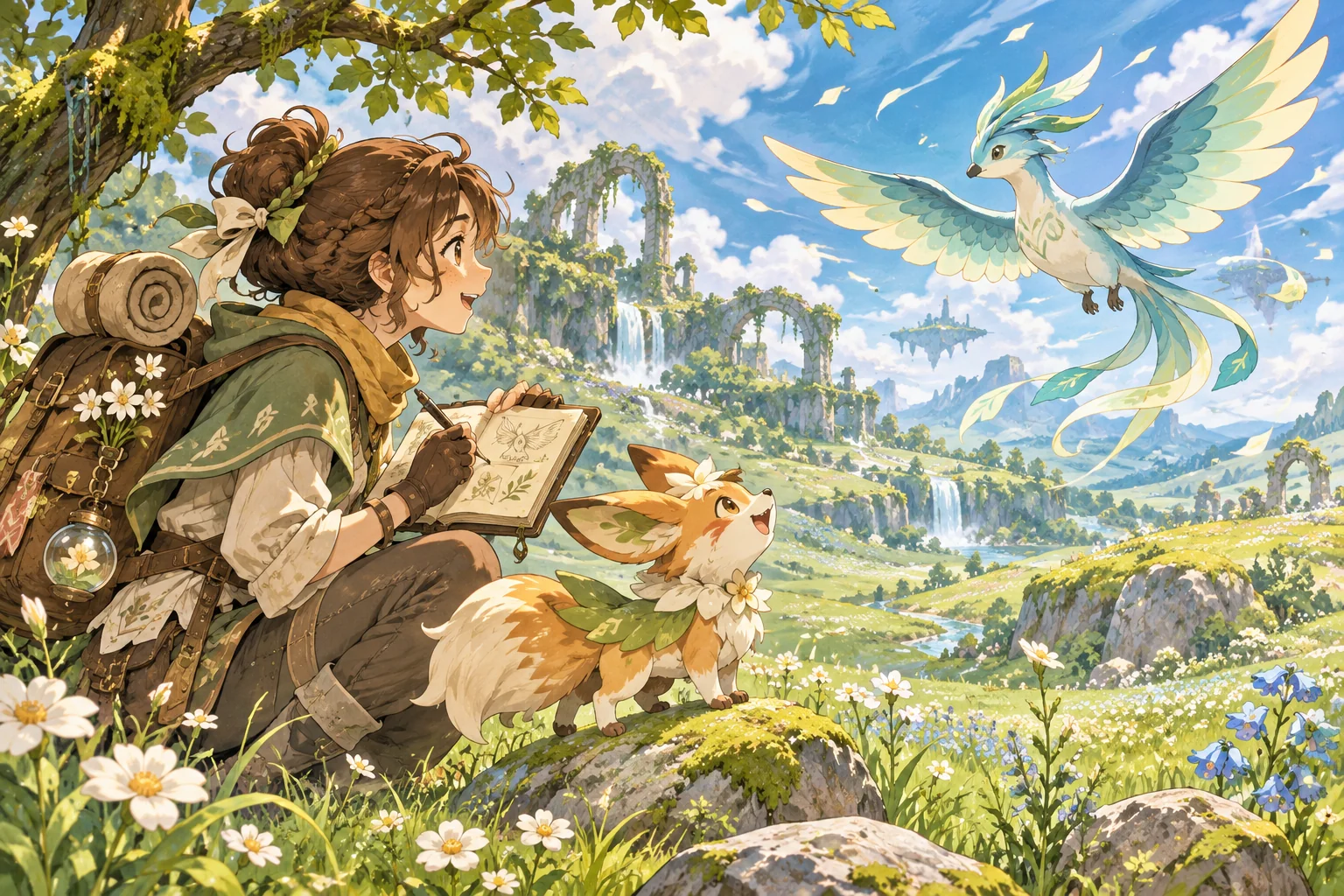
Give the wild creature a readable behavior, such as lowering its crest before a wind attack. Observing the tell records a journal clue. At camp, the player can use that clue to teach the companion a defensive gust ability. Keep creature behavior separate from the companion skill definition.
Show the transfer requirements before the player spends a token or time. The journal should state what was observed and what remains missing. Once learned, mark the companion’s ability as inherited so the player can distinguish researched skills from level-up rewards.
Keep one wild creature and one companion in the first build. Hold encounter frequency and camp resources fixed while changing only whether the player sees the tell. Add cross-species inheritance or rare behaviors after the basic transfer is clear.
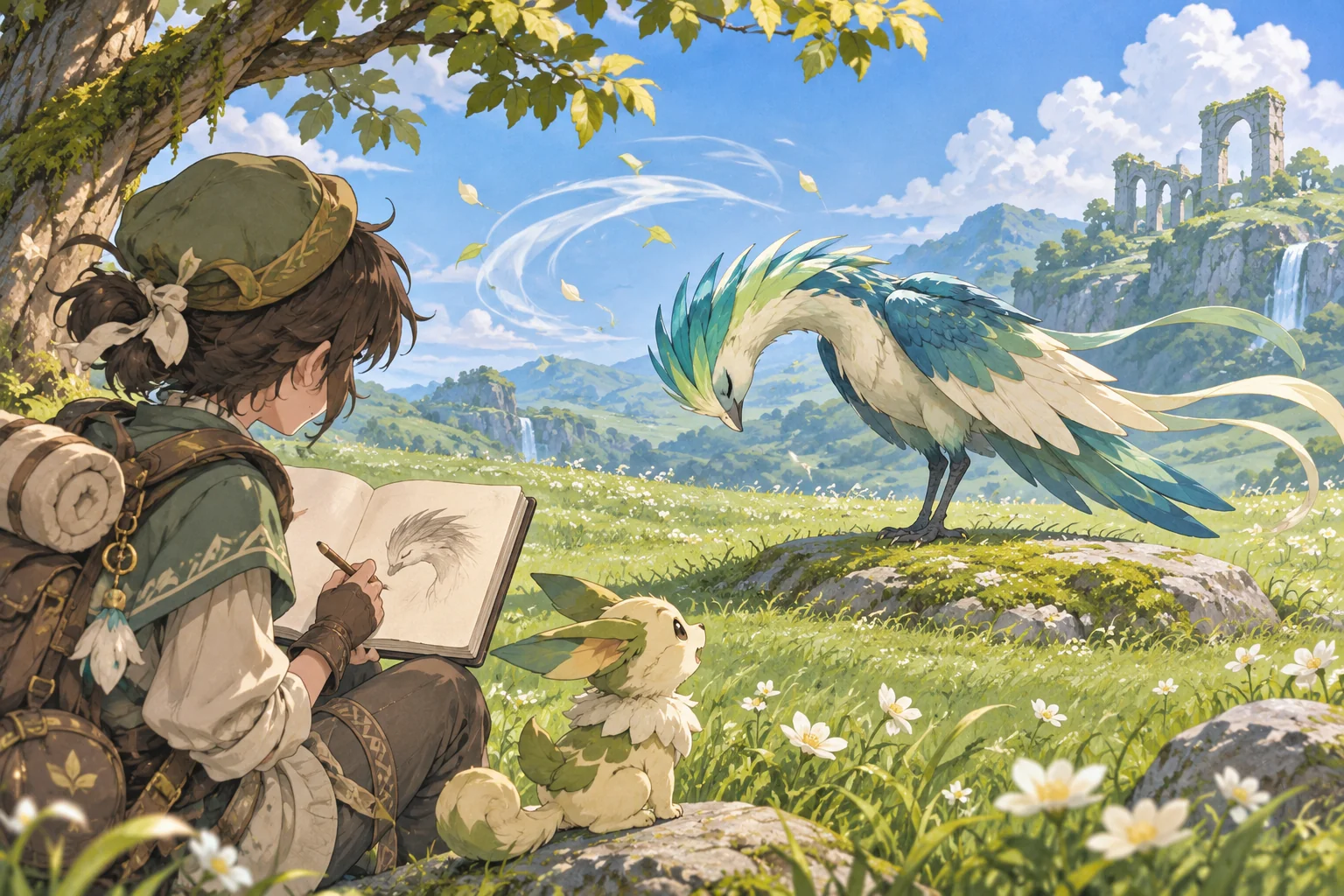
Change whether the tell was observed
The windbird lowers its crest one turn before using Gale Sweep. If the player sees the tell twice, the journal records “crest lowers before wind attack.” A companion can learn Guarding Gust at camp after the clue is recorded and one study token is spent.
Change only the second observation: the player retreats before the windbird lowers its crest again. The clue remains incomplete and Guarding Gust stays unavailable. Keep the creature, token cost and camp state fixed to isolate the study requirement.
This event model checks observation and inheritance gating only. It does not test creature balance, battle strength, player comprehension or whether the learned skill makes collection more satisfying.
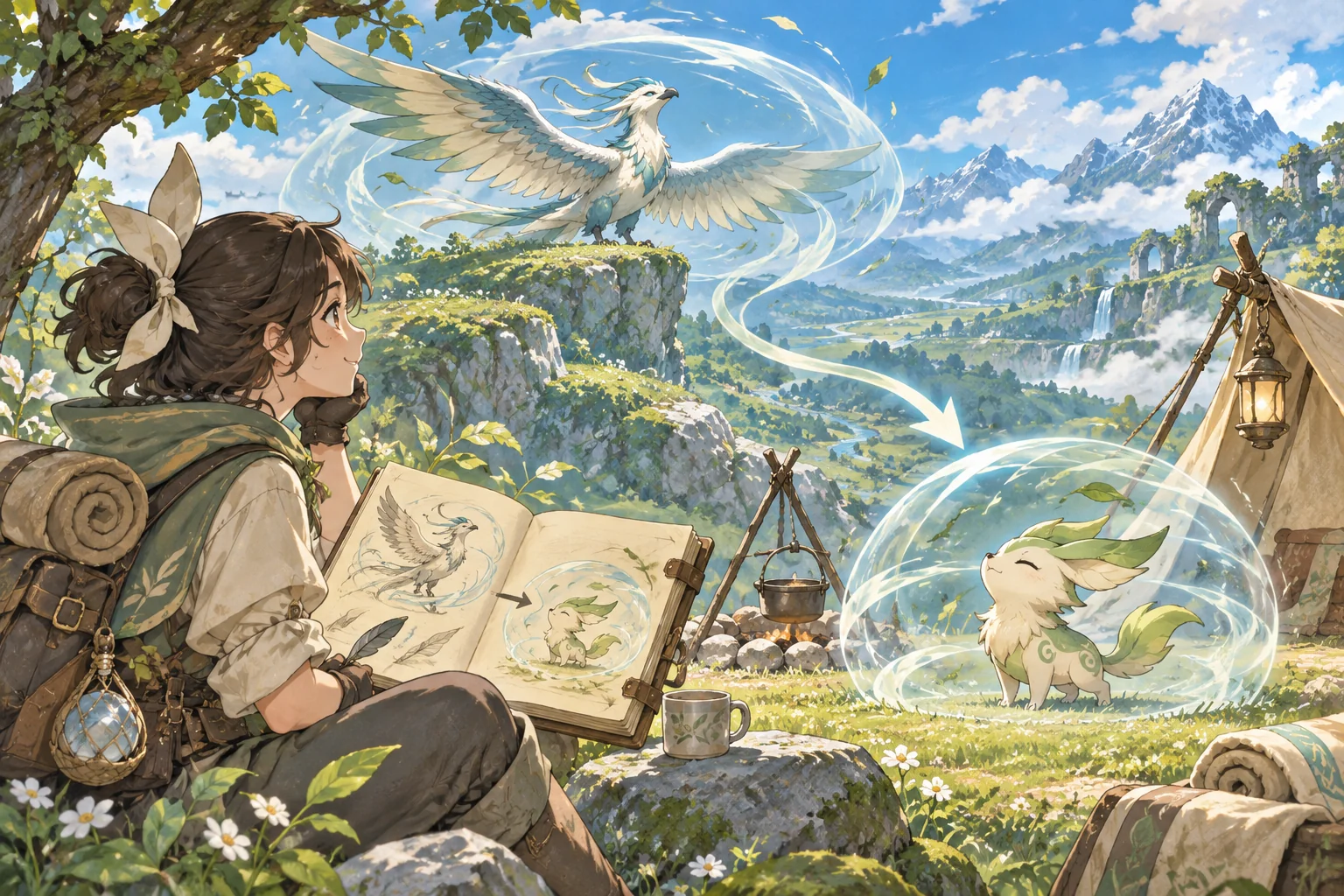
Ask AI to prototype research and inheritance
Separate observation clue, study resource and companion ability state.
Compare complete and incomplete field observation with camp inputs fixed.
Create an original creature-collection RPG prototype. A wild windbird lowers its crest one turn before using Gale Sweep. Observing this tell twice records the journal clue. At camp, spend one study token to teach a companion Guarding Gust. Show the clue progress, token cost and inherited skill state. Compare a run where the player observes twice with one where they retreat before the second tell. Keep roster, encounter and camp resources otherwise unchanged. Do not add random inheritance or balance claims.
Make field research matter to the collection
Creature research gives collection a second purpose when observed behavior can become a companion skill. Keep the clue, study cost and inherited ability visible as separate steps. After players can follow the transfer rule, expand the roster and test how abilities interact across a full team.
Start a creature research RPG with SEELE’s AI game maker
Frequently asked questions
How can observations affect collected creatures?
Record a visible wild behavior as a journal clue, then let the player use that knowledge to teach a related ability to a companion. Show any required study resource before the transfer. This makes research part of collection progression rather than a hidden battle counter.
Should every wild ability be inheritable?
Not necessarily. Begin with a narrow set of clear behavior-to-skill pairs so players can predict what research will teach. Some behaviors can remain ecological clues or encounter hints. Add broader inheritance only after the first transfer rule feels understandable and useful.
Does the clue model prove creature balance?
No. It verifies when observation unlocks a transfer. It cannot assess team strength, player comprehension, fairness or the value of collected creatures. Those questions require playtests with varied teams and encounter patterns. Test several encounter types and companion teams before judging their value.