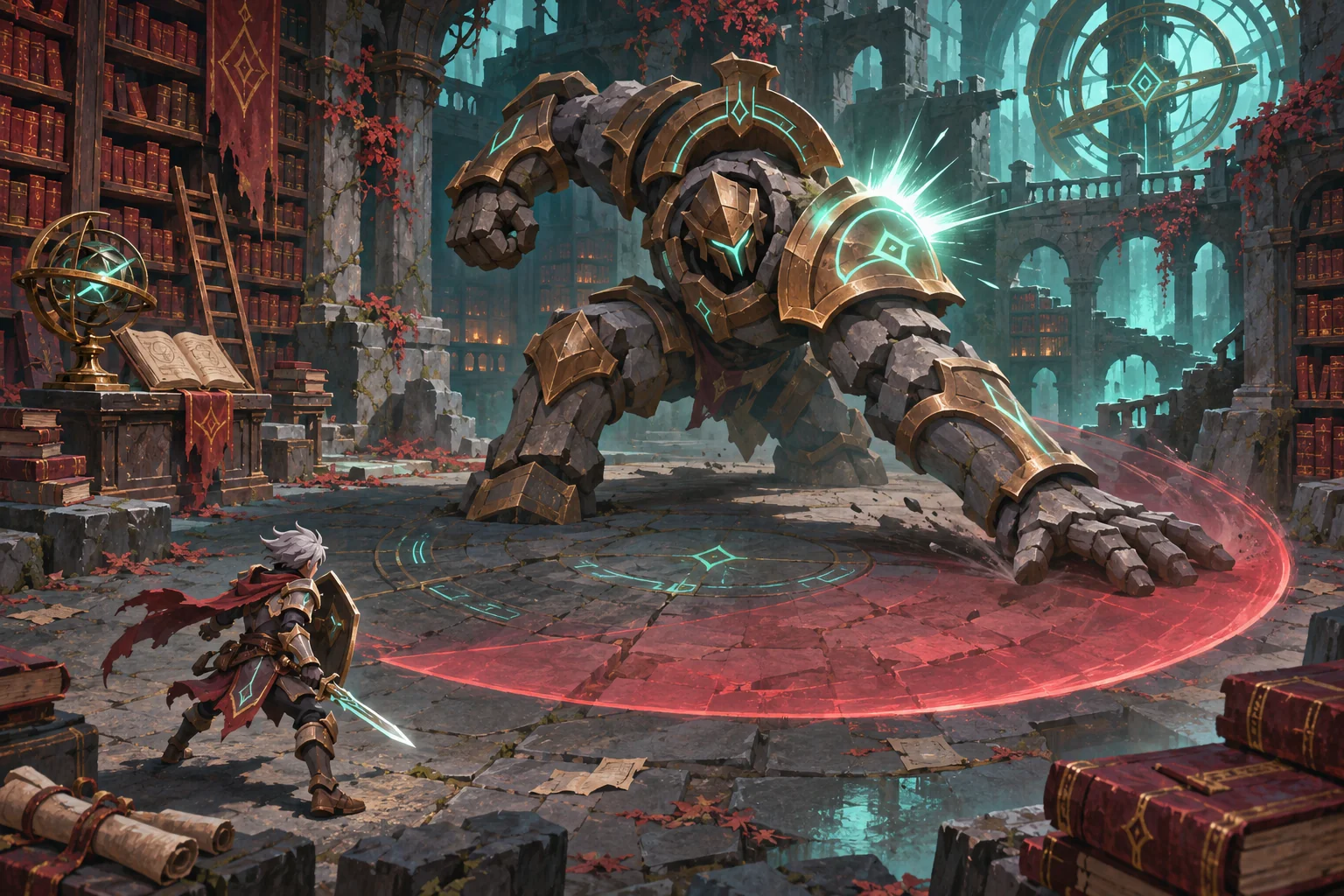
Enemy study in a dungeon crawler can reward attention under pressure. A creature’s attack pattern becomes a clue the player can record, survive and later turn into a counter ability. The player learns the dungeon’s combat language rather than receiving a skill from a random chest.
Start with one shieldbearer, one repeated telegraph and one counter skill. Keep the attack timing deterministic and unlock the skill only after the player observes the sequence and exits the encounter. This model checks the unlock rule; it does not prove a boss is fair or the ability is balanced.
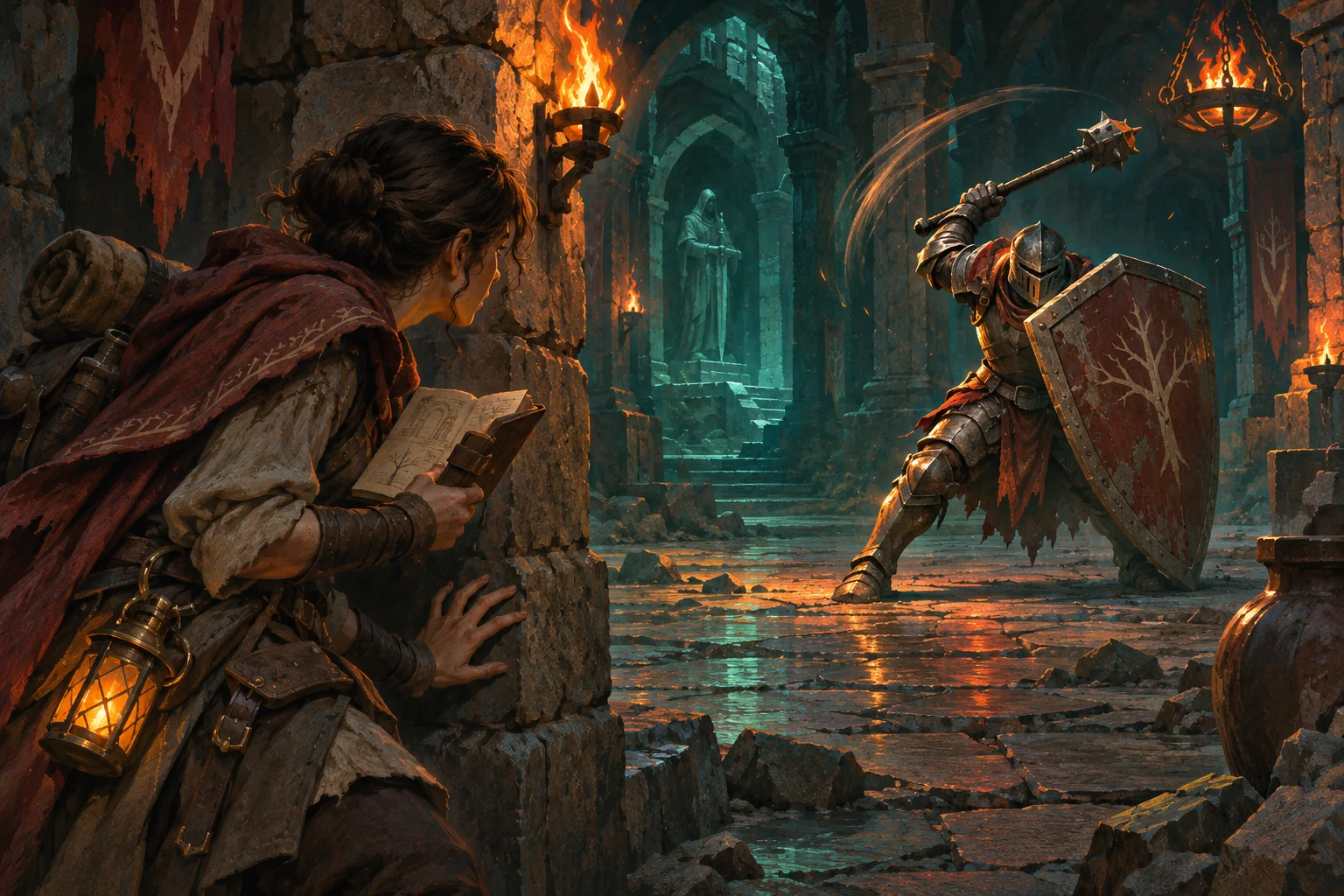
Make attack patterns teach counter skills
Give the enemy a visible three-beat windup: brace, raise shield, strike. If the player remains in range and observes the full pattern, the journal records the timing clue. A later training interaction can unlock a timed guard that counters the strike.
Separate recognizing the pattern from activating the learned skill. The first reveals what the enemy does; the second lets the player practice the response outside immediate danger. Show the unlock condition and training cost before the player commits.
Keep one enemy and one sequence in the first prototype. Hold damage and encounter placement fixed while changing only whether the player observes all three beats. Add boss variants after the clue and counter are readable.
See Godot’s Resource documentation for reusable enemy-pattern and ability definitions.
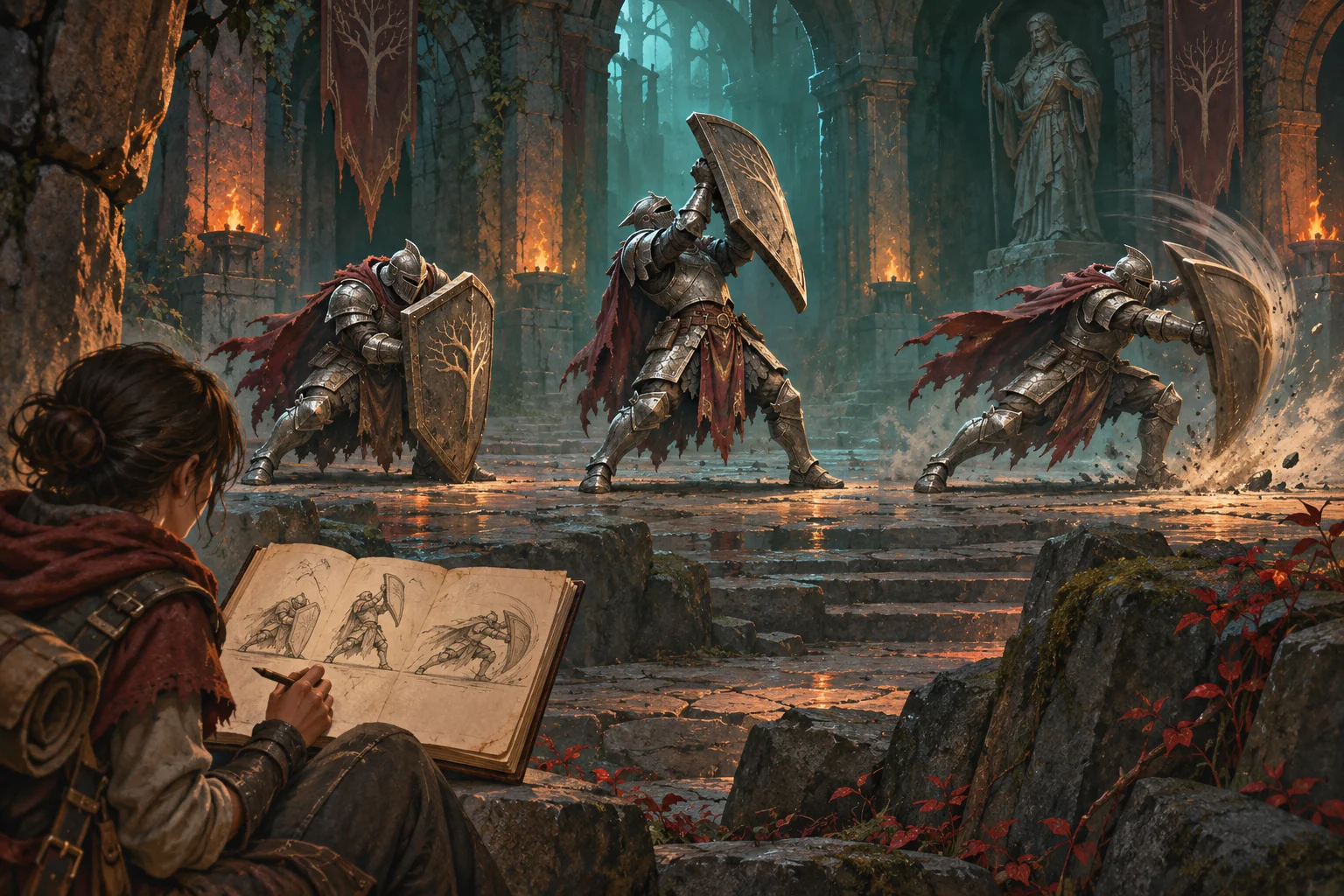
Change one observed attack beat
The shieldbearer repeats brace, raise and strike across three turns. If the player stays in the arena for all three, the journal logs the sequence. After the encounter, a training post lets the player practice a timed guard and unlock the counter ability.
Change only the player’s observation: they leave after the raise but before the strike. The journal notes the partial clue, but the guard remains locked. Keep enemy timing, damage, rewards and training costs unchanged.
This deterministic event model verifies the observation gate only. It does not evaluate reaction difficulty, fairness, combat pacing, controller timing or ability strength.
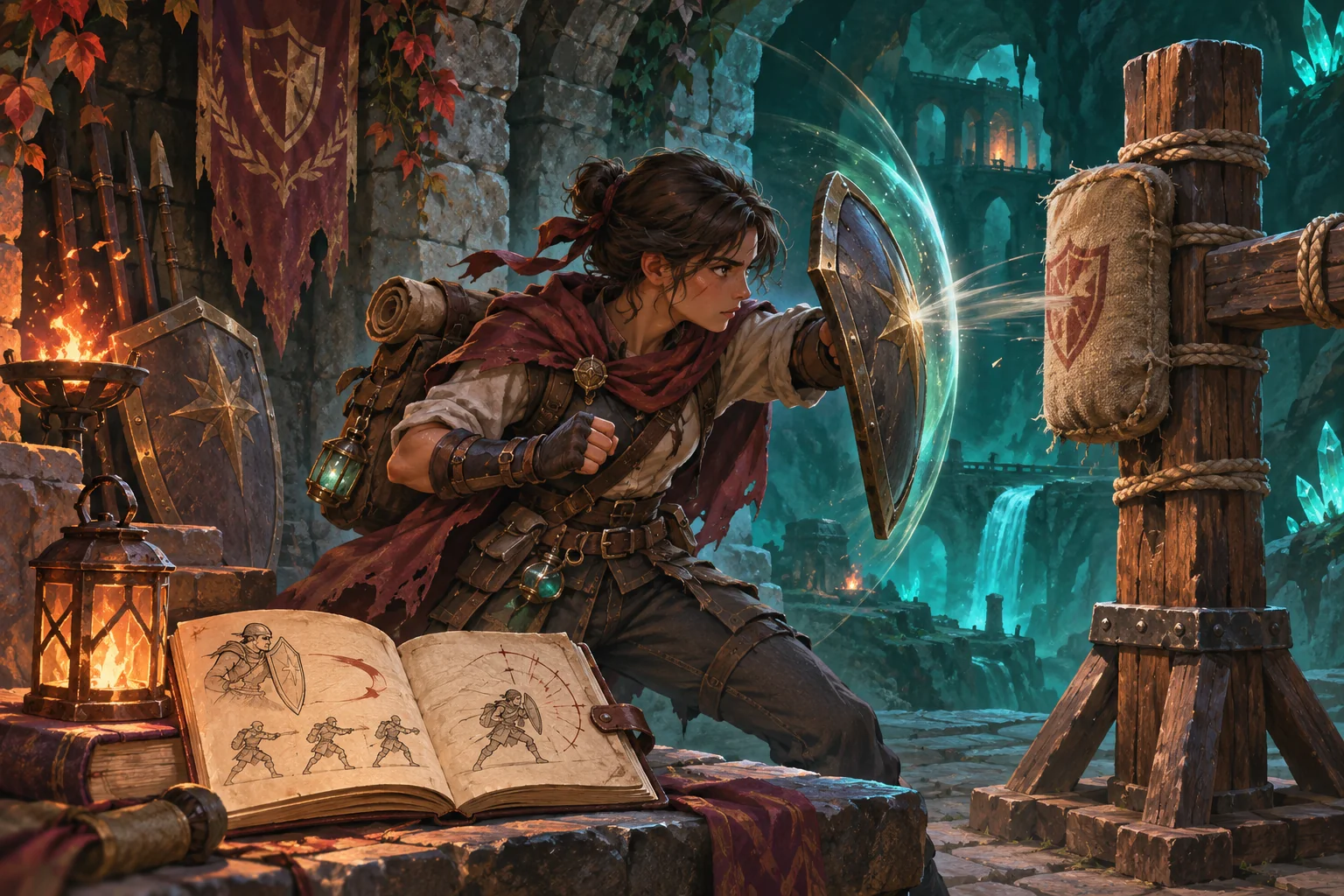
Ask AI to prototype the telegraph-to-skill loop
Show each attack beat and the current journal clue.
Unlock the counter only after the full pattern is observed and practiced.
Create an original dungeon crawler prototype with one shieldbearer enemy. Its attack repeats a three-beat sequence: brace, raise shield, strike. Record the pattern in a journal only if the player observes all three beats. After the encounter, a training post can teach a timed guard that counters the strike. Compare a full observation with leaving before the strike; keep timing, damage and rewards fixed. Show why the ability is locked or available. Do not add boss variants or balance claims yet.
Teach one enemy pattern before adding bosses
A studied enemy ability feels earned when the player can point to the attack they survived and recorded. Keep telegraph, journal clue and practice step separate. After the counter works in a controlled encounter, add new patterns and test them in a playable dungeon.
Start an enemy-study dungeon crawler with SEELE’s AI game maker
Frequently asked questions
How can enemy attacks teach a skill?
Use a repeatable telegraph with visible beats, record the pattern when the player observes it and provide a safe place to practice the counter. Show which beat is missing if the clue is incomplete. This links the learned ability to a specific encounter rather than a hidden reward roll.
Should players learn a counter during combat?
The encounter can reveal the clue, while a later training step teaches the input. This gives players time to understand the pattern without forcing an immediate tutorial during a dangerous attack. Some advanced games can teach in combat, but the first prototype should keep the learning condition inspectable.
Does the unlock model prove the enemy is fair?
No. It checks whether the pattern was observed and the ability unlocked. It does not measure reaction time, readability, difficulty or combat balance. Those need playtests with the actual animation, controls and representative player skill. Test different movement speeds and encounter conditions in the actual prototype.