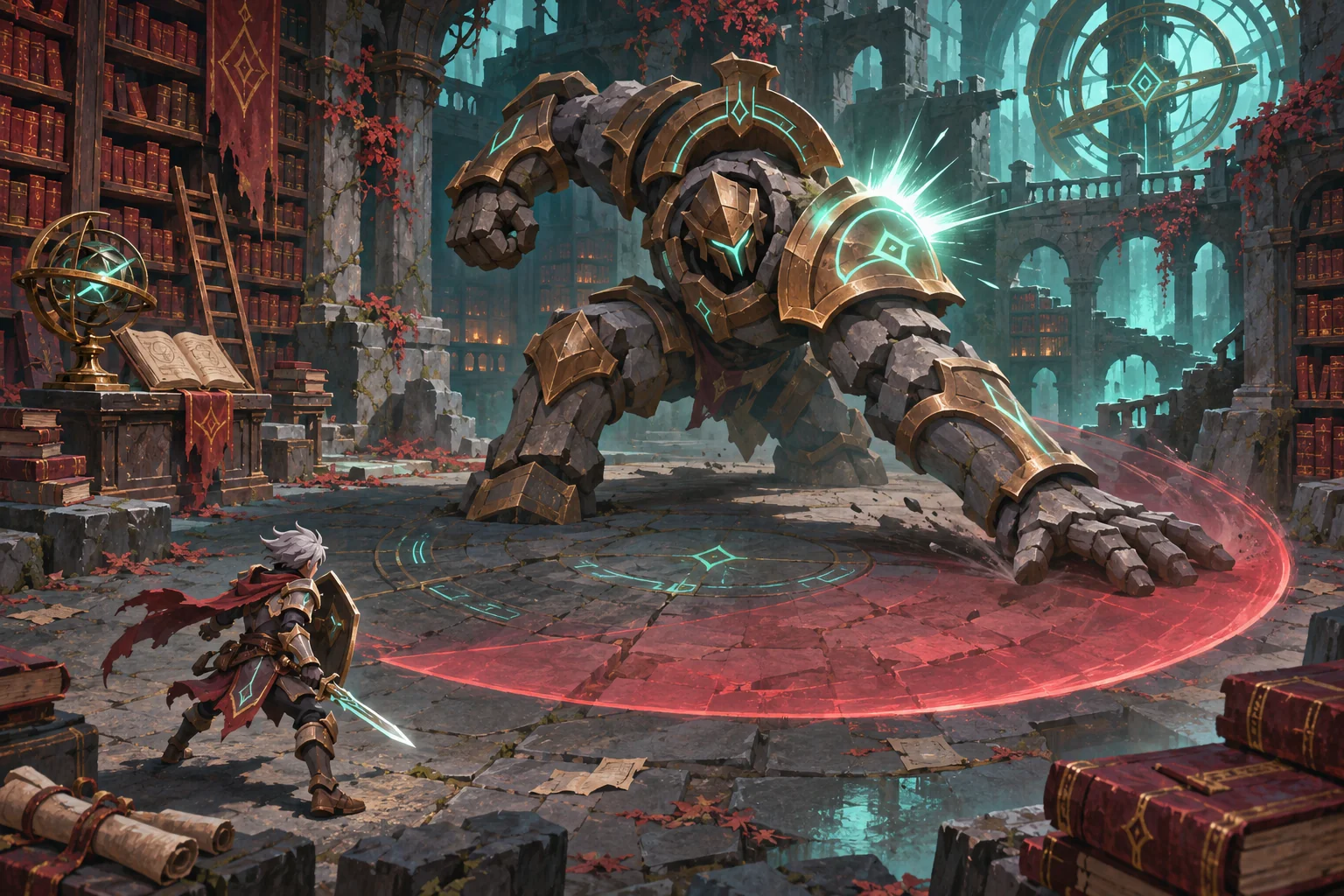
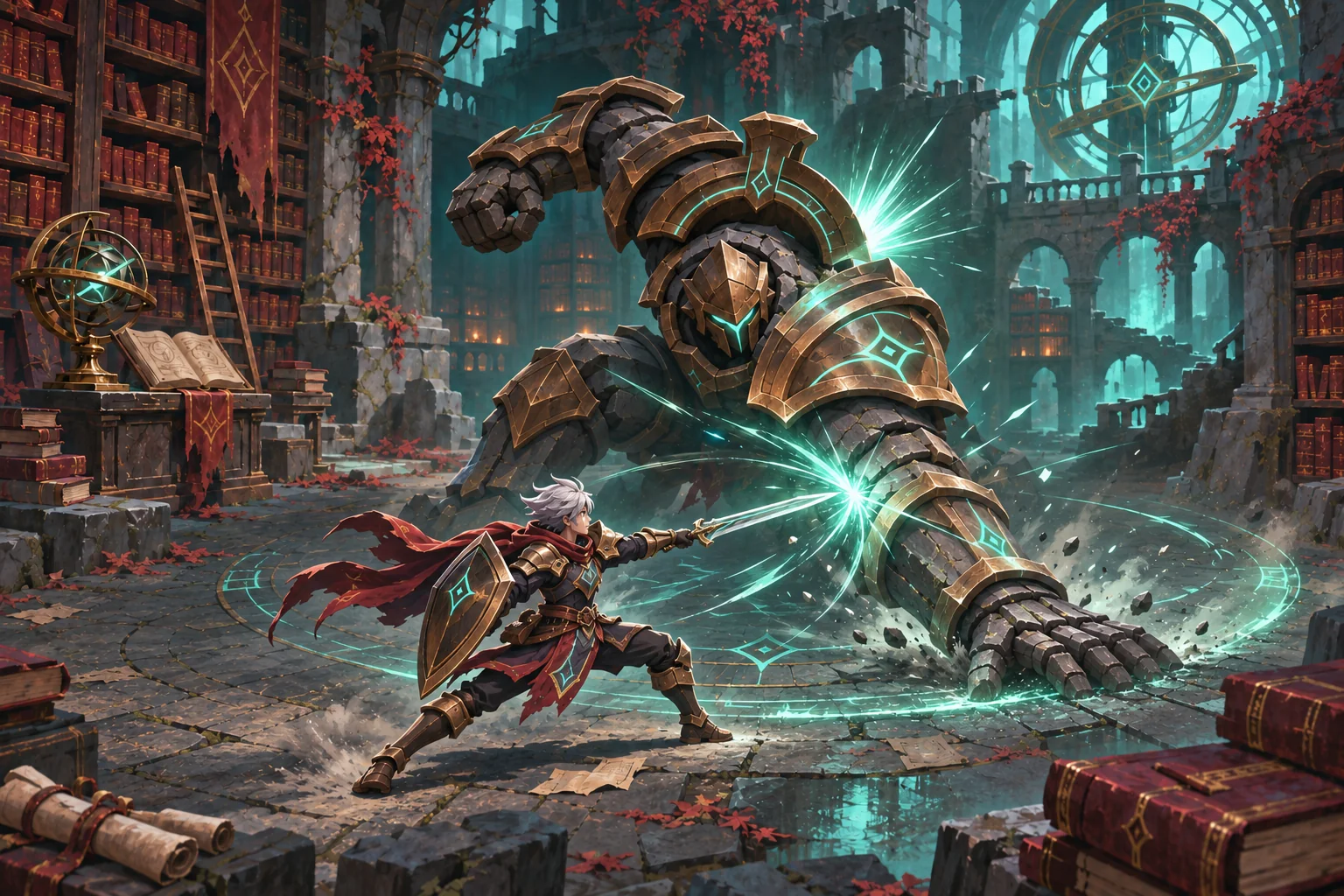
An enemy can teach a skill through its attack pattern, without dropping a scroll. In the fictional action RPG Glass Archive, the warden's bronze shoulder flash precedes a low sweep. The hero must observe, avoid the strike and recognize the repeated tell before learning a counter.
Keep the first encounter to one enemy, one readable tell and one learned ability. Show the tell before impact and log what the player has observed. Then let the hero return to the same enemy with the counter-skill unlocked.
Turn a repeated tell into a combat lesson
Use a small state sequence: warden ready, tell visible, attack resolving, recovery. The tell should be distinct in silhouette, timing or color. The hero can dodge or guard during the wind-up; after the sweep, a short recovery window makes the observation useful.
Track the cue separately from the damage result. A matching shoulder flash adds one observation to the study record. When the required count is reached, unlock a counter-skill that interrupts the next low sweep. Show progress without announcing the answer before the player sees the cue.
Godot's AnimationNodeStateMachine reference describes animation states and transitions. It can help organize visible tells and recovery poses. It does not decide when a fictional ability is learned; keep that rule explicit and inspectable.
Read Godot's animation state machine reference
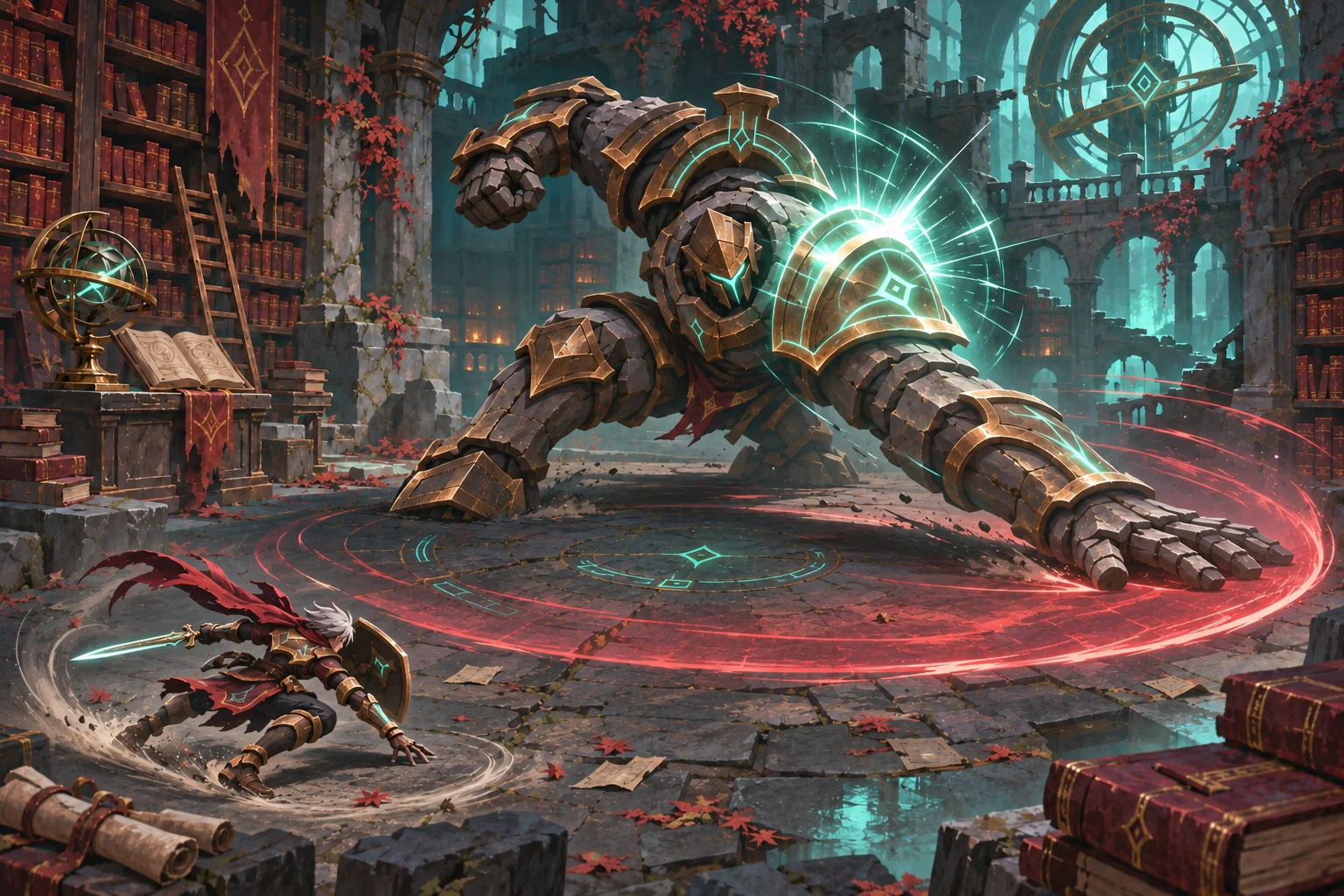
Unlock the counter after two matching cues
The same warden gives three identical shoulder flashes in the deterministic study model. With a three-observation rule, the hero learns the counter after turn 3. This is the baseline sequence; the enemy cues do not change.
Change only the required count to two. The model now unlocks the counter after turn 2. The later attack remains the same, so this iteration measures the rule threshold rather than changing enemy behavior.
This headless result checks recognition bookkeeping only. It does not show whether a person can read the tell, dodge fairly or enjoy action combat. In the interactive prototype, keep the cue visible, ask a player to identify it and verify the learned move works during recovery.
Ask AI for one study-and-counter encounter
Describe one original arena, the warden's shoulder flash, its low sweep, a dodge window and the counter-skill. Ask for an observation log and a visible unlock threshold. Keep damage and attack timing fixed while comparing two versus three matching cues.
After the numeric comparison, play the generated encounter. Confirm that players can notice the cue before impact, that the dodge window is fair and that the learned counter interrupts the next matching sweep. The rule model cannot verify those experiences.
Create one small original action RPG encounter called Glass Archive. A warden shows a bronze shoulder flash, then performs a low sweep with a recovery window. Let the hero dodge or guard. Track each identical tell in a study log. Add a resettable setting that unlocks a counter-skill after either two or three matching cues. Keep the enemy attack sequence and timing identical in both settings. After unlock, the counter interrupts the next low sweep. Show the current observation count, learned skill and combat state. Include restart and a trace of cue, dodge, attack, unlock and counter. Keep the tell readable before impact.
Tune how the enemy teaches before adding more skills
A repeated tell can connect observation to character growth when the cue, study count and counter window are visible. Keep one warden and one skill while tuning the unlock threshold. Add other enemy lessons after the first can be recognized and used in combat.
Start an action RPG prototype with SEELE's AI game maker
Frequently asked questions
Should every enemy teach a different ability?
Start with one enemy and one counter-skill so the tell-to-ability link is easy to understand. Later enemies can teach variations, but make their visual cues and combat responses distinct. If several foes share a lesson, show that relationship instead of making the player guess whether progress carries over.
How can the game tell the player they learned a move?
Show the observation count while the enemy is recovering, then mark the ability as learned when the threshold is met. Give the player a safe moment to try it. Keep the unlock message short and make the skill visible in the action list so it is not confused with a temporary buff.
Does the repeated-cue model test combat readability?
No. It verifies only that a counter unlocks after the configured number of identical cues in a fixed sequence. It cannot measure how quickly people notice a tell, whether an evade feels fair or whether the counter is satisfying. Those questions need an interactive encounter and a playtest.