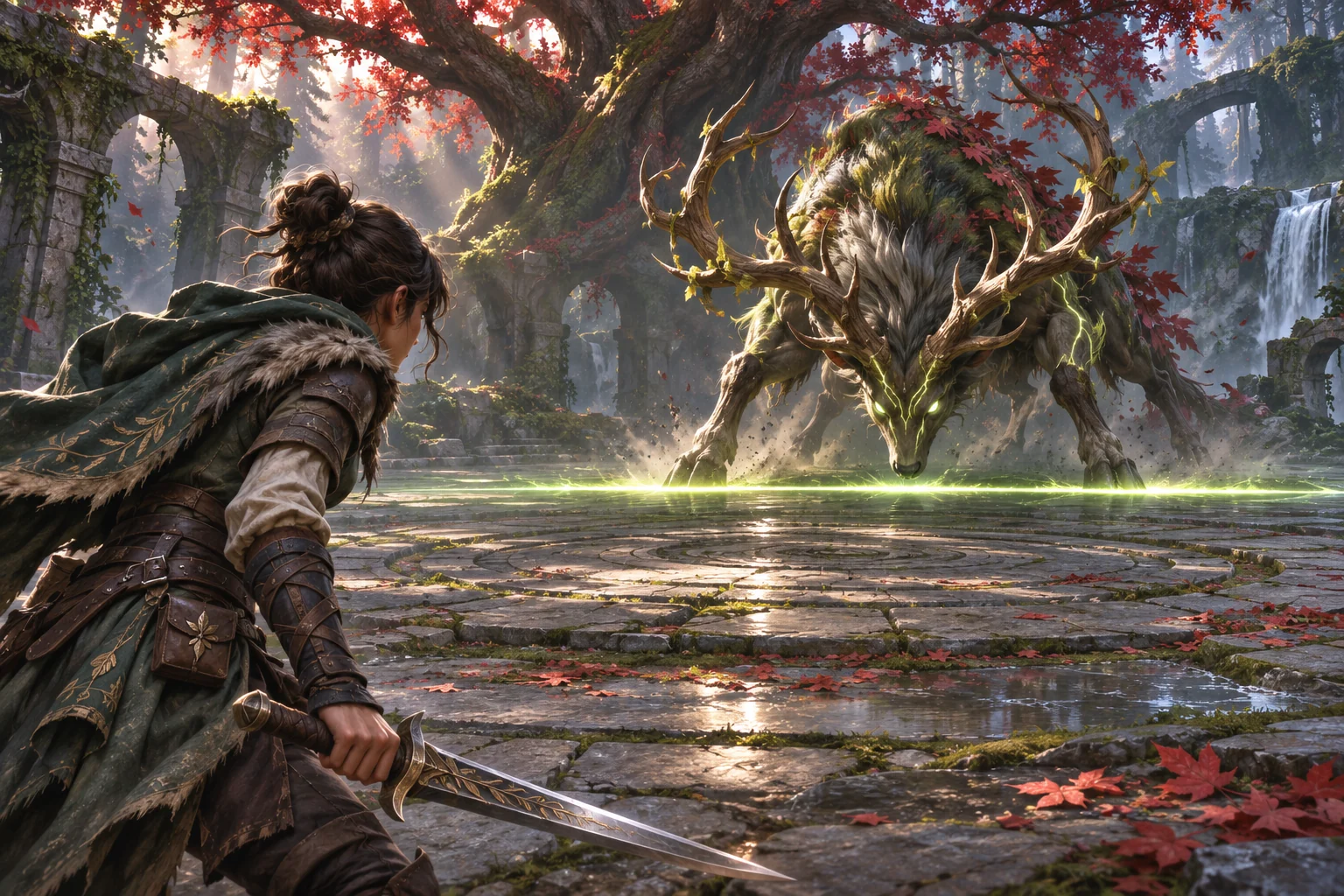
An RPG job system can turn enemy encounters into a source of new abilities. In fictional Field Notes, characters learn a technique by recognizing and surviving a named attack. They do not receive it from a level-up menu: they observe a telegraph, respond safely and bring what they learned back to camp.
Keep the learning rule visible. A Study mark is earned when the player sees a named tell, remains within four tiles and survives its resolution. Two marks for the same attack unlock its linked ability at camp. The fixed example is a paper rules simulation, not observed player data.
Tie ability learning to a repeatable enemy action
Give each enemy one named attack with a tell players can recognize. The Vault Stag’s Line Charge flashes a horizontal row before rushing through it. When a player sees the tell, stays within four tiles and survives the resolution, record one Study mark for Line Charge.
After two marks from the same attack, the linked ability becomes available at camp. This connects combat observation to progression while giving players a reason to learn enemy patterns. Display the attack name, Study count and unlock condition before the encounter.
Show danger, range and the study condition before the attack
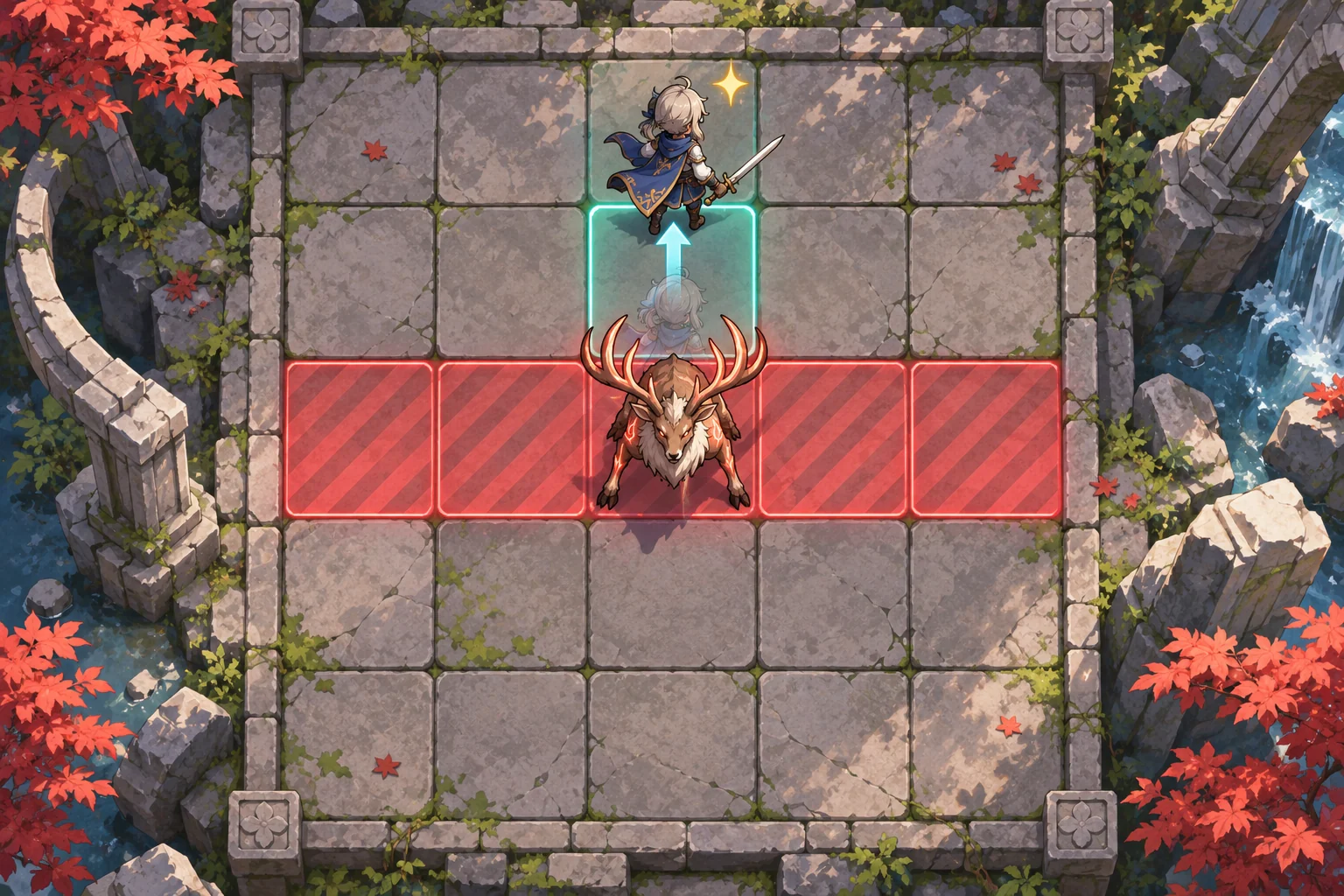
Use a 5×5 open arena. Mark the Stag’s target row, show the four-tile study range and keep a small counter beside its attack name. A safe response must leave the danger row before the charge resolves. Taking the hit or standing outside study range does not earn a mark.
Keep these conditions consistent across enemies. A player should be able to tell whether they observed the move, escaped it and made progress toward learning. Avoid hidden rolls for an ability that is presented as earned through observation.
Replay the Line Charge twice to unlock Rush Step
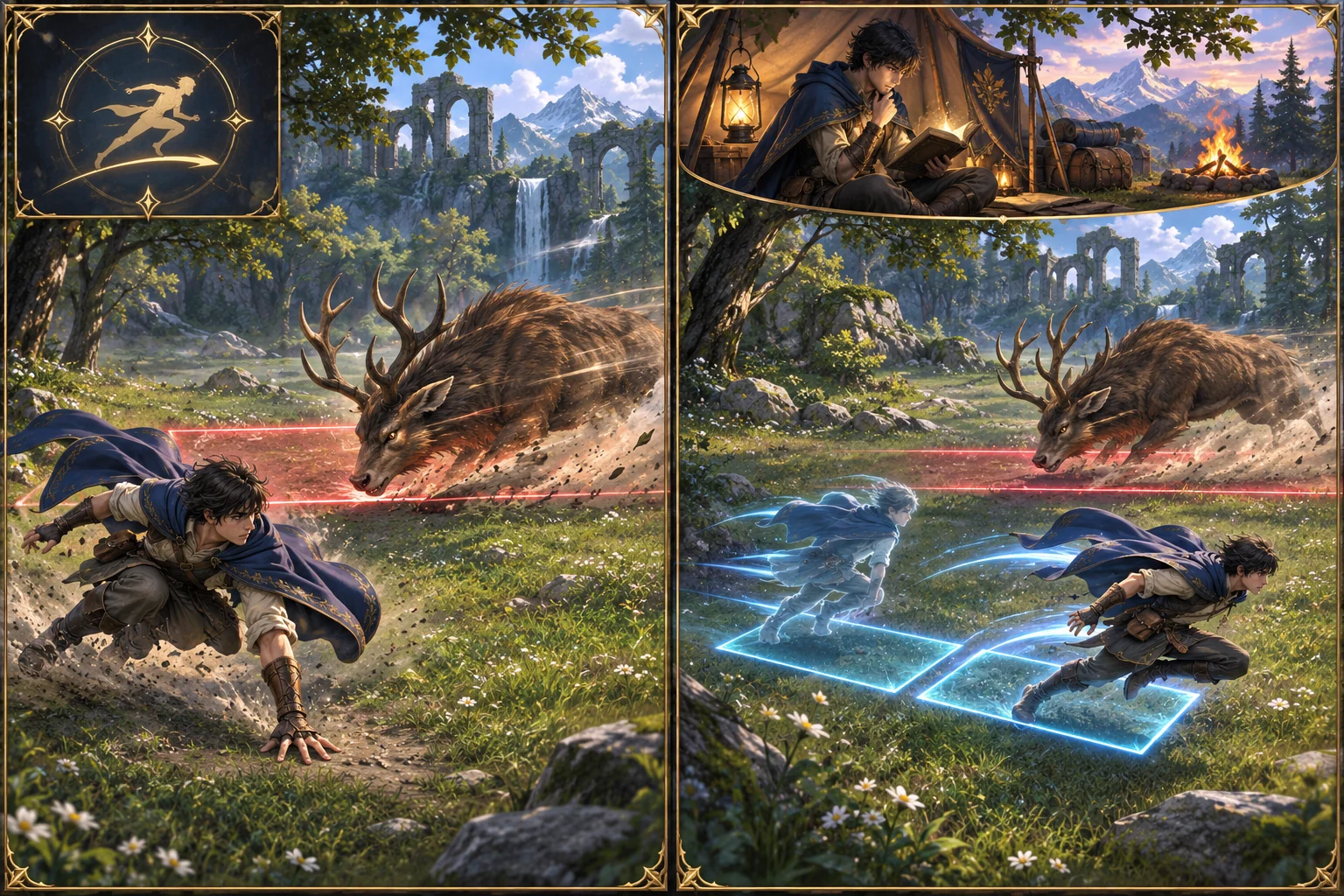
Place the player at (2,3) and the Vault Stag at (4,3). Its Line Charge targets row 3. When the tell appears, move the player to (2,2), still within four tiles but outside row 3. The charge resolves through the marked row; the player avoids it and gains Study mark 1.
Reset the same encounter and repeat the response for mark 2. At camp, Line Charge unlocks Rush Step, which lets the character move up to two tiles in one action. The positions, attack and response stay fixed. This paper replay checks the rule; it does not show that players will learn at a particular rate.
Prototype one learned move before building a job tree
Build one arena, one enemy, one telegraph, the Study counter, one camp screen and Rush Step. Test whether players can identify the warning row, stay within range, dodge and see their progress. Add a reset so the same tell can be repeated without changing other variables.
Once the link between observation and ability is clear, add another enemy with a different tell and a different move. Let job choices equip learned abilities, but keep the source attack visible in the skill record so progression remains connected to what the player studied.
Create Field Notes, an RPG where abilities are learned by studying enemy attacks. Use a 5×5 open arena. Vault Stag at (4,3) telegraphs a horizontal Line Charge through row 3. Player begins (2,3). A Study mark is earned only after seeing the tell, remaining within 4 tiles and surviving resolution. Moving to (2,2) avoids row 3 and earns one mark. Repeat to earn a second mark; at camp unlock Rush Step, which moves up to two tiles per action. Show danger row, range, attack name, mark count and unlock condition. Include reset and do not present the paper replay as playtest data.
SEELE's official page describes a general workflow: generate a playable first version from a prompt, test it in a browser and refine it with follow-up prompts. Use it to inspect whether players can read a telegraph and understand the Study condition; Field Notes and its rules are fictional design guidance.
Prototype enemy-study progression in SEELE
Frequently asked questions
How can an RPG teach abilities through enemy encounters?
Tie each ability to a named attack with a readable tell. Define what counts as observing it, how the player must respond and how many safe observations unlock the move. Show progress so learning feels connected to combat rather than a hidden reward.
What should an enemy-study system show?
Display the attack name, telegraph, danger area, observation range, Study count and unlock condition. Make it clear why an action did or did not count. Start with one enemy and one ability before adding job trees or multiple combat systems.
How do I check an ability-learning rule?
Replay the same telegraph with fixed positions and movement rules. Confirm the player is in range, leaves the danger area and gains exactly one mark per safe observation. This checks rule consistency, not whether players will learn quickly or find the system balanced.