Give each crew member a useful station
FTL: Faster Than Light provides high-level context for crew-managed spaceship events. Starling Wake is a separate fictional ship game. Its crew, stations and numerical bonuses are original examples, not claims about FTL balance or behavior.
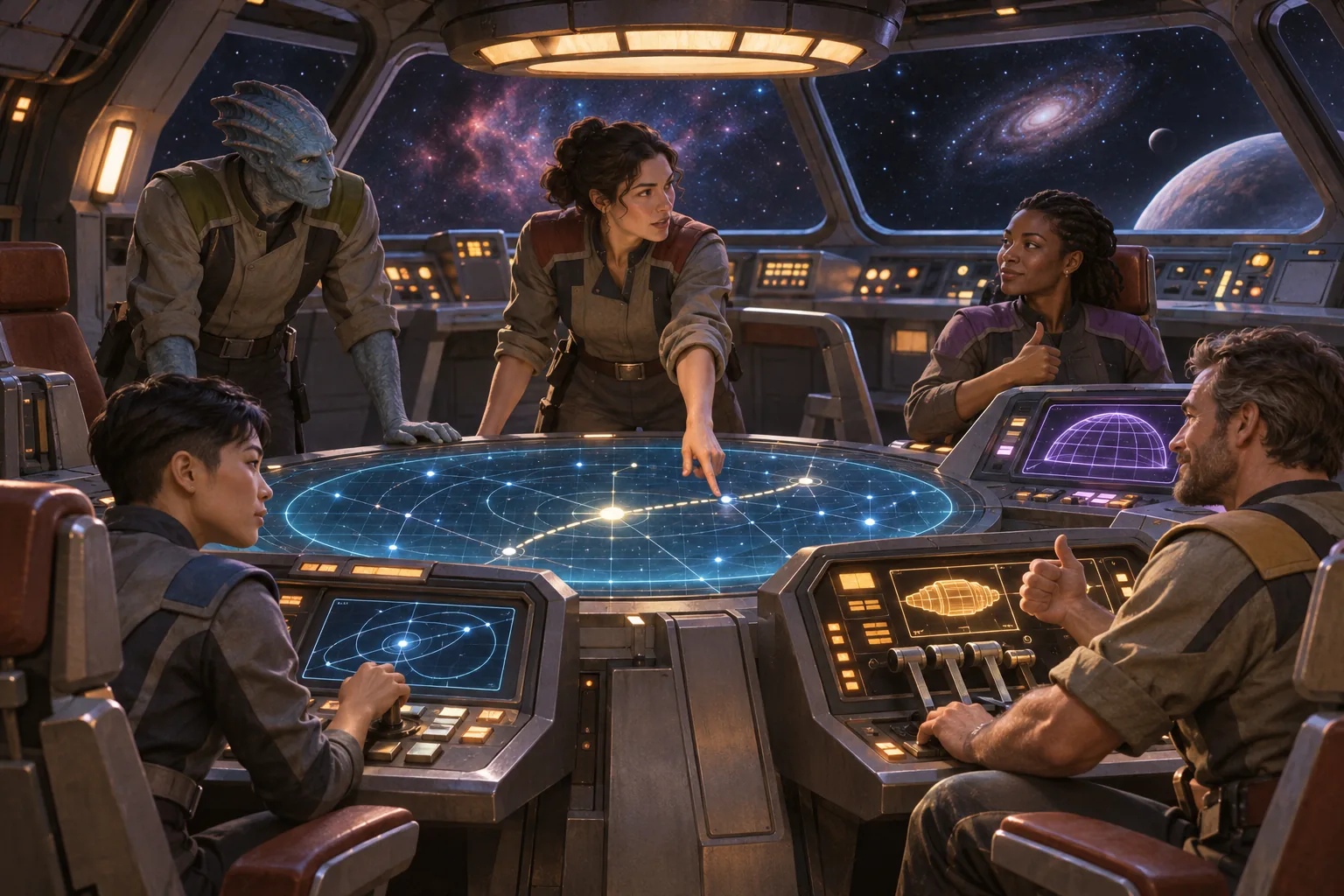
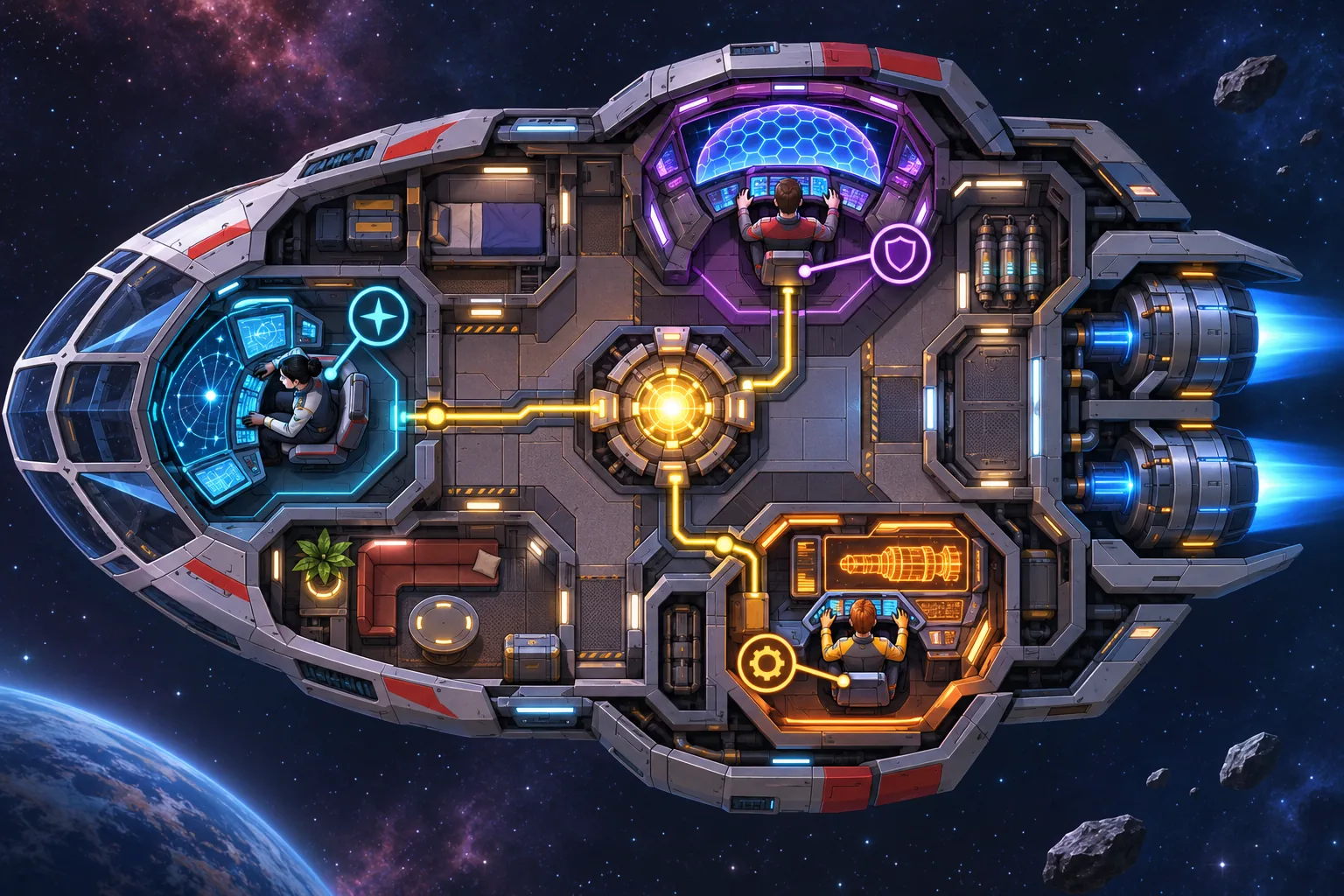
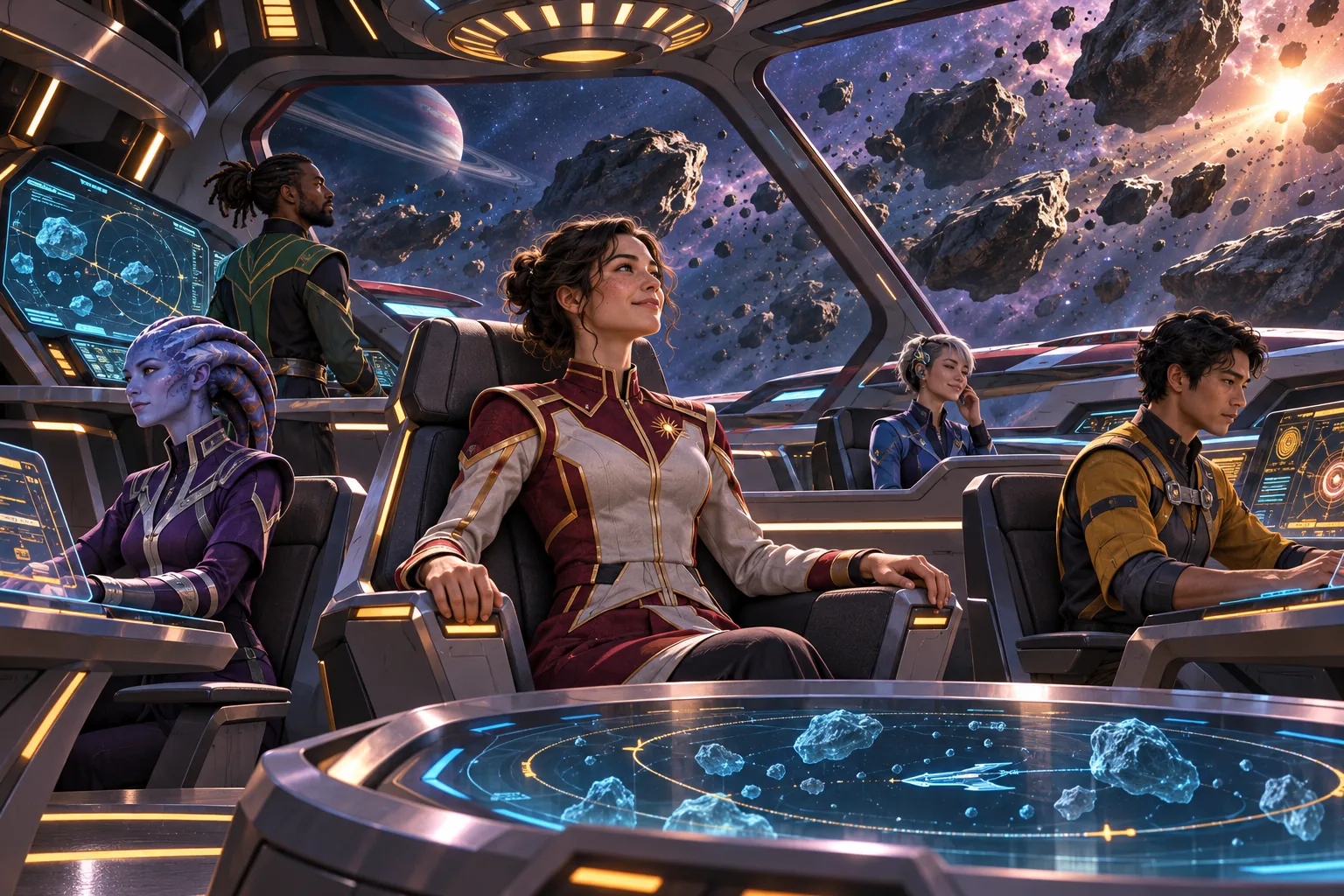
Start with three crew members and three stations: helm, shields and engines. Assign each person to one station before a route event. The pilot at helm adds one evasion to the next encounter, the shield tech blocks one damage, and the engineer at engines removes one cooldown tick. These temporary bonuses make assignments matter immediately.
Make assignments exclusive and readable
Store each crew member's station and show the assignment beside the station name. A station accepts one crew member. When an emergency requires a transfer, move that person to an open station; apply the new bonus at the next event, not retroactively. This keeps the event result tied to a visible assignment snapshot.
The deterministic test assigns all three crew, resolves a route event, and confirms the expected bonuses. It then tries to place two people at helm and verifies the conflict is rejected without moving either crew member. Finally, an emergency reassignment changes the next event only. These checks validate the rule, not whether the roles are strategically balanced.
Let emergencies change the next assignment
Show an open station and the transfer action when an event calls for a specialist. If every station is occupied, require the player to choose who moves. Preserve the current assignment until that choice is confirmed, then update the visible station roster. This makes a rushed crew change understandable instead of silently overwriting a job.
Test the roster before adding more roles
Represent assignments as crew-to-station data and resolve each event from a copied roster snapshot. Godot Resource can hold an original crew and station record; SEELE AI Game Maker is a starting point for an original prototype. FTL offers broad genre context only and does not validate Starling Wake's made-up bonuses.
Build an original spaceship crew system with three people and helm, shields and engine stations. Allow one crew member per station. At the next route event, helm grants one evasion, shields blocks one damage, and engines removes one cooldown tick. Reject an occupied-station assignment without changing the roster. Emergency transfers affect the following event.
Create an original sci-fi game in SEELE · FTL: Faster Than Light on Steam
Frequently asked questions
What information should a crew assignment screen show?
Show each crew member, their current station and the next event effect of that assignment. Starling Wake lists helm, shields and engines with one temporary bonus each. The player can then see who is available before moving someone. This screen should reflect the same roster snapshot the event resolver uses.
How should a game handle two crew assigned to one station?
Choose a clear capacity rule and validate it before changing the roster. This example allows one person per station, so a conflicting assignment is rejected and both existing positions remain intact. If a later design permits teams, make that capacity visible and test the effect of multiple crew.
When should an emergency reassignment take effect?
Confirm the transfer first, then apply the new station bonus to the next event. Do not change an event that has already started, because its result should come from the assignment snapshot shown to the player. A deterministic test can compare the current event with the following event after the transfer.