Introduction
An auto-battler can look simple because the fight plays itself. The real design work happens before combat: players choose units, arrange a team, and decide which combinations are worth the cost. If you want to make a game like Super Auto Pets, borrow that decision-making shape as a design reference, then build a new theme, roster, interface, and ruleset of your own.
Start with one short loop: make a shop choice, change a team, watch an automatic fight, then use the result to make the next choice. This guide turns that loop into a small original prototype called Lantern League, a fictional game about tiny couriers delivering glowing seeds. The names and mechanics below are teaching examples, not features from Super Auto Pets or tested SEELE output.
Identify the loop you want to learn from
The official Steam listing describes Super Auto Pets as an auto-battler and says players battle other players; it also explains that packs determine which pets are available during gameplay (official Steam listing). Those facts help identify the broad reference. They are not a reason to copy its characters, names, art, interface, ability combinations, or presentation.
Instead, ask what you want your own player to decide. For Lantern League, the decision is: “Do I spend now to make the next battle safer, or save a resource for a stronger option later?” That question sets a clearer target than “make it cute” or “add lots of units.”
Design one round from shop to result
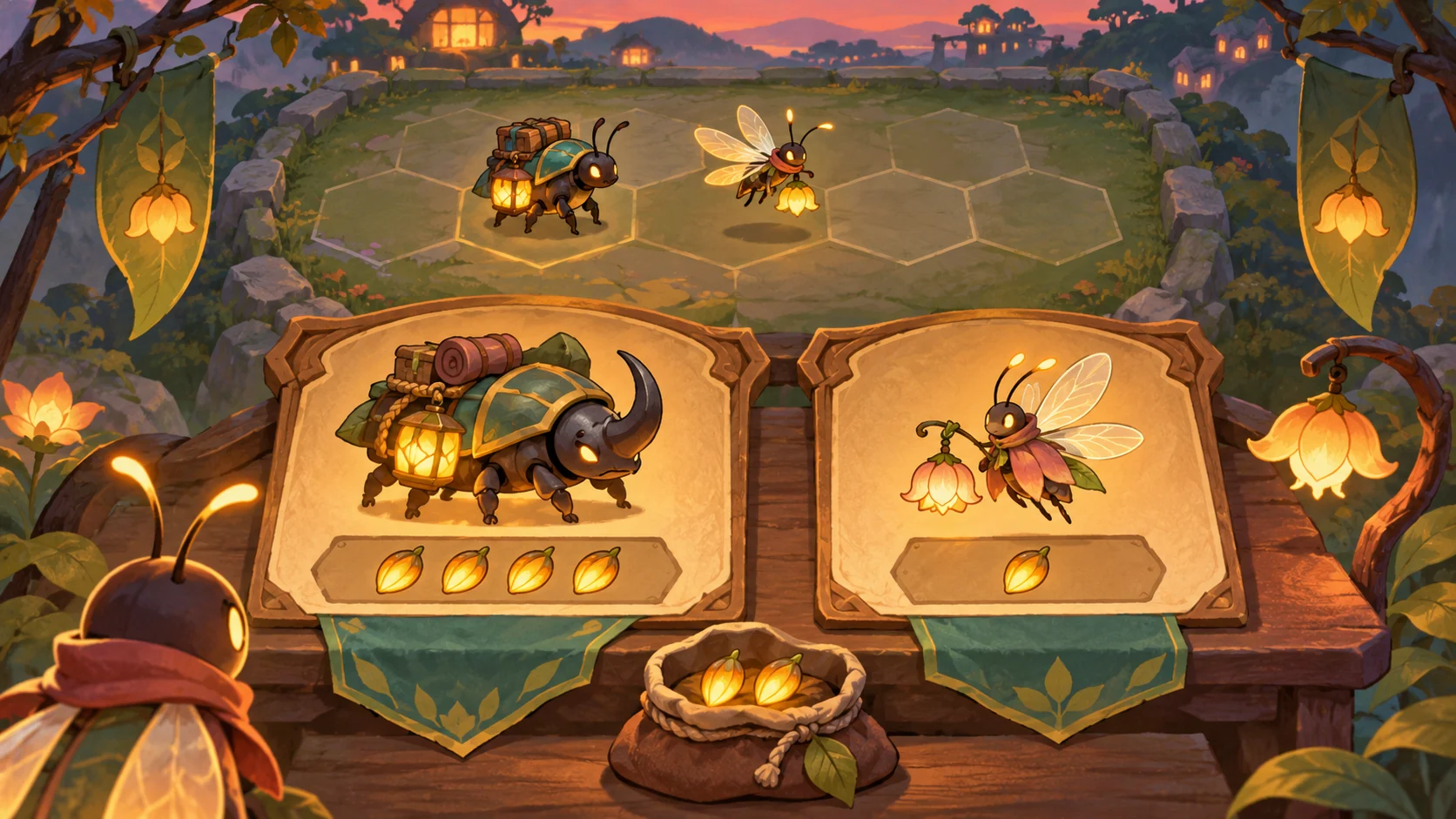
Write down the loop before creating a large roster. Keep each stage connected to an input and an outcome:
| Stage | Player action | Game response | What to check |
|---|---|---|---|
| Shop | Buy, reroll, or save a seed token | Offers units with visible costs | Can the player explain the tradeoff? |
| Team setup | Place up to four couriers in a row | Order determines trigger timing | Does moving one unit change a readable interaction? |
| Automatic battle | Start the round | Units act using a fixed resolution order | Can the player follow why a unit acted? |
| Debrief | Review the winner and battle log | Show key triggers and remaining health | Can the player name one useful next change? |
For a first prototype, remove anything that does not strengthen those decisions. You do not need collection progression, online matchmaking, dozens of status effects, or a complicated economy to find out whether the core loop works.
Create a small original synergy
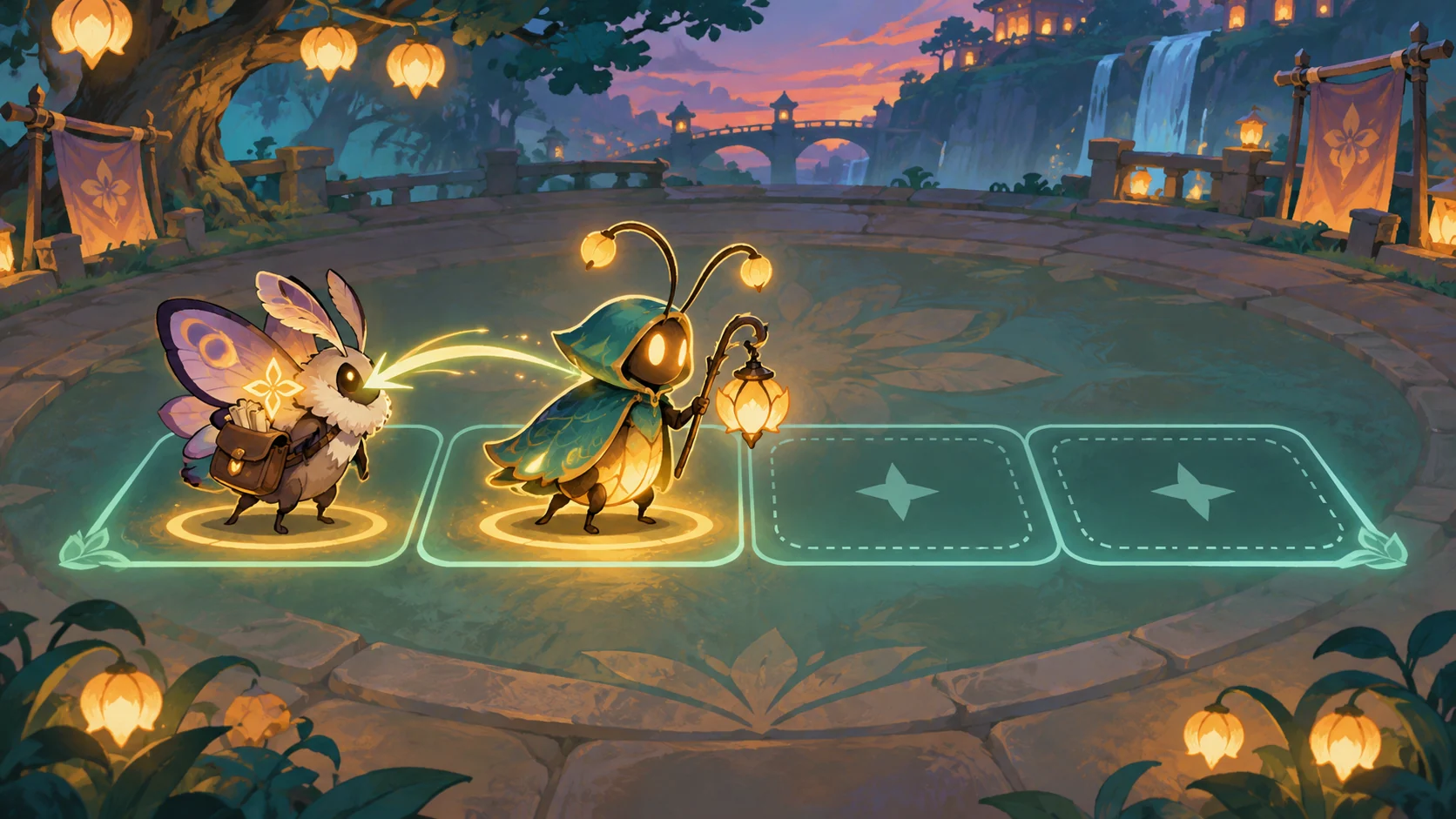
Give each unit one clear job. In Lantern League, the Glowkeeper marks the ally directly in front of it when a round begins. The Moth Courier gains one temporary shield when it starts a battle marked. Put the Glowkeeper behind the Moth Courier and nothing happens; move it in front and the Moth gets its shield. The placement choice is visible, testable, and tied to a rule the player can learn.
| Original unit | Trigger | Result | Counterplay or tradeoff |
|---|---|---|---|
| Glowkeeper | At battle start | Marks the next ally behind it | Low attack, so using it takes a team slot |
| Moth Courier | Starts battle while marked | Gains one temporary shield | The shield is spent after one hit |
| Seed Cart | Leaves the team for a shop purchase | Refunds one seed token once per round | Weak in combat and competes with a combat unit |
These numbers are placeholders for a paper prototype. Adjust them after observing whether the trigger is understood and whether the effect matters. Avoid adding more effects until the first interaction creates a meaningful choice.
Set a rules budget before expanding
For a first playable version, try six units, three keywords, and two shop items. Keep triggers distinct: one may act at the start of battle, one after taking damage, and one when removed from the team. If several units all trigger “when an ally does something,” the log becomes hard to read and balancing becomes harder.
Write every ability as a small rule card:
- Trigger: What exact event starts the effect?
- Target: Which unit or resource can it affect?
- Result: What changes, and for how long?
- Limit: Can it happen once, once per round, or every time?
- Counterplay: What could an opponent or later shop offer do about it?
For example: “When this unit is placed in the first slot, give the unit behind it one shield at battle start. The shield blocks one hit and then disappears.” This is easier to implement and test than “protects its friends.”
Prototype the decision, not the whole game
Build the smallest version that lets someone make a shop choice, arrange a team, and see a battle resolve. A prompt for an AI-assisted starting point could be:
Create a small turn-based auto-battler prototype called Lantern League. Use original lantern-bug courier characters and a four-slot team row. Add a shop with buy, reroll, and save actions; a Glowkeeper that marks the unit directly behind it at battle start; and a Moth Courier that gains one shield if marked. Resolve combat automatically from front to back. Show each trigger in a battle log. Use placeholder art and make all costs and unit stats easy to change. Do not use characters, names, art, interface, or exact rules from an existing game.
Then ask for one change at a time. First verify that swapping the Glowkeeper and Moth changes the battle log. Next add a rival team that can beat one but not both arrangements. After that, test whether the shop gives the player a real reason to buy, reroll, or save.
SEELE’s product catalog describes a prompt-led game studio and the ability to build playable games. That can make it a reasonable place to explore a starting prototype from a concrete idea. You still need to inspect the result, check the rules, and decide whether the loop is fun; the capability description does not establish that this particular design has been generated or tested. You can start from the free AI game maker with the loop and rules written above.
Test whether the prototype teaches its rules
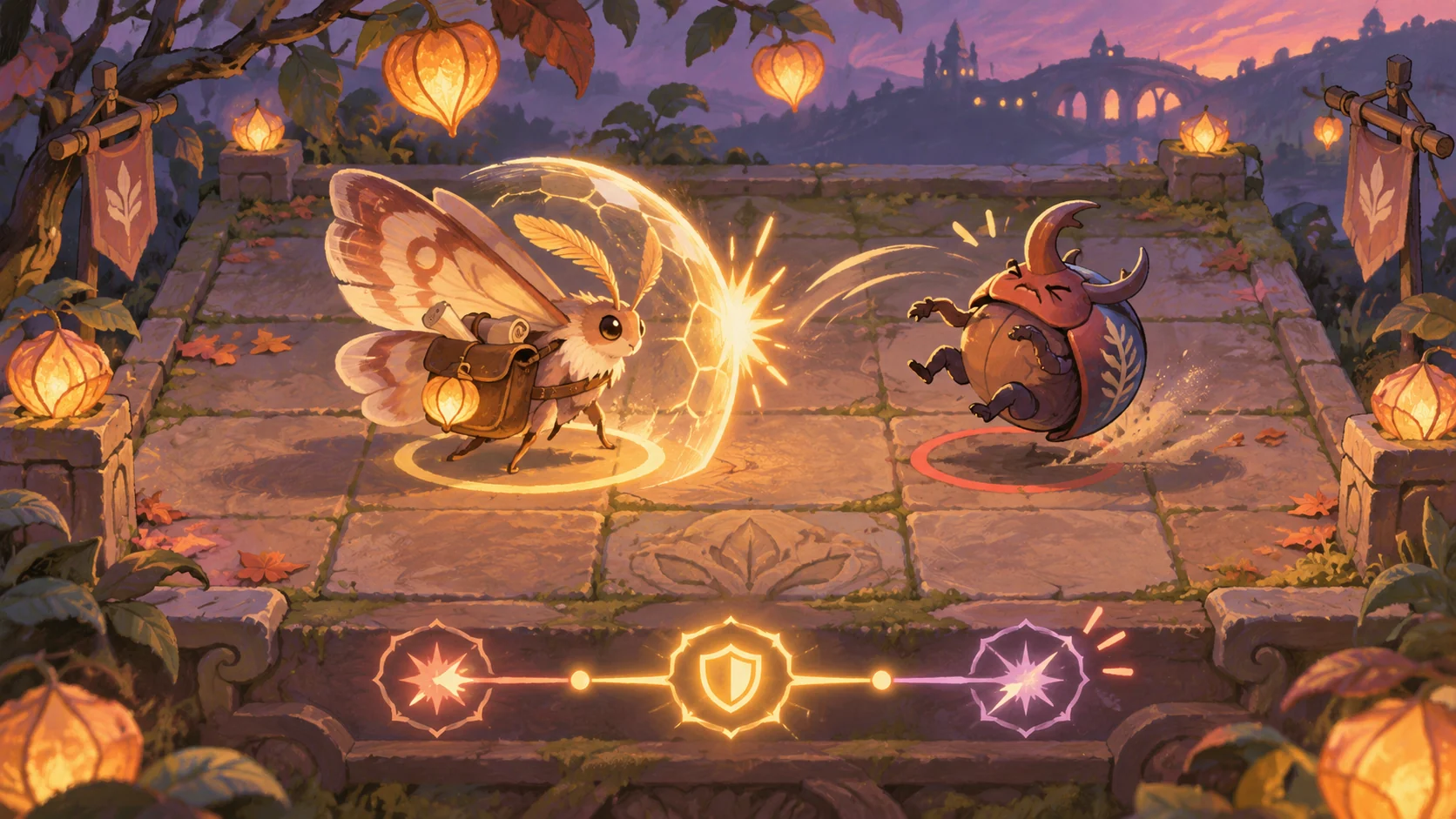
Ask a player to try these cases without explaining the answer first:
- Put Glowkeeper behind the Moth. Does the player predict that no shield is granted?
- Move Glowkeeper in front. Does the log show the mark and shield in the expected order?
- Remove the Moth. Does the shop decision still have a cost the player understands?
- Offer two plausible purchases. Can the player explain which one helps the next fight?
- Repeat a round with a different opponent. Does the player have a reason to change the team?
Record where the player hesitates, what they thought would happen, and what the game displayed. If the rules are correct but the player cannot predict an outcome, improve the trigger wording or battle log before adding content. If every reasonable team wins the same way, change the interaction or the opponent rather than simply adding more units.
Conclusion
To make an original game inspired by Super Auto Pets, begin with the decisions that make an auto-battler interesting: a constrained shop, team order, readable synergies, and a fight whose result teaches the next move. Prototype one interaction, show exactly when it resolves, and expand only after players can explain why it worked. That gives you a distinct foundation instead of a reskinned roster.
FAQ
What should I prototype first in an auto-battler?
Prototype one shop choice, one team-order interaction, and one automatic fight. If a player can predict the interaction and understand the result, you have a useful foundation to expand.
How many units does a first auto-battler need?
There is no fixed number. A small roster of about six units is enough for a teaching prototype if their roles and triggers create different choices. Add units when a playtest reveals a missing decision, not just to make the shop look full.
Should combat be fully automatic?
Automatic resolution is useful when the main decisions happen during team building. Keep it readable with a consistent action order, clear trigger text, and a log of important events. If players cannot tell why the fight changed, improve the explanation before adding more effects.
How do I make the game feel distinct from Super Auto Pets?
Create a new theme, character designs, interface, vocabulary, and rules. Use the reference to understand the broad auto-battler loop, then make original units and interactions such as the Lantern League examples in this guide.
Can AI balance my auto-battler automatically?
AI can help draft variations or create a starting prototype, but balance depends on play data and design goals. Test repeated matchups, record which choices dominate, and adjust costs or effects based on observed outcomes.
Can I use this example as my final game design?
Use it as a starting exercise. The names, units, and numbers are fictional teaching material; change the theme and rules to fit your own concept, then test whether players understand and enjoy the decisions.
---