Introduction
A sandbox adventure feels open because the player can discover a place, collect useful materials, and change the world in response. If you want to make a game like Terraria, start with that broad cycle, then give your world a rule of its own. This guide uses a fictional 2D adventure called Skyloom: players build small wind vanes that redirect drifting seed pods between floating gardens.
That is a design example, not an existing or tested game. It shows how to make one island feel worth exploring before adding a giant map, a long crafting list, or many enemy types.
Start with the part of the reference you want to learn from
The official Terraria listing frames the adventure around digging, fighting, exploring, and building in a sandbox world (official Terraria listing). Those broad verbs can help you think about player goals. They do not require copying Terraria’s items, enemies, progression, art, world layout, or exact systems.
Pick one relationship among the verbs. In Skyloom, exploration reveals wind paths, gathering provides reeds and sailcloth, and building changes where seed pods travel. The player is not just collecting ingredients for a recipe; each construction changes the route through the level and can bring a new garden back to life.
Give the world one rule that ties gathering to building
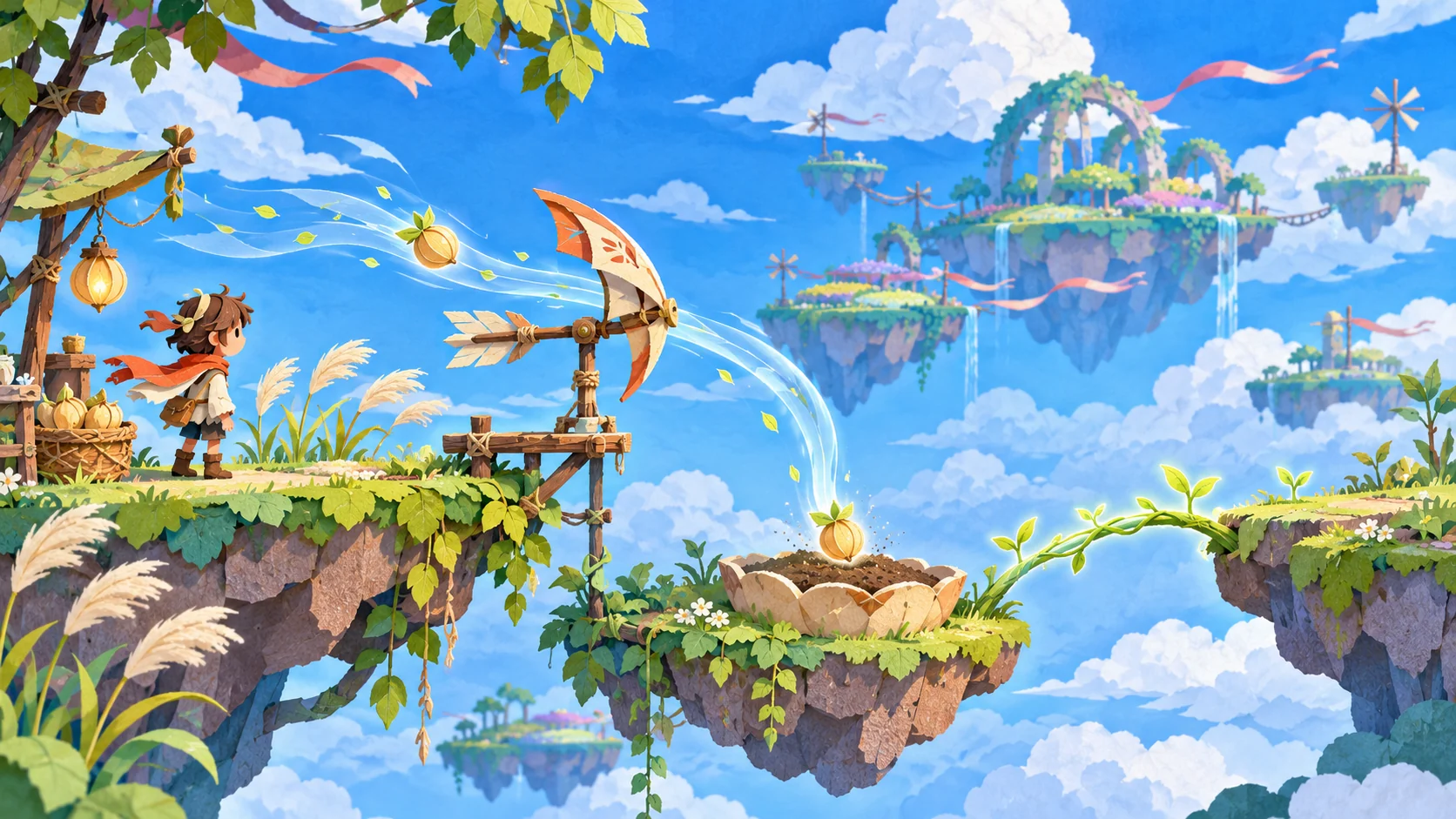
Make your central rule easy to state: “Seed pods drift along the visible wind ribbons until a vane turns them toward another island.” The player can see the wind ribbons as moving leaf specks. A vane changes the direction of one ribbon within its radius. When a pod reaches a soil bowl, a plant grows and opens a short bridge to another ledge.
| Player action | World response | What the player learns |
|---|---|---|
| Follow drifting leaf specks | Find a wind ribbon and its endpoints | Wind direction predicts where pods can travel |
| Gather reeds and sailcloth | Add a small amount to a visible build pouch | Materials have a clear purpose |
| Place a wind vane | One ribbon bends around it | Construction changes the route |
| Guide a seed pod to a soil bowl | A plant grows and creates a climbable tendril | The route has a visible payoff |
| Walk to the next ledge | Reveal another ribbon or material patch | Progress extends the same rule |
The table gives each action a reason to exist. If gathering does not help alter a route, it is busywork. If a plant grows but does not change how the player moves, the reward may need a clearer connection to exploration.
Build one island before building a whole sandbox
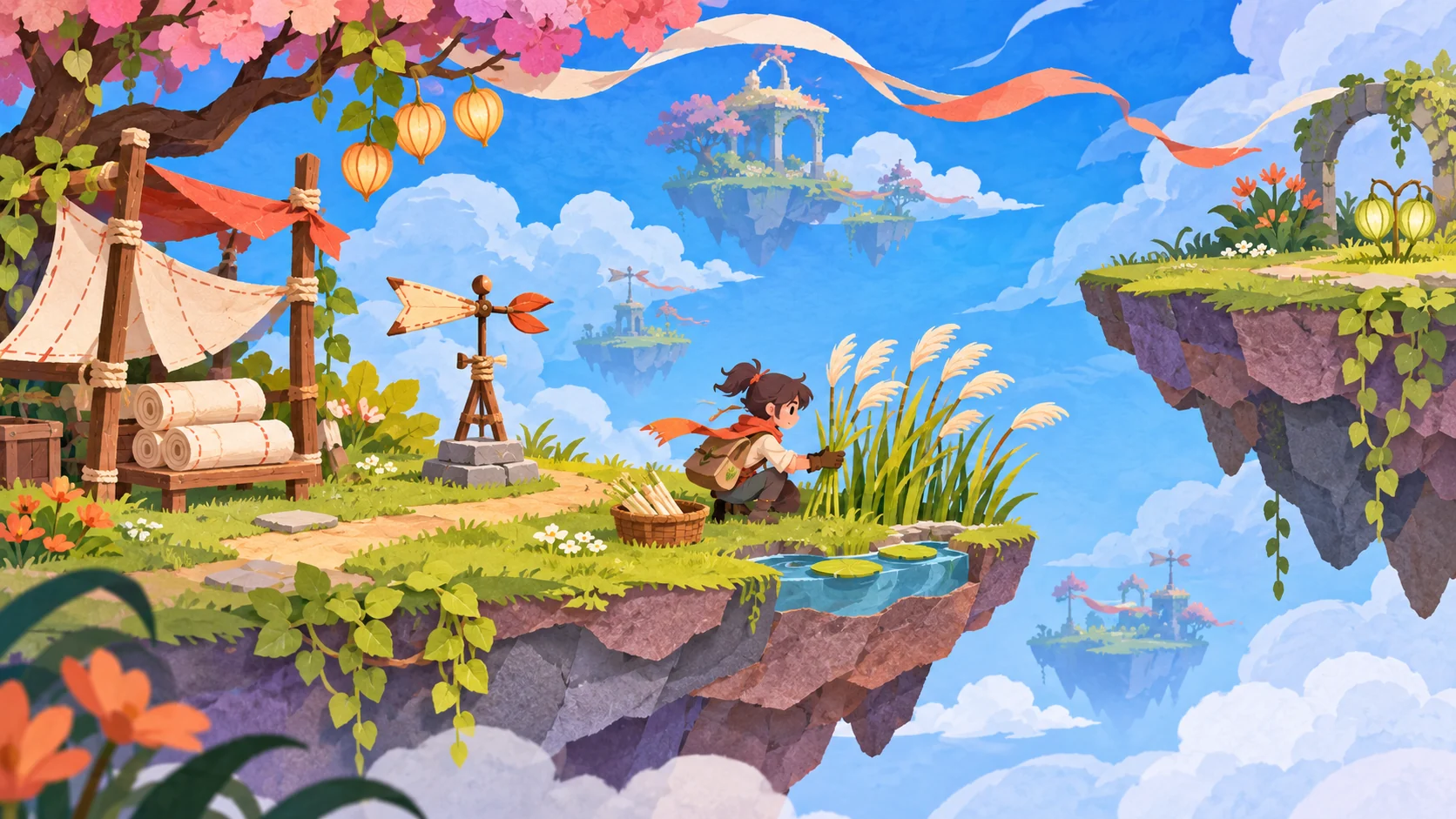
Sketch a small side-view island with a starting ledge, one gap, one visible seed pod, one soil bowl, and a second ledge just out of reach. Draw the wind ribbon between the pod and the bowl. Then place one possible vane location where a player can understand how the route might bend.
Start with three materials:
- Reeds make the vane frame.
- Sailcloth catches and redirects the breeze.
- Seed pods are the moving goal object, not a spendable currency.
These are fictional design roles. Keep the first build recipe fixed while testing the route. If both the cost and the wind behavior change at once, a player’s confusion will not tell you which rule needs repair.
Make construction a meaningful experiment
A useful first build should change what the player can do next. In Skyloom, let the player rotate the vane through a few clear orientations before placing it. Show a faint preview of the altered wind ribbon. Once the player commits, the seed pod moves along that route. A reset action lets them try again without restarting the island.
Avoid making the vane solve every problem. A later island might add a drifting cloud that blocks a ribbon for a few seconds, or a light seed pod that follows a weaker breeze. Add one variation only after players can predict the starter rule. Otherwise, a missed seed might come from the wind, timing, object movement, or placement rather than the intended puzzle.
A simple implementation checklist is:
- Draw the ribbon as a visible path.
- Make the pod move along it at a steady pace.
- Let the vane bend one segment when placed inside a marked range.
- Preview the new path before placement.
- Stop the pod if the route does not reach a valid soil bowl.
- Add reset and a short explanation of what state it restores.
This sequence gives the player useful feedback before and after a choice. It also gives a creator a small set of behaviors to inspect if the rule feels inconsistent.
Use a prompt that describes what can change
A prompt for an AI-assisted starting point should state the world rule, player actions, expected feedback, and limits. “Make a Terraria-like sandbox” is too broad and names no original interaction.
Create an original side-view sandbox-adventure prototype called Skyloom. The player explores one small floating island, gathers reeds and sailcloth, and places a wind vane to redirect visible wind ribbons. Seed pods drift along the ribbons. Guide one pod into a soil bowl to grow a tendril bridge to a second ledge. Show a preview of a route before the vane is placed, plus a reset action. Keep the first build recipe and movement rules easy to inspect and change. Use original placeholder art; do not reuse any existing game's items, enemies, characters, worlds, interface, art, or text.
SEELE’s product catalog describes a prompt-led game studio and playable-game creation, so it can be a place to explore a specific starting idea. The catalog does not establish that Skyloom has been generated, tested, or balanced. You can try the free AI game maker with the rule and feedback above, then inspect what the prototype actually does.
Diagnose the first loop before adding more content
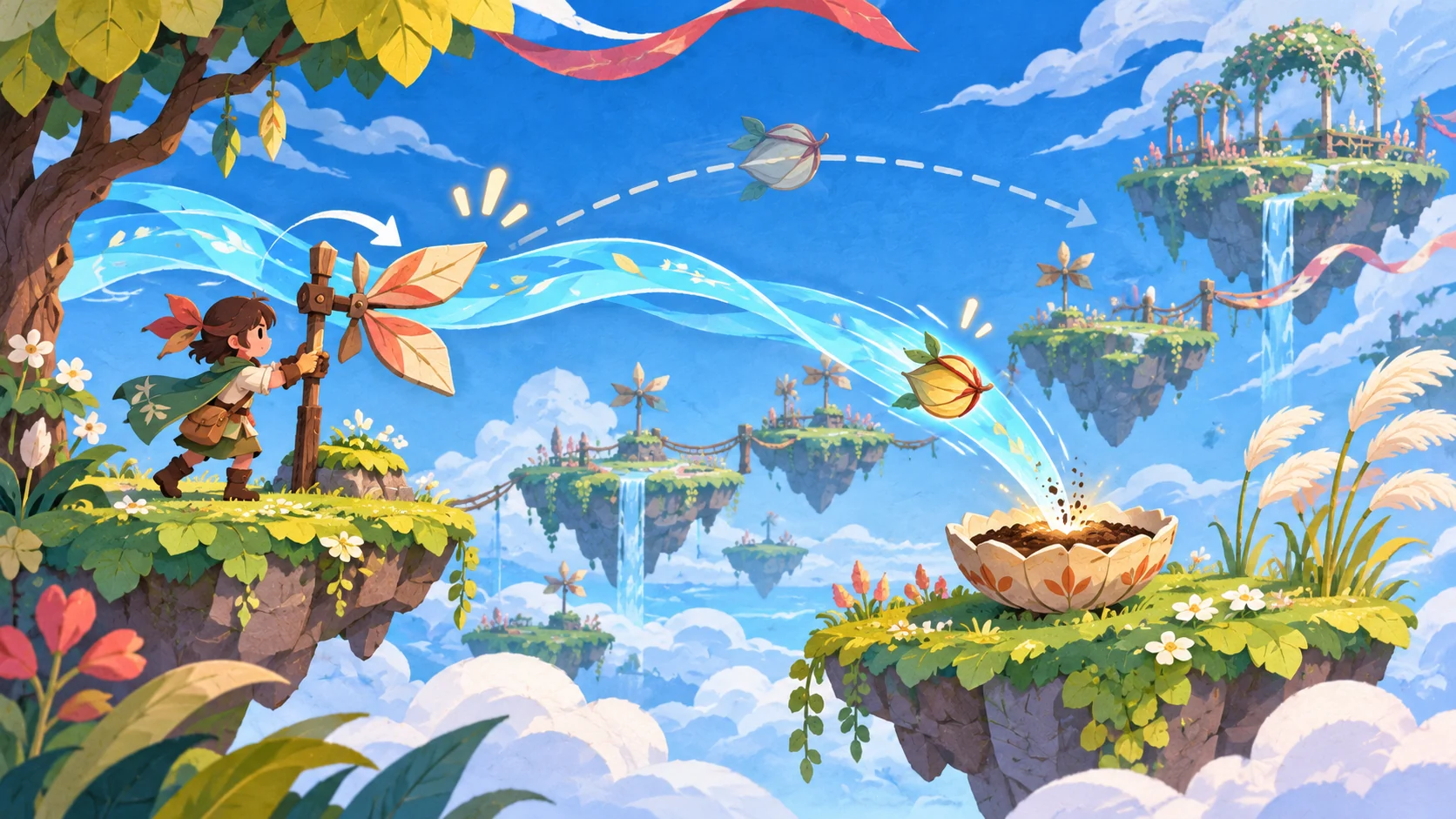
If a seed pod misses the soil bowl, identify which link in the loop broke. Did the player notice the wind? Did the vane affect the ribbon? Did the pod follow the preview? Did the garden reward make the next ledge reachable? Those are separate questions.
| What happens | First question to ask | A focused adjustment |
|---|---|---|
| Player walks past the wind ribbon | Is the direction visible at the starting camera? | Increase contrast or show leaves moving along it |
| Vane placement feels random | Can the player see its effective range? | Preview the changed ribbon before committing |
| Pod ignores the preview | Does the moving object use the same route as the preview? | Align the route calculation and visual path |
| Player reaches the garden but sees no reward | Does growth change traversal or reveal something? | Connect the plant to a bridge or new ledge |
| Player gathers everything without thinking | Are materials tied to one clear build choice? | Reduce the recipe and make the scarce material matter |
These are hypotheses for a prototype, not reports from a completed playtest. Change one cue or rule at a time, repeat the same starting sequence, and note whether the player can predict the next result.
Test whether the island teaches its rule
Ask a new player to explain where the seed pod will go before they place the vane. If they cannot point to the relevant wind ribbon, the clue is not clear enough. After the vane preview appears, ask them to predict the new route. If the prediction matches but the pod moves elsewhere, the implementation is inconsistent. If they understand both routes but do not care about the destination, strengthen the garden’s payoff rather than adding more crafting.
For a first test, use one seed pod, one vane, one soil bowl, and one reset. Watch the player once without giving hints. Then repeat with one visual cue changed. This simple comparison can tell you whether the cue helped before you invest in more islands, recipes, or hazards.
Conclusion
To make a Terraria-inspired sandbox adventure that feels like your own, choose a broad exploration-and-building loop and tie it together with an original world rule. Skyloom links visible wind, a small material set, one buildable vane, and a seed pod that creates a new route. Prototype one island, make the cause and effect visible, and expand only after players can predict how their construction changes the world.
FAQ
What should I build first in a sandbox adventure?
Build one small area with a clear exploration goal and one way the player can change it. A compact loop is easier to understand and adjust than a large world with many unfinished systems.
How do I make a game inspired by Terraria without copying it?
Use a broad design interest such as exploration and construction, then create your own world, art, objects, progression, and central rule. Skyloom’s wind-routing example is fictional and separate from Terraria’s specific content.
How many crafting recipes should a first prototype have?
Start with only the recipes needed to test the main interaction. If one buildable object can show whether construction changes exploration, extra recipes can wait.
Should a sandbox game include combat?
Only if combat supports the player task you want to test. A gathering-and-building prototype can first establish whether exploration and world changes are satisfying; add combat later if it creates a distinct decision.
Can AI make the whole sandbox game for me?
An AI tool may help create a starting point from a clear prompt, but this example has not been built or tested. Inspect the actual movement, route preview, and seed behavior before treating any generated result as complete.