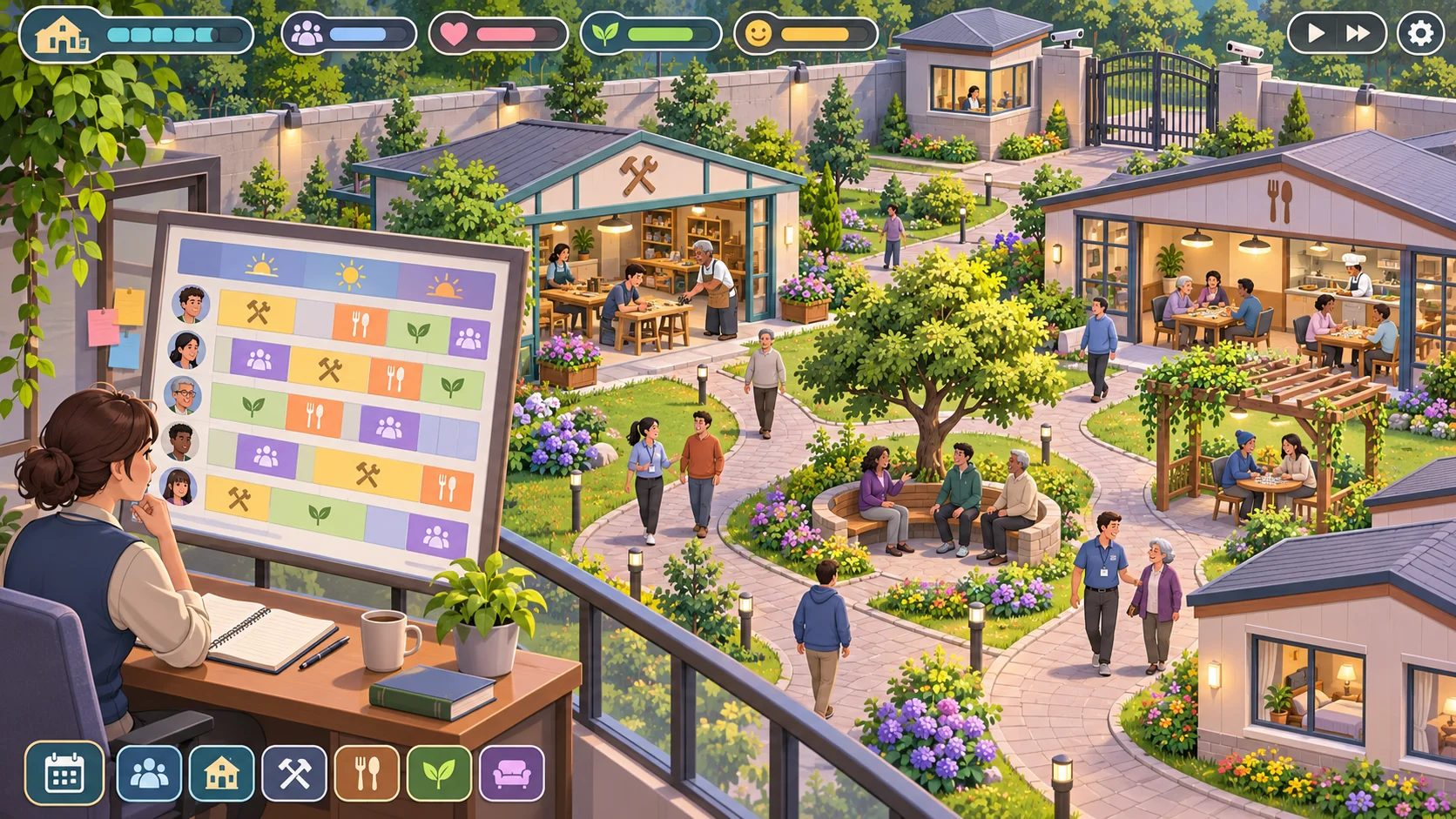
Daily activity choices create a life simulation’s rhythm by asking players what they want to prioritize. A good schedule gives each activity a distinct purpose, communicates its cost, and leaves room for personal routines. Stardew Valley’s official Steam listing describes an open-ended country-life RPG with farming, mining, combat, fishing, and foraging; the scheduling guidance here is original.
Shape a day around meaningful priorities
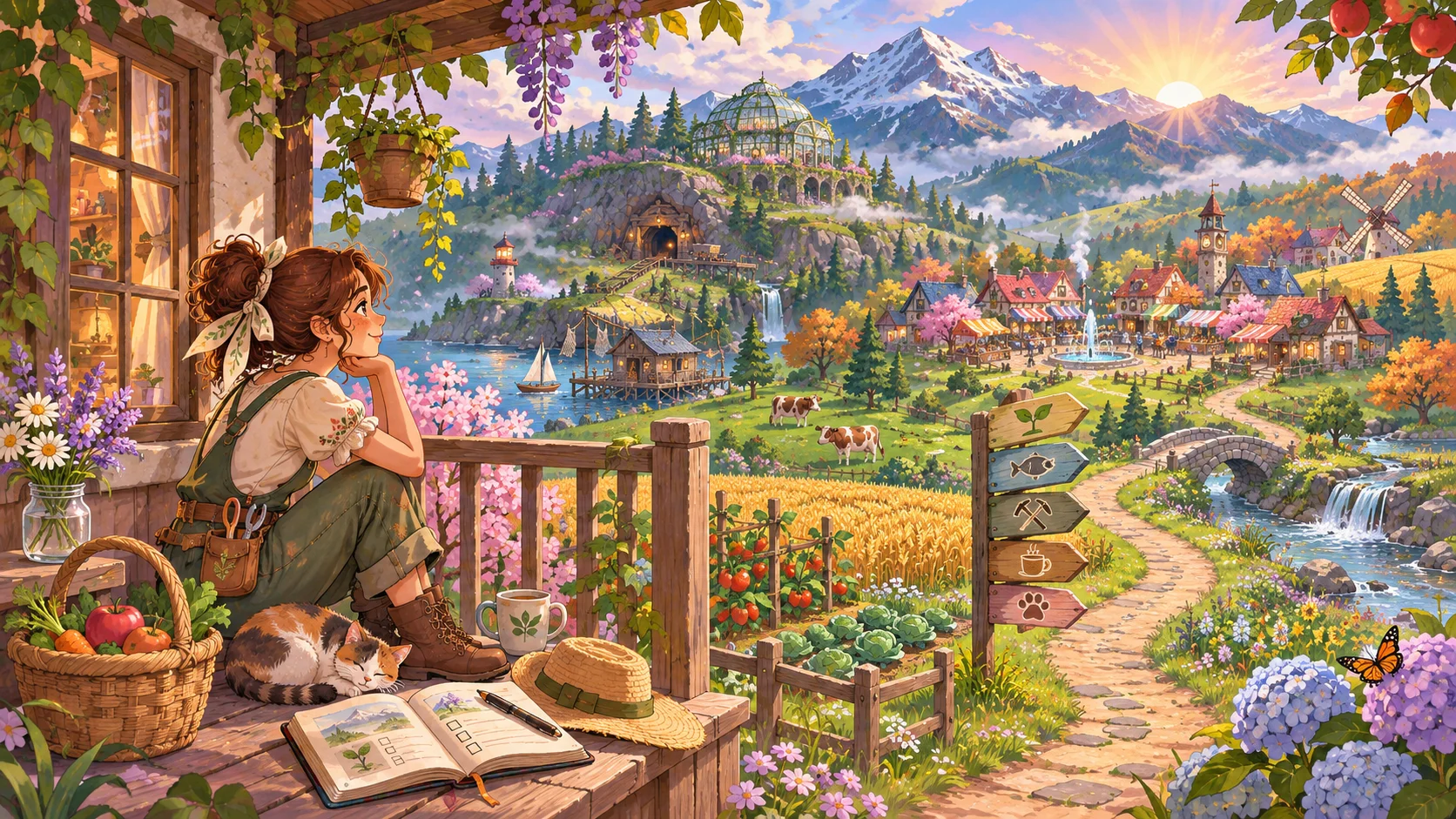
Daily activity choices give an open-ended life simulation its rhythm. Stardew Valley’s official Steam listing describes an open-ended country-life RPG with farming, mining, combat, fishing, and foraging among its activity areas. This is only public genre context; the scheduling model below is an original design proposal.
Begin with the goals players can pursue during a day: maintain a home, earn resources, explore a new place, visit someone, or prepare for a future event. Each activity should contribute to a distinct goal. If every action only increases money, players may treat the schedule as an efficiency problem rather than a way to shape the day.
Give activities different time scales. A quick conversation may fit between errands, while a long expedition becomes the day’s main commitment. Use transitions and location changes to make those costs feel consistent. Players should know when an activity will take the rest of the day and what options may remain afterward.
Make activity costs and rewards legible
Time and energy are useful constraints when they are visible. Show an approximate duration, effort level, and likely reward before an activity begins. The information does not need exact numeric forecasts; a clear “short walk” or “tiring expedition” can establish expectations if the game uses consistent rules.
Avoid hidden costs that only appear after a commitment. If a conversation consumes the remaining evening, say so. If a crop task takes energy only when tools are used, show the distinction between walking and work. Consistent costs help players plan and reduce the feeling that the game is punishing curiosity.
Rewards can be tangible or relational. A small harvest, a new location clue, or a conversation can all make an activity worthwhile. Avoid making social actions invisible bonuses while resource tasks show exact gains. Let players understand the kind of progress each path supports, even if the exact outcome depends on context.
Let routine and changing conditions coexist
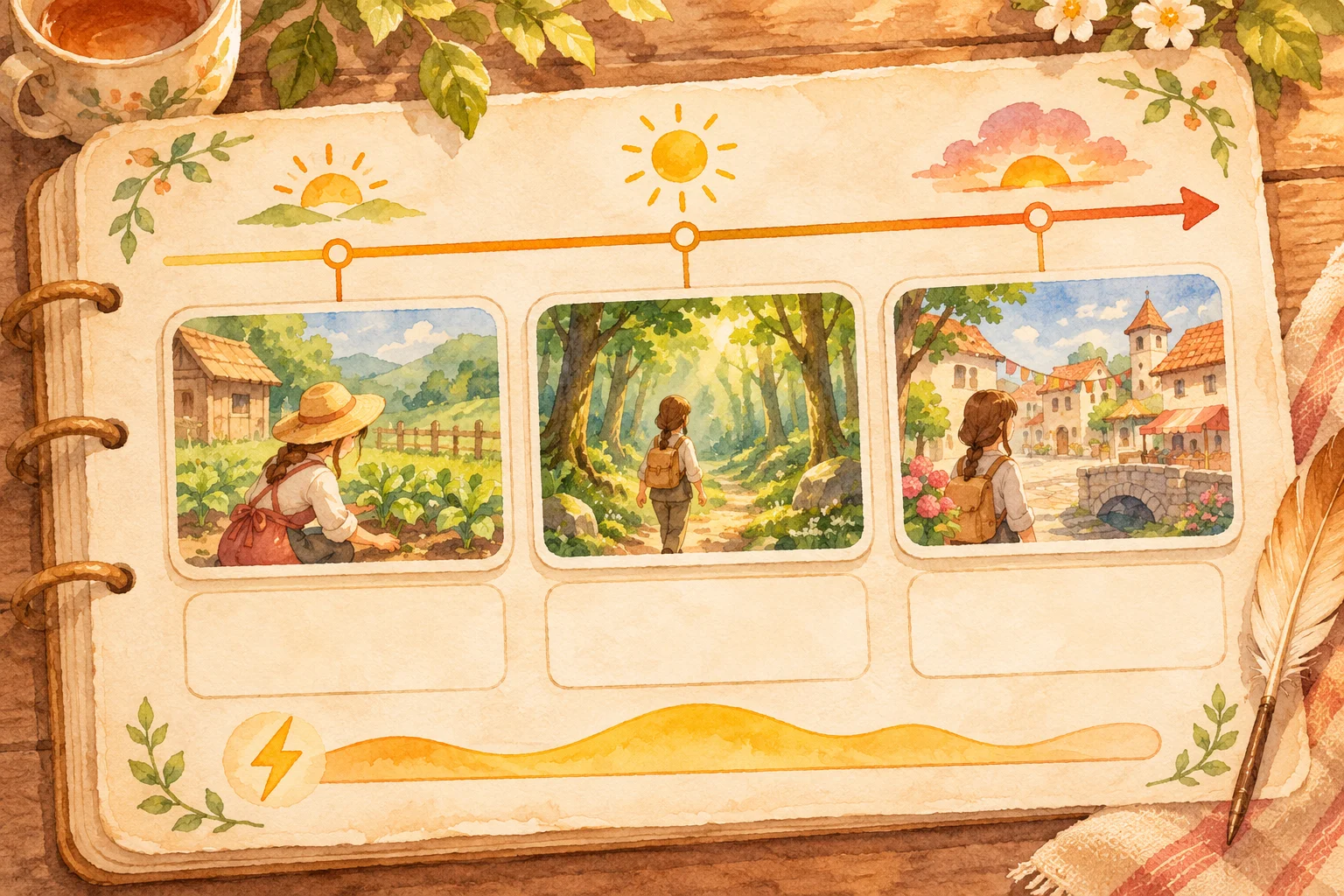
A familiar routine can make a life sim comforting, while changing conditions create reasons to adapt. Weather, shop hours, seasonal tasks, and local events can alter which choices feel attractive. Show these changes through the world and calendar before they close an opportunity.
Keep routine tasks easy to repeat when they express a player’s chosen lifestyle. An activity that must be performed every day should not require a long sequence of confirmations. Offer batching, shortcuts, or automation as the player becomes familiar with it. Reserve attention for choices that are newly meaningful.
Make recovery part of the schedule. Players will sometimes spend energy unwisely, miss a visit, or discover that a planned route takes longer than expected. A low-stakes rest, a later chance to reconnect, or an alternate way to complete a need helps the day remain a story rather than a pass/fail checklist.
Test daily rhythms across player styles
Playtest several routines: a player focused on farm income, a player who explores, and one who spends time with neighbors. Record time left at night, unmet needs, activity variety, route backtracking, and whether players feel rushed. Ask what they wanted to do but could not, and whether that limitation felt intentional.
Check the calendar over several days. A single day may feel flexible while a sequence of deadlines makes every action mandatory. Identify collisions between crop maintenance, character availability, and travel. Move or soften deadlines that force the same optimal schedule unless planning pressure is central to the game.
Finally, verify that small choices accumulate into a sense of personal routine. A player should be able to describe how their days differ from another player’s. If every tester repeats the same sequence, adjust activity rewards, timing, or availability. Keep the overall rhythm understandable and allow players to spend a day differently without losing all progress.

Related guide
For another cozy progression loop built around craft and care, see the guide to crafting activities.
Frequently asked questions
How do you design daily choices in a life sim?
Choose a few activities that support different goals, such as earning supplies, exploring, or building relationships. Give each a visible time or energy cost and a clear reward. Let players combine them in more than one way so a day can feel purposeful without requiring a single optimal route.
How many activities should fit in one day?
Set the day length from the decisions you want players to make, then test whether a typical routine leaves room for one or two surprises. A short day can make choices sharper, while a longer day can support relaxed exploration. Make the end-of-day transition predictable and avoid silently wasting leftover time.
How should energy affect daily activities?
Use energy to make strenuous actions distinct from low-effort social or planning tasks. Show the likely cost before the player commits and provide recovery methods that fit the day’s rhythm. If energy reaches zero, communicate the consequence in advance and avoid making ordinary experimentation feel punishing.
How can daily schedules support relationships?
Offer small relationship actions that fit naturally into a route, such as sharing a meal or helping with a local task. Let the player see when a character is available and how the interaction connects to a current story or need. Avoid requiring a perfect gift or calendar sequence to maintain a basic relationship.
Prototype a daily schedule
Use AI to generate alternate routines and identify calendar collisions, then test the pace with players who choose different goals. Designers should decide how much freedom, pressure, and recovery the day provides. Start a game project with Seele.