Give materials clear contact rules
Noita is a magical action roguelite whose Steam page describes a world where every pixel is physically simulated. Emberwell is a separate fictional magic sandbox. Its materials and reactions are original examples, not claims about Noita's specific material rules.

Use three material types: rainwater, cinder resin and glass bloom. When rainwater touches cinder resin on an orthogonally adjacent cell, both are consumed and one glass bloom appears in the resin cell. Diagonal contact does nothing. A heat pulse touching glass bloom converts it to crystal. Each interaction uses the board snapshot from the start of the tick.
Resolve each tick from one board snapshot
Collect eligible material pairs before applying changes. If two rules compete for a cell, sort them by row then column and allow the first match only. Consume the input pair once, create the output in the resin cell, and defer any further reaction until the next tick. This prevents scan order from changing the result.
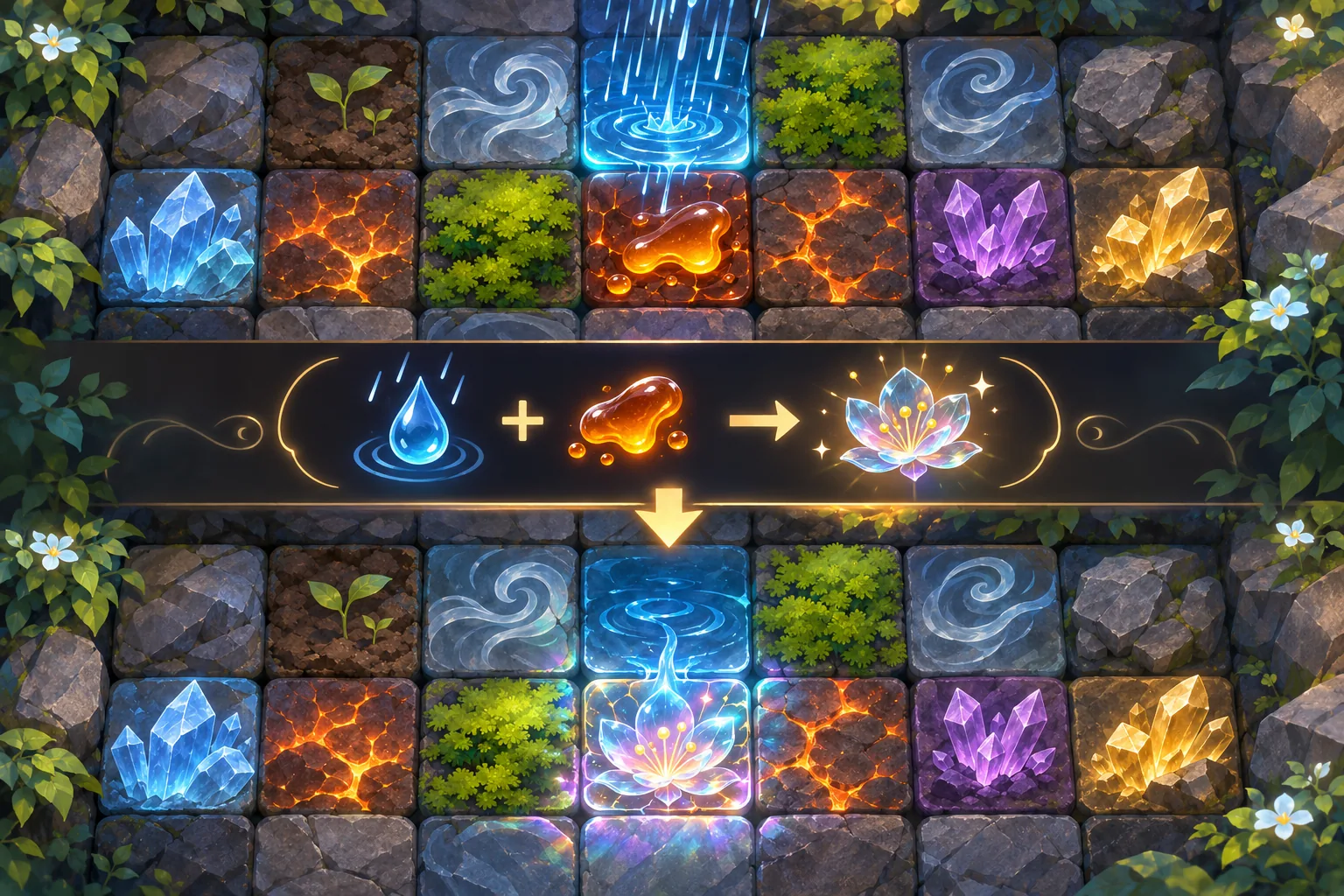
The test confirms diagonal rain and resin do not react, while orthogonal contact creates exactly one bloom. The consumed cells cannot be reused in the same tick. On the next tick, a heat pulse changes bloom into crystal. These checks validate deterministic reaction order, not the visual feel of a large material simulation.
Make reactions legible as they happen
Show the two input materials briefly before replacing them with the output. A small reaction log can list the rule name and affected cells. Players can then experiment with one material pair at a time and understand why a new substance appeared, even when several elements move across the cave.

Test a few rules before filling the world
Represent materials with stable IDs and keep the reaction table separate from rendering. Godot Resource can store original material definitions; SEELE AI Game Maker is a starting point for a prototype. Noita offers high-level pixel-simulation context only and does not validate Emberwell's rules.
Build an original magic sandbox with rainwater, cinder resin, glass bloom and crystal. On a tick, orthogonally adjacent rainwater and resin are consumed and create one bloom in the resin cell. Diagonal contact does nothing. Resolve from a start-of-tick snapshot, then on the next tick let heat convert bloom to crystal. Make each reaction visible.
Create an original magic sandbox in SEELE · Noita on Steam
Frequently asked questions
How should a material interaction rule define contact?
Specify which cells count as neighbors, what materials are consumed and where the output appears. Emberwell uses orthogonal contact, consumes rainwater and cinder resin, and places one bloom in the resin cell. Diagonal contact does not count. Explicit geometry makes a reaction easier to predict and test.
Why resolve reactions from a board snapshot?
A snapshot prevents one material from reacting multiple times because of the order in which cells are scanned. First collect eligible pairs, then apply them in a stable order. This produces the same result for the same starting grid and keeps later rules from seeing half-updated cells in the same tick.
What should a first material-system test cover?
Test a valid neighboring pair, diagonal non-contact, input consumption, output placement and the next-tick heat reaction. Also verify that a cell cannot participate in two reactions during one tick. These deterministic checks help find logic errors before adding more materials or visual effects.