Give every system a cost the player can compare
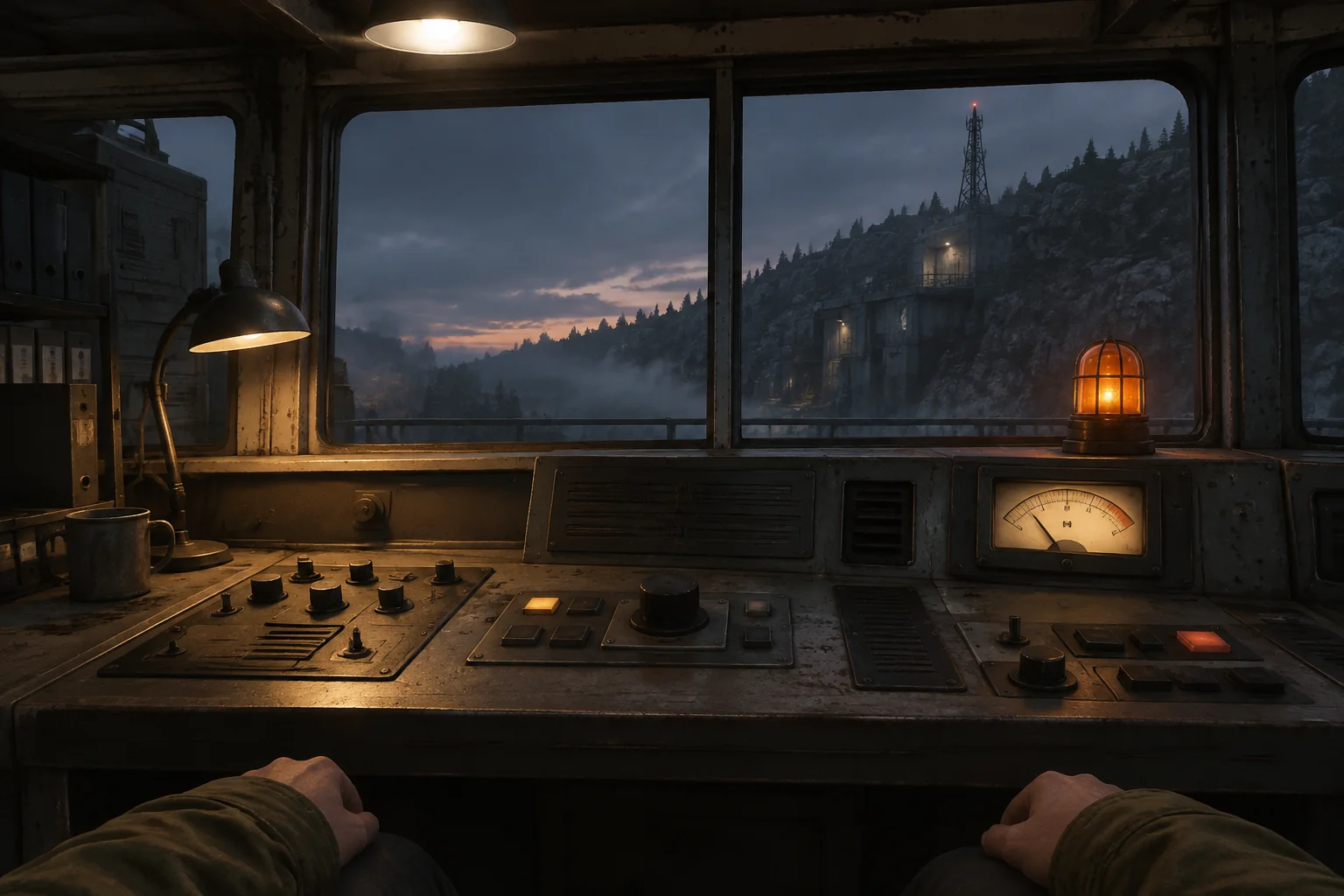
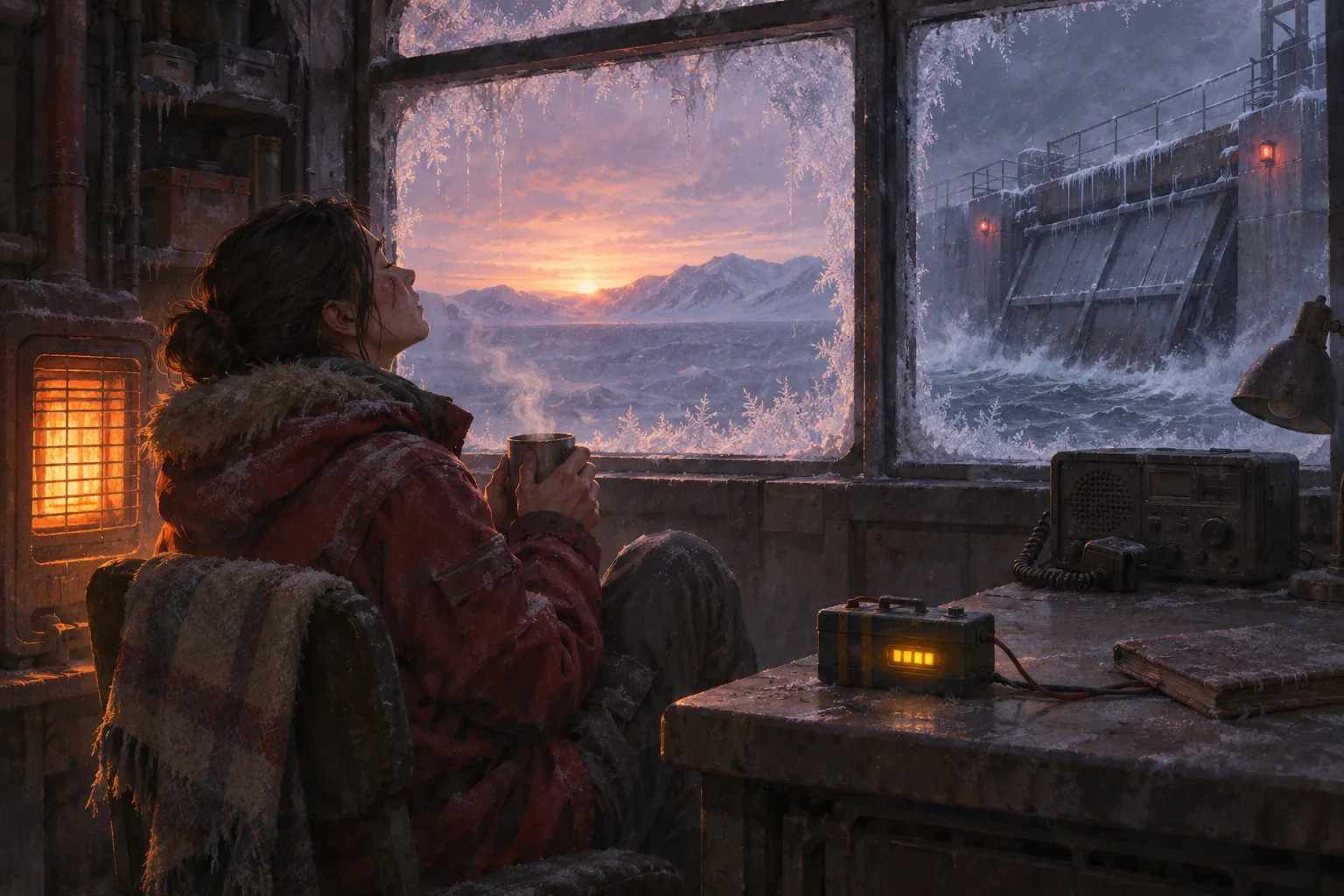
The official Five Nights at Freddy's Steam page describes a power shortage that removes access to doors and lights. Siltglass Station is a different fictional survival-horror design: a polar technician balances a heater, emergency radio and seawall barrier against one battery. Its setting, devices and costs are original.
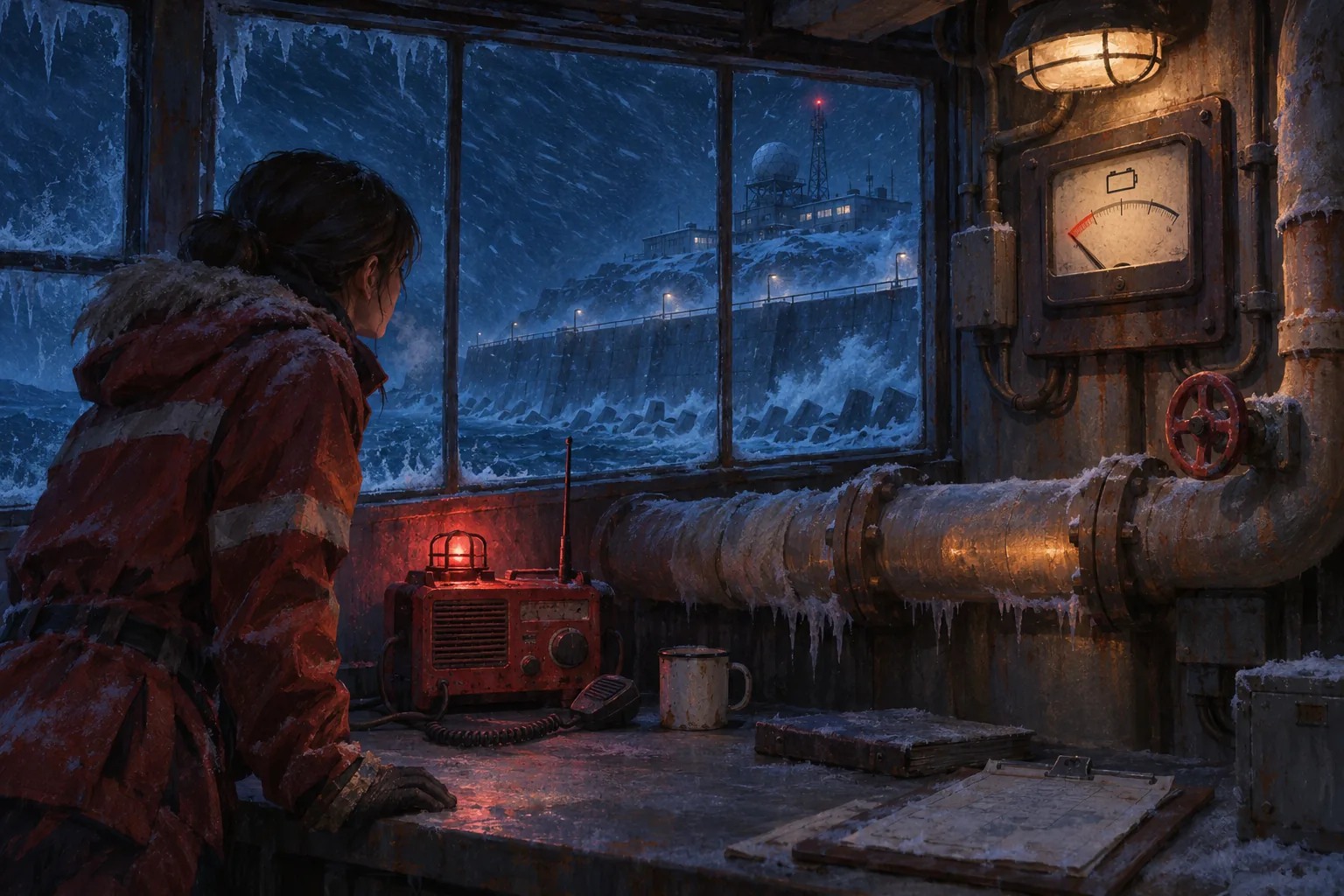
Start each watch with 10 battery units and four time ticks. The heater uses 1 unit per tick, one radio burst costs 3 and the seawall barrier costs 2. Keeping heat, sending one signal and securing the barrier uses 9, leaving a reserve of 1. Show the projected balance before each choice.
Protect a reserve before the storm advances
Track battery, action cost and remaining ticks in one ledger. Do not allow a device to spend power that the station no longer has. When the player tries a second radio burst, the plan would cost 12 and exceed the 10-unit supply, so reject it before changing the battery or watch state.
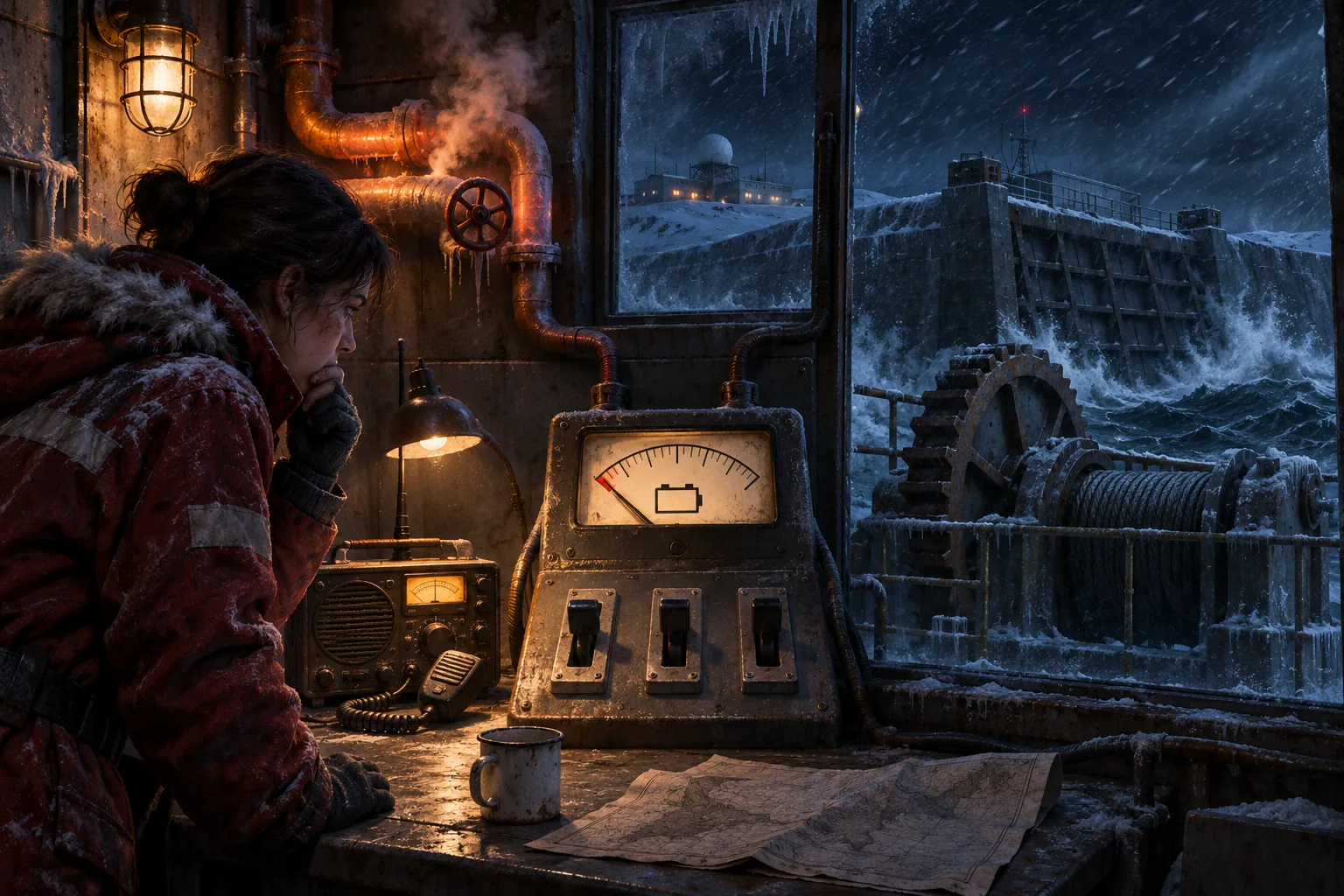
The first iteration let the radio activate twice without checking the remaining budget; the station blacked out before dawn. Add an affordability check before every action. The test accepts four heater ticks, one radio burst and one barrier for 9 units, then rejects a repeated burst and preserves the last unit. This deterministic rule check does not test horror pacing or player response.
Make the remaining power part of the tension
Keep the reserve visible but do not tell the player which optional device is always correct. A radio call may reveal a route while the barrier protects the station; the right choice depends on the next threat. Show how much power each system will use and update the forecast after every action.
Prototype one night budget before adding more devices
Start with one shared battery, a repeated heat cost and two optional actions. Test an affordable plan, a rejected repeat action and the remaining reserve. Five Nights at Freddy's provides broad context for power scarcity; Godot Resource can store device costs, and SEELE AI Game Maker offers a prompt-based entry point. These sources do not validate Siltglass Station.
Create an original survival-horror game in a polar station with one shared battery. Make heat, radio and a seawall barrier consume visible amounts. Forecast the full watch cost, reject actions the battery cannot afford and preserve the remaining reserve. Keep the setting and systems original. Do not claim horror pacing or playtest validation.
Start an original survival-horror prototype in SEELE · Five Nights at Freddy's on Steam
Frequently asked questions
How can limited resources create tension in a survival-horror game?
Make several useful systems draw from the same visible supply. Players can compare a constant need, such as heat, with optional actions that help in a specific threat. In Siltglass Station, four heater ticks, a radio burst and a barrier consume 9 of 10 units, leaving little room for another signal.
Why should the game reject an action before spending power?
Check the action cost against the remaining battery before changing the station state. If the budget is short, explain the amount needed and preserve the current balance. This avoids partial costs or a hidden blackout caused by an action the player could not afford.
What should a first resource prototype include?
Use one battery, one repeated cost, two optional devices and a short watch timer. Test a valid plan, an unaffordable repeat action and the reserve after each choice. A playable scenario is still needed to evaluate whether the decisions feel tense rather than arbitrary.