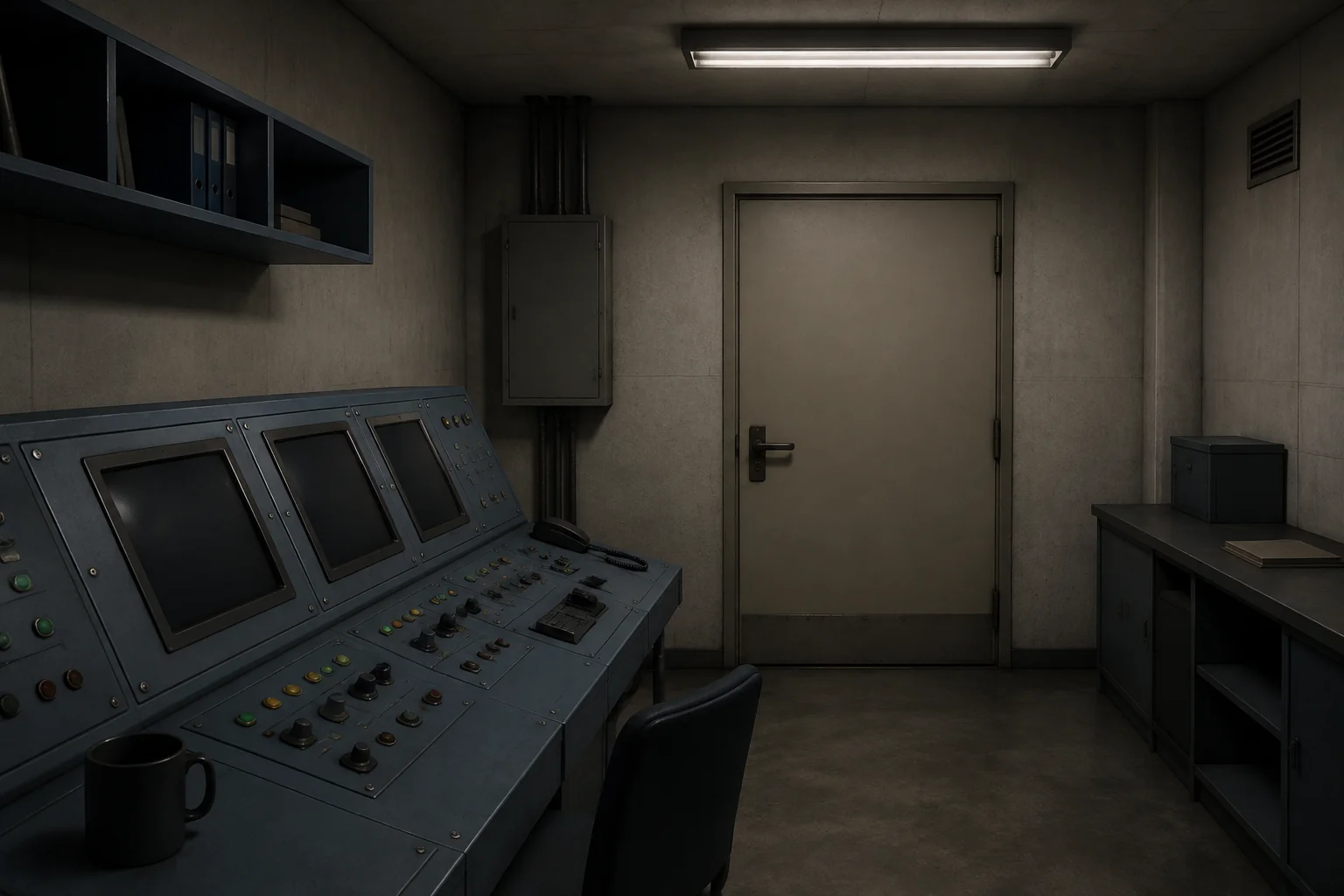
Give the player a fixed seat, a limited charge reserve, and two actions that draw from it. One action tells them where a threat is coming from. The other protects one channel. A free warning tells the player when to investigate, while the paid reading gives them enough information to act.
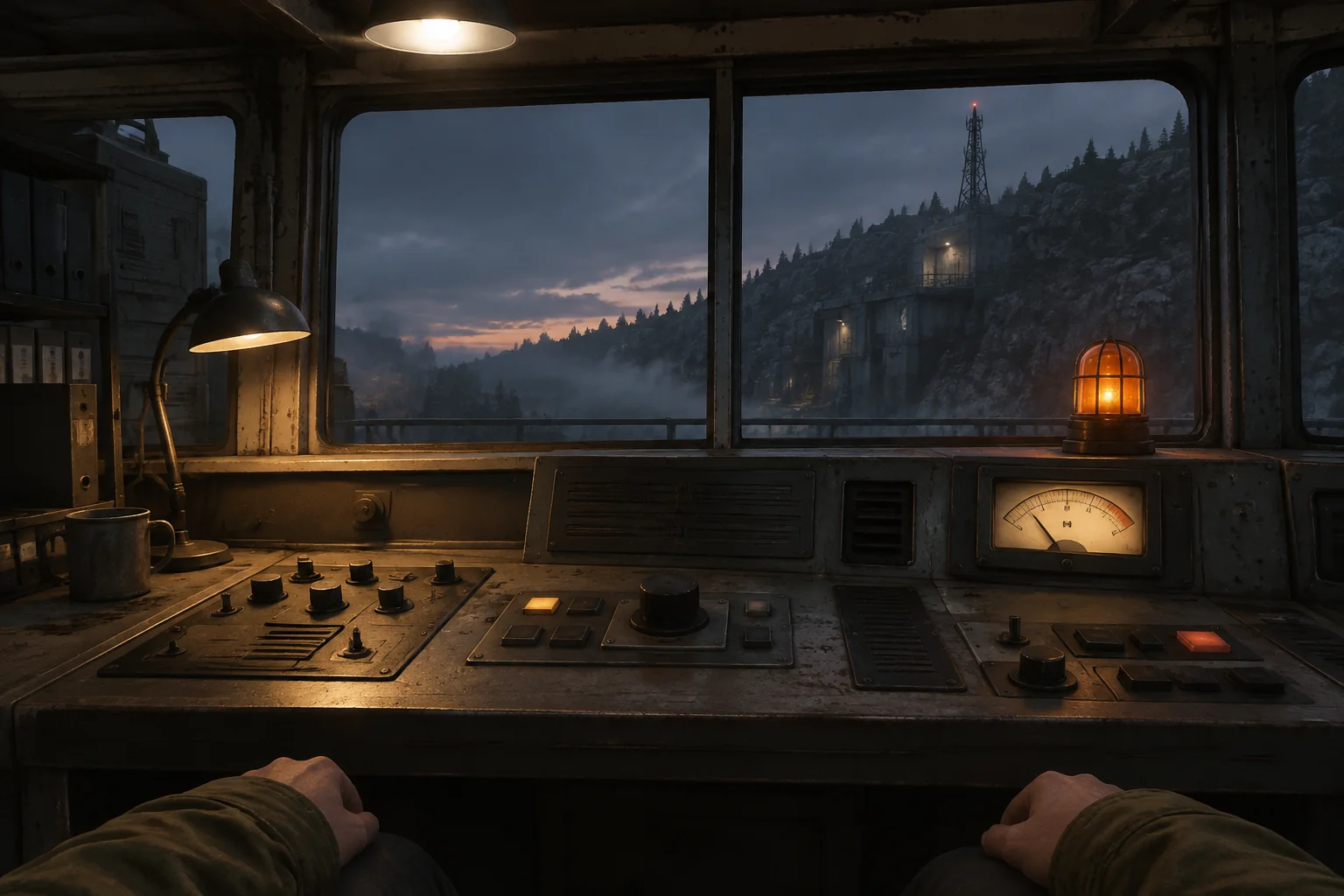
In the fictional Sill Station, a cliffside operator must keep a vibration relay working through a five-beat shift. Two harmful pulses approach on different channels. The operator can afford to read and divert both, but a needless check leaves nothing for the last response.
Make information and protection share a budget
Scott Cawthon’s official Five Nights at Freddy’s listing describes watching cameras from a small office and operating under a limited nightly electricity supply. A design lesson is that checking for danger can matter as much as reacting to it when both draw from the same reserve.
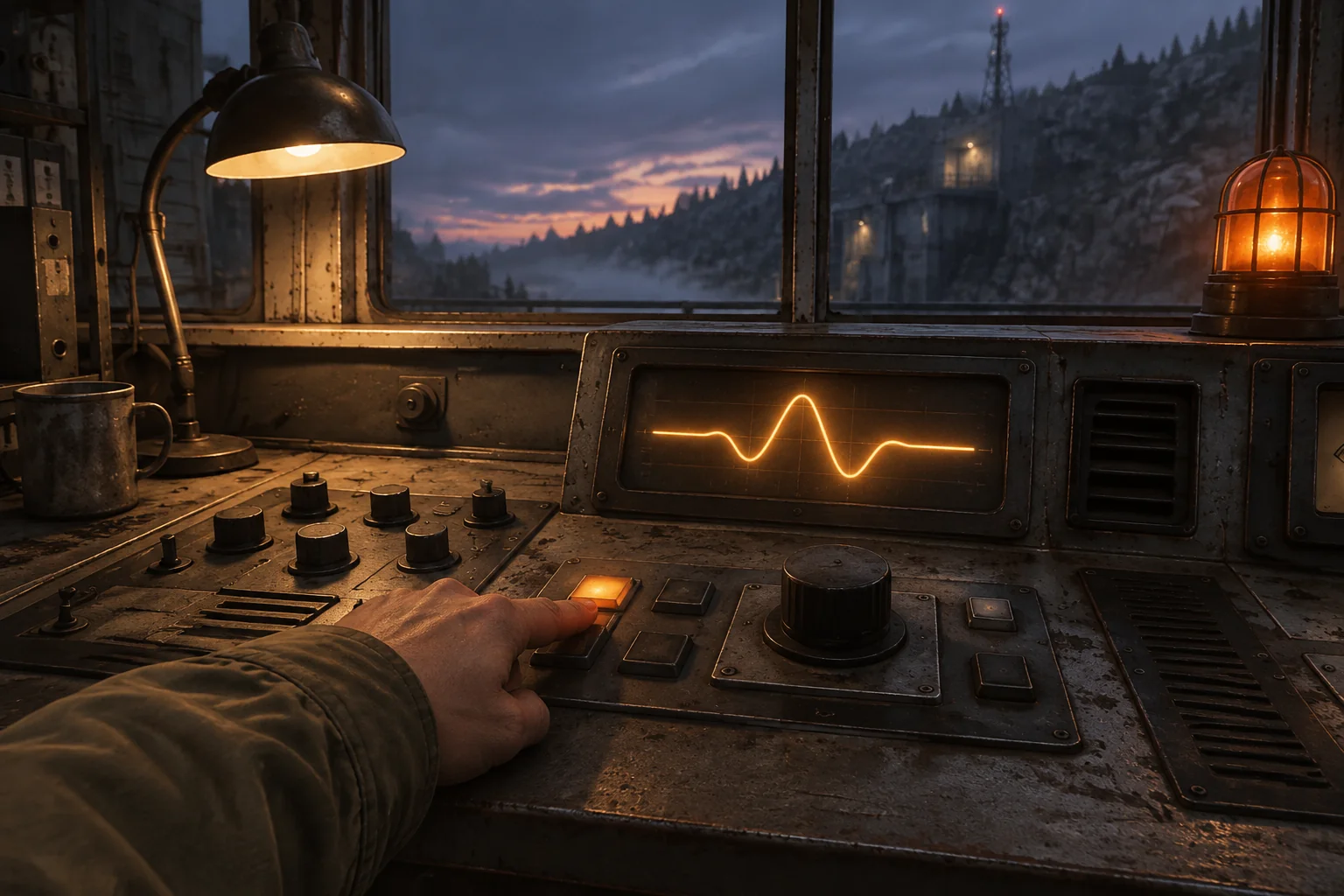
Sill Station applies that idea to an invented relay and two vibration channels. A lamp warns that a pulse is due on the next beat. It gives no direction. Sample reads an abstract waveform that identifies the channel, and Divert protects one channel on the beat it is selected.
Give each action a distinct consequence
Start with four charge. The player gets one accepted action per beat. There is no timer while choosing. Charge changes only when the player can afford and takes a paid action.
| Action | Charge | Result |
|---|---|---|
| Sample | 1 | Show the current cycle’s channel. On a quiet beat, show Quiet and still spend the charge. |
| Divert West or East | 1 | Protect the selected channel for this beat only. The cost applies to an early or wrong choice too. |
| Hold | 0 | Advance the beat without reading or protecting either channel. |
Resolve the action first, then the pulse scheduled for that beat. If its channel is unprotected, fail the shift. Clear the prior reading after a pulse resolves. A Sample on the pulse beat can reveal the direction, but it takes the action the player would have needed for Divert.
Allow Divert without a reading. Guessing can save charge, and a wrong guess still fails when the pulse hits. If a paid action is unaffordable, leave charge and beat unchanged and keep Hold available. The player can finish at zero charge if the final response protects the correct channel.
Replay the five-beat shift
Schedule West at beat 2 and East at beat 5. Show the same free amber warning at the start of beats 1 and 4. The table gives the author’s fixture, including the hidden schedule. In the interface, let the player read the channel through Sample.
| Beat | Fixture event | Expected action | Charge left |
|---|---|---|---|
| 1 | Warning | Sample reveals West. | 3 |
| 2 | West pulse | Divert West. | 2 |
| 3 | Quiet | Hold. | 2 |
| 4 | Warning | Sample reveals East. | 1 |
| 5 | East pulse | Divert East and complete the shift. | 0 |
Reset and replace Hold with Sample on beat 3. The quiet reading leaves one charge, and the beat-4 Sample spends it. Divert East on beat 5 is now rejected. If the player then chooses Hold, the East pulse hits. The failure comes from an earlier spending decision, even though the last direction was read correctly.
For a different check, Hold on beat 1 and Sample on beat 2. The reading can still reveal West, but the player has already used their one action and the pulse hits. Give this case different feedback from a rejected action at zero charge.
Give AI the full resolution order
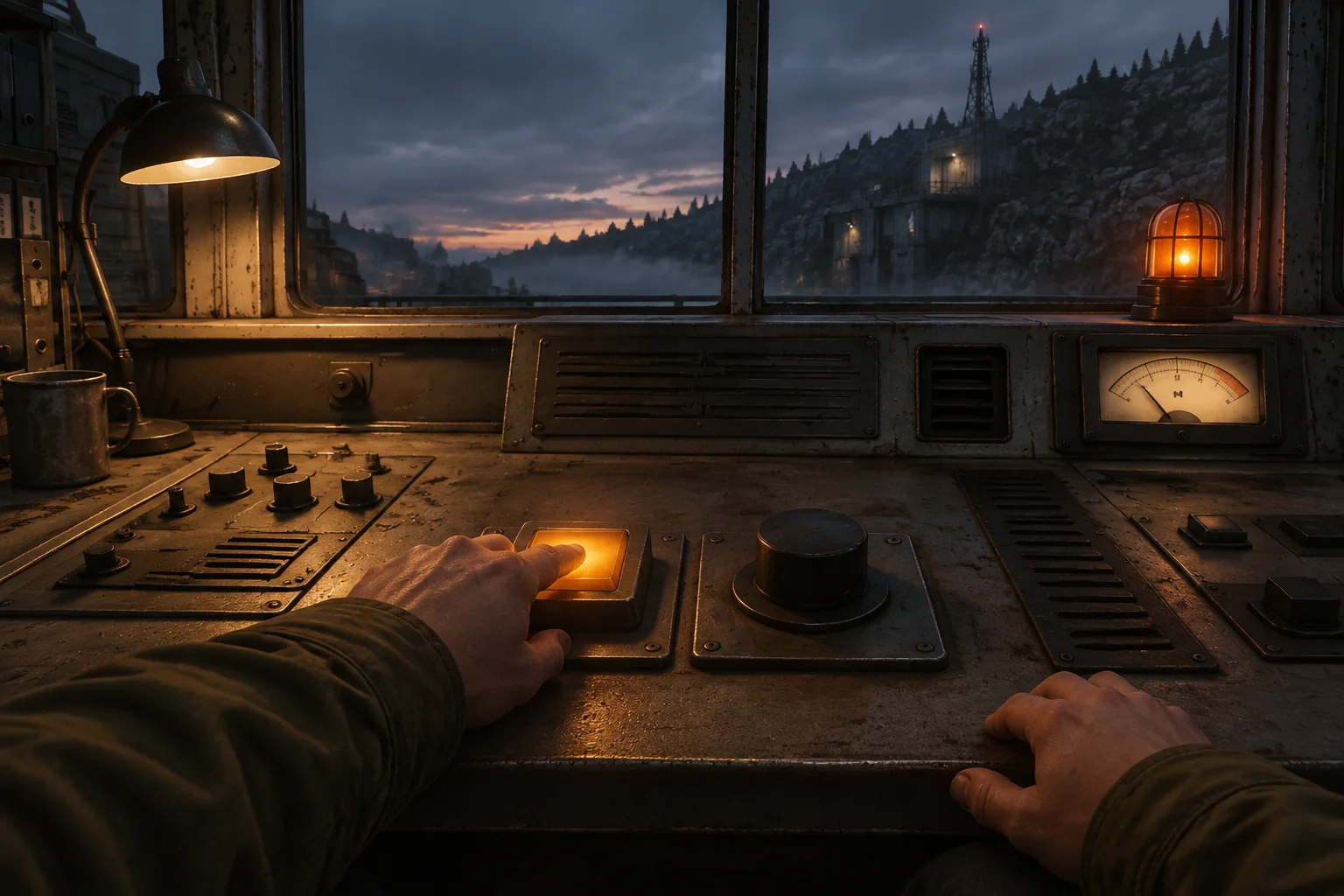
Put the schedule and the state rules in the same prompt. SEELE’s prompt-led creation can start from a single scene with an action and a clear finish. Use the first build to check what happens when the player reads late or tries to spend their last charge.
Make an original fixed-seat browser game called Sill Station.
Start at beat 1 with four charge, no reading and no protection.
Show the same free warning at the start of beats 1 and 4.
Resolve a West pulse on beat 2 and an East pulse on beat 5.

Allow one accepted action per beat. Sample costs one charge.
It shows West on beats 1–2, Quiet on beat 3, and East on beats 4–5.
Divert West or Divert East costs one and protects only that
channel for the current beat. Hold costs zero and has no effect.
A Divert may be selected without a reading. If a paid action
is unaffordable, reject it without changing state or beat.

Apply the action before resolving any pulse. Fail if the active
pulse is unprotected. Clear the reading after each pulse.
After surviving beat 5, finish the shift even with zero charge.
Stop accepting actions after clear or failure. Reset restores
the starting beat, charge, reading, and protection.
Show charge and outcome feedback after each accepted action.
Also check an early Divert on beat 1 and a wrong-channel Divert on beat 2. The first spends charge without carrying protection forward. The second spends charge and fails against West. Use SEELE’s first-build revision guide to isolate one change after the sequence works.
Change only the starting reserve
Set the reserve to five and replay the same extra Sample on beat 3. After the beat-4 reading, one charge remains for Divert East. The shift now clears at zero. The original plan with Hold on beat 3 would retain one. The added charge buys room for a redundant check, while a wrong channel or late Sample still fails under the same resolution order.
In a future build, watch whether a player can explain when they need a reading. A player who already knows the fixture may guess both channels correctly. Keep this schedule for checking state and costs, then vary the channels separately if you want to examine how people use the warning.
Start your original monitoring game with SEELE’s AI game maker.
Frequently asked questions
What should a free warning show?
Show that a response may soon be needed while leaving the channel to a paid reading. The player can then decide whether the information is worth charge. Give the warning a consistent lead time so a player who checks promptly still has an action left.
Why use a fixed schedule first?
A fixed schedule lets you replay the same inputs and check payment, protection, and failure in order. It also means someone can memorize the answer. When evaluating the warning itself, vary the hidden channel after the original fixture behaves consistently.
Should zero charge end the shift?
Let the outcome depend on whether the last pulse was handled. A correct final response can use the last unit and still clear. If a pulse remains, show which paid action is unavailable and let the player Hold to resolve the beat.
When should I add a third threat?
Add one after the player can distinguish an early response, a wrong direction, and a correct response they cannot afford. Give the new threat a cue or timing decision the first two do not cover. Replay the original five beats after adding it.