Give the player a destination and one instrument that can answer a precise question. Let them see where they are and how many commands they have left. Keep the space ahead hidden until they spend a charge to check it. The tension comes from choosing which part of the next move is worth verifying.
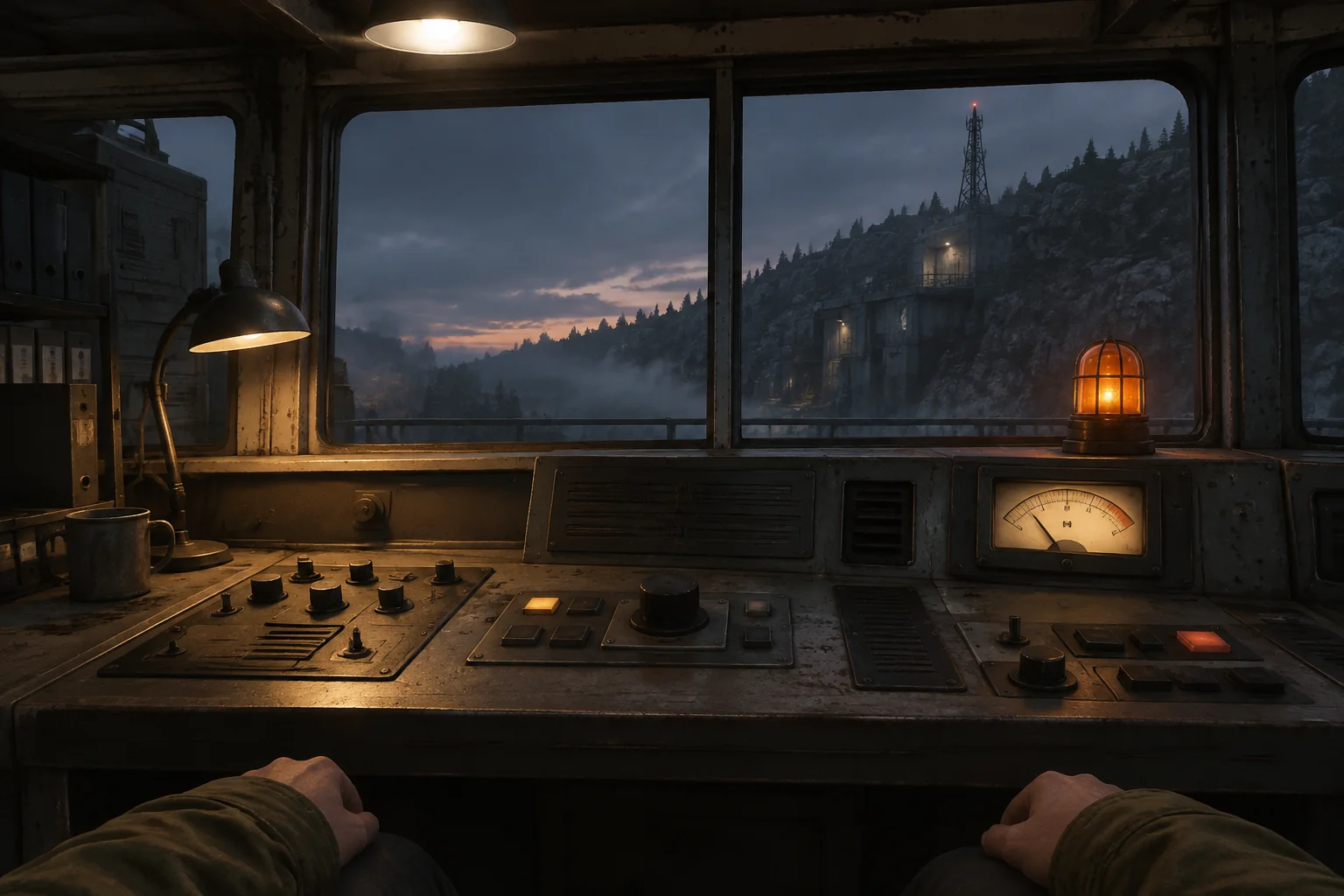
In the fictional Relay Below, the player stands at a console outside a sealed utility vault. A rover inside must reach a relay and pair with it. The player can see the rover’s coordinates, its remaining charges and the last instrument message. The vault has no video feed.
Give restricted visibility a clear job
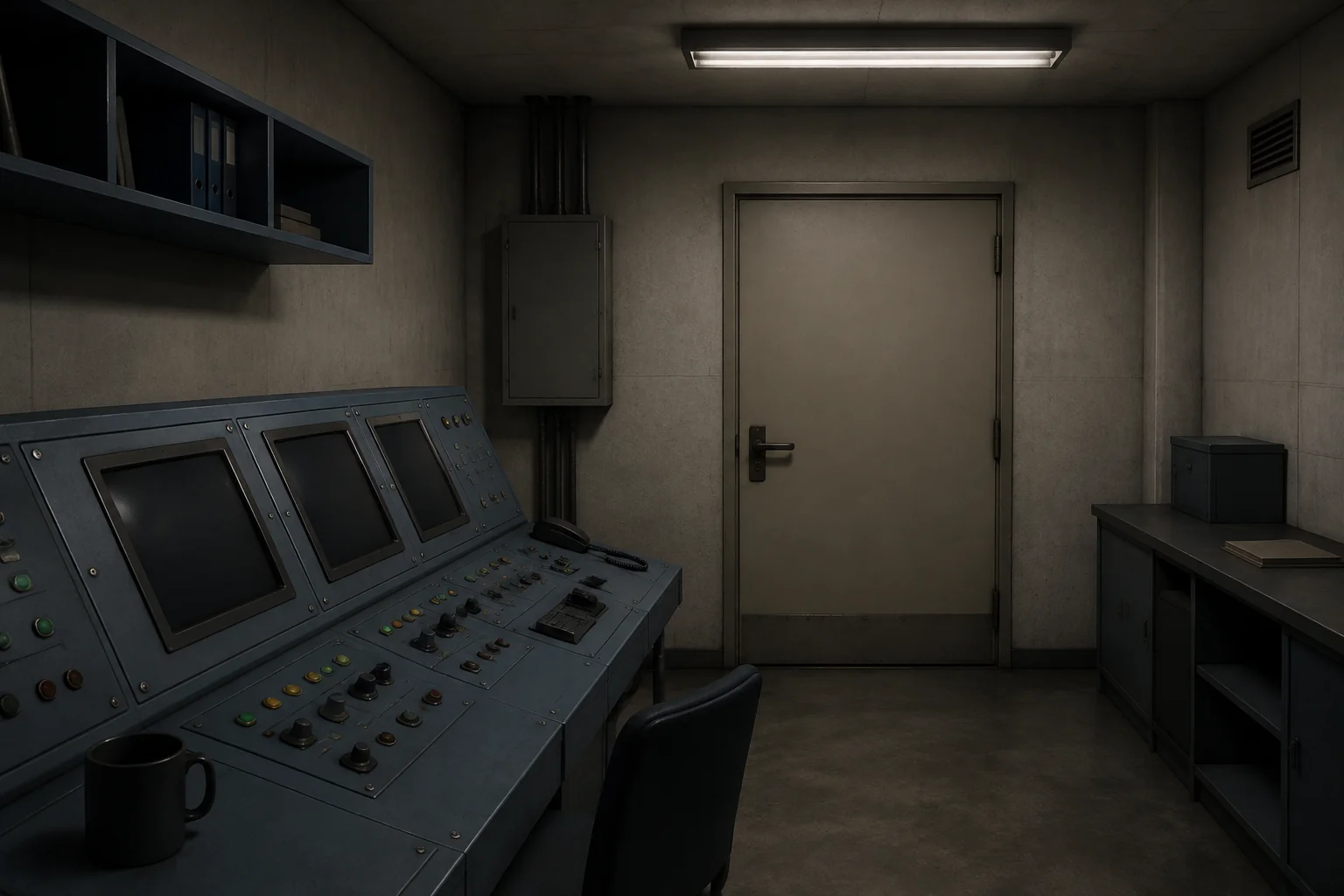
The official Iron Lung listing credits David Szymanski and describes navigating a submarine with its porthole closed. An incomplete map, proximity sensors, sound and an external still camera stand in for a direct view. The official Nintendo listing describes the same arrangement. For an original game, decide what a player can know before acting and what they have to spend a command to find out.
Relay Below uses a dry room, an unseen rover and a directional probe. The reading is reliable within a stated range. The player may know the first cell is clear while having no information about the second. Make that distinction explicit so uncertainty comes from the instrument’s limits.
Define one directional instrument
Start at (1,2) with nine charges and an unpaired relay at (5,2). The vault spans x 1 to 5 and y 1 to 3. East increases x and North increases y. For the author’s fixture, block (3,1) and (3,2) and leave (3,3) open. Show the bounds and destination to the player and keep the blocked cells out of the interface.
| Command | What it costs and tells the player |
|---|---|
| Move | Spend one charge. Move one cell in the chosen cardinal direction if it is open. A wall or boundary gives “Move blocked” and leaves coordinates unchanged. |
| Probe | Spend one charge and stay in place. Check cells in the chosen direction starting with the adjacent cell. Report the distance to the first blocked cell or boundary, or clear through the full range. The baseline range is one cell. |
| Pair Relay | At (5,2), spend one charge and finish successfully. Elsewhere reject the command without spending or moving. |
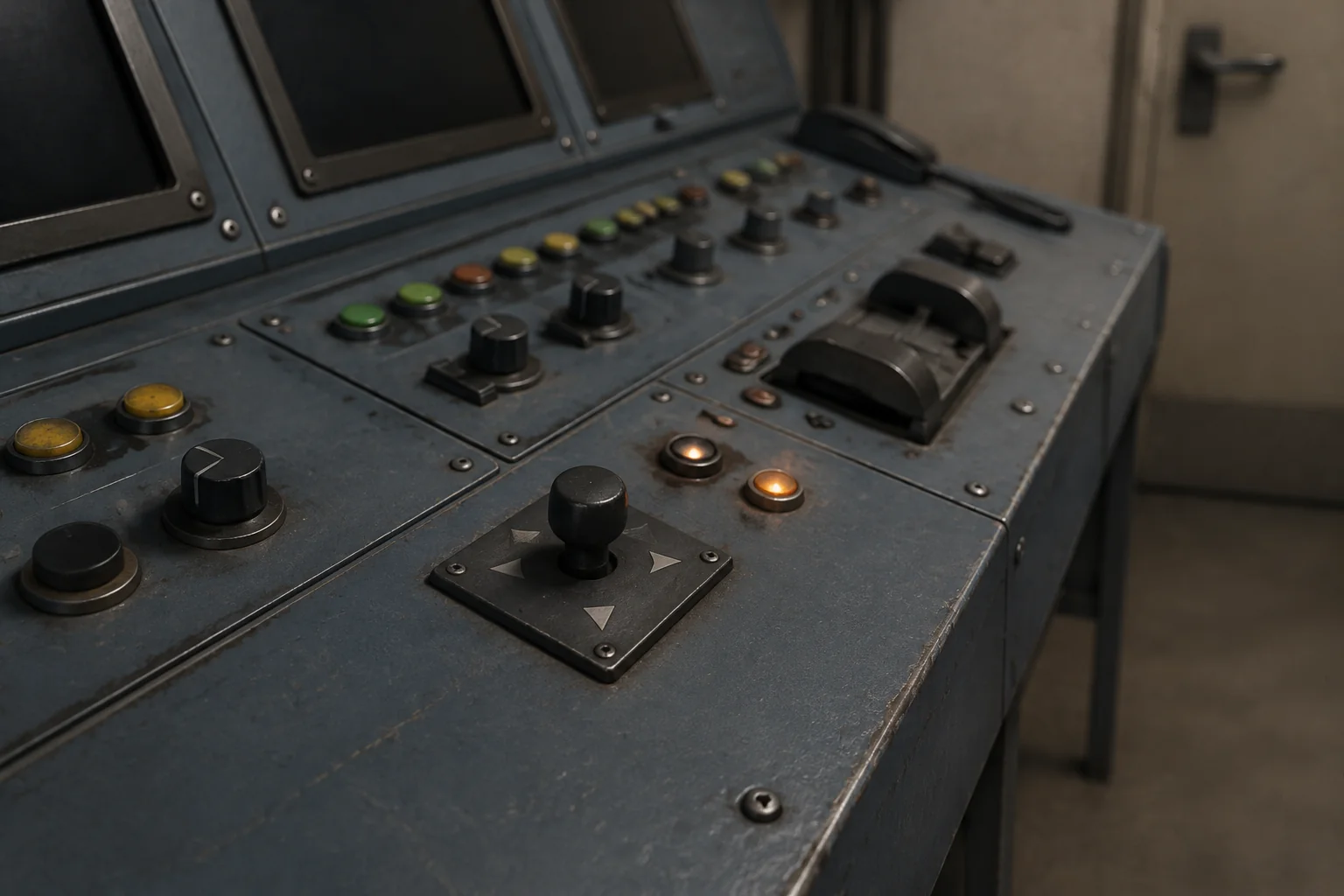
End the run when the final charge is spent. A successful pairing on that charge takes priority. Display the last reading as text even if you add an audible cue. The message must distinguish a clear segment from a block at a stated distance.
Replay the instrument-first route
Check east from the start and then move one cell. The next probe reports the obstacle directly ahead. This route tries the northern bypass, then follows the open row to the far side of the vault.
| Action | Command and result | Charges left |
|---|---|---|
| 1 | Probe East at (1,2). Clear through one cell. | 8 |
| 2 | Move East to (2,2). | 7 |
| 3 | Probe East at (2,2). Block at distance one. | 6 |
| 4 | Move North to (2,3). | 5 |
| 5–7 | Move East through (3,3), (4,3) and (5,3). | 4, 3, 2 |
| 8 | Move South to (5,2). Relay still unpaired. | 1 |
| 9 | Pair Relay and succeed. | 0 |
Try a blocked East move from (2,2) as a separate check. It costs one charge and returns a blocked message. If you add that move after the second probe in this replay, you arrive with no charge left to pair. An early Pair attempt is different. It spends nothing because the rover is outside the target cell.
Give AI one complete mission
Specify the hidden fixture and the limited information the player sees. Keep any atmospheric changes separate from navigation rules while you check the first build.
Build an original browser suspense game called Relay Below.
The player sees a dry control room and instruments, with no vault feed.
Use a hidden 5 by 3 grid, x 1–5 and y 1–3.
Start the rover at (1,2) with 9 charges. Relay at (5,2).
Block (3,1) and (3,2). North increases y. East increases x.

Move costs one. Try one cardinal step. If blocked or outside,
keep position and show a blocked message.
Probe costs one. Starting with the adjacent cell, inspect along
the chosen direction up to the range. Report the first block's distance
or clear through range. Treat a boundary as blocked. Start at range 1.

Pair only at (5,2) and spend one. Reject early Pair for free.
Pairing wins even on the final charge. Otherwise reaching
zero charges fails. Ignore later commands.
Show position, target, charge and last reading with direction.
Keep the obstacles hidden. Reset position, charge, result and log.
Change only the probe range
Raise the range from one cell to two. Probe East from (1,2) again. The first block is now reported at distance two. That tells the player the adjacent cell is open and the following cell is blocked. Move East once and take the same north bypass without another probe. Pair on action eight with one charge left.
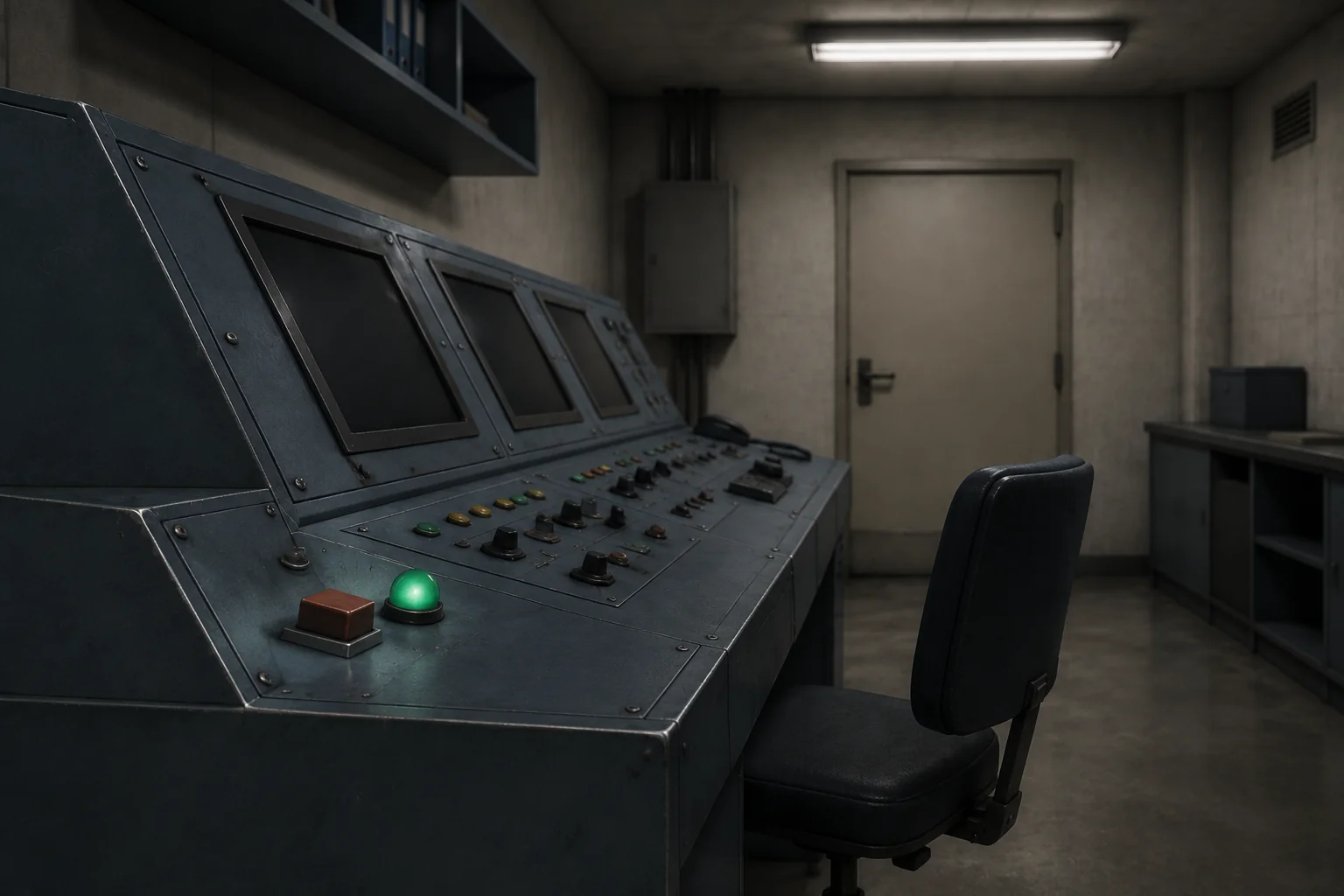
The move path and its cost stay the same. The earlier reading saves one probe in this replay. Check both observations from the start and confirm the charge totals after pairing. Use the guide to revising one rule at a time to isolate the sensor change.
Finish one route through the unknown
Start your original contained horror game with SEELE’s AI Game Maker and build one route with an instrument you can test. Replay the readings and make sure a player can tell what they learned and what still lies beyond the probe.
Frequently asked questions
What should the player see before moving?
Show their current position, destination, remaining charges and the controls they can use. Keep unknown obstacles hidden until an action reveals something about them. If a route is blocked, show whether that information came from a probe or an attempted move.
Can sound carry the probe result?
Sound can reinforce an observation and give the room atmosphere. Put the same information in readable text so players can check the direction and distance without hearing the cue. Keep atmosphere separate from the instrument unless you intend it to affect decisions.
Should a blocked move spend a charge?
Spend one if you want an attempted move to count as a decision under the budget. Explain that rule before the route begins and leave the coordinates unchanged on a block. Give invalid commands a distinct response so players know why those cost nothing.
How can I tell if a longer probe range matters?
Replay the same opening from reset with both ranges. Find the earliest observation that changes, then check whether it makes another probe redundant. Keep the route, charge budget and movement rules fixed so you can trace any difference to the range.