Start with two spells that do different things to the same material. Let one turn a solid drop into liquid so it can move. Let the other set it in place. The second spell is useful only when the liquid reaches the right part of the channel.
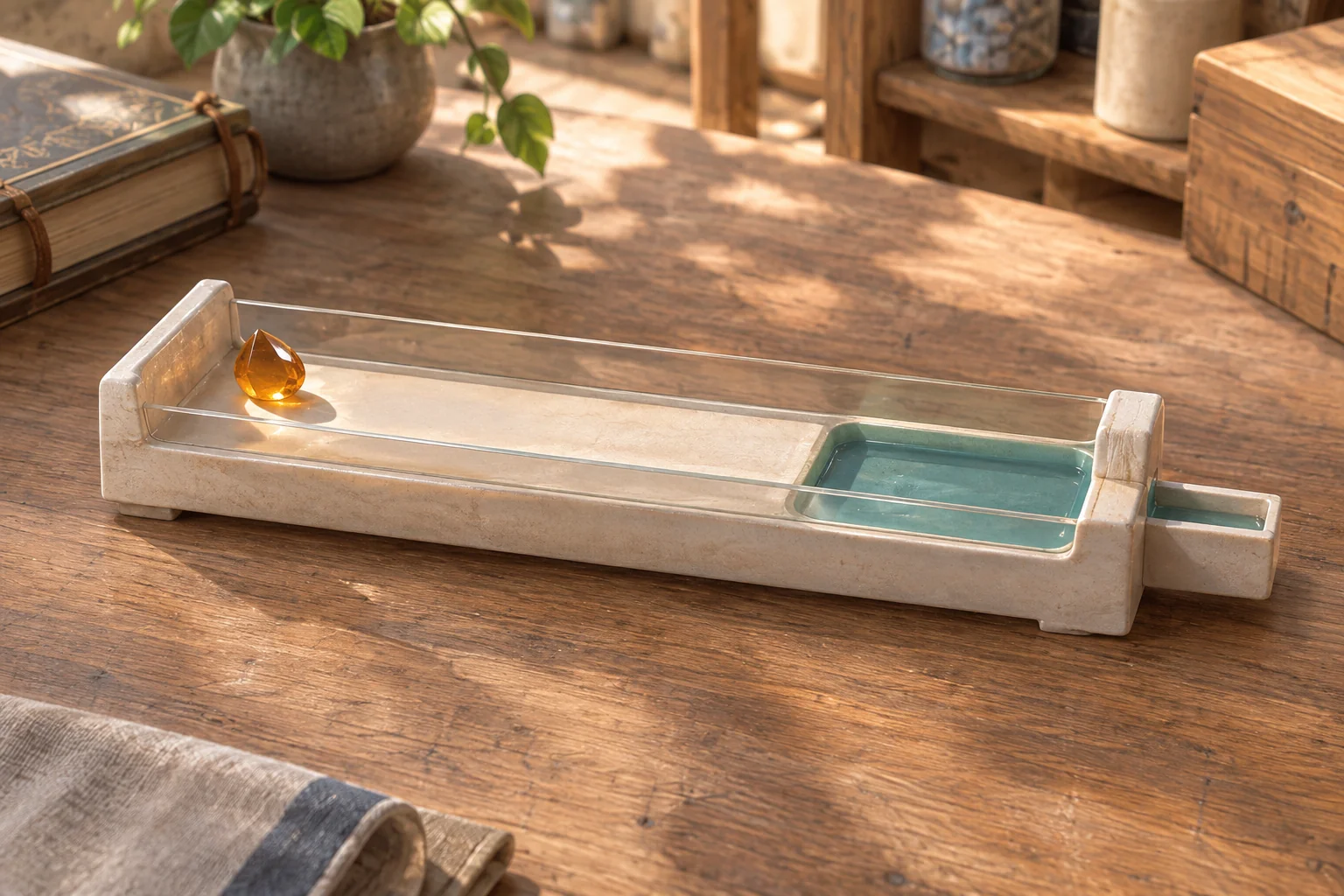
In the fictional Kilnwick Channel, a drop of resin starts at the left end of an enchanted workbench. The goal is to fix the drop in a receiving pocket before it flows out. The player can inspect it between commands and choose when to cast.
Make two spells act on the same thing
The official Noita site describes an action roguelite built around physically simulated pixels. Nolla Games’ press kit describes using crafted spells to melt, burn, freeze or evaporate parts of the world. For a small original game, take the idea of acting on a material’s current state. The resin, channel and timing here are authored puzzle rules.
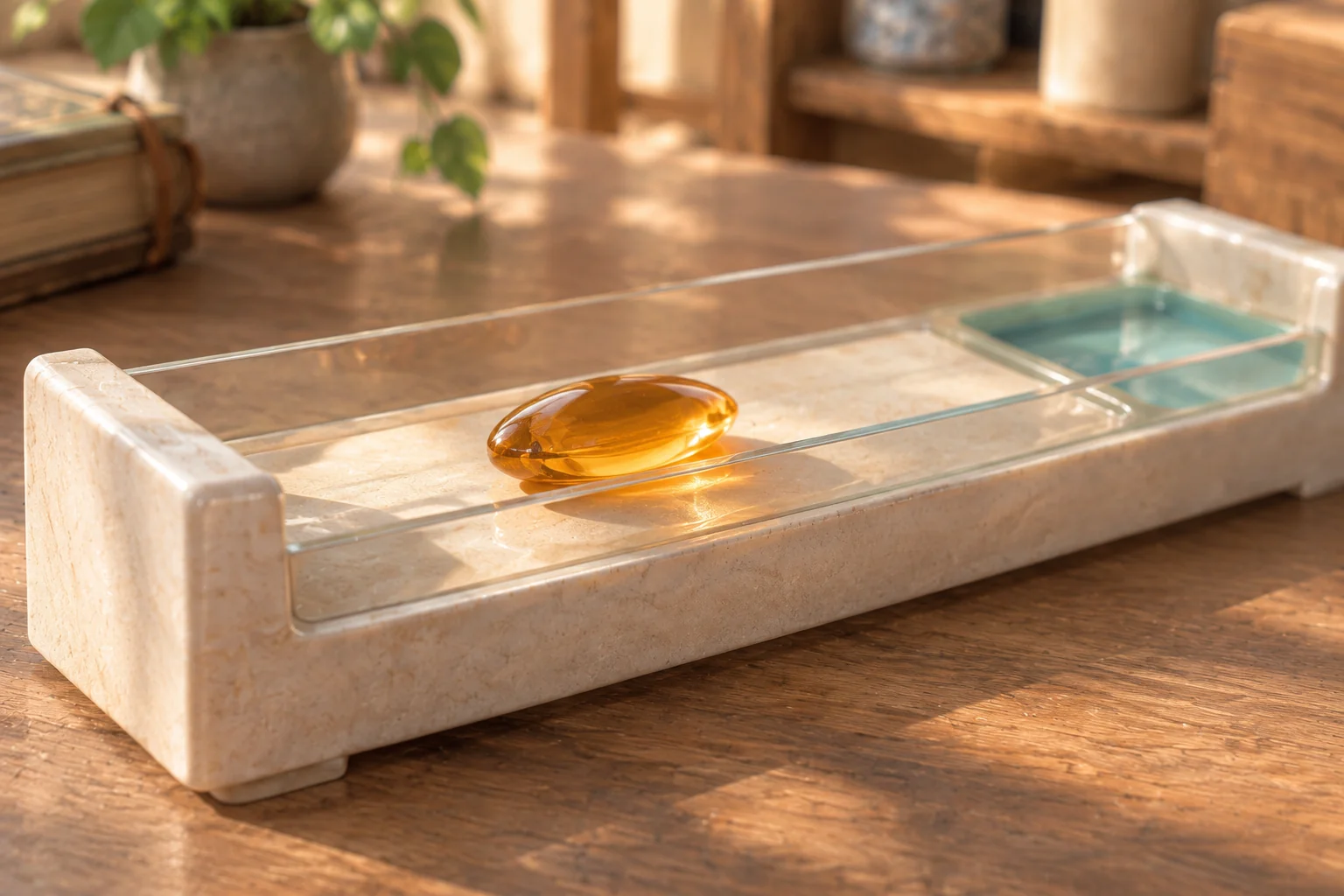
Keep the two spells distinct. Loosen turns a solid drop into a liquid that can travel. Set only works on the liquid at its current cell. Give each state a visible shape so the player can tell what happened without needing to infer it from an animation.
Separate spells from flow
Label five cells from left to right. The solid drop starts at cell one. Cell four is the receiving pocket and cell five is the outlet. Only a valid command advances the fixture. Inspecting the current cell and state is free.
| Command | What happens before flow |
|---|---|
| Loosen | Accept only on the solid drop at cell one. Turn it liquid in place. |
| Set | Accept only if the chosen cell contains the liquid drop when the command starts. Fix it in place. |
| Wait | Apply no spell. |
After the command, a liquid drop moves one cell right. Solid material stays still. Entering the outlet drains the liquid and ends the attempt. A valid Set at cell four succeeds. A valid Set elsewhere ends the attempt with the material fixed in the wrong place. A rejected command changes neither the state nor the position.
Replay three moments to cast
| Plan | State after each command | Result |
|---|---|---|
| Set in the pocket | Loosen → liquid at 2. Wait → liquid at 3. Wait → liquid at 4. Set at 4. | Fixed at 4. Success. |
| Set too early | Loosen → liquid at 2. Wait → liquid at 3. Set at 3. | Fixed at 3. Failure. |
| Wait too long | Loosen → liquid at 2. Wait → liquid at 3. Wait → liquid at 4. Wait again. | Liquid reaches 5 and drains. Failure. |
From liquid at cell three, try targeting cell four with Set. The command is rejected and the drop stays at three. Targeting cell three is legal, but it fixes the material in the wrong place. Give those actions different feedback. An invalid target leaves another choice available, while a valid early cast ends the run.
Give AI one tiny chamber
Put the written fixture into the SEELE workspace and ask for a small browser prototype with a channel, two spell controls and a state readout. Check the first draft against the table before adding more materials. The critical moment is the command that starts with liquid at cell four.
Build an original browser material puzzle called Kilnwick Channel.
Use five cells from left to right. Start one solid drop in cell 1.
Cell 4 is the receiving pocket and cell 5 is the outlet.

Loosen is valid only on the solid drop at cell 1 and turns it liquid.
Set targets the cell that contains liquid at the start of the command.
It fixes that drop before any motion. Wait applies no spell.
Reject invalid inputs before mutation or flow.

After each accepted command, move liquid one cell right.
Solid or fixed material does not move. Entering cell 5 drains liquid
and fails. Set in cell 4 succeeds. Set elsewhere fails.
Freeze the result until reset. Show current cell, state and last action.
Inspection is free. Reset the drop, history and outcome.
Use original art and controls. Do not add a real-time clock.
Run the three sequences from reset. If the successful cast drains the drop, check whether motion runs before Set. If an invalid target moves the drop, check whether validation runs before the flow phase.
Let the pocket hold once
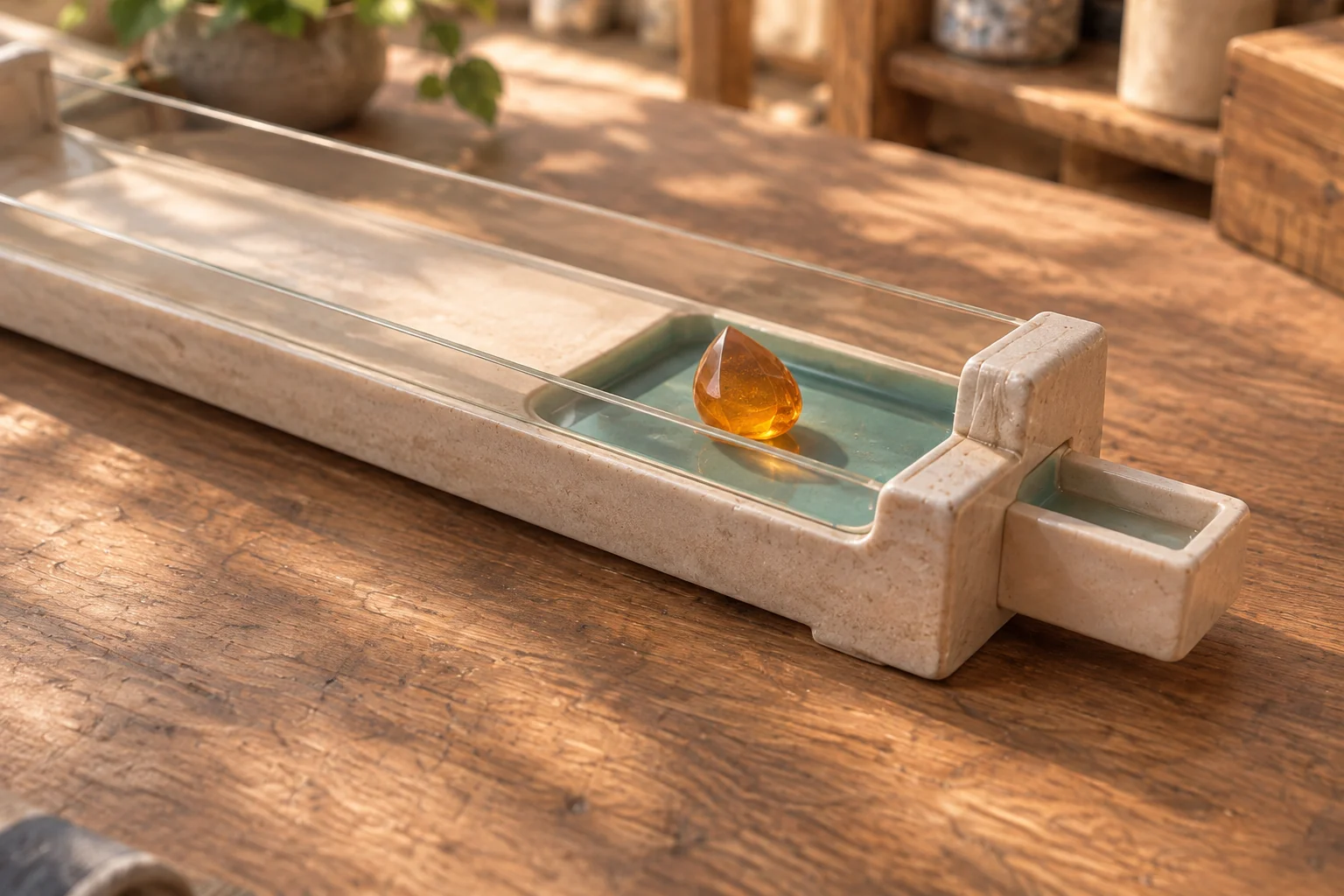
Change only the first attempted flow from the pocket. Give it a lip that holds the liquid at cell four for one accepted command. Replay the same late Wait. The baseline drains at cell five. With the lip, the liquid stays at four and the hold is spent. Set on the next command now succeeds. Waiting again still drains the drop.
Keep the casts, outlet and motion in other cells fixed. Reset the hold when the puzzle resets. Use the guide to revising one rule at a time to compare that fourth command before and after the change.
Finish one material interaction
Start your original physics game with SEELE’s AI Game Maker. Check when the drop changes state, where it moves and why the second spell succeeds in one cell. Then try one change that gives the player a different moment to cast.
Frequently asked questions
Why should the spell resolve before flow?
Choose the order that makes the player’s input understandable. In this chamber, the player targets the liquid they can see. Resolving the spell first means a visible drop can be fixed in that cell before it has a chance to move.
What should happen if the player targets an empty cell?
Give a clear response and leave the chamber unchanged. That lets the player look again without losing the current position. Reserve the early-cast failure for a legal Set that fixes the material in a cell outside the receiving pocket. Show which cell still contains liquid after the rejection.
How can I show that the liquid will move again?
Show the current cell and whether the drop is liquid or fixed. A short motion cue can help after an accepted command. In the revised chamber, show when the one-use hold has been spent so another Wait is easy to predict.
When should I add a second material?
Add one after the first material has a clear state, movement rule and result. Give the new material an interaction that changes an actual decision, such as a different casting moment. Replay the original chamber afterward to check for unintended changes.