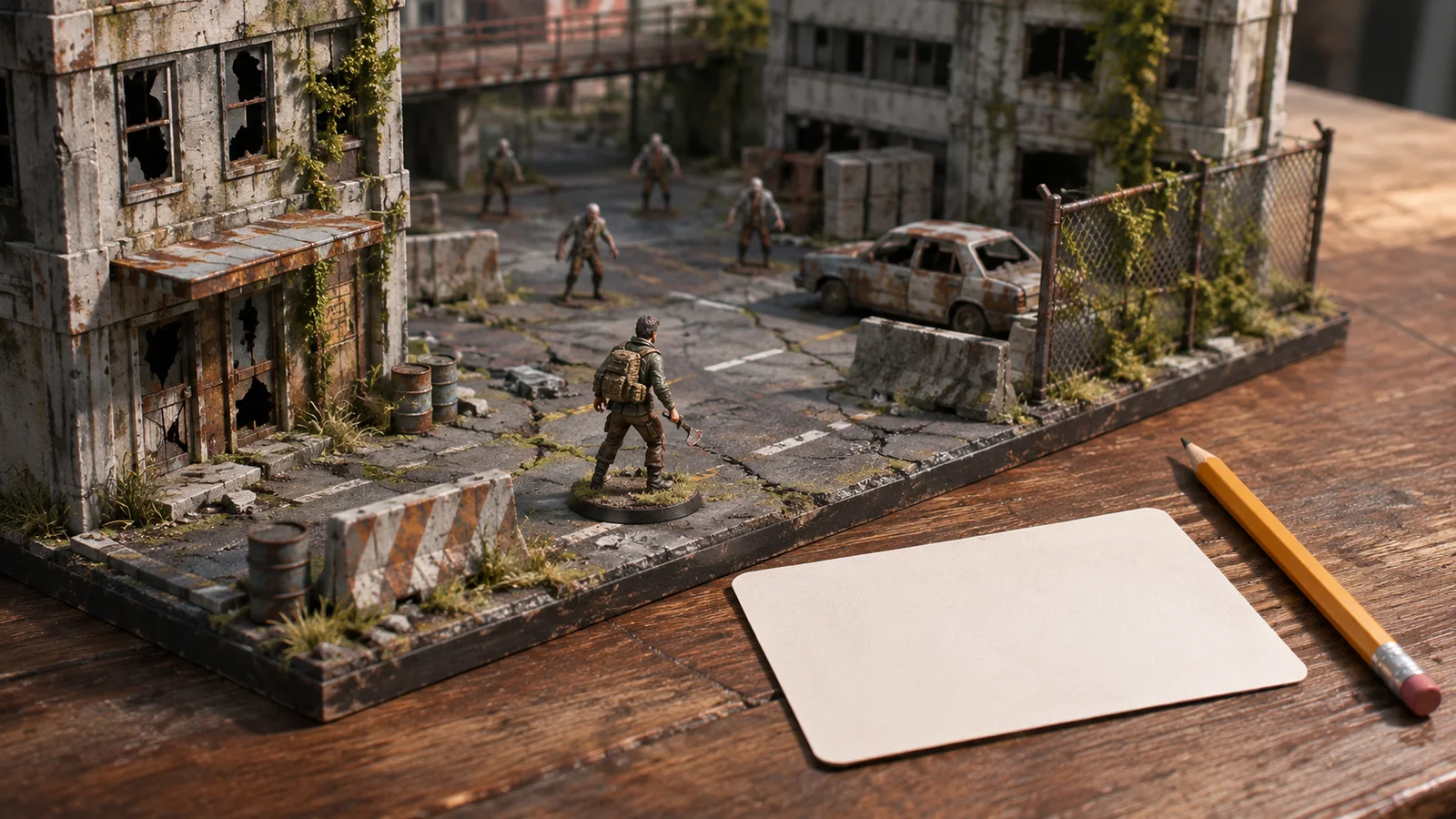
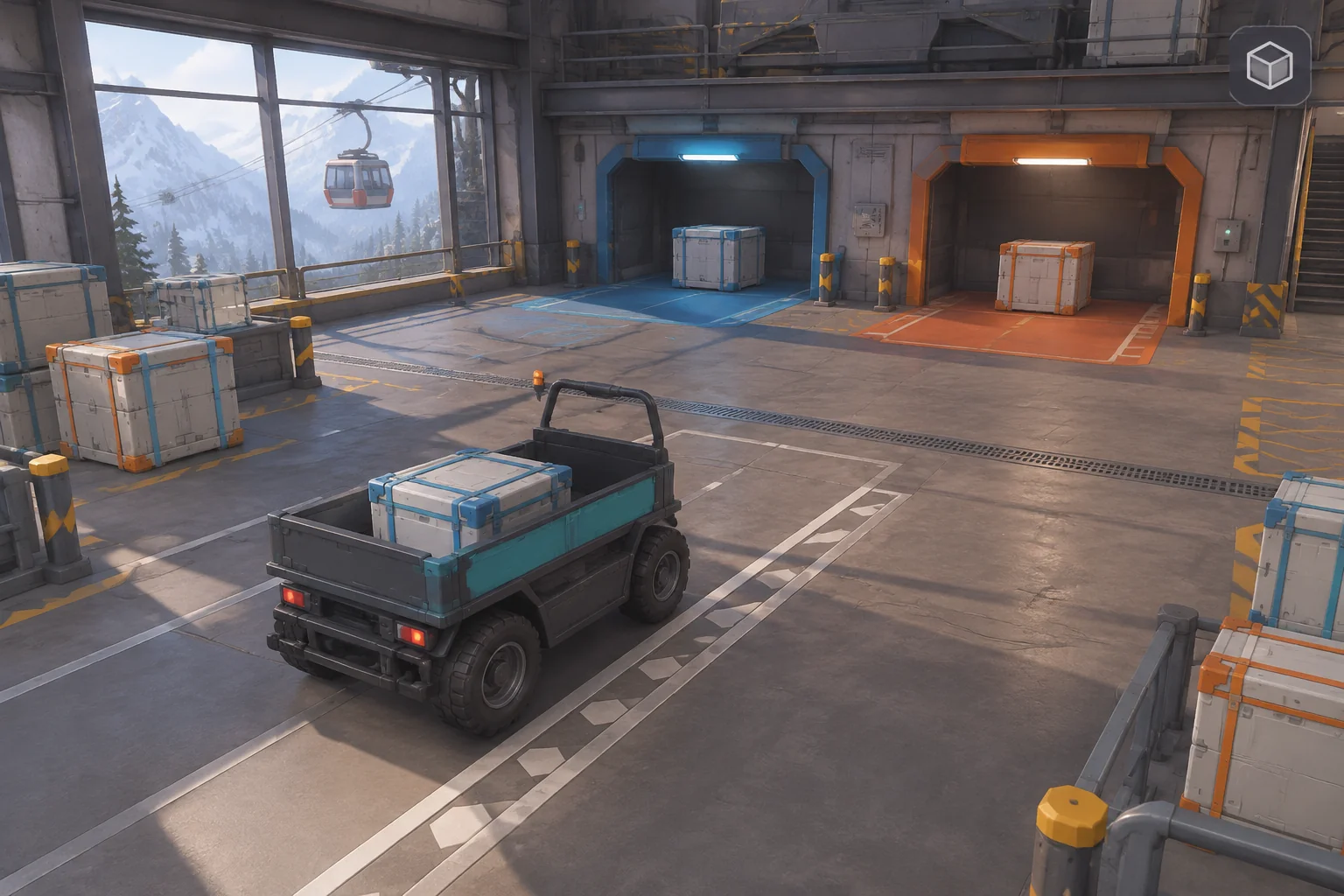
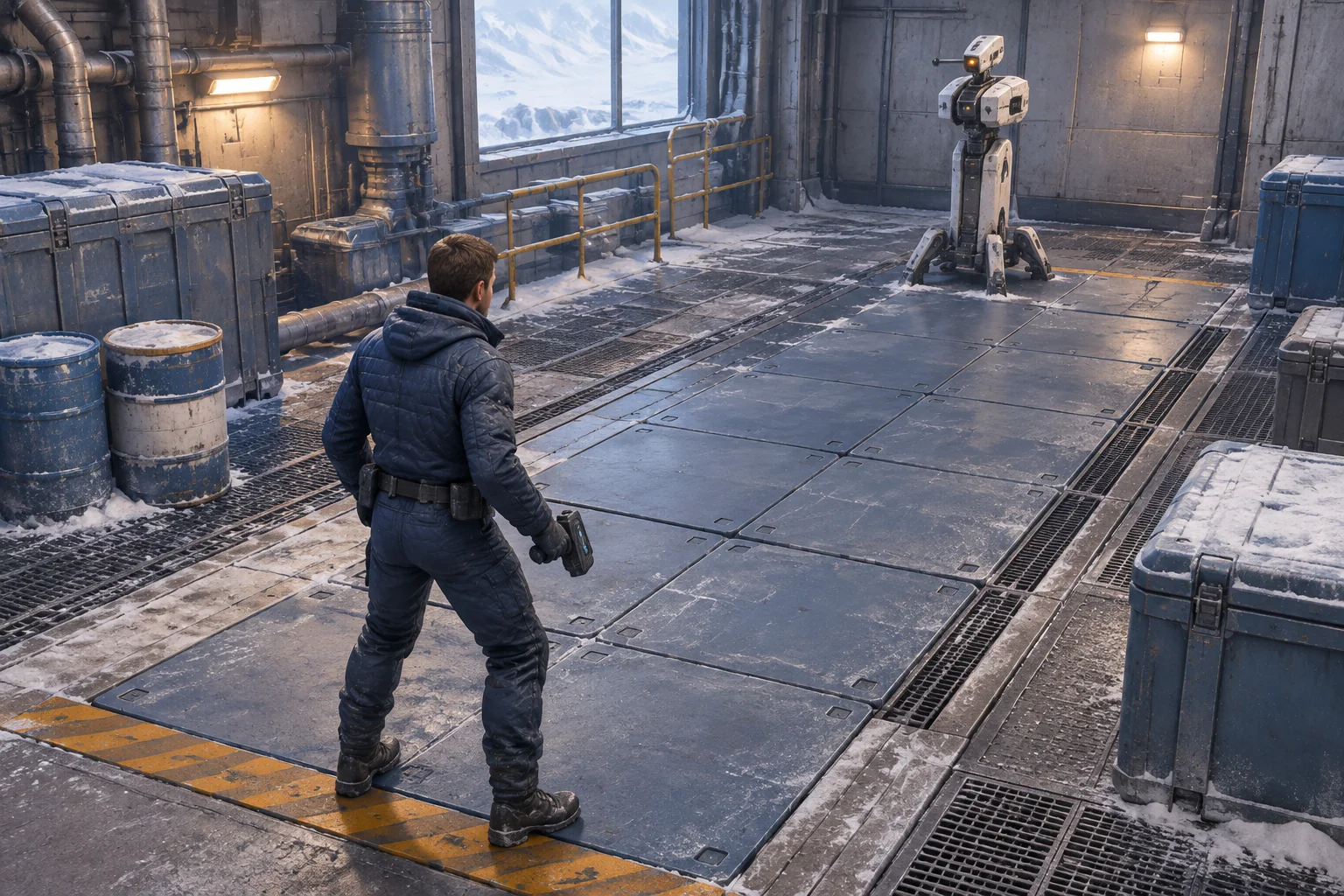
Build your first factory game around a shipment the player can count. Give one machine a steady input, make a second machine work on its own schedule, and keep the stock between them visible. If the order comes up short, the player can see whether the line ran out of parts or simply failed to finish them in time.
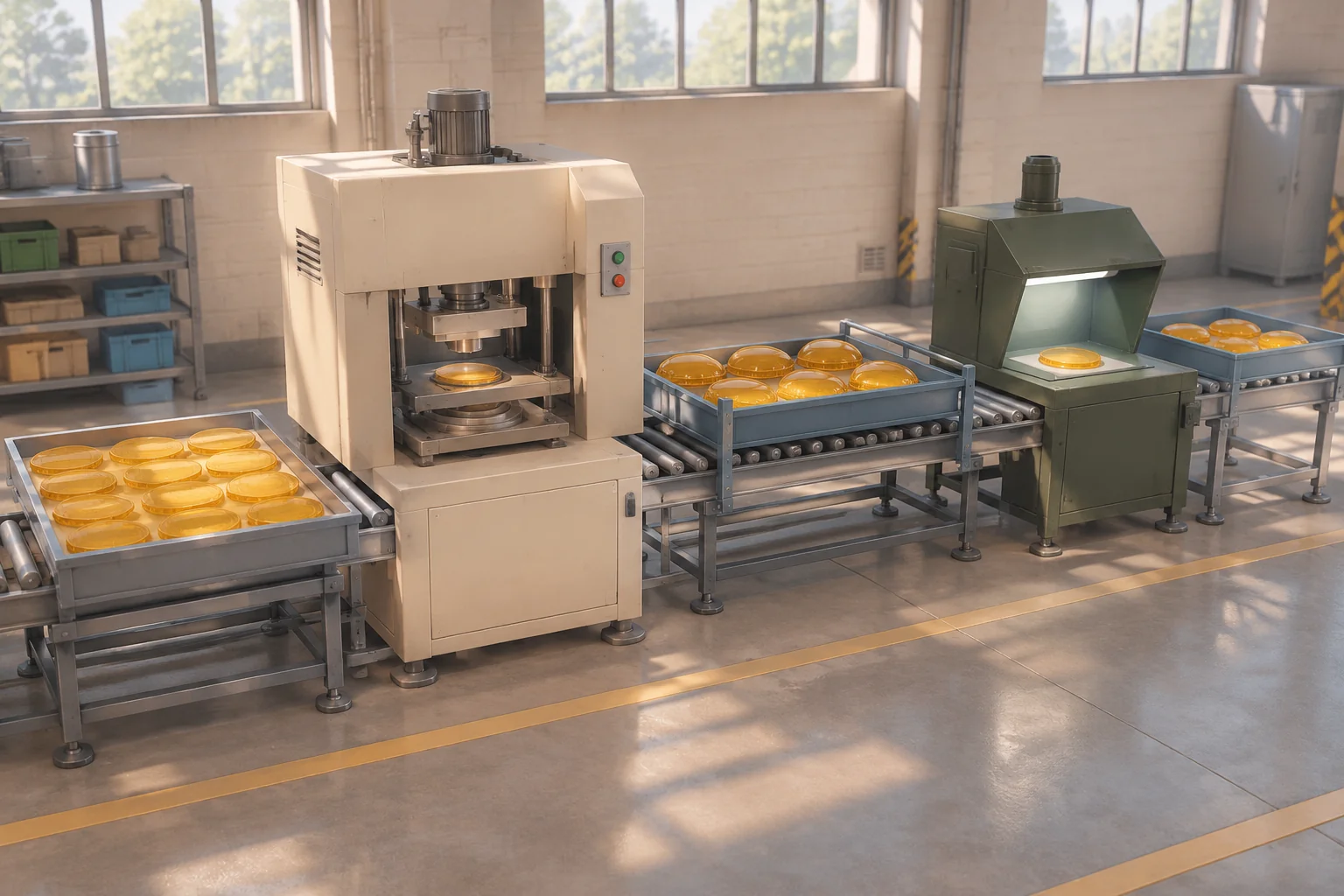
In the fictional Glasslight Line, a press forms lamp diffusers and an inspection station clears them for shipping. The challenge is to ship ten by the end of six ticks. The player changes the inspector’s schedule between runs and compares the finished count.
Count what leaves the line
Wube Software describes Factorio as a game about building and maintaining factories, gathering resources and automating production. The official Steam listing describes automated factories that make items of increasing complexity. Take the idea of connected production stages into a new setting. The diffuser recipe, equipment and timing below belong to Glasslight Line.
The press makes a formed part, but only inspection moves it into the shipped count. If the rack fills while that count stalls, adding speed at the press may just give the second machine more work to do. Keep the two counts separate so the player can decide which stage to change.
Put both machines on one clock
Start at tick zero with an empty rack and zero shipments. The default inspection interval is two ticks. Each tick begins with the inspector. On a tick divisible by the selected interval, it ships up to three parts already in the rack. If there are only two, it ships two. On all other ticks it ships nothing.
After that inspection phase, the press takes two new blanks, forms both into diffusers and adds them to the rack. The rack has enough room for the run. A part formed this tick has missed this tick’s inspection, so it can ship on a later eligible tick. The order of operations matters even if the parts seem to move continuously on screen.
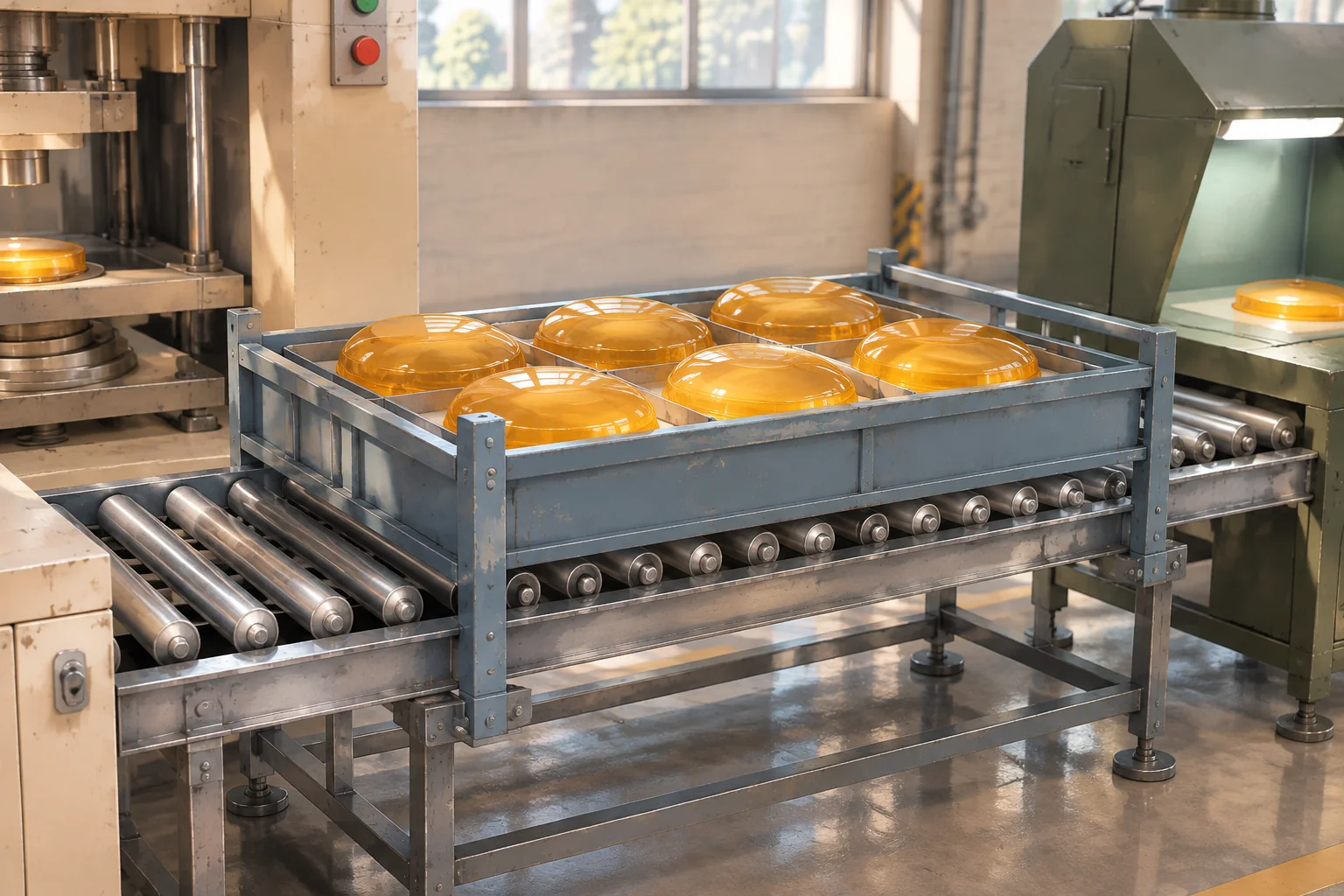
Follow six ticks from empty
In the baseline, tick one ends with two formed parts and no shipments. Tick two starts by shipping those two. The press adds two more afterward. The inspector sits out tick three, so the rack ends that tick with four. At tick four the inspector clears three and leaves one. The press then adds two, leaving three waiting.
| Tick | Shipped this tick | Rack at end | Shipped total |
|---|---|---|---|
| 1 | 0 | 2 | 0 |
| 2 | 2 | 2 | 2 |
| 3 | 0 | 4 | 2 |
| 4 | 3 | 3 | 5 |
| 5 | 0 | 5 | 5 |
| 6 | 3 | 4 | 8 |
The press has formed twelve by the deadline. Four are still waiting and eight have shipped, so the order is two short. The inspector can clear at most three per two ticks while the press makes four in that span. That rate explains why stock accumulates. The exact replay also accounts for tick two, when the inspector had only two parts ready.
Give AI one measurable shipment
Specify what advances the clock, what the counters mean and when the game evaluates the order. Step should let the player inspect a single tick. Run should repeat that same operation, so the trace is independent of which control they choose.
Build an original browser factory challenge called Glasslight Line.
Use one press, one intermediate rack and one inspection station.
Start at tick 0, with an empty rack and zero shipped.
Default the inspection interval to 2. Also allow 1 before a run.

Each tick, first check whether its number is divisible by
the selected interval. If so, ship up to 3 parts already in
the rack. Otherwise ship 0. Then feed 2 blanks to the press,
form them and add 2 parts to the rack. Rack space is ample.
No scrap or transfer delays. Only inspected parts count as shipped.

Step applies one tick. Run repeats Step through tick 6.
Freeze the result then. At least 10 shipped means the order passed.
Keep the same tick sequence if the player starts with Step
and then chooses Run. Ignore extra steps after tick 6.
Reset tick, rack and shipped to zero, keeping the selected interval.
Allow interval edits only at tick 0. Show all three counters.
Use original equipment, workshop art and interface.
For a quick check, advance three ticks by hand. At interval two the screen should show four waiting and two shipped. Now select Run. The deadline should show four waiting and eight shipped, just as it does when you select Run from the start. If those paths disagree, check whether both controls use the same tick function.
Change only the inspection interval
After a reset, select interval one. Tick one still ships nothing because the rack starts empty. Ticks two through six each ship two, so the shipped totals are 0, 2, 4, 6, 8 and 10. The rack ends every tick with two parts, and the two still there at the deadline were formed after the last inspection.
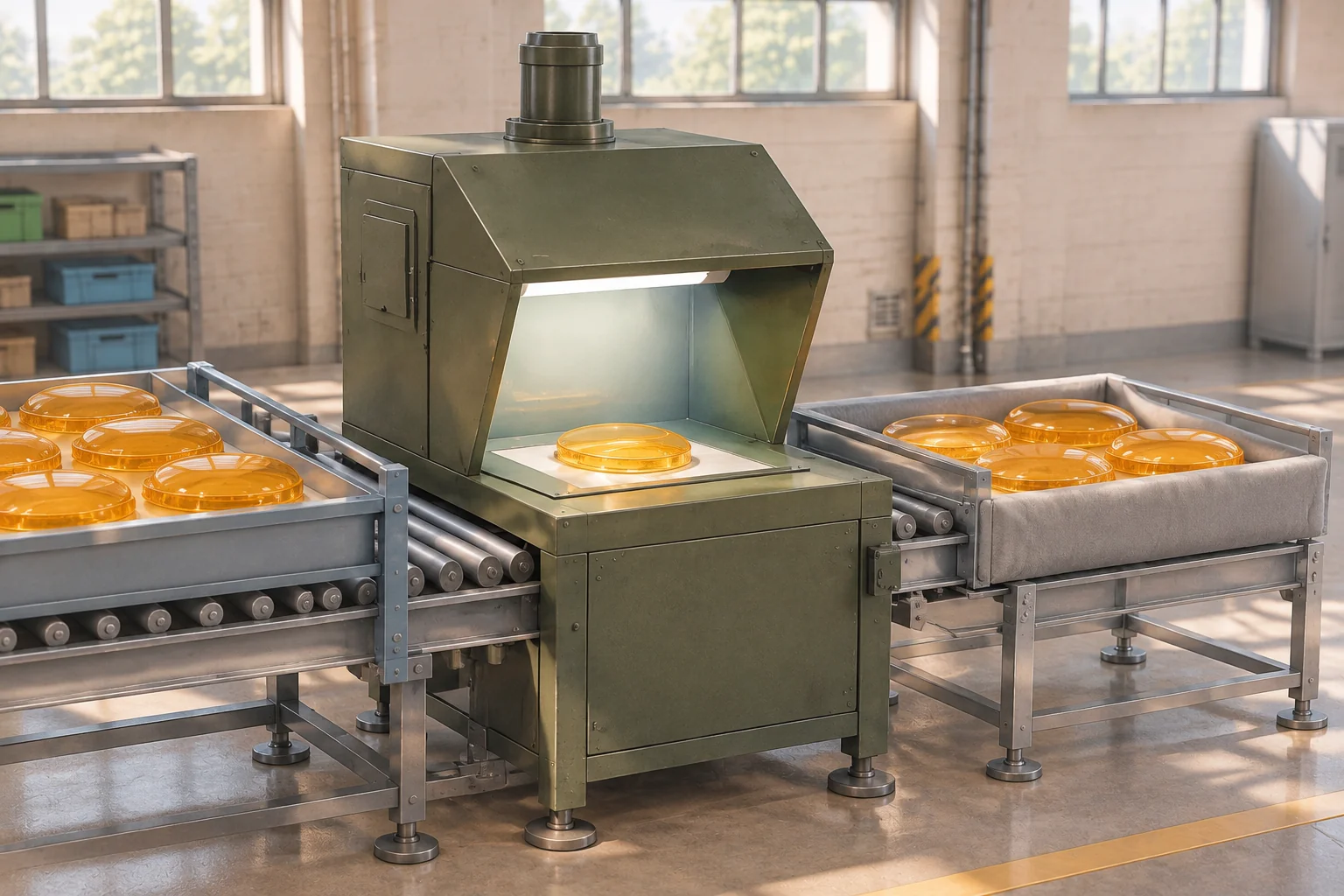
The inspection capacity per pass is still three. The new schedule gives it an opportunity every tick, but it finds only the two parts left from the previous tick. The same supply and deadline now yield ten shipped. Use the guide to revising one rule at a time to keep that comparison focused on the interval.
Finish one production chain
Start your original automation game with SEELE’s AI Game Maker. Replay one shipment from empty, check every counter against the planned trace, and give the player one setting that changes where the work waits.
Frequently asked questions
What should count as throughput?
Choose one completed unit and one time window. Here, shipped diffusers are the output and six ticks are the window. The rack count tells you where material is waiting. It helps explain the shipment count without being part of it.
Which machine should I upgrade first?
Watch where parts pile up and compare how much each station can process in the same time. In this example, the rack grows because the press makes four parts in two ticks and inspection can clear at most three. Try changing inspection first.
Does it matter which machine updates first?
Yes. Inspecting before forming makes a new part wait until a later tick. Reversing the order can let it ship on the same tick. Pick one rule, document it, and make Step and Run share the same update order. Check the first eligible tick after reset.
When should I add another resource?
Add one when it creates a decision the current line cannot express. First verify that the player can read the existing counters, find the bottleneck and repeat the shipment. A second input is easier to reason about once those checks work.