Make the shop a build decision between waves
Steam describes Brotato as an arena roguelite where players collect materials and get items from a shop between enemy waves. Ash Circuit is a separate fictional design: it offers a coil weapon, medkit and boots, then asks which combination best fits the build and coming threat. Its items, prices and rules are original.
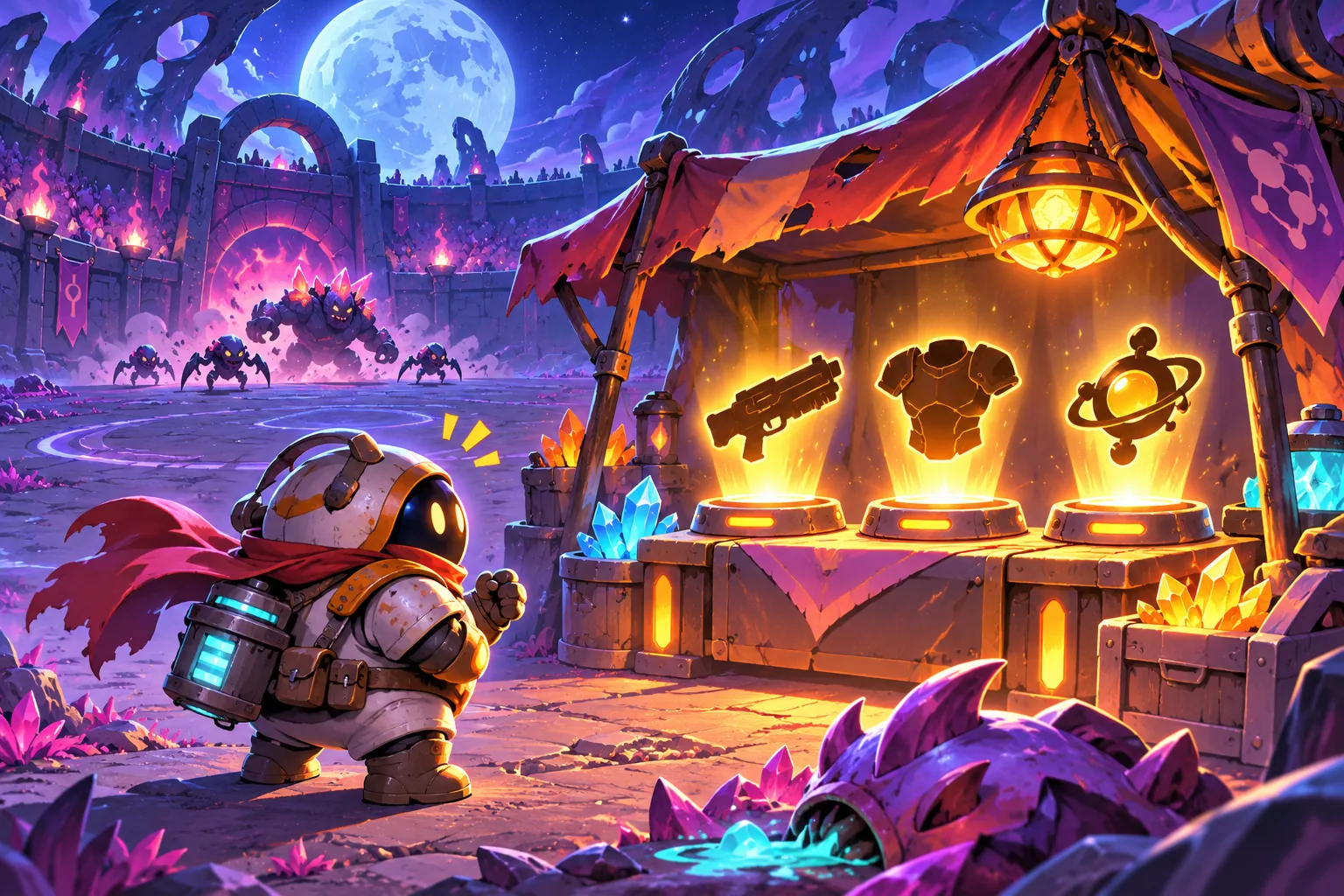
Show the next-wave threat and the player's build tags beside each offer. Give every item a scrap price and a simple fit value so a purchase feels like a tradeoff. The player has 8 scrap: Coil costs 5, Medkit 3 and Boots 2. Coil plus Boots best fits the sample build for 7, leaving 1.
Price refreshes so rerolling has a real cost
Store the current offers, scrap balance and refresh count. In this example, the first refresh costs 2 scrap and the next costs 4. After both, only 2 scrap remains, so a third refresh costing 6 is unavailable. Keep this curve visible before the player spends; a refresh should not silently reset to its cheapest price.
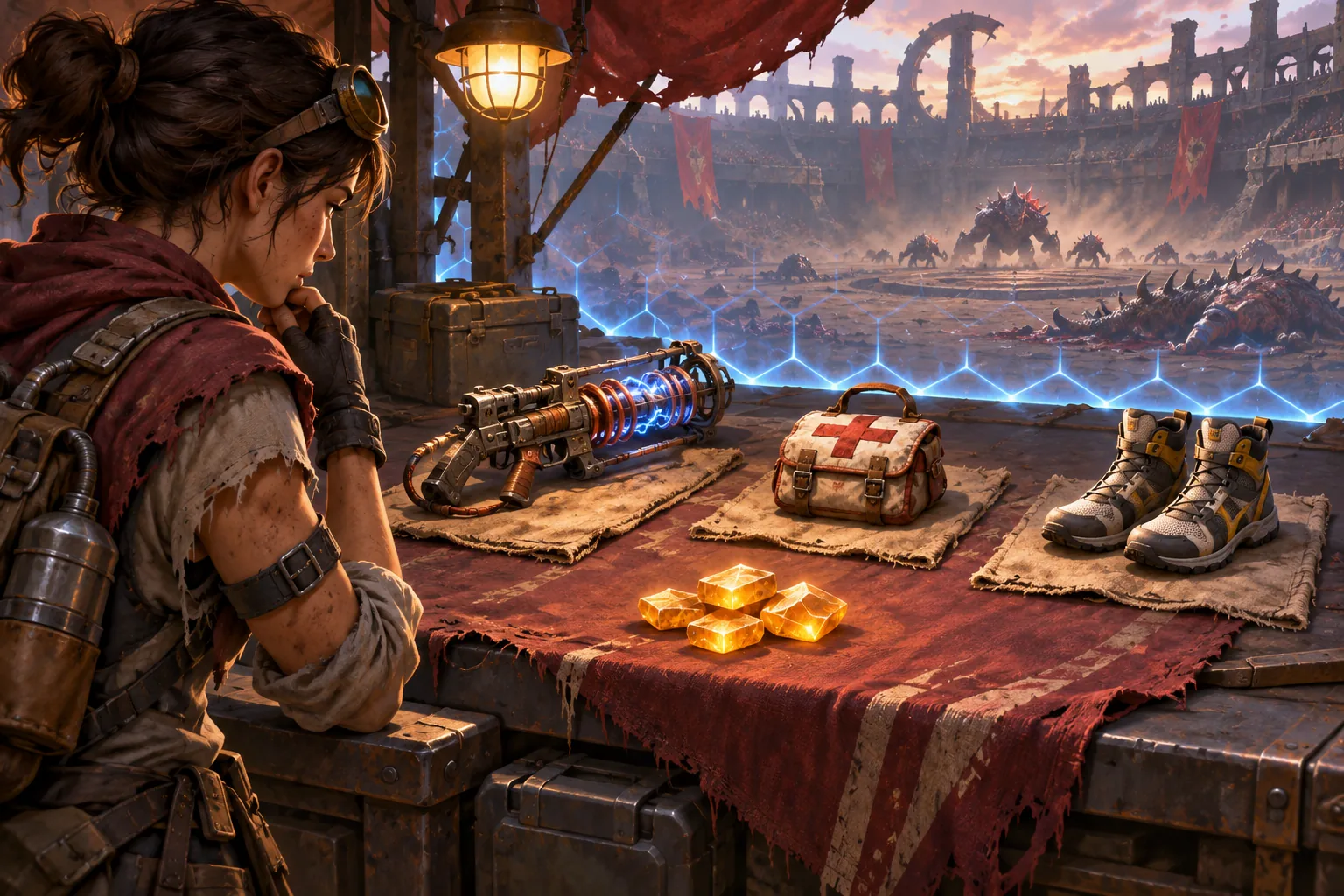
The first iteration allowed free repeated refreshes because the counter reset after each click. Persist the refresh count for the shop round. The test buys Coil and Boots for 7 of 8 scrap, then verifies refresh costs of 2 and 4 and rejects the 6-scrap third refresh. This ledger checks purchases only, not combat balance or item strength.
Carry the purchase into the next arena wave
After buying, update the build summary and carry selected gear into the next wave. Keep the threat cue visible so the player can compare the purchase with what arrives. Explain any unaffordable offer and preserve unspent scrap, rather than making an automatic purchase or hiding the remaining budget.

Prototype a short shop round before tuning a full run
Start with three offers, a build-fit value, 8 scrap and two refresh prices. Test one affordable combination, one budget limit and an escalating refresh sequence. Brotato supplies a high-level reference for a between-wave shop; its official store description does not validate Ash Circuit. Godot Resource can hold reusable offer data, and SEELE AI Game Maker offers a prompt-based starting point.
Create an original arena-survival shop with three gear offers, limited scrap, visible next-wave threats and escalating refresh costs. Show how each offer fits the current build. Reject purchases and refreshes the player cannot afford. Keep the rules and art original; do not claim combat balance or playtest validation.
Start an original arena prototype in SEELE · Brotato on Steam
Frequently asked questions
How can shop offers create meaningful decisions in an arena game?
Show the upcoming threat, current build and price together. Let players compare how each item helps and what it costs from the same limited budget. In Ash Circuit, Coil and Boots use 7 of 8 scrap and fit the sample build; the values are fictional test data.
Why should refresh costs increase?
A rising cost makes repeated searches compete with purchases and unspent currency. Display the next price before a refresh and keep the count for the full shop round. The local ledger tests the 2, 4 and 6 cost sequence, not whether it feels balanced.
What should a first shop prototype include?
Use a few offers, one currency, clear prices and a deterministic purchase ledger. Add the next-wave cue and build-fit values, then check purchases and unaffordable actions. A playable run is still needed to judge combat pacing and item strength. Measure a full wave after the purchase.