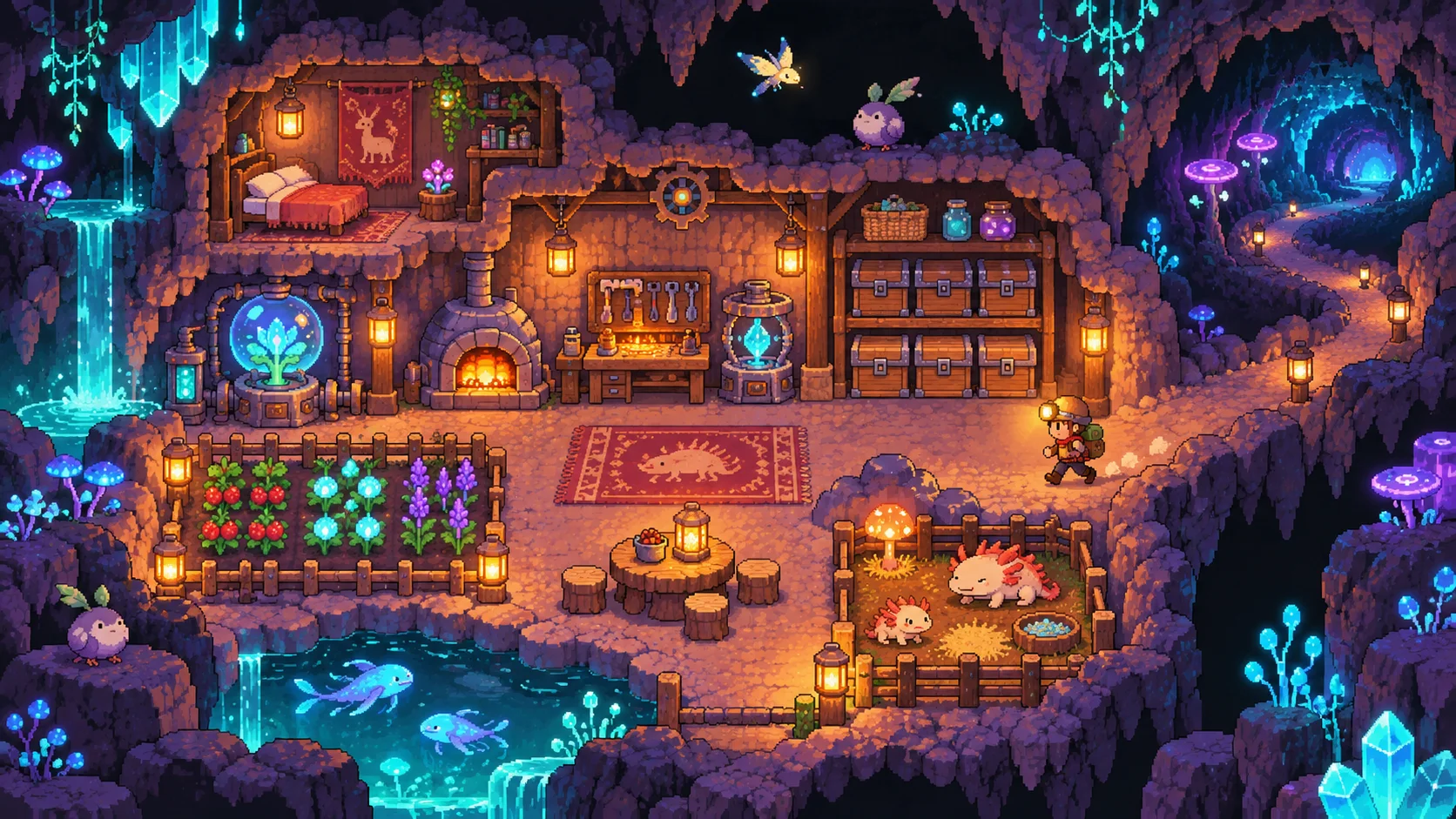
Make each resource open a clear next step
Core Keeper's official store page describes mining resources and crafting advanced tools. Ashfall Lantern is a separate fictional design: its explorer repairs a drill with Pebble and Amber to reach a deeper layer. The materials, amounts and unlock sequence are original, so the reference informs the broad loop rather than the game's specific balance.
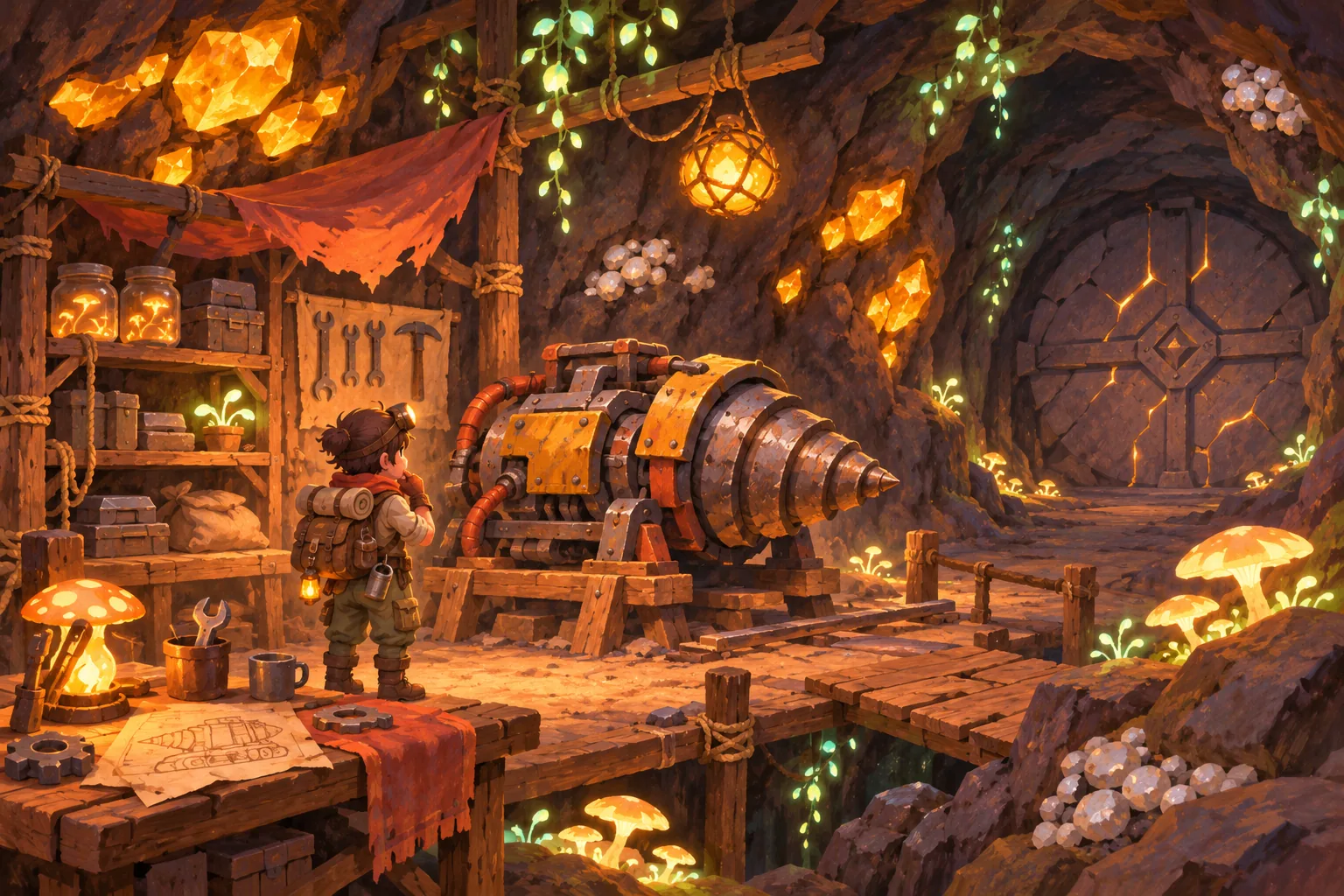
Show which deposits are reachable at the current depth and what a tool repair will unlock. A Pebble deposit alone cannot satisfy the recipe: the drill costs 3 Pebble and 2 Amber. Players can see whether to mine more Amber before returning to the workshop instead of spending materials on a partial upgrade.
Validate every ingredient before spending any
Store typed inventory counts, the current layer, and whether the drill repair has already been claimed. Check all required materials first, then deduct them together and unlock the next layer. If one type is missing, leave every count unchanged and name the missing resource. This avoids losing Pebble when the explorer still needs Amber.
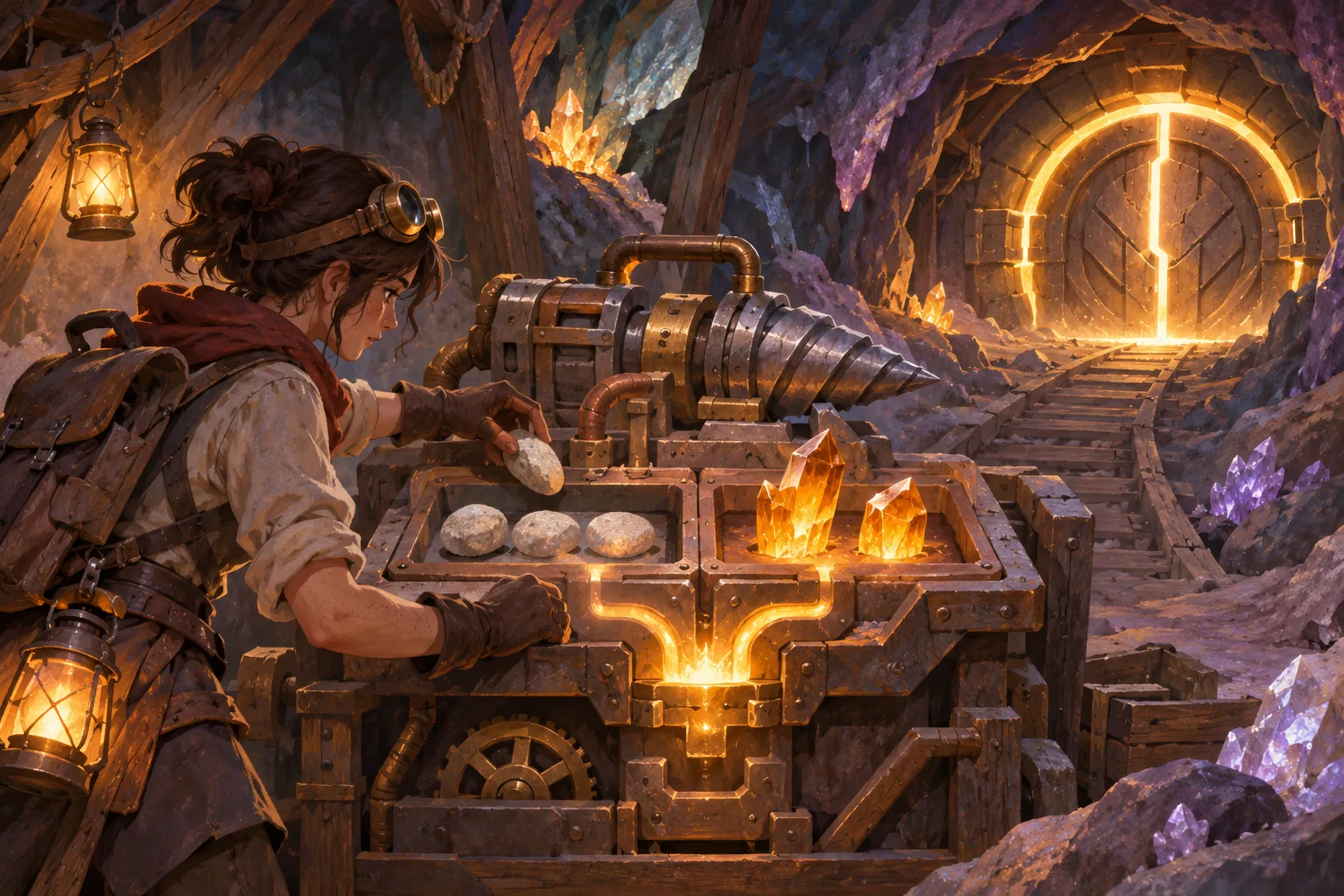
The first iteration deducted Pebble before checking Amber, so an incomplete repair lost resources. Make the recipe atomic: start with 5 Pebble and 1 Amber, fail without spending, then add one Amber and pay 3 Pebble plus 2 Amber once. Layer 2 opens and Blue Shard becomes reachable. A repeated unlock is rejected without another deduction. This deterministic check does not tune resource balance or prove a playable loop.
Let new deposits reward a successful upgrade
After the repair, reveal Blue Shard deposits only in layer 2 and keep the workshop route visible. A new material should create a next recipe or tool choice, not just a larger inventory number. Show the material source, recipe cost and unlock outcome together so players understand why the trip deeper matters.

Prototype one resource gate before adding more tiers
Start with two materials, one repair recipe and two cavern layers. Test a missing ingredient, the successful repair, a repeated claim and the new deposit gate. Godot Resource can store reusable recipe or material definitions, while Core Keeper's store page gives only broad mining and crafting context. SEELE AI Game Maker offers a prompt-based starting point; none of these references validate Ashfall Lantern's costs.
Create an original underground survival game with typed resources, a drill repair recipe and gated cavern layers. Validate all ingredients before deducting any, unlock a deeper layer once, and place a new material there. Keep costs and materials original. Do not claim balance or playtest validation.
Start an original cavern prototype in SEELE · Core Keeper on Steam
Frequently asked questions
How can resources create a clear progression path?
Give each material a visible use in a recipe, tool or access gate. Show which layer contains it and what the crafted upgrade unlocks. In Ashfall Lantern, Pebble and Amber repair a drill, which opens a layer with Blue Shard. The fictional numbers illustrate the loop; they are not balance recommendations.
Why validate a recipe before spending resources?
Check every required material before changing inventory. If an ingredient is missing, report it and leave the other counts intact. The local test catches the partial-spend problem where Pebble was lost even though Amber was unavailable. A real game would also need save and rollback behavior tested.
What should an early resource-progression test include?
Use a short chain with a failed recipe, a successful cost, a one-time unlock and a newly reachable deposit. Confirm that each state change follows from the previous one. Then test it in a playable cavern; the local rule check does not establish pacing or resource balance.