A useful base changes what an expedition can accomplish. It gives players a place to store supplies, craft tools, prepare for a new route, and see how earlier discoveries have changed their options. For an original underground survival game, begin with a small hub that solves an immediate problem, then connect each new facility to a clear need. Core Keeper’s official store page describes a mining sandbox where players mine, build, fight, craft, and farm; use that broad loop as context, not a blueprint for specific recipes or progression.
Give the first base a practical purpose
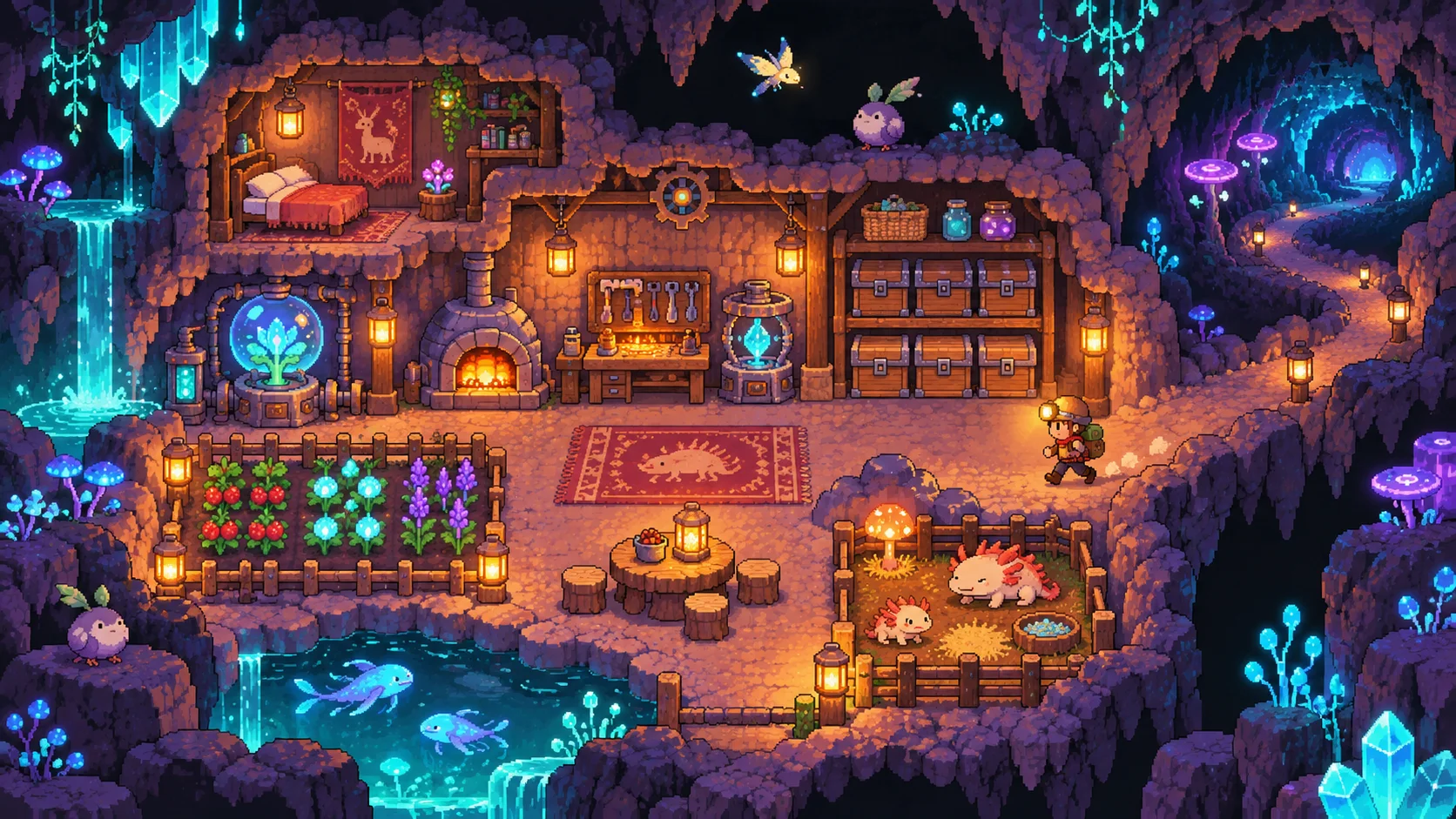
Start by identifying a problem the base solves. A shelter might make a safe place to recover; a workbench might turn gathered material into a better tool; storage might let players leave behind items they do not need for the next trip. Avoid asking players to gather a long list of resources before they understand what the facility will do. Let a first build provide a visible benefit quickly.
Keep the starting footprint small. A compact room or clearing helps players understand where facilities can go and how to move between them. Show the building footprint before placement, provide a clear confirmation, and make construction costs visible. If a structure needs a specific surface, power source, or nearby object, explain that rule while the player is deciding rather than after the placement fails.
Give the base a practical rhythm. A player can return, sort a few materials, craft an item, and set out again without a long checklist. If the base requires several maintenance chores after every trip, its convenience may disappear. Choose which tasks can be automated, which need player attention, and which are optional decoration.
Connect facilities to exploration needs
Each facility should solve a recognizable expedition problem. A crafting station may make an upgraded tool; a storage room may hold bulky materials; a food area may prepare a useful supply; a map or communication structure may help players plan a new route. Show the relationship between a new facility and the action it enables. This makes construction feel like progression rather than a collection of disconnected objects.
Introduce facilities when the need becomes relevant. A resource discovered in a cave can hint at a future tool, while a blocked passage can make a mining upgrade feel useful. Avoid revealing too many recipes at once. A short list of nearby goals can help players choose what to build next without turning the hub into an unreadable catalog.
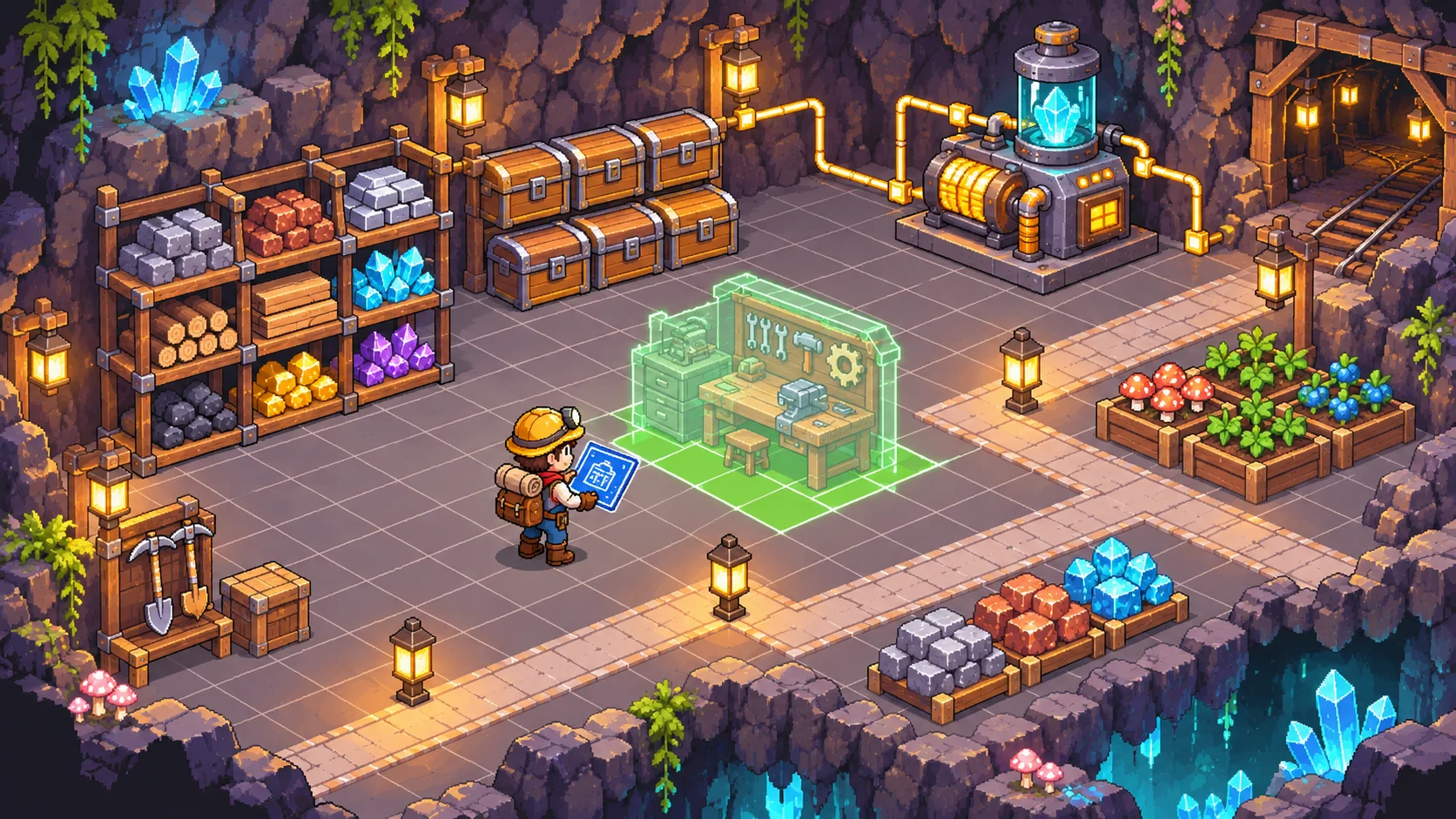
Let layout express player priorities. A player may place storage near the entrance, put crafting stations together, or build gardens near a light source. Support this with clear snap rules, enough room to move, and simple ways to rotate or reposition structures. If adjacency or power matters, draw a readable connection rather than making players infer why something is inactive.
Offer a recovery path for placement mistakes. If players can move a structure, explain whether its materials are returned and whether any progress is preserved. If movement is limited, allow a preview or undo before confirming. A base is a long-term investment, so hidden placement costs can make experimentation feel unsafe.
Make construction and layout legible
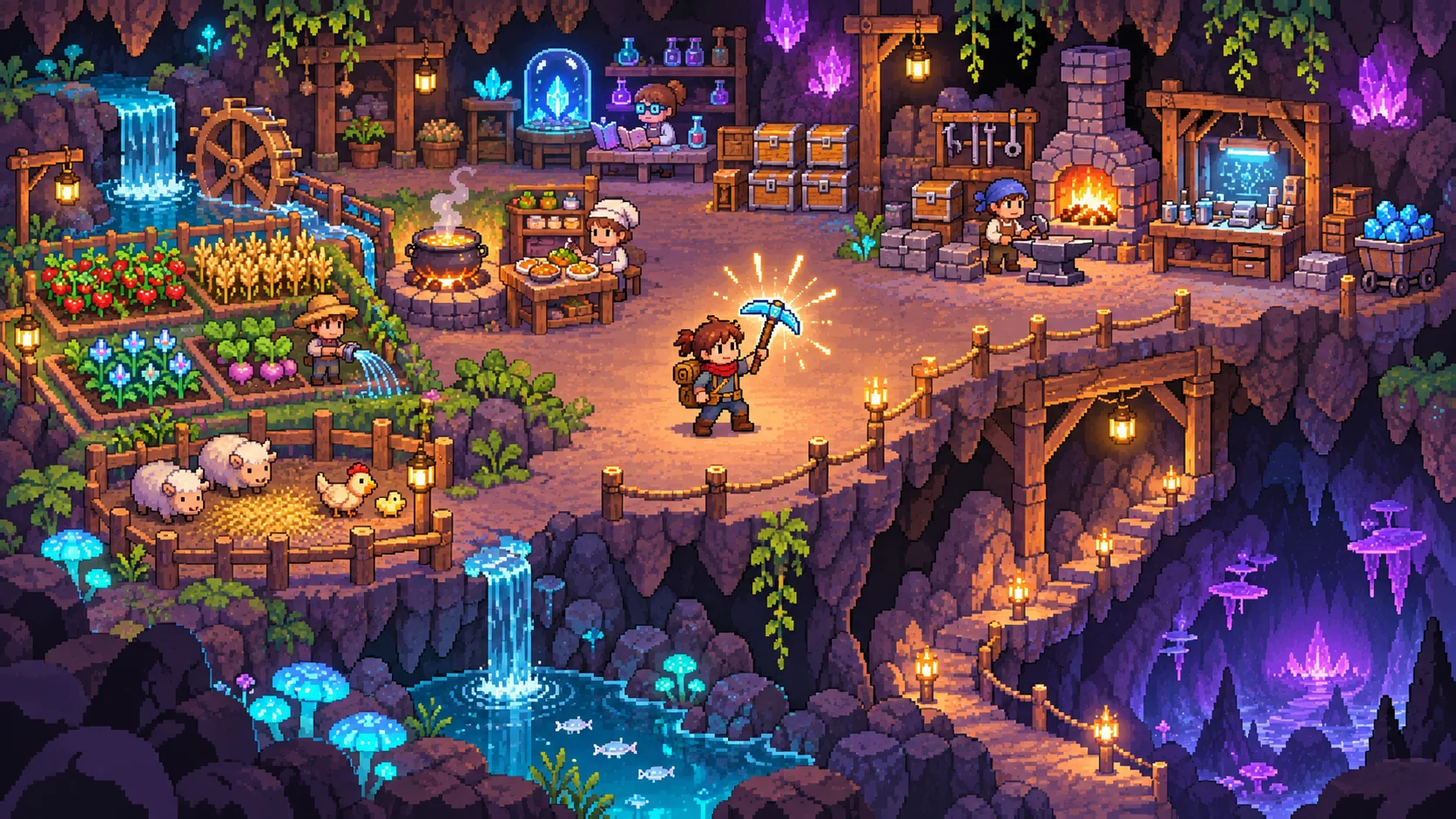
Use distinct shapes and silhouettes so players can recognize stations from a short distance. Give active facilities a visible state: a lamp, animation, smoke trail, or small indicator can show that the station is working. Keep decorative objects visually separate from usable stations, or clearly communicate when they have an interactive function. The base should remain easy to read as it grows.
Think about accessibility and co-op behavior if the project supports multiple players. Avoid making essential tools easy to block behind decorations or another player’s avatar. Show who owns an active task when that matters, and allow shared access to core services. Test the base while several people are moving, building, and sorting items at once.
Test progression and return loops
Playtest the first several returns to base. Observe what players do after coming back from a short trip, which facility they use first, and whether they understand what to build next. Ask whether they feel ready to explore again or whether inventory sorting, crafting queues, or resource requirements delay them too long. The goal is a useful hub, not maximum time spent inside it.
Track which facilities players build, how often they use each one, and what trips they take after an upgrade. If a new station is rarely used, find out whether players do not see its purpose, do not have the ingredients, or can solve the same problem another way. If a facility becomes mandatory, consider whether the feature should be part of a simpler starting kit instead.
Test resource costs against the routes players take to collect them. A facility can ask players to explore for uncommon materials, but the journey should teach or reveal something in return. Avoid repeating the same low-risk trip solely to accumulate a large quantity. Provide alternative sources or let player skill and exploration choices affect how efficiently they gather materials.
Core Keeper’s official listing supports a high-level reference to mining, building, crafting, farming, and base building. It does not prescribe a particular base layout or recipe structure. Design your own facilities around your world, then check whether each upgrade makes exploration more interesting or more convenient. SEELE’s documented game-creation capability can help start from a natural-language concept; validate the hub through playtests and tune the return loop based on observed needs.
Frequently asked questions
What should players build first in a survival game?
Start with a facility that solves an immediate, understandable problem, such as a safe place to prepare or a basic station that turns gathered materials into a useful tool. Show the benefit quickly and keep the initial resource cost manageable. The first build should explain how the base supports future exploration.
How do you make a base useful for exploration?
Connect facilities to needs players encounter outside the hub: equipment, storage, recovery, food, or route planning. Introduce each facility when its purpose becomes relevant and show what it enables. Let players prepare quickly so returning to base helps them continue exploring rather than adding unnecessary chores.
Should players be able to move base structures?
Usually provide a way to preview placement and recover from mistakes. Moving structures can encourage experimentation, while restrictions can make layout choices meaningful. If a structure is costly to move or cannot be moved, explain that rule before placement and preserve resources when a placement error is easy to make.
How do you prevent base building from becoming a resource grind?
Make costs match the value of the facility, vary where materials come from, and show the benefit before players invest. Let exploration reveal useful resources or alternative paths, and avoid requiring repeated identical trips for basic upgrades. Playtest how much time players spend gathering versus using what they built.
Prototype a compact hub with three facilities that solve different expedition needs. Explore an AI game creation starting point for an original underground survival game.