Multi-floor combat adds spatial choices to a deckbuilder: where to place defenders, which threat to stop, and what may reach the objective next. Shiny Shoe’s official Monster Train listing describes a strategic roguelike deck-building game with three vertical play fields to defend. That broad premise is the only reference fact used here; all floor capacities, turn steps, and enemy rules below are original design recommendations.

Define floor order and capacity
Represent each floor as a visible combat zone with an order, a unit limit, and a clear connection to the objective. The player needs to see which floor enemies occupy and what reaching the bottom means. A three-band layout can help, but use as many floors as the turn logic can explain without constant inspection.
Decide how capacity works before card effects complicate it. Units might take one slot each, or larger units might take more space. Show available capacity before a card is played, and decide whether a full floor blocks placement, redirects a summon, or uses a reserve area. State that rule in the interface before the player commits.
Give floor order a gameplay purpose. An upper floor could provide an earlier chance to intercept a threat; a lower floor might be a last defense. If floors have modifiers, make them distinct and visible. Avoid adding special-case rules to every level until players understand the basic vertical sequence.
Resolve placement before enemy movement
Write the turn sequence as a fixed state machine. One possible original sequence is: draw and play cards, resolve summons and effects, resolve combat on each floor, then move surviving enemies toward the objective. Display the current stage and preview what will happen next. Consistency lets players reason about timing instead of memorizing exceptions.
Define what happens when a defender and enemy meet. For example, they might exchange damage until one is removed, while survivors remain in place until the next round. If combat order depends on speed, position, or target priority, show that order. Use a simple encounter first and add reactions only when their timing is legible.
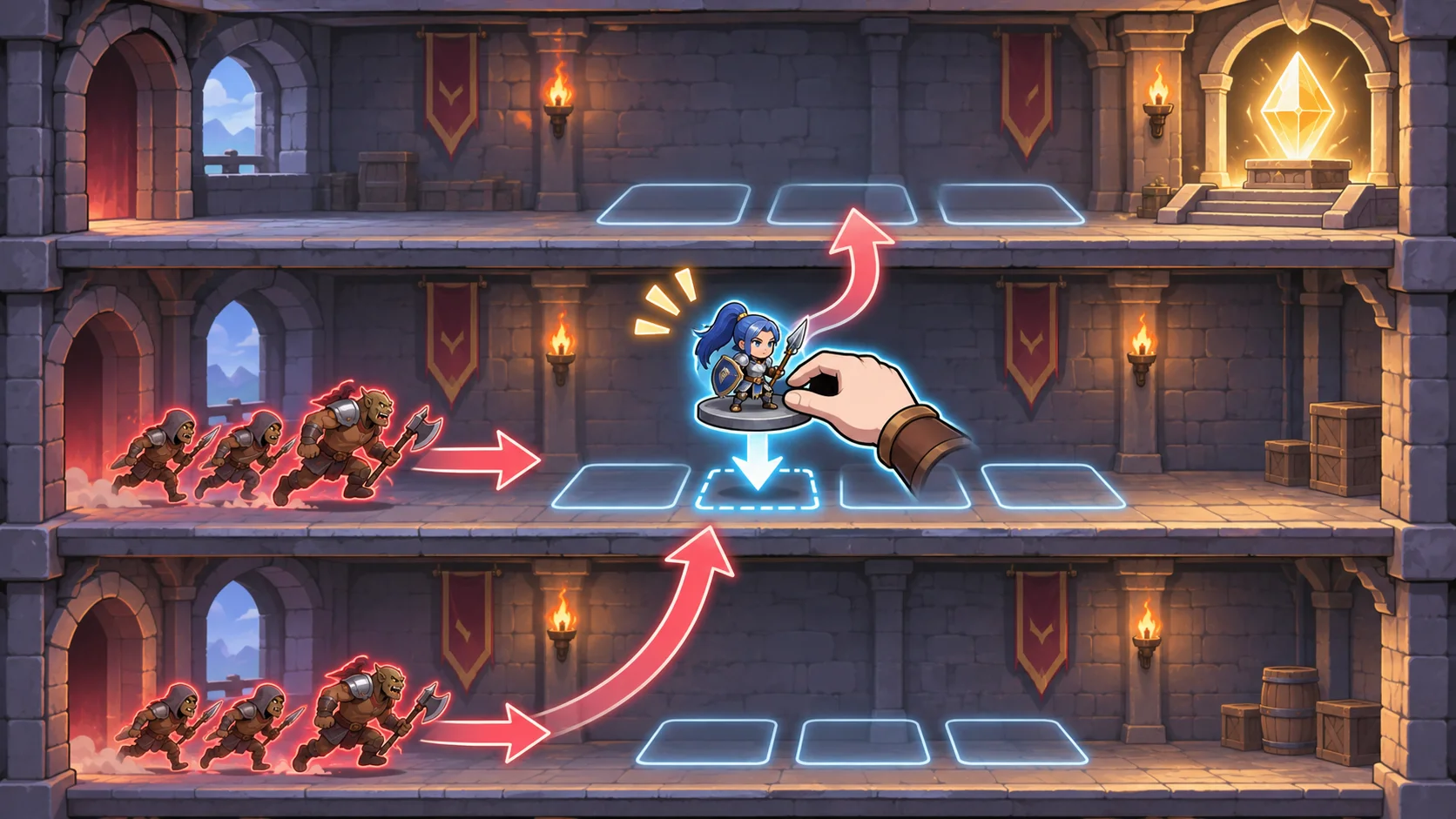
Make card play safe to revise before resolution. A player should be able to inspect the floor, unit capacity, and enemy path before ending the turn. If the game allows undo before confirmation, explain that boundary. After the turn resolves, report why the objective took damage or why a unit held a floor.
Make threats and travel legible
Show each enemy’s current floor, likely destination, and the cost of letting it advance. A directional cue or highlighted floor can preview movement. If an enemy is blocked, delayed, or redirected, indicate the rule that changed its path. The player should be able to see whether a defender intercepts, slows, or merely damages a threat.
Start with one movement rule, such as advancing one floor after combat if no defender stops the enemy. Then test multiple enemies, blocked lanes, and effects that remove a unit mid-turn. Make sure the objective’s remaining health and any incoming threat are both visible, so a player can choose between defense and damage knowingly.
Do not bury critical movement logic in card text. If a unit affects a floor’s capacity or enemy path, show the effect in the combat view as well as the card. Clear status icons and targeted highlights help players understand the board without rereading every description.
Balance builds with readable outcomes
Playtest defensive and aggressive decks, then record floor occupancy, overflow attempts, predicted enemy movement, objective damage, and card choices. Ask players to predict the result before ending a turn. If they cannot, identify whether capacity, combat order, or travel was unclear. This observation distinguishes a balance problem from an information problem.
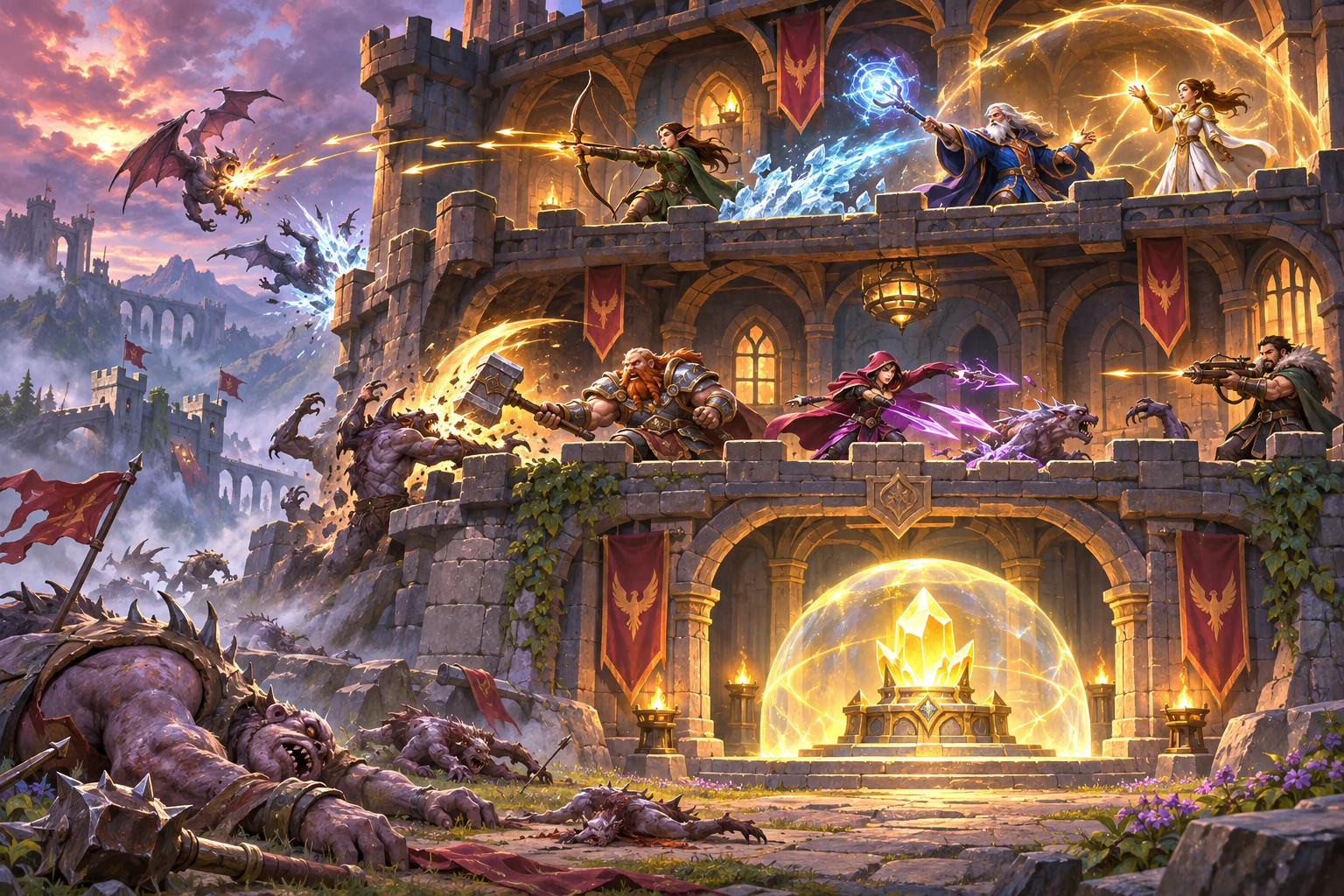
Test the edge cases where a floor starts full, empties during combat, or receives a unit from an effect. Confirm that every outcome follows the displayed order. If combat feels too predictable, vary enemy roles or floor conditions only after the base rules are readable. Tune capacity and telegraphs together; changing one without the other can make the same fight feel unexpectedly harder.
SEELE AI can help draft an original deckbuilder concept, but turn order, floor capacity, enemy movement, and combat balance need to be implemented and playtested. For a wider premise, see the original deckbuilder guide. Prototype an original deckbuilder with SEELE AI.
FAQ
How do you build multi-floor combat for a deckbuilder?
Represent floors as ordered combat zones with visible capacity, unit position, enemy movement, and objective proximity. Define a predictable turn sequence and state what happens when a floor is full. Start with a small number of unit roles and enemy behaviors so players can learn how placement affects later turns.
How should enemies move between floors?
Choose a simple movement rule and show the next destination before it resolves. For example, an enemy might advance one floor after combat unless a defender stops it. Keep exceptions rare at first, and indicate whether movement is blocked, delayed, or redirected so players can plan around the threat.
What happens when a floor reaches capacity?
Decide whether excess units cannot be played, occupy a reserve, or displace another unit, and communicate that rule before the player commits a card. Capacity should create a planning tradeoff rather than a surprise penalty. Test full-floor states with different unit sizes and summon effects.
How do you playtest stacked-floor combat?
Measure whether players predict enemy movement, use floor capacity intentionally, and understand damage to the objective. Test defensive and aggressive builds, plus edge cases where a floor is full or emptied mid-turn. If outcomes feel surprising, clarify the sequence or telegraph rather than simply reducing difficulty.