A card upgrade should change a decision the player will make, not simply add a larger number to a card. In an original deckbuilder inspired at a high level by Monster Train, treat each upgrade as a transformation with a cost, a clear mechanical effect, and a reason it fits this run. Players should be able to compare what they gain with what they give up, then see how the upgraded card changes their deck in later battles.
Choose what an upgrade should change
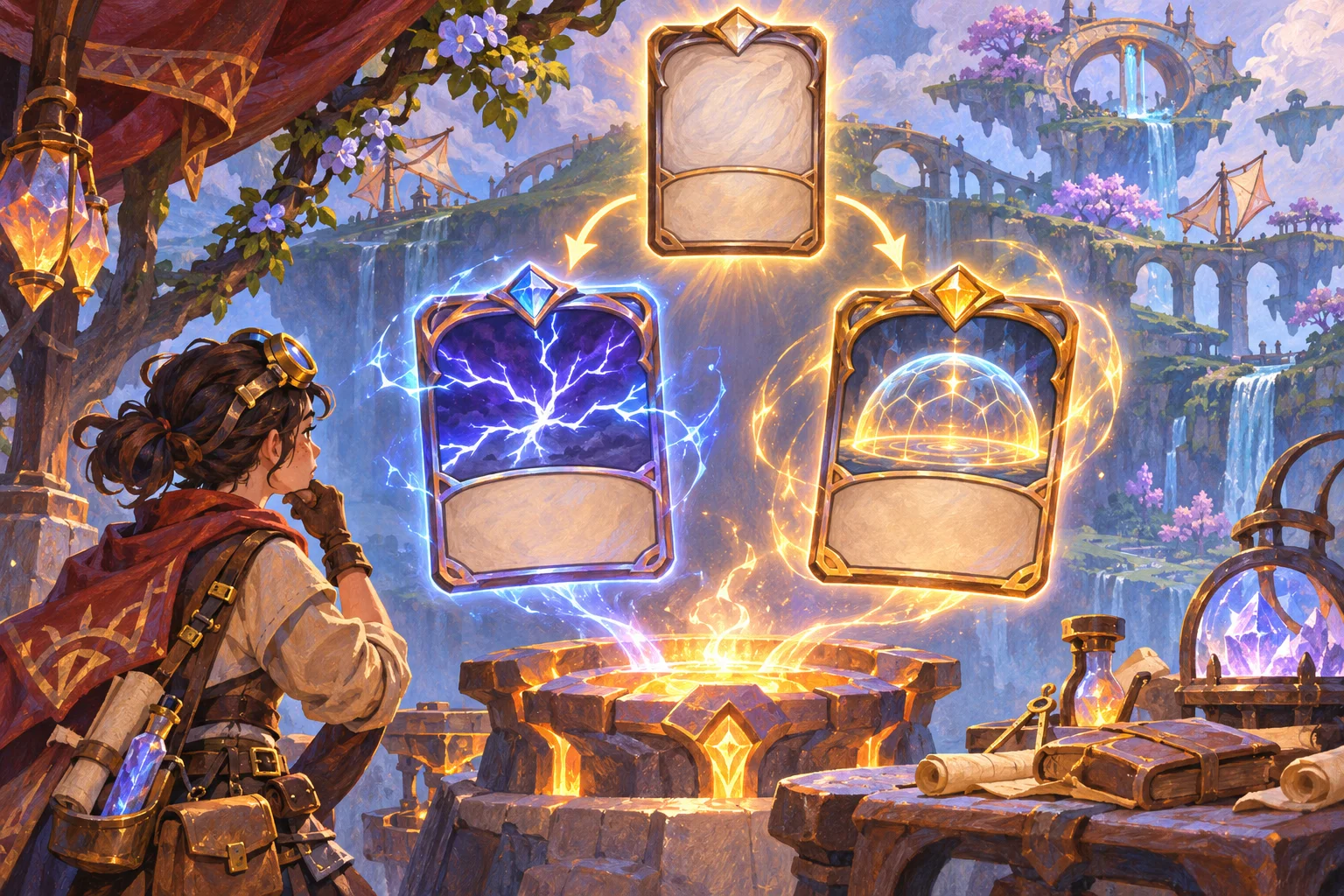
Start with the role of the base card. Does it deal direct damage, protect a unit, draw another card, or set up a later effect? An upgrade can strengthen that role, reduce a cost, broaden its target, or add a secondary effect. Choose one primary transformation at a time so players can understand why the card behaves differently.
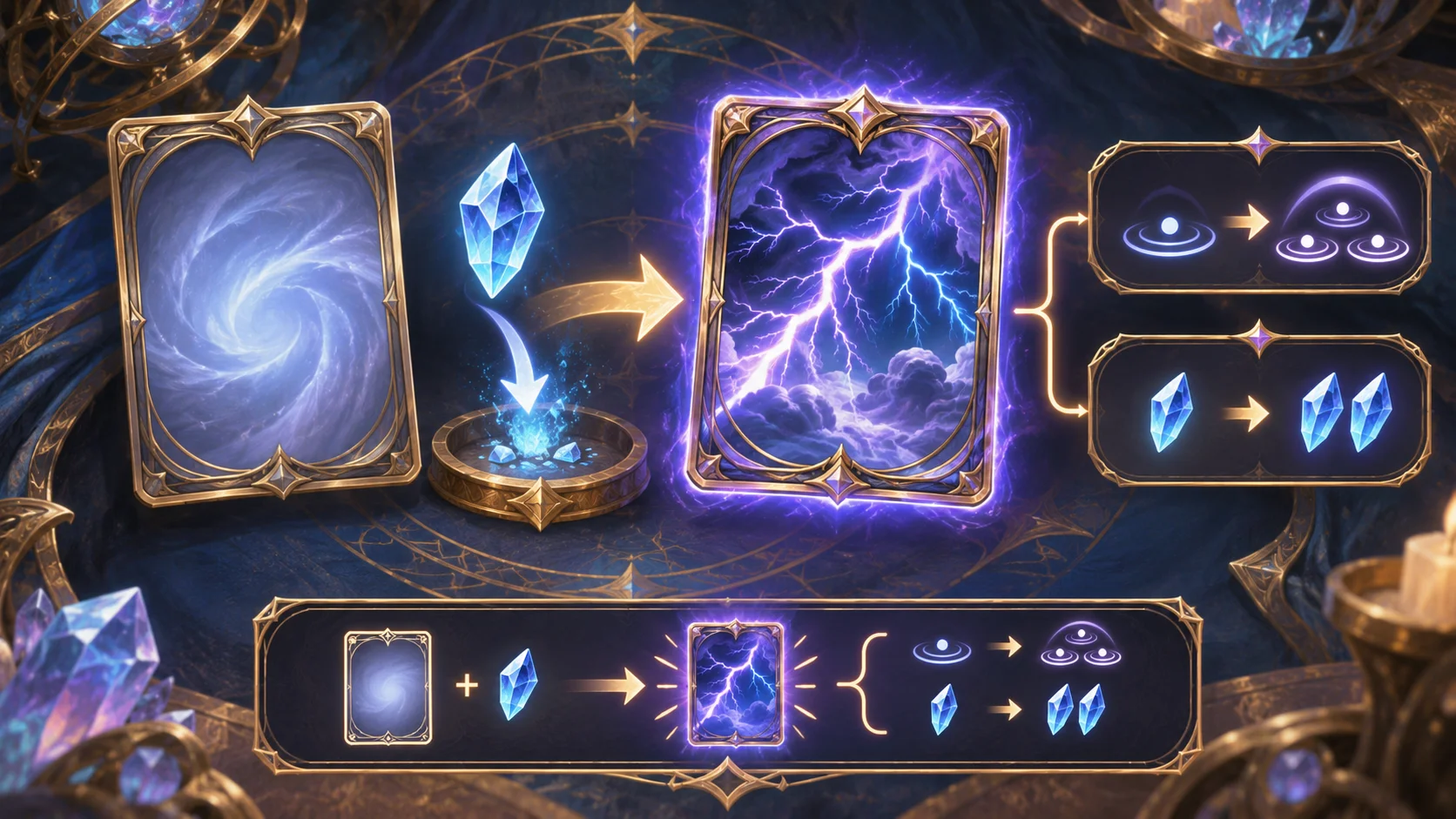
For example, an original “Spark” card could gain a forked effect that reaches a second target, while an alternate upgrade could add a brief ward to the player’s front unit. Both preserve the idea of a quick spell but support different plans. State what remains unchanged as well: cost, target rules, timing, and other effects should not shift without a clear reason.
The official Monster Train listing describes a strategic roguelike deckbuilding game and mentions multiple upgrades for its clan-specific champion. This is broad context for the reference; the card examples and upgrade model in this article are original and do not describe Monster Train’s implementation. For another deckbuilding structure, see this guide to branching encounter maps.
Represent upgrade rules and costs
Store an upgrade as data that describes its source card, transformation, cost, and compatibility. A simple specification might say: “Spark branches to one additional adjacent target; it costs one more ember to play; the change does not stack with the chain upgrade.” The exact numbers depend on your game. The important part is that the effect and its limits are explicit enough for both interface and combat logic to use consistently.
Keep upgrade availability understandable. If upgrades are offered at a workshop, show the eligible cards and the resources required before the player commits. If a transformation is permanent for the run, label that choice and let the player inspect the card afterward. If upgrades can be replaced, explain what happens to the earlier effect and whether the original resource cost is refunded.
Do not hide essential changes in flavor text. A card preview should reveal cost, target, effect, and relevant status interactions. Use a side-by-side comparison or highlight the changed properties so the player can recognize what changed without memorizing the entire card. Make upgrade icons consistent across the deck, reward screen, and battle view.
Make upgrade choices fit the run
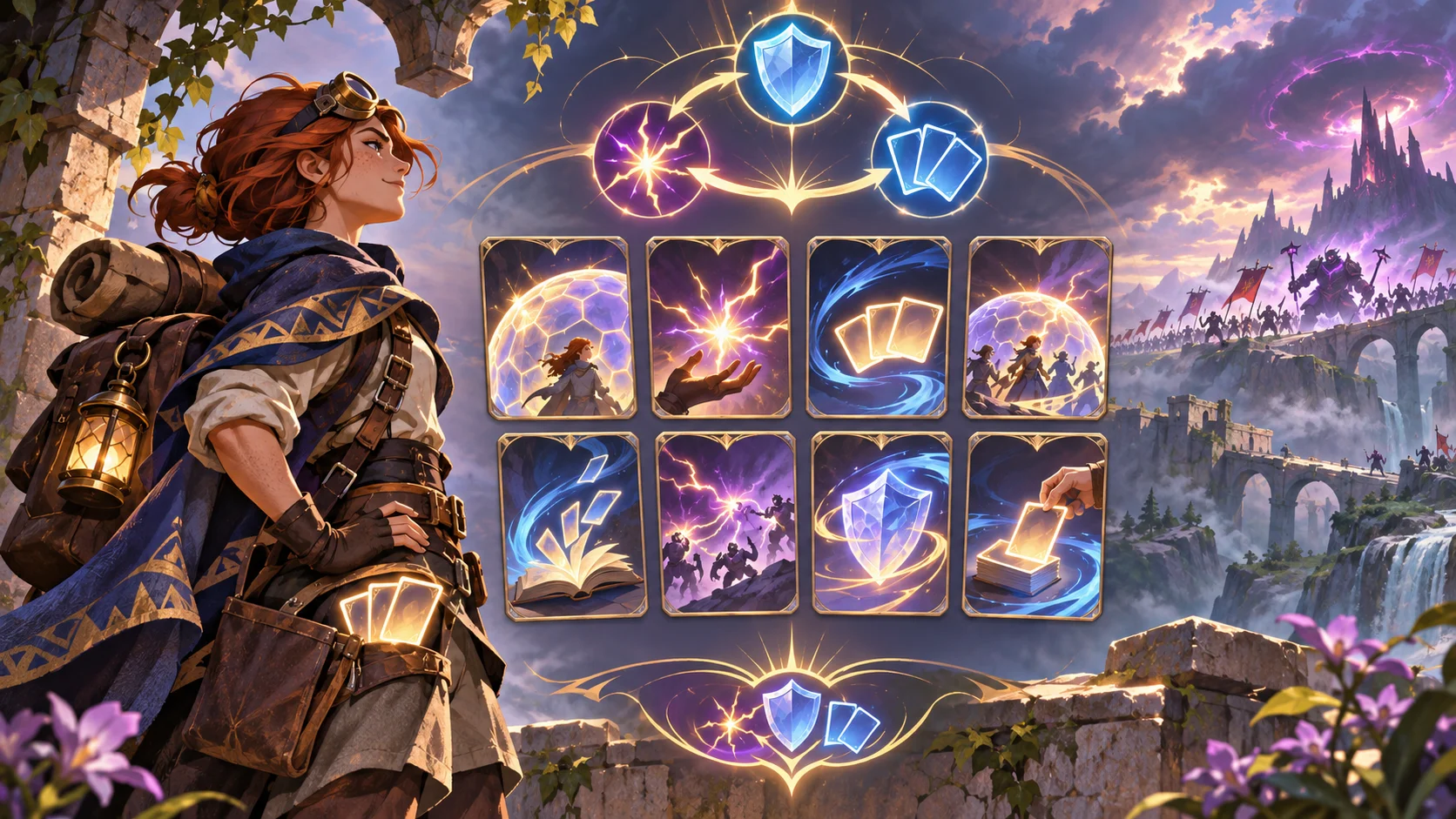
An upgrade matters when it creates a useful decision in the context of the current deck. If the player already has effects that reward multiple targets, a forked spell may create a strong combo. If the deck lacks defense, a ward variation might make a risky route more manageable. Let the player inspect enough of the deck and upcoming challenge to connect the upgrade to a plan.
Offer choices that are comparable but distinct. Three options that all increase damage by different amounts can be difficult to evaluate and may collapse into a math check. A direct effect, a resource discount, and a synergy effect invite different priorities. Avoid placing a clearly superior upgrade beside two weak options unless the situation itself makes the tradeoff meaningful.
Consider how an upgrade affects deck consistency. A powerful card that costs too much may sit unused; a free effect can crowd out every other choice. A broad upgrade may improve many encounters while a specialized one solves a narrower threat. These differences are valuable when players can recognize their consequences and the game gives each option a reasonable opportunity to matter.
Test synergy and balance across decks
Test an upgrade in more than one deck. Compare a focused deck that can exploit its synergy, a general deck with no special support, and a deck that has a competing resource demand. Track how often the upgraded card is drawn, played, and decisive. If it is always selected, its efficiency or opportunity cost may be too strong; if it is ignored, the upgrade may not change a real decision.
Also test edge cases: duplicated cards, transformations applied in different orders, effects that reduce costs, and upgrades whose target is absent. Decide whether an upgrade can be applied twice and what happens when it conflicts with another modification. Write a small test matrix and keep representative run states so balance changes can be compared consistently.
AI can help generate original upgrade variants or organize a test matrix, but it cannot establish balance from a description alone. Start a deckbuilder prototype with Seele’s AI game maker, then review the generated rules and test them in repeated runs.
Frequently asked questions
How do you design card upgrades for a deckbuilder?
Begin with the base card’s role, then choose a focused transformation such as changing its cost, target, effect, or synergy. State the transformation and its limits clearly, show the player the cost, and test it in several decks. An upgrade should create a new decision rather than only inflate a value.
What makes a card upgrade meaningful?
A meaningful upgrade changes how a player might use the card or build around it. It can improve efficiency, add a new tactical option, or support a deck strategy, but its tradeoff should remain visible. Players should be able to explain why they chose it and when it could matter.
How do you balance upgrade costs?
Compare the upgrade’s effect with the resource it consumes and the opportunity cost of other available upgrades. Test it across decks with different synergies and resource needs, then record how often it is selected and played. Adjust the cost or effect when one option dominates or never becomes relevant.
How can AI help prototype card upgrades?
Use AI to draft original upgrade variants, clarify transformation rules, or organize test cases. Review every effect for compatibility with your own combat rules, then play repeated runs to assess its value. Generated ideas can speed up exploration, but player behavior is needed to judge balance and clarity.