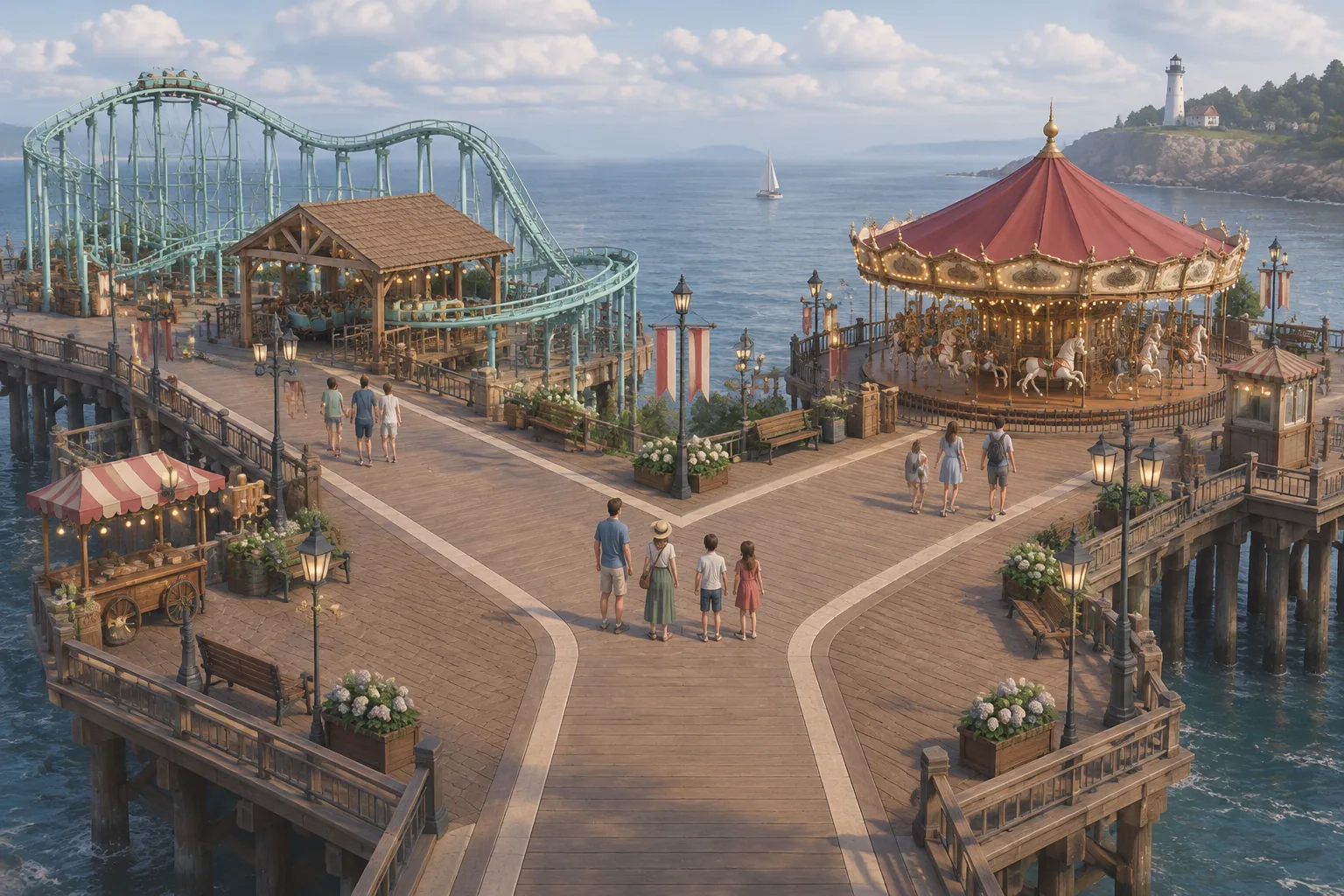
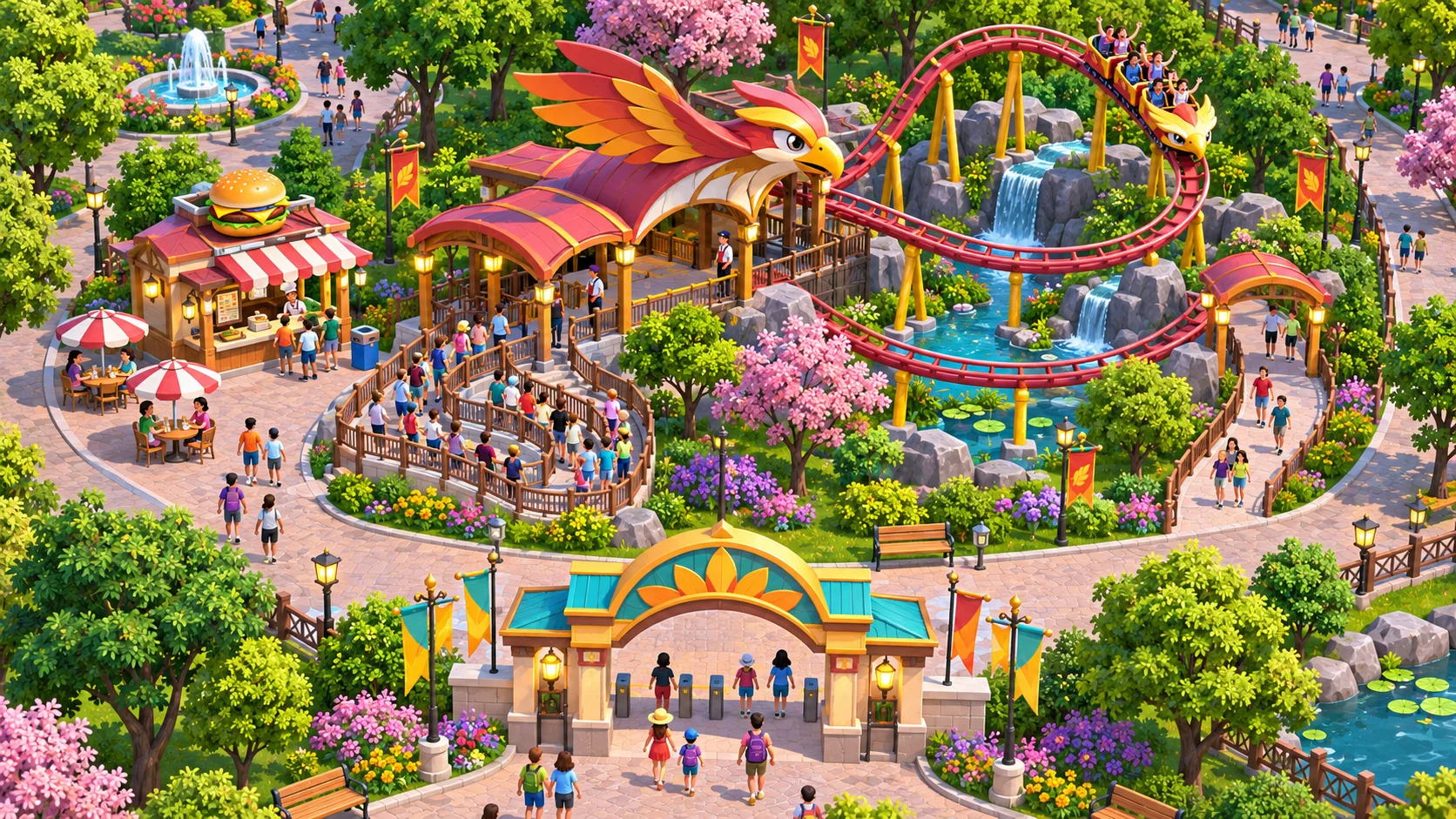
Park finances become playable when spending today changes the park’s options tomorrow. Atari’s official RollerCoaster Tycoon Classic listing describes creating parks in a rollercoaster simulation. That supports only the broad park-building context; the cash-flow model, budget categories, and investment rules below are original design guidance.
Build a readable park budget
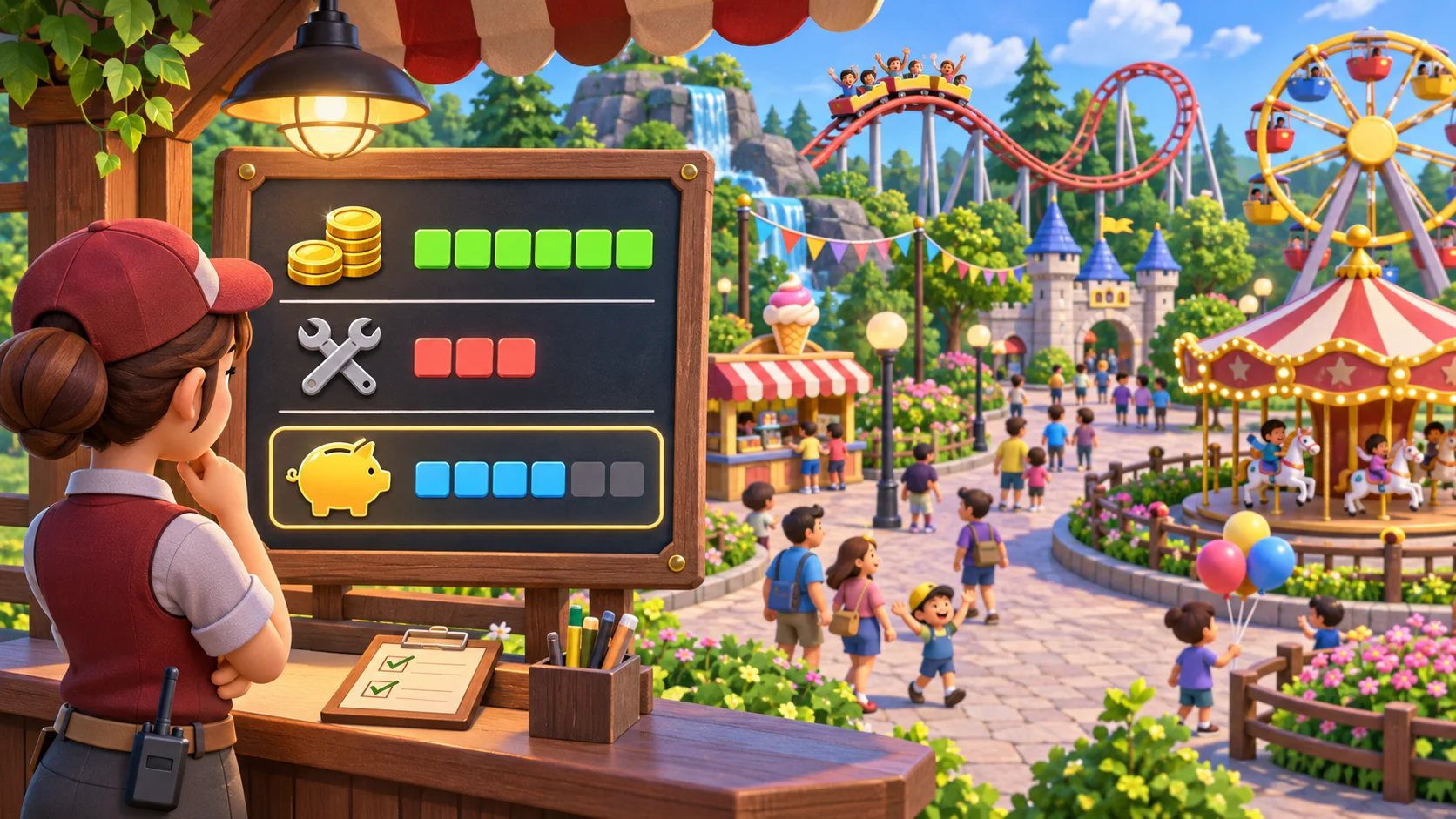
Separate finances into a few useful categories: visitor income, recurring operations, maintenance, construction, and reserve. Show which items repeat each period and which happen once. A ride purchase may be a one-time investment, while staffing and upkeep continue. This distinction helps players understand why a project that was affordable to build can still become expensive to run.
Choose an accounting period that matches the pace of the simulation. A daily summary can work in a fast management game; a monthly period may suit slower planning. Keep the period consistent and show when charges are applied. If the player sees a balance drop, the ledger should identify which category caused it.
Use a sample budget while teaching the system. A small park could earn a certain amount from visitors, pay staff and utility costs, reserve funds for repairs, and still have a little cash for expansion. The exact values are balance parameters. What matters is that the player can trace how the period ended.
Connect prices, costs, and cash flow
Link price changes to guest behavior or park outcomes. A higher ticket price might raise income per visitor but reduce attendance or satisfaction. A lower price could draw more guests while increasing pressure on paths and facilities. Show the likely direction of these effects, and let actual results teach how strongly demand responds.
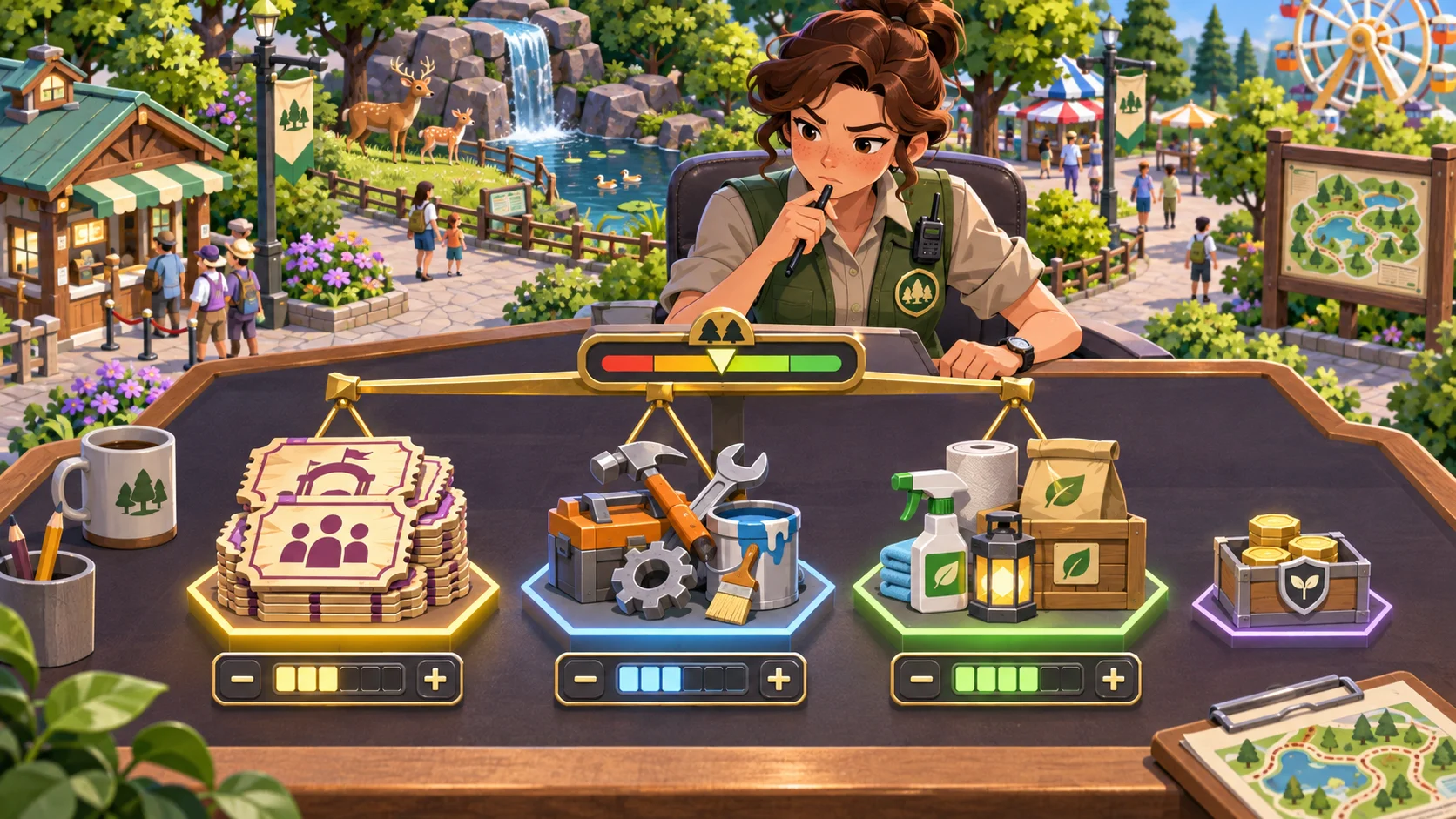
Make maintenance a visible choice rather than a surprise failure. A ride can accumulate wear over time; the player can schedule service, replace a part, or accept a risk of downtime. If maintenance is deferred, warn when the risk rises and show what may happen. Do not hide a large cost behind a vague condition meter.
Let operations and investment interact. A new attraction may increase visitor capacity but raise staff and upkeep costs. A path or service improvement may not earn direct income, yet prevent congestion or missed visits. Keep a short forecast of the next period so players can compare the expected effects before spending.
Choose investments with clear payback tradeoffs
Describe an investment with its initial price, recurring burden, expected capacity, and demand assumptions. Avoid a single profit rating that hides why an investment might work. A small ride may be cheaper and easier to maintain; a larger attraction may serve more guests but require more staff and space.
Test more than one strategy. A compact park can focus on a few well-run attractions; a broad park can invest in more variety and supporting services. If one approach always produces more money with no extra cost, adjust its construction price, maintenance, or capacity limits so the choice depends on player goals.
Test financial stability across demand changes
Run scenarios where visitor demand rises, falls, or shifts by season. Add one maintenance spike and a large construction decision. Observe cash flow, reserve use, and available recovery choices. Players should have a way to respond to a weak period, such as reducing expansion, adjusting operations, or delaying noncritical maintenance.
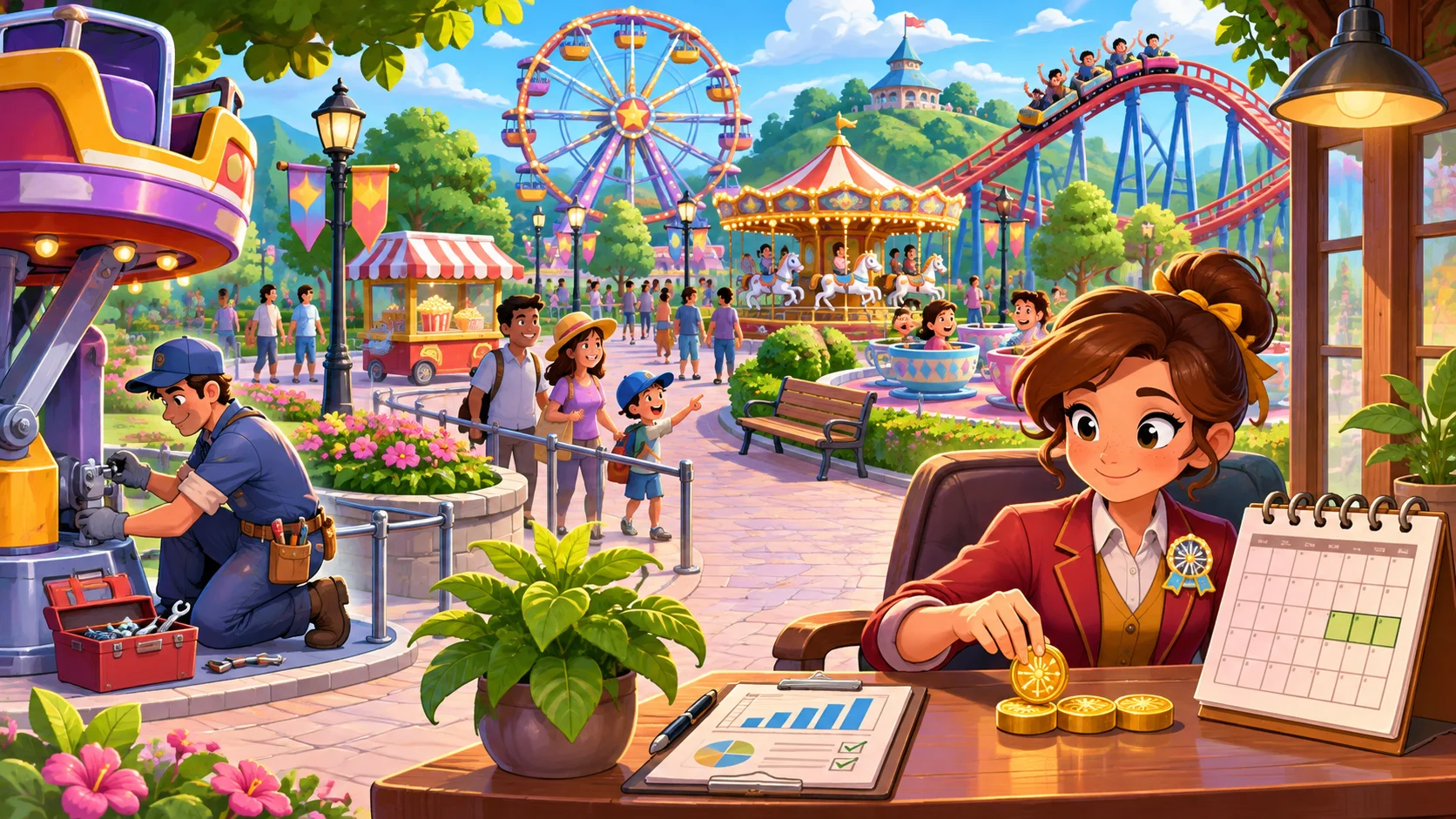
Ask playtesters to explain why a park made or lost money. Track whether they understand recurring costs, price effects, and the value of a reserve. If a profitable strategy depends on an exploit players do not understand, make the cash-flow rules more explicit or revise the incentives.
Use SEELE AI to draft an original theme-park management game and inspect the budget, upkeep, and demand behavior in the working prototype. A generated concept does not guarantee accounting or a balanced economy. For a broader park-building premise, read the original park simulation guide. Prototype an original park simulation.
FAQ
How do you build park finances in a management game?
Separate income, recurring operating costs, maintenance, investment, and reserve. Show how prices and visitor activity change cash over a clear period. Let players inspect a forecast before they commit, then report actual results so they can compare what they expected with what happened.
What expenses should a park simulation model?
Start with costs that change player decisions, such as staff, utilities, upkeep, and construction. Avoid modeling every small expense if it adds no meaningful choice. Distinguish one-time investment from recurring costs, and explain when maintenance or staffing needs will affect the next budget period.
How can park investments feel strategic?
Compare the upfront cost, ongoing burden, capacity, and likely demand for each investment. A new attraction can bring more visitors but require upkeep; a service improvement may reduce crowding or improve satisfaction. Make tradeoffs visible and ensure no one investment is always the best response.
What should you playtest in a park economy?
Test demand changes, maintenance spikes, construction decisions, and different park sizes. Track cash flow, reserve use, guest response, and whether players can explain a profit or loss. Verify that recovery options exist after a poor decision and that several park strategies can remain viable.