A repeatable expedition needs a local story and a reason to begin again. Eremite Games’ official Against the Storm listing describes a roguelite city builder in which resources, upgrades, and experience carry forward between expeditions. That broad settlement-roguelite and carryover premise is the only reference fact used here. The reset model, local objectives, reward examples, and pacing rules below are original.
Separate expedition goals from settlement survival
Give each trip a local objective, a pressure condition, and a reason to return. A goal might ask players to gather a scarce material, establish a temporary outpost, or reach a landmark before a storm intensifies. Make the success condition visible before departure and show what ends the run. The player needs to understand what matters during this particular settlement.
Keep survival rules distinct from the local objective. Food, shelter, or morale may create ongoing pressure, while an expedition objective gives the player a direction. If both systems compete, show how a choice affects them. A resource detour could help the settlement but reduce the time available for a scouting goal.
Use a short mission summary at the hub. It can show starting supplies, known conditions, the main objective, and any optional reward. Avoid hiding a critical requirement in a later event. A player should be able to leave with a plan, even if the map contains uncertainty.
Define what carries forward
Choose which state persists and which state resets. Persistent progress could include a hub upgrade, a new starting option, or recorded map knowledge. Local food, buildings, and temporary workforce might reset if rebuilding is part of the loop. Write the rule down explicitly for every resource and show the result when the player returns.
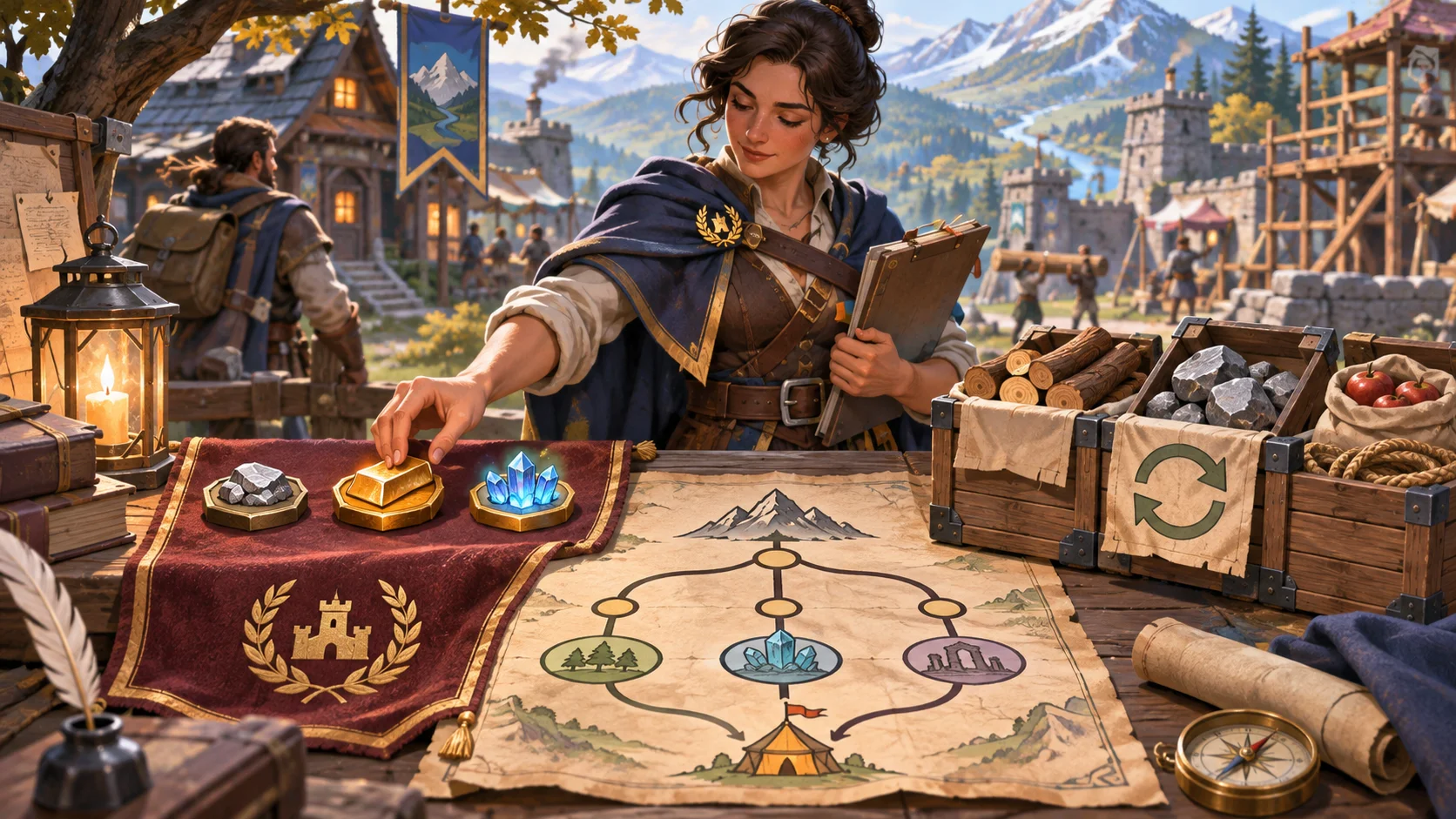
Make carryover useful without making each run feel like a payment toward a distant reward. A lasting resource might open a choice at the hub; a map discovery could reveal a safer route; an upgrade might change one starting condition. Show the connection between the expedition and the next decision so the player understands what their effort achieved.
Decide how failure affects the reward. Partial progress can preserve a discovery or modest hub resource, while the failed settlement still carries a cost. Explain that result before the player risks a difficult objective. If everything persists, failure may lose its stakes; if nothing persists, a failed run may feel wasted.
Vary maps without hiding the rules
Change conditions between expeditions while keeping core production and settlement rules readable. A new biome might alter which resource is easy to find, while the cost of building a workshop stays consistent. Distinct conditions create adaptation; changing the meaning of familiar icons creates confusion.
Use a small set of modifiers at first. A harsher storm, limited starting supplies, or a blocked route can each change the plan. Tell players which modifier is active and how it affects the settlement. Combine modifiers only after players can predict each one in isolation.
Ensure the map generator still offers a plausible route to essential resources. Random variation should make planning interesting, not silently remove a requirement. Test many seeds and include a recovery option if a settlement starts without a viable path to a needed material.
Test the reset and return loop
Measure whether players can explain the local objective, the pressure condition, and what carries forward. Compare successful and failed settlements. Track time from return to next departure, repeated resource grinding, and whether the player can describe a new plan. These signals help distinguish a short reset from a frustrating restart.
Watch how players use the lasting reward. If everyone buys the same hub upgrade because alternatives are weak, adjust the options. If players repeat the same easy objective to farm progress, vary the local goals or change what is rewarded. If reset rules surprise them, show the carryover summary before they confirm departure or return.
SEELE AI can help outline an original settlement-roguelite concept, but expedition generation, persistent state, settlement resets, and pacing need implementation and playtesting. For a broader premise, read the original settlement-roguelite guide. Prototype an original settlement roguelite with SEELE AI.
FAQ
How do you build repeatable expeditions in a settlement roguelite?
Give each expedition a clear local goal, a set of changing conditions, and a return point where the player can convert success into persistent progress. Decide which resources, upgrades, or knowledge carry over and which settlement state resets. Show those rules before the player leaves the hub.
What progress should carry over after an expedition?
Keep a small set of lasting rewards that open future choices, such as a hub upgrade, a starting option, or recorded knowledge. Reset short-term settlement stock if rebuilding is part of the loop. The player should understand what changed after returning and why it matters next time.
How can a failed expedition still feel worthwhile?
Preserve some learning or partial reward without making failure equivalent to success. A recorded map discovery or modest hub resource can help players adapt, while the lost settlement still gives the run stakes. Test how quickly players can start again and whether they can name a new plan.
What should you playtest in an expedition loop?
Track whether players understand the local goal, the storm or pressure condition, and what carries forward. Compare several map conditions and successful or failed runs. Watch for rewards that create repeated grinding or reset rules that erase progress the player expected to keep.