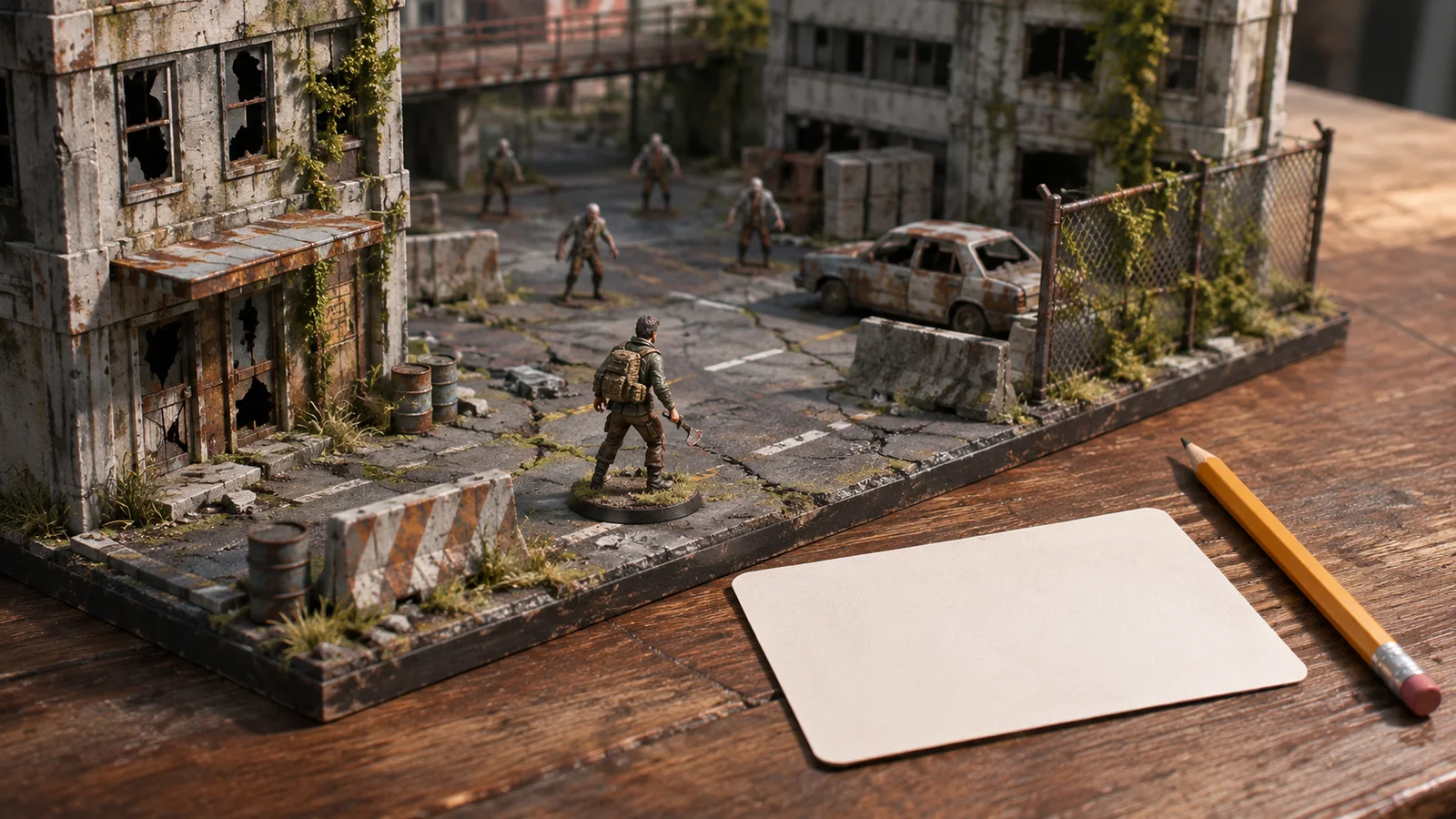
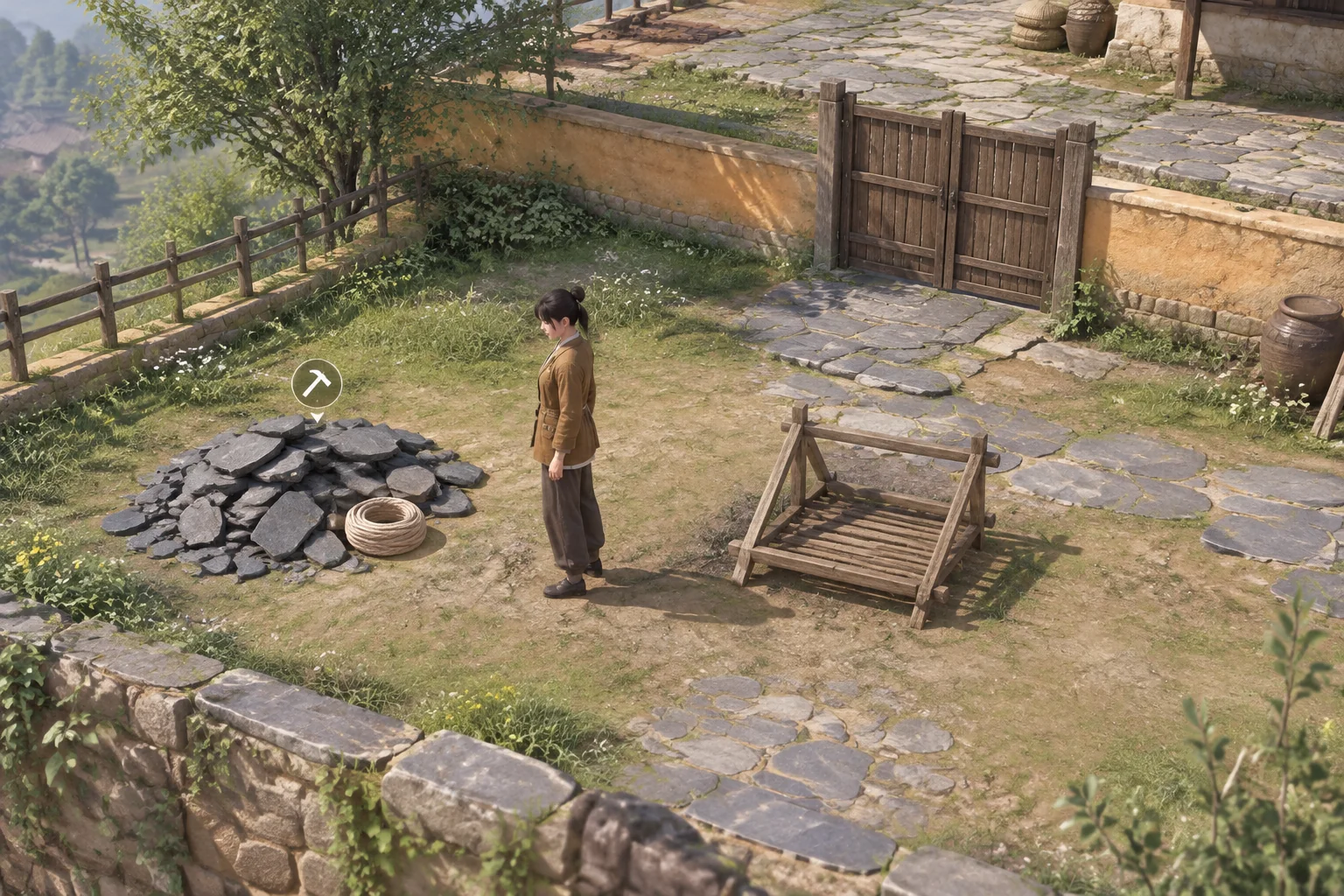
Start with a settlement objective that changes the order of work. Against the Storm gives players Orders to choose from and awards Reputation when they complete them. For an original game, take that idea down to one contract that you can write in a sentence and check in four turns.
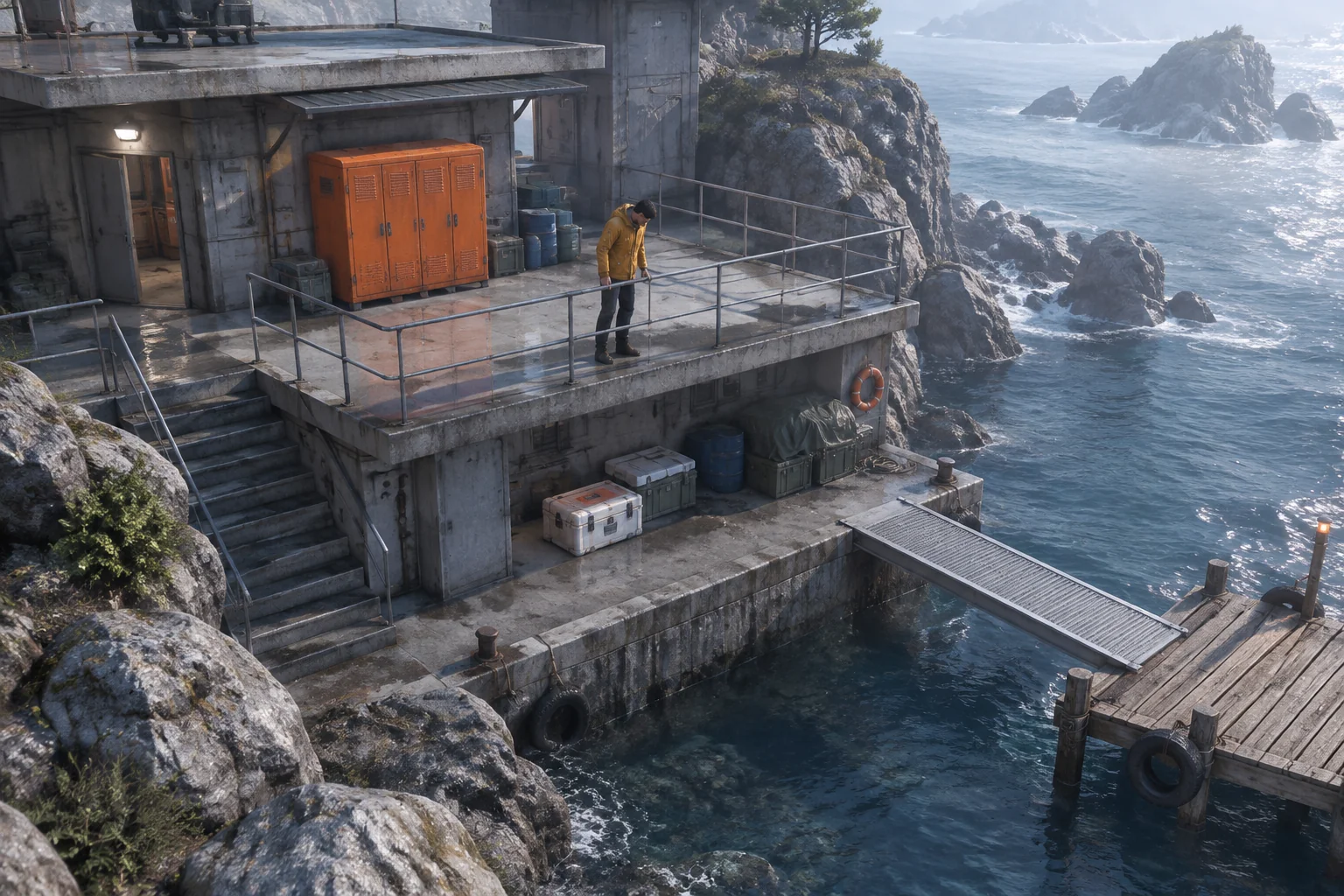
In the fictional Breakwater Dispatch, a coastal rescue station must send a kit on the next boat. The crew has enough material to repair the ramp and assemble the kit. A flood can still ruin the delivery if the finished kit sits on the wrong shelf when the water rises.
Take the objective structure into a new setting
Hooded Horse’s game page describes Eremite Games’ Against the Storm as a city builder about rebuilding amid severe rains. The official Orders wiki explains that players choose objectives from Order packs and earn Reputation and sometimes other rewards when they complete them.
For your own design, ask what a commitment changes about the next job. A resource counter gives players a quantity to track. A delivery objective gives that quantity a purpose, a destination, and a time when it matters. Breakwater Dispatch uses a single published boat schedule and the location of one finished kit to make the order of work matter.
Give one contract a deadline and visible requirements
Write the whole contract on one card. Send one emergency kit on shift four using the repaired loading ramp. The boat docks only on that shift. Start with three boards, one cloth, a broken ramp, and both storage locations empty. Keep the raw materials above the water. The workbench sends its finished kit to the low staging shelf. The dry locker can hold one kit.
Allow one legal action per shift. The crew repairs the ramp from the sheltered upper deck, so that job is possible even when the lower shelf floods. An action that fails a requirement leaves the shift and inventory unchanged. Show the reason while the player still has time to choose something else.
| Action | Requirements and result |
|---|---|
| Repair | Spend two boards once to restore the loading ramp. |
| Assemble | Spend one board and one cloth. Put the finished kit on the empty staging shelf. |
| Stow | Move the staged kit into the empty dry locker. Spend no materials. |
| Dispatch | On shift four, with a repaired ramp and a kit in either location, consume the kit and complete the contract. |
| Wait | End the current shift without doing a job. |
Follow the kit through the flood
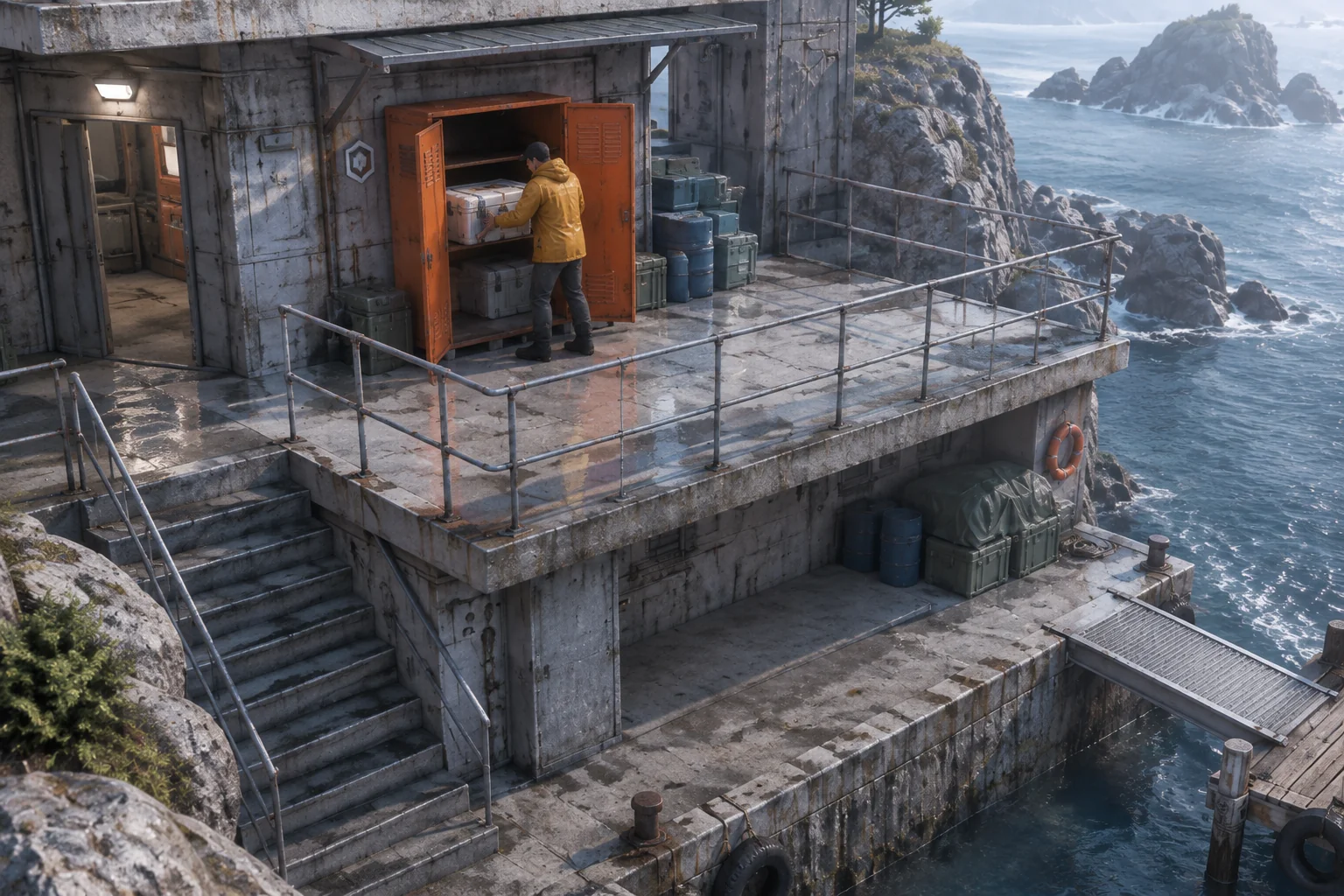
Announce the flood on shift one. In the baseline, it happens once when shift three opens, before the crew can act. The water removes a kit on the lower shelf. A kit in the locker survives. The raw stock also stays dry.
| Shift | Store the kit first | Repair the ramp first |
|---|---|---|
| 1 | Assemble. Two boards remain, and the kit is on the shelf. | Repair. One board and one cloth remain. |
| 2 | Stow. The kit is in the dry locker. | Assemble. The kit is on the shelf, with no materials left. |
| 3 | The flood leaves the locker dry. Repair with the last two boards. | The flood washes out the kit. There is no cloth for another one. |
| 4 | Dispatch the locker kit across the repaired ramp. The contract is complete. | Dispatch is rejected for lack of a kit. Waiting ends the shift with the contract unfilled. |
Both plans can spend the same materials on the same jobs. What changes the outcome is whether the kit is still on the shelf when shift three opens. If the player misses that risk, keep the forecast visible beside the shelf and use a specific loss message. “Kit washed off the staging shelf” gives the next attempt a clear starting point.
Give AI a complete shift loop to build
Use SEELE’s prompt-led game creation to turn the contract, action costs, and event order into a first build. A simple deck layout and a visible stock panel are enough to check whether the rules work together.
Create an original browser settlement game called Breakwater Dispatch.
Use a coastal rescue station with an upper work deck, a dry locker, a
low staging shelf and a loading ramp. The boat docks on shift 4 only.

Start on shift 1 with 3 boards, 1 cloth, a broken ramp and no kit.
Accept one legal action each shift.
Repair costs 2 boards and restores the ramp once.
Assemble costs 1 board and 1 cloth and puts a kit on the empty shelf.
Stow moves a staged kit to the empty dry locker.
Dispatch consumes a kit from either location and wins if the ramp
is repaired and the current shift is 4. Wait spends a shift.

On entry to shift 3, remove any kit on the shelf before accepting a
player action. Apply the flood once. Keep the locker and raw stock dry.
Repair uses the sheltered deck and is allowed on shift 3.

A rejected action leaves the shift, inventory and ramp unchanged.
After a legal shift-4 action, end the run. If the contract is still
open, show that the delivery failed. Reset all state for a new attempt.

Show the boat shift, forecast, ramp, materials, kit location and the
result of the last action. Keep assets and interface original.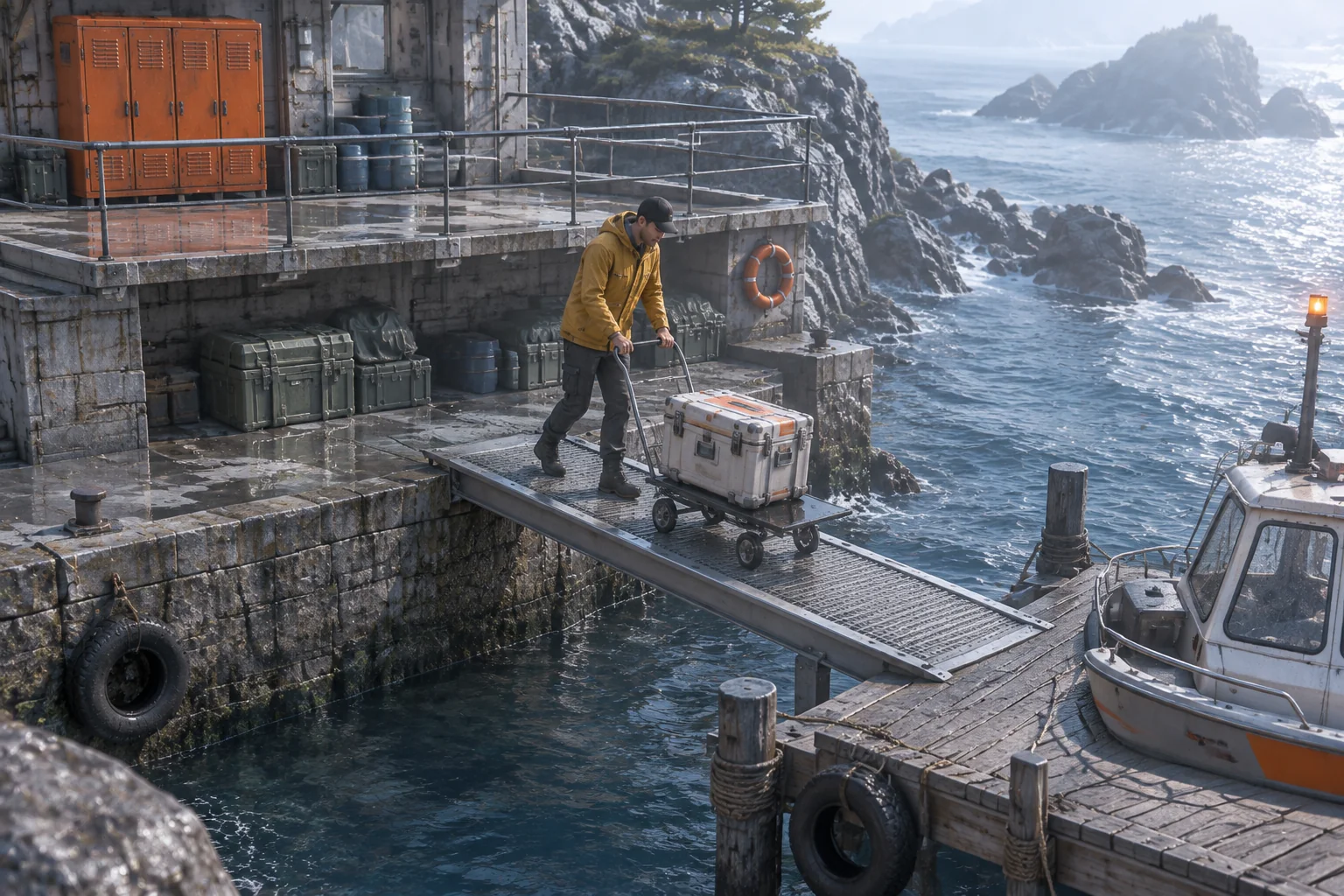
Check Dispatch before shift four and again on shift four with a broken ramp. Each attempt should explain what is missing and preserve the kit. Replay the two routes and verify that the flood applies once even if you try an invalid action during shift three. Finally, reset after a loss and confirm the original cloth, boards, and broken ramp are back.
Move one event and replay the same plan
Try applying the flood after the accepted action on shift three instead of before it. Keep the boat on shift four and preserve the action costs. Replay Repair, Assemble, Stow, then Dispatch. Under the baseline, the kit is already gone when you try Stow. Under the revised order, Stow puts it in the locker just before the flood, so the delivery can go ahead.
The dry-locker-first route still works under both rules. That gives you a comparison with a clear outcome for each route. Check when the flood notice appears and whether it explains that the crew can act first in the revised build. The guide to revising one rule and rerunning the loop shows how to keep the change small enough to check.
Build the contract before expanding the settlement
Pick an objective that makes one finished item valuable at a particular place and time. Start your original settlement prototype with SEELE’s AI Game Maker and check that the weather changes the work plan before adding a second contract.
Frequently asked questions
How do I use a reference game without copying its look?
Write the design question the reference helps you answer. Here it is how a commitment changes the next job. Build the answer around your own objective, setting, rules, and assets. Give your crew a different reason to act and a different way to succeed.
When should I add another contract?
Add one after players can explain why the first succeeds or fails. Make the second contract change the job order, such as favoring an early ramp repair. Two contracts feel different when they lead to different plans even if they share the same buildings.
How should I show when a weather event happens?
Put the timing beside the action it affects. “The shelf floods before the shift-three action” tells the player exactly when the kit needs to move. Keep that wording aligned with when the event resolves, especially if you change the order during a revision.
Should the weather or orders vary each run?
Keep the first schedule fixed so you can check the same choices on repeat. Once the baseline works, vary one piece of the schedule and make the new information visible before the player commits. Check that each schedule still allows at least one valid route.