Production choices become interesting when one worker, ingredient, or building can support more than one goal. Against the Storm’s official publisher-hosted wiki documents recipes through ingredients, outputs, buildings, and goods that satisfy needs. The system in this guide is an original design proposal, not a description of its exact rules.
Start from settlement pressures
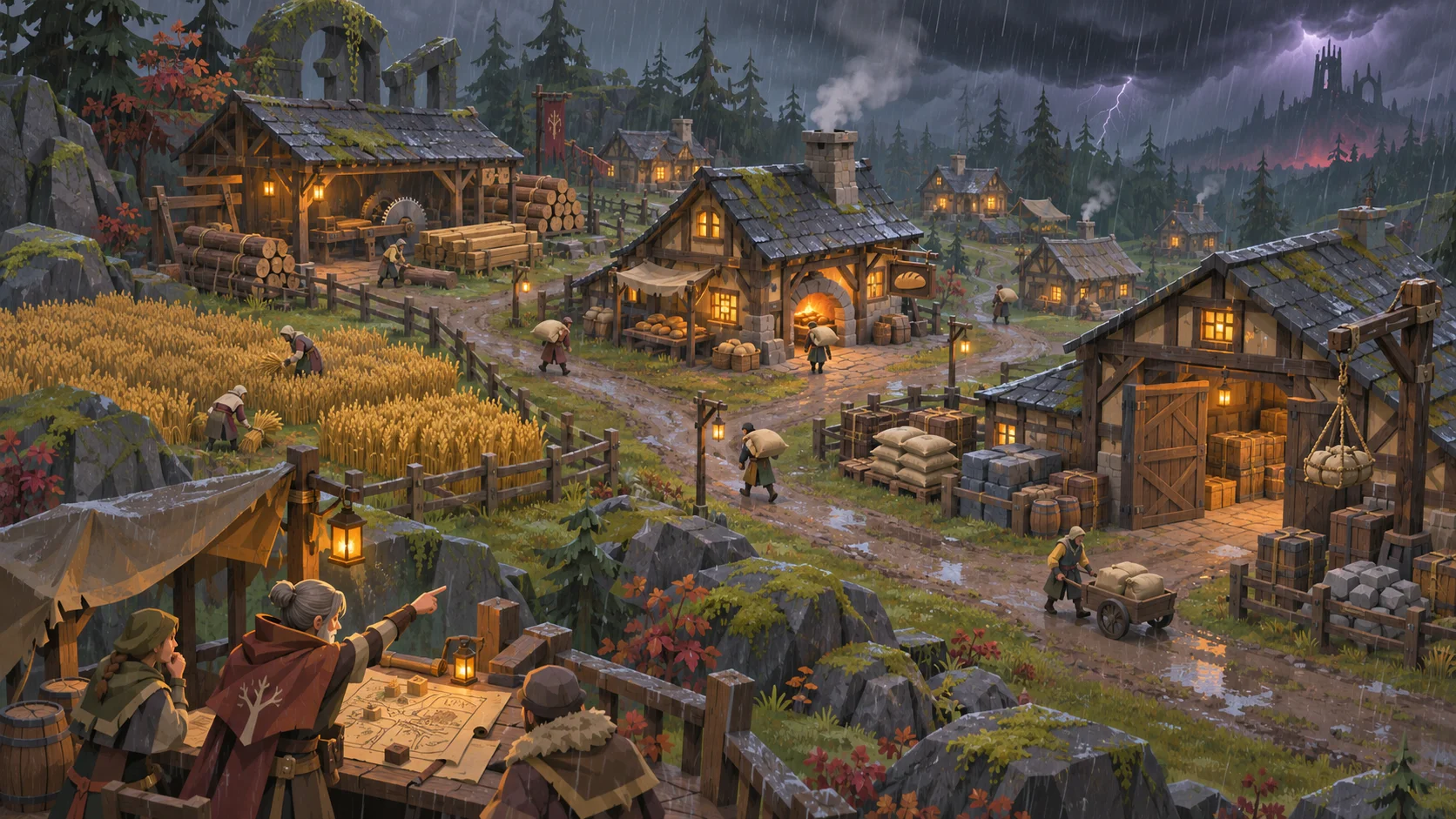
Imagine a village entering a wet season with enough grain for a few meals, an unfinished storehouse, and a damaged road. The bakery needs grain and one worker; the construction crew needs planks and another worker. Both plans help the settlement, but committing every worker to one line creates an obvious risk. A useful choice asks players to trade one visible benefit for another.
List the pressures before adding recipes: keep residents fed, complete a project, prepare for weather, or preserve a reserve. Each pressure should point to a good or task. Then write what happens if the player delays it. If every option is equally urgent, the system is noise; if one option always wins, it is not a choice.
Let the local state change which option is attractive. A good surplus may favor construction; a looming food shortage can make the bakery urgent. Tell players why the forecast matters and which resource will be consumed. The challenge comes from adapting priorities, not guessing at hidden production rules.
Give recipes legible costs and outcomes
A recipe card should answer four questions quickly: what goes in, what comes out, where it runs, and what can use the output? Keep ingredient amounts visible beside output amounts. If a recipe uses grain to make flour and another uses grain directly for food, make their shared cost apparent before workers are assigned.
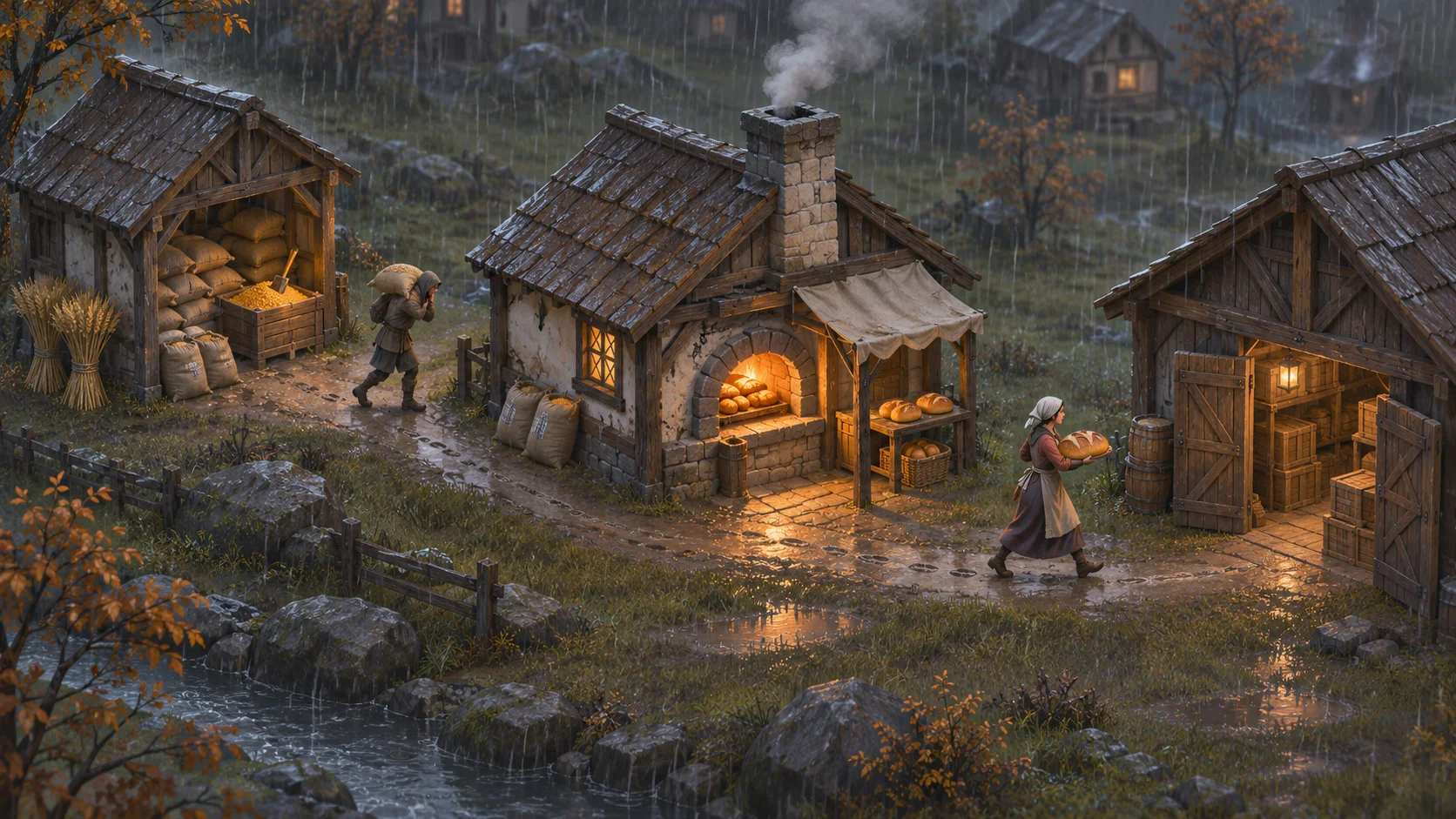
Track the flow with a simple production ledger. For each line, record input stock, reserved stock, expected output, workers committed, and the next use. A stockpile can look full while most of its goods are already promised elsewhere. Differentiating available from reserved quantities prevents players from misreading why a building has stopped.
Compare a production line by its bottleneck rather than a single efficiency score. A fast mill may be useless if grain is scarce; a slower recipe can be safer if it accepts alternate inputs. Use clear descriptions for substitutes and make the tradeoff visible in the expected output. A small number of understandable options beats a sprawling recipe list with opaque overlap.
Shape priorities and interruption rules
Give workers a small, explicit priority scale. A high-priority food task might interrupt a low-priority stockpile task, but only if the worker can reach the bakery and its input is available. Display the next intended action and its blocker. This turns a stalled chain into a diagnosis: no grain, no worker, no path, or an intentionally paused job.
Define stop conditions at the line level. A player might ask a sawmill to stop after producing enough planks for one building, leaving wood for fuel. A job target should be a visible quantity or event, not a hidden estimate. When the target is reached, explain what worker becomes available and what happens to leftover inputs.
Avoid complicated priority controls until tests reveal a specific conflict. If players repeatedly cannot keep food running while completing construction, add a targeted tool such as a reserve threshold or pause toggle. Do not add a dozen priority layers as a substitute for clarifying which tasks compete.
Test choices across settlement states
Use a short test matrix: abundant ingredients, a critical input shortage, a sudden need spike, a blocked route, and recovery after a pause. Ask testers what they expect to happen before letting time advance. Then compare their expectation with the actual worker assignment and stock change. A mismatch reveals a rule, feedback cue, or cost that needs revision.
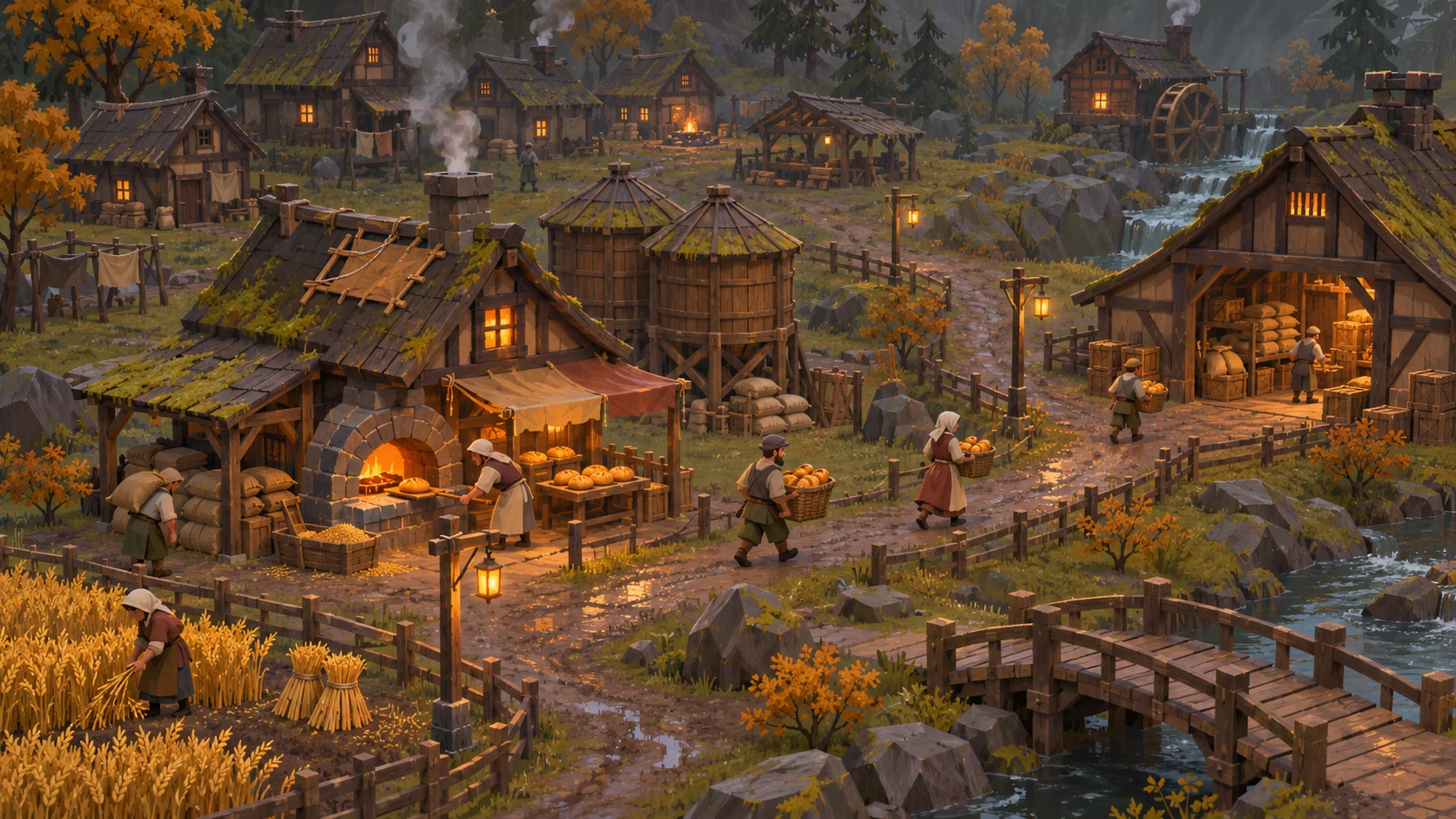
Use SEELE AI’s game-studio capability to begin from a written settlement concept, then inspect the result against the production ledger. Confirm that the prototype expresses the intended buildings, resources, and player decisions. Treat the generated draft as an exploration aid; the capability description does not promise a specific economic simulation or worker priority system.
For another production-design perspective, compare this settlement model with conveyor routing in a factory game. To start an original prototype, describe your game idea.
FAQ
How do you design production choices in a settlement game?
Connect each production option to a visible need, a limited input, and a labor cost. Show players what the output will enable, then let them compare immediate survival with longer-term goals. Test the same choice under surplus and shortage so its value changes for a reason players can understand.
What should a production recipe show the player?
Show its ingredients, output amount, required building or station, and any worker commitment that affects availability. Explain where the output goes next, such as construction, food, trade, or a settlement need. If several recipes use the same input, make that shared bottleneck visible before the player commits labor.
How can a game prevent production chains from stalling?
Surface the missing input, blocked destination, or unavailable worker at the point where the chain stops. Keep stored goods and reserved goods distinguishable, and give players a safe way to pause or reroute work. Test partial inputs and restart behavior so a temporary shortage does not silently erase a player’s intended priorities.
How do you balance worker priorities?
Start with a few explicit priority levels and predictable tie-breaking, such as distance or task order. Let players see which task a worker will take next and why a higher-priority job interrupts another. Playtest crowded settlements and missing inputs; add more controls only when they solve a demonstrated conflict rather than creating another hidden rule.