Resource gathering is a satisfying loop when the player can see what they can collect, understand what tool is needed, and use the result for a purpose. Build it as a chain of explicit steps: identify a resource node, reach it, apply a suitable tool, create drops, add them to inventory, and connect those materials to crafting or construction. Each step needs feedback and a predictable rule.
Define the resource lifecycle
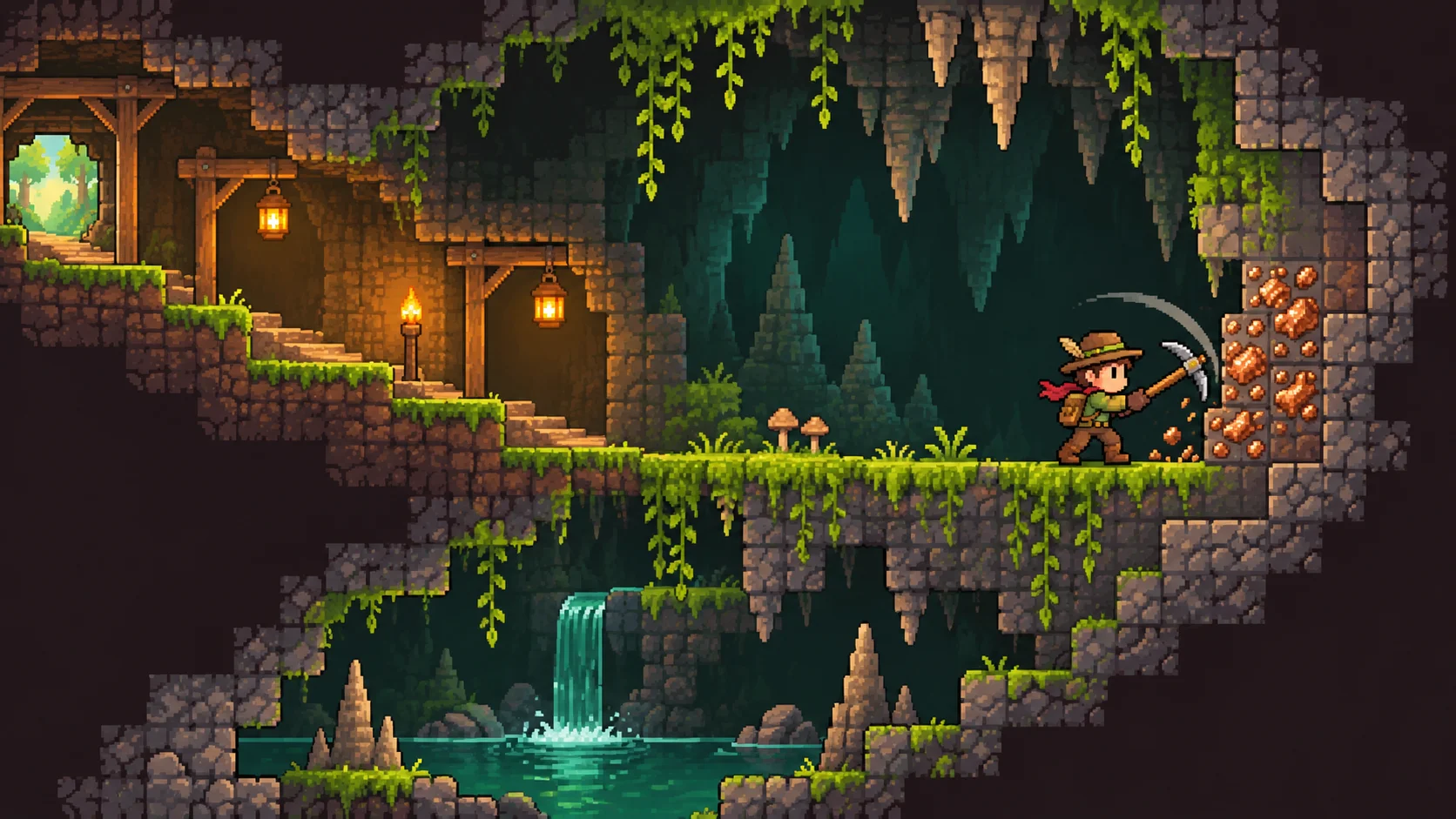
Represent a resource node with a resource type, remaining durability or quantity, drop rule, and world location. A tool action should first check that the target is in range and that the player is allowed to interact with it. If valid, apply the tool’s gathering power, show a hit effect, and update the node. When its remaining durability reaches zero, remove or transform the node and create its drops exactly once.
Keep world state separate from inventory state. The deposit exists at a coordinate in the world; each dropped item is a collectible instance; the inventory stores quantities by item type. This separation makes it possible to save a depleted deposit, leave drops on the ground, or allow a player to return later without duplicating the resource.
Decide whether deposits contain a fixed quantity or are regenerated when the world loads. For a finite sandbox, saving the depleted state prevents repeat harvesting. For a renewable resource, define when and how it regrows. Avoid an accidental middle ground where a node appears depleted during play but returns after reload because its world state was never saved.
Connect tools to extraction rules
Give each tool a capability and each resource a requirement. A basic pick might mine soft stone but fail against dense ore; a stronger tool can mine both, perhaps with different speed. A failed attempt should communicate why: the tool cannot affect this material, the target is out of reach, or the player needs more hits. Do not make a no-op look like a successful strike.
Mining speed can come from tool power versus node hardness. For a simple model, subtract the tool’s power from remaining durability on each valid hit. For a paced action, accumulate progress over time and grant a drop only when the threshold is reached. Whichever model you choose, use the same rule for effects, sound, and state changes so feedback stays synchronized.
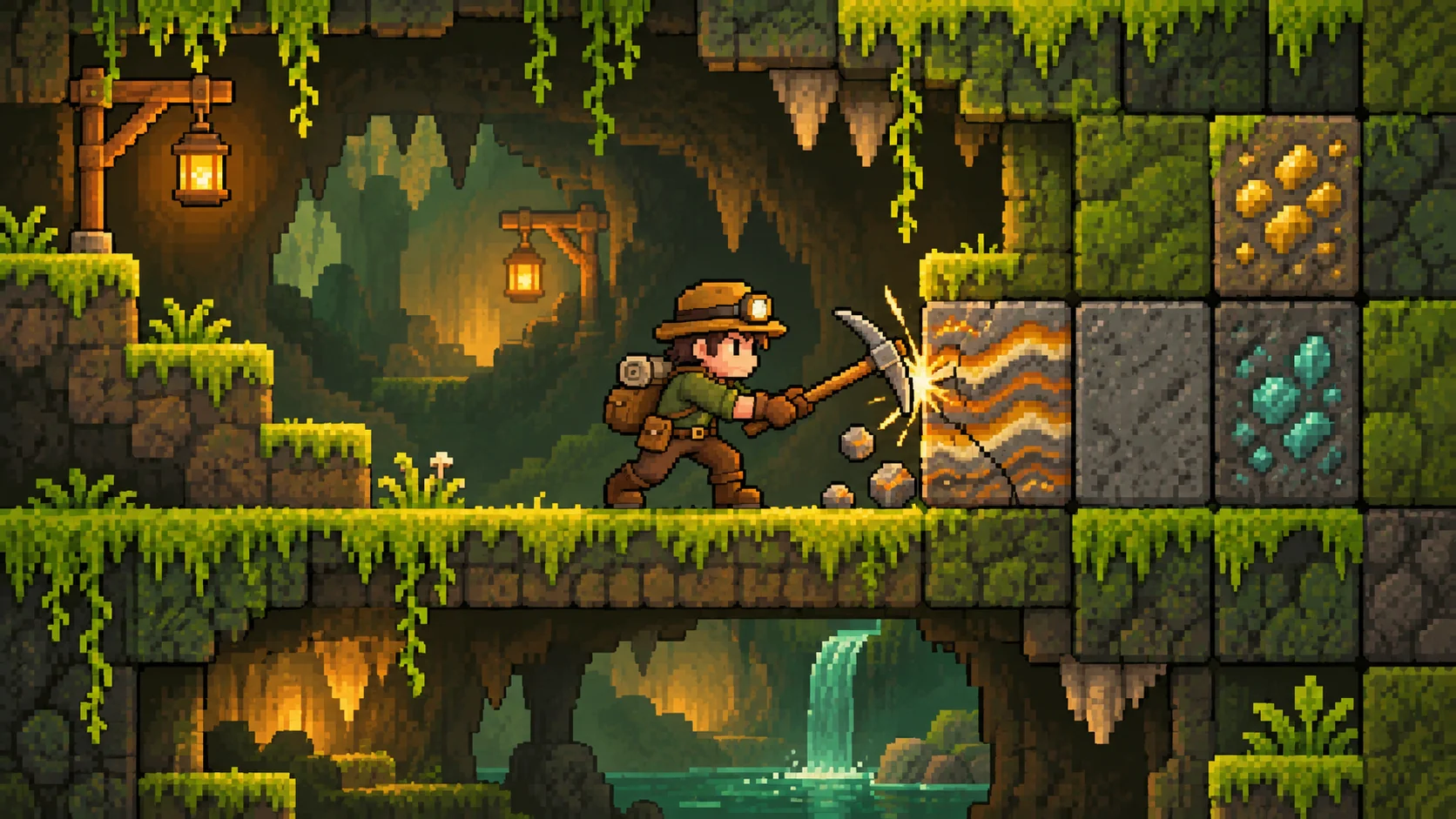
Make the impact legible. Show a brief hit flash, a crack stage, particles, or a small sound as progress changes. The final hit should look different from an ordinary hit, and the drop should appear where the node was. Keep nearby blocks intact unless the player action explicitly affects them; unclear collateral changes make it difficult to understand what the tool did.
Handle drops and inventory safely
When a node breaks, create its drops from a single authoritative event. Attach an identity to the node or break event so that loading, animation callbacks, or repeated input cannot spawn the same reward twice. If a pickup succeeds, remove the world drop and increase the inventory count together. If the inventory is full, leave the drop in the world or explain the chosen alternative.
Define stack limits and pickup behavior. If a stack is partly full, fill it first, then place the remainder in another slot if one exists. When no slot remains, do not silently delete the items. Show a concise message and keep the remaining drop available. This gives players a clear reason to sort their inventory or return to a storage point.
Saving should preserve both sides of the transaction. If the game saves inventory after adding an item but before removing its world drop, a reload can duplicate it. If the drop is removed first but the inventory is not saved, the player can lose it. Use one save transaction or an event log that records the pickup outcome consistently.
Give gathered materials a useful destination
A resource feels valuable when it changes what the player can do. Connect ore, wood, fiber, or other materials to a recipe, building part, tool upgrade, or world interaction. Show the recipe requirement before the player travels far to gather it. If a material has several uses, make those uses discoverable without overwhelming a new player with a long catalog.
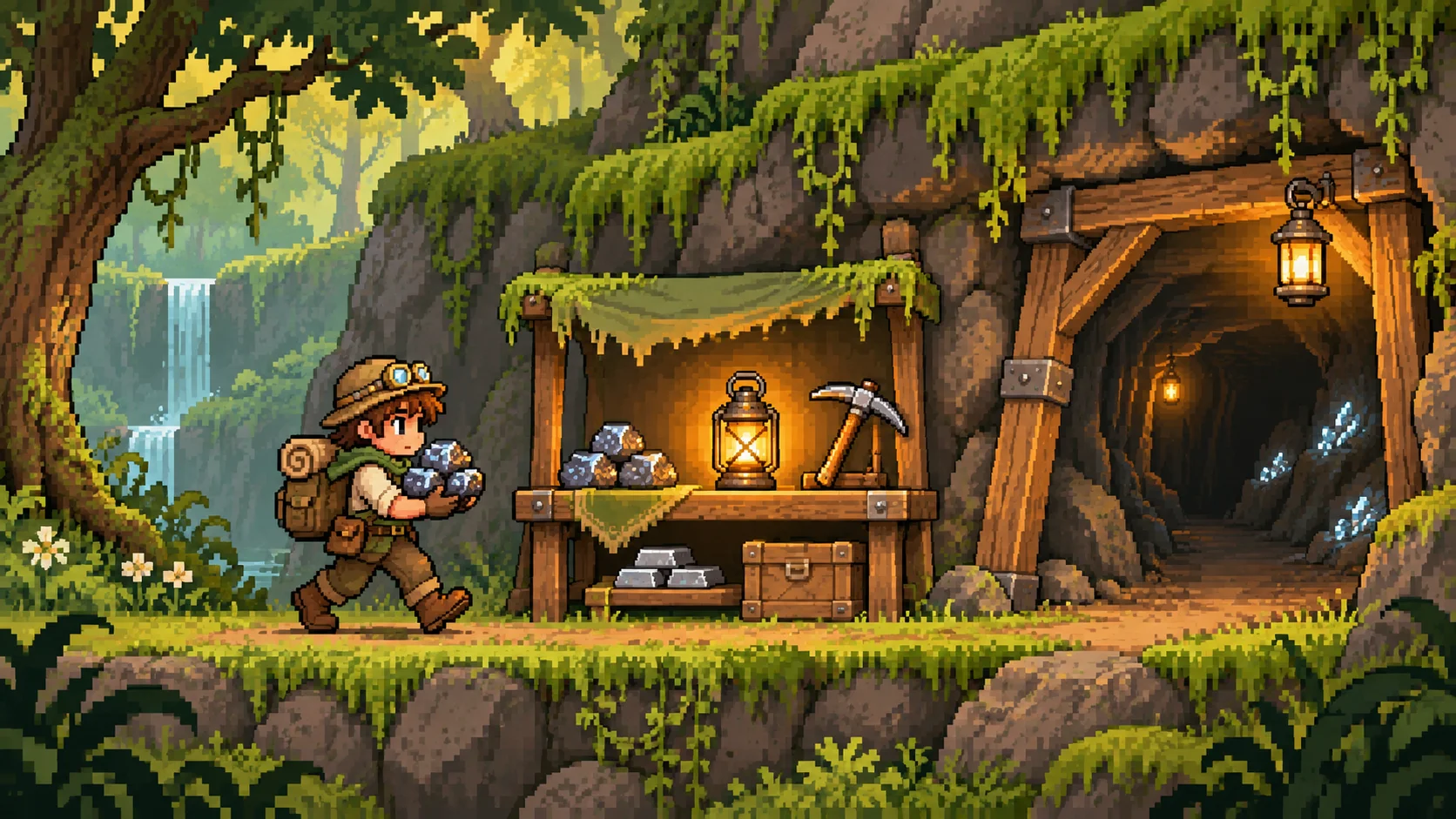
Use a small progression chain to test the loop. For example, a player gathers common stone and ore, crafts a better pick at a workbench, then reaches a harder deposit. This is an original tutorial scenario, not a claim about a specific game. The chain should make the reward understandable: the new tool changes access, gathering speed, or survival options in a visible way.
Test the gathering loop
Test each boundary deliberately: a tool that is too weak, a target just outside range, the final durability hit, two players striking the same node, a full inventory, a pickup during save, and a reload after depletion. Confirm that a resource node breaks once, drops the intended quantity, and remains depleted if that is the rule. Repeat the tests after changing tool strength or drop tables.
Check the loop at normal play scale. Can the player distinguish the target material from surrounding blocks? Is the mining feedback visible against the cave background? Can they tell why a tool failed? Do they understand what the gathered item unlocks? If players gather without knowing the purpose, improve recipe discovery or resource feedback before increasing the amount they must collect.
The Terraria official site describes a sandbox built around digging, fighting, building, and exploration. That broad loop is useful context for an original project, while the extraction, inventory, and persistence rules in this tutorial are design recommendations. SEELE’s documented game-creation capability can help start from a natural-language game concept; treat any generated prototype as a draft and verify that gathering, drops, saves, and recipes behave as intended.
Frequently asked questions
How should mining tools affect resource gathering?
Give each tool explicit gathering power and each resource a requirement or hardness. A valid hit should advance extraction, while an invalid tool should produce clear feedback without changing the node. Tune power to affect time or access, then test whether each tool upgrade opens a useful choice instead of making earlier tools feel pointless.
What should happen when inventory is full?
Keep uncollected items available in the world or route them to a storage location the player understands. Fill partial stacks first, then use another slot when possible. If capacity blocks the pickup, show the reason and preserve the drop; silently deleting gathered resources makes the system feel unreliable.
How do you prevent resources from duplicating?
Give each node or break event a stable identity and allow its drop event to resolve once. When a pickup succeeds, update inventory and remove the world drop as one consistent save operation. Test reloads around the break and pickup moments so a saved depleted node cannot recreate its reward and a saved inventory cannot leave the same drop behind.
How can I make gathering feel rewarding?
Make the target readable, give each tool hit clear feedback, and show the resource moving into a useful loop such as crafting or building. The final hit should feel distinct, and the player should know what the material can unlock. Add variety through access, tool choice, or world discovery rather than requiring a large pile of indistinguishable items.
Start with one resource, one tool, and one useful recipe. Verify the node, drop, inventory, and save rules before adding more materials. Explore an AI game creation starting point for an original sandbox adventure concept.