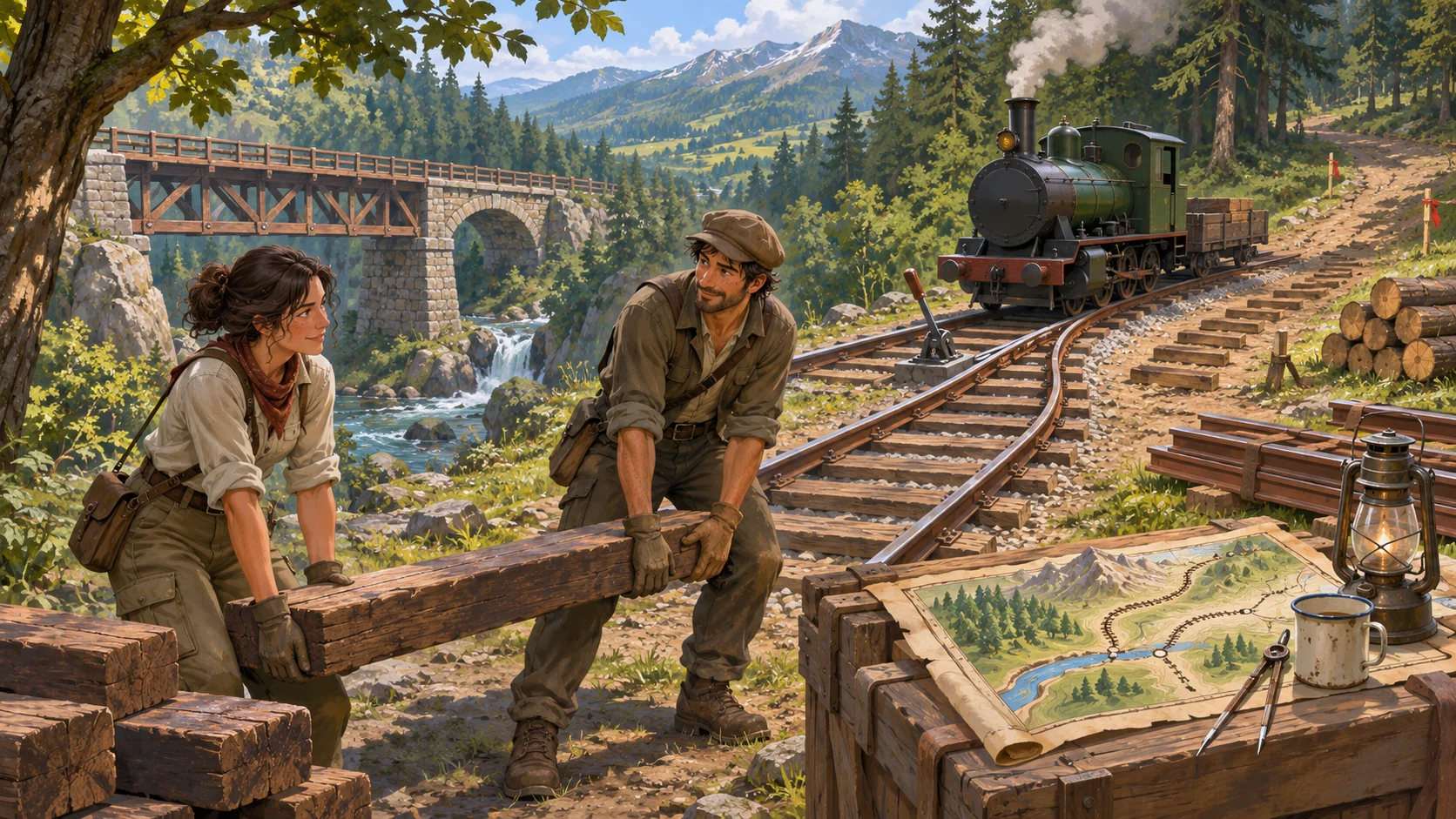
Cooperative resource gathering creates urgency when a team can see what the route needs and divide work toward it. Unrailed!’s official listing describes gathering resources and crafting tracks to extend a railroad before the train reaches the end, with one tool of each type. The team roles and pacing guidance below are original proposals for a new game.
Tie resources to an immediate route goal
Cooperative resource gathering is clearer when players see what they are building next. Unrailed!’s official Steam listing describes teams gathering resources and crafting tracks to extend a railroad before the train reaches the end, and notes that there is only one tool of each type. This supports the public co-op resource context; the role structure below is original.
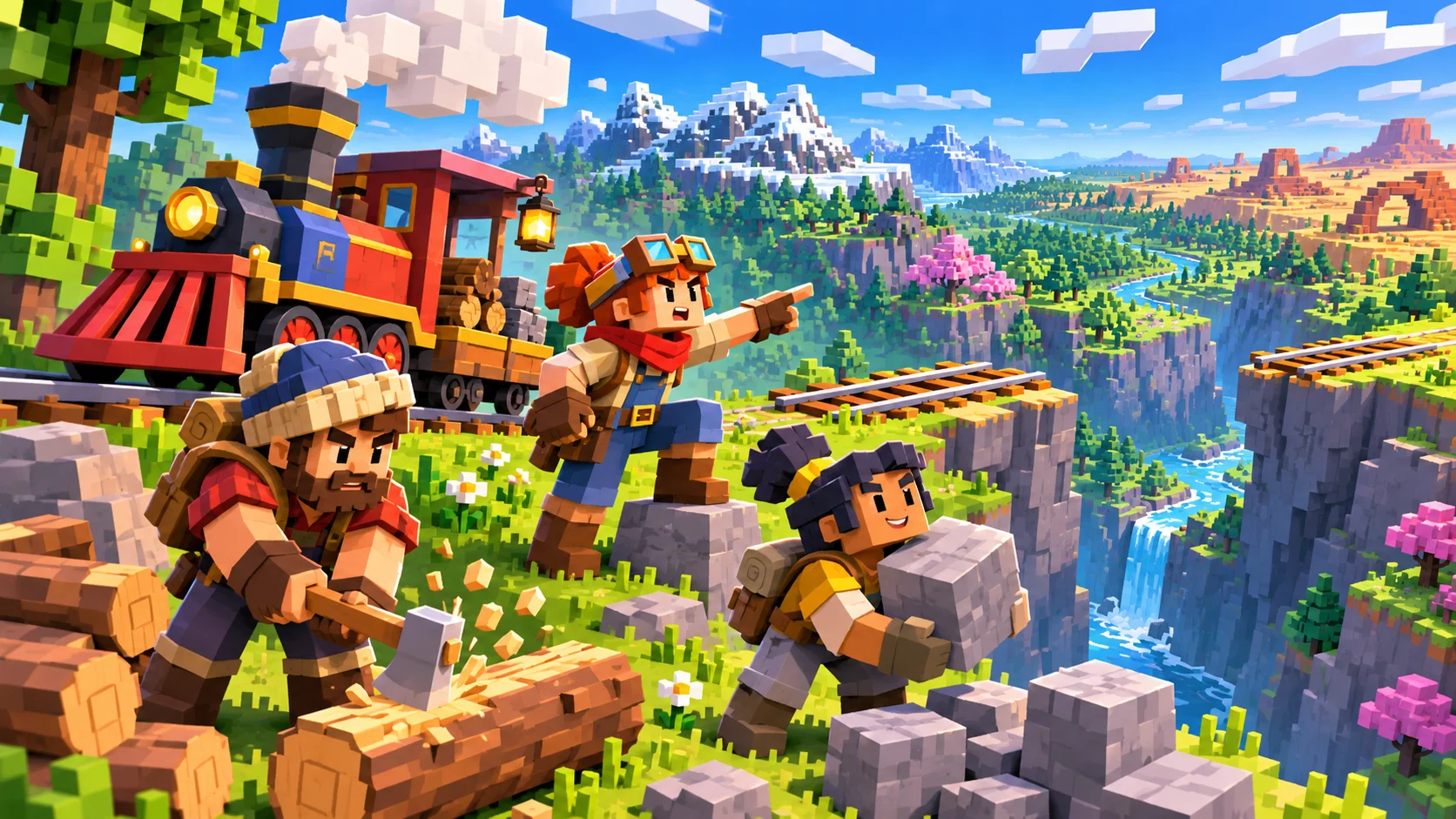
Show the next route gap and the materials needed to close it. A team can then choose whether to gather timber, collect stone, clear an obstacle, or carry materials back. Each task should contribute to the shared goal and produce visible progress. If players do not know what the team needs, they may all gather the same material or wait beside the train.
Keep source silhouettes distinct. Trees, rocks, and route obstacles should be identifiable while players move at speed. Use a simple pickup or carry cue and confirm when an item reaches the crafting area. These cues reduce coordination chatter and let teams make quick plans together.
Make gathering roles clear under pressure
A co-op loop can encourage role division without locking players into fixed jobs. Give each resource source a clear interaction and use the available tools consistently. If each tool type is scarce, show who currently carries it or where it was left. Teammates should be able to find or pass tools without a long menu interaction.
Design routes that support parallel work. A nearby resource patch can be safe but small; a farther source can provide more material while exposing a player to time pressure. A carrier may move more slowly, creating a choice about who transports the load. Keep these tradeoffs visible so the team can decide rather than discover after a mistake.
Allow roles to change as the route changes. A player gathering stone may need to switch to track crafting when the train approaches. Make task transitions quick and communicate when a player is holding a critical resource. Teamwork should emerge from useful choices, not from a rigid assignment system that prevents improvisation.
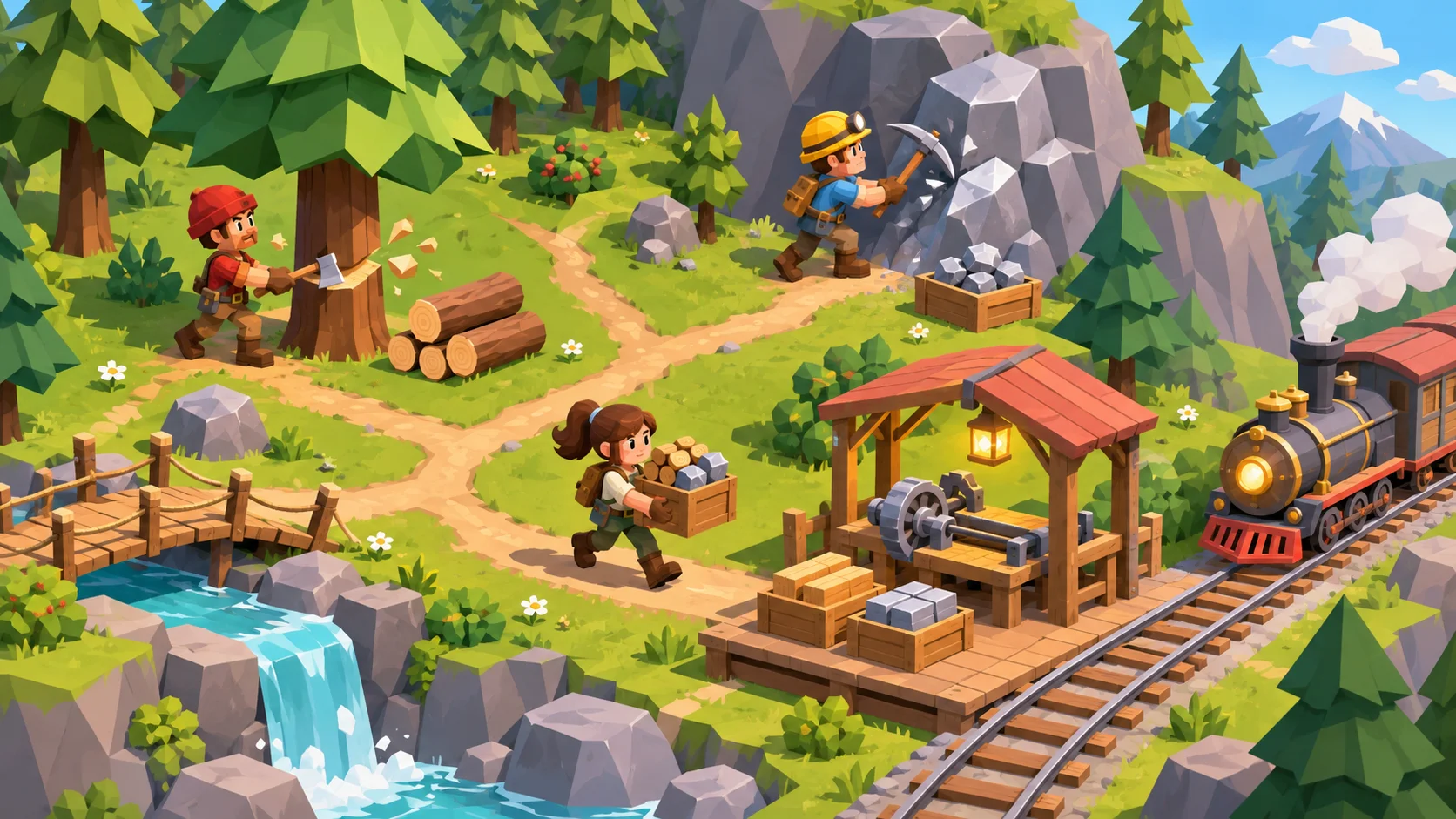
Coordinate tools and team movement
Tool actions need consistent feedback, especially when several players work near one another. A chop, mine, carry, or build interaction should have a clear start and completion state. Avoid requiring precise cursor work while the environment scrolls quickly unless that precision is a deliberate skill.
Use the track crafting area as a coordination point. Players can deposit resources, queue a section, or take a crafted piece toward the route. If only one player can build at a time, make that state obvious and let others prepare the next material. A short input buffer can prevent a rushed action from being lost when the train moves.
Keep the camera helpful. The team should see the train, the next gap, and nearby sources at a glance. If an important resource falls offscreen, add a landmark, signal, or minimap marker. Players can handle pressure when they understand where work is needed.
Test recovery after missed resources
Test teams with different communication styles and controller experience. Give them a route goal, then observe role choice, tool handoffs, idle time, duplicate gathering, and materials lost on the way back. Ask which task they thought mattered most when the train began to approach.
Try a missed-resource scenario. A player may forget to gather an item, lose a carried resource, or arrive after the crafting station is blocked. Check whether the team has a plausible recovery action. A short delay, alternate nearby patch, or partial track segment can preserve momentum without removing the consequence of poor coordination.
Finally, vary team size. A route balanced for three players may become impossible solo or trivial with four. Scale the number of parallel tasks, source distance, and tool availability rather than only changing a timer. The system should reward communication while letting every player make a useful contribution.
Related guide
For resource collection in a different survival loop, see the guide to ocean survival gathering.
Frequently asked questions
How do you design resource gathering for a co-op game?
Connect every resource to a shared goal players can see, such as completing the next section of track. Give each material a recognizable source and a quick, consistent tool interaction. Test whether a team can identify what is missing and choose a route without waiting for one player to explain the system.
How can teams divide gathering roles?
Make resource locations and tool affordances clear enough that teammates can choose complementary tasks. One player might collect timber while another gathers stone and a third carries materials or prepares the route. Let teams switch roles when needed so a single assignment is never the only way to contribute.
How do resources support a moving train loop?
Use gathered materials to create visible progress on the route ahead of the vehicle. Players should understand the material cost of the next track section and how much time they have before the train must move. Give them a short safe window to stage resources and craft after a difficult segment.
How do you keep time pressure fair?
Communicate the train’s pace and danger zone early, then keep it consistent enough for teams to plan. Increase pressure through route length, resource distance, or choices one at a time. Provide a recovery option after a mistake, such as a short delay or a nearby reserve cache, when the game intends repeated runs to remain playable.
Prototype co-op resource flow
Use AI to create resource map variants and team-role test cases, then validate timing and tool handoffs with actual multiplayer sessions. Designers should decide the train pressure, shared goals, and recovery rules. Start a game project with Seele.