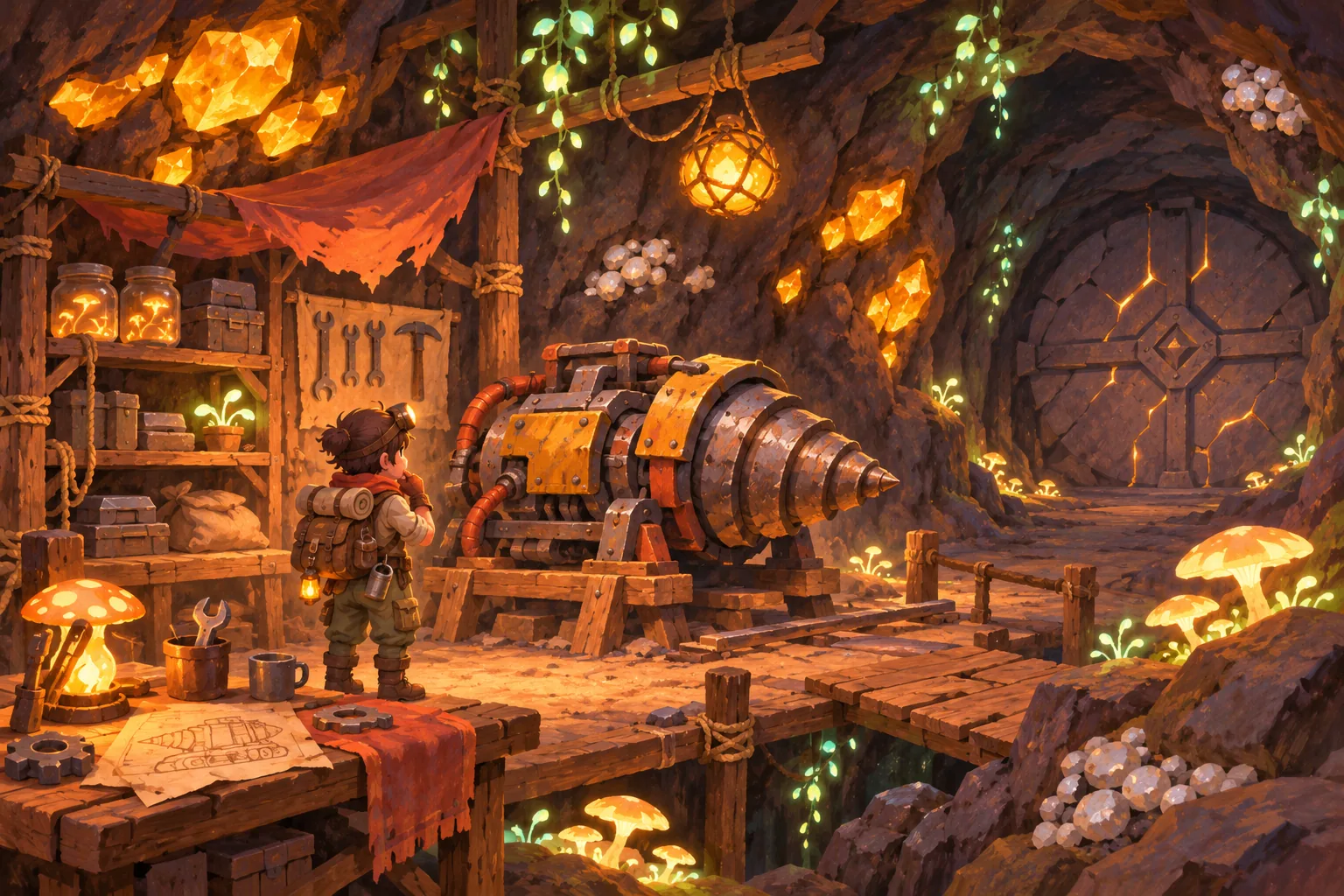
Make every part of the route visible
Satisfactory is a first-person factory-building game with automated production and conveyor transport. Copperline is a separate fictional factory prototype. Its ore rates, buffer and smelter are original.
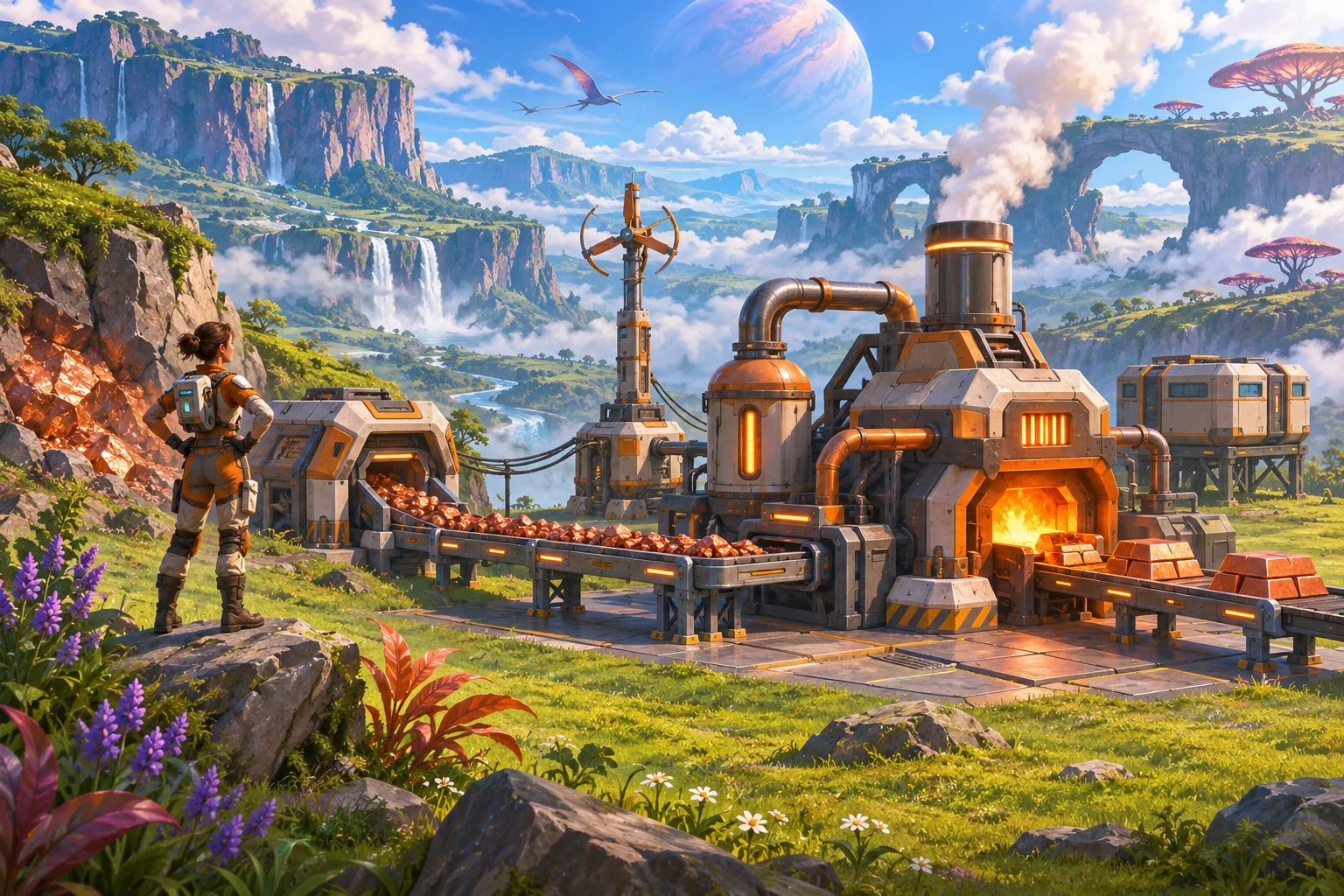
Set the miner to produce 4 ore per tick and the smelter to consume 3. A six-unit belt buffer starts empty. With both machines running, one ore remains after each tick, so the queue reaches 3 after three ticks. Show input, output and stored ore separately.
Use backpressure when the next machine stops
If the smelter pauses, the buffer can accept only five ore. Once full, throttle the miner to the remaining space instead of deleting ore or pretending the belt keeps moving. When the smelter resumes, release the queued ore before adding new production.
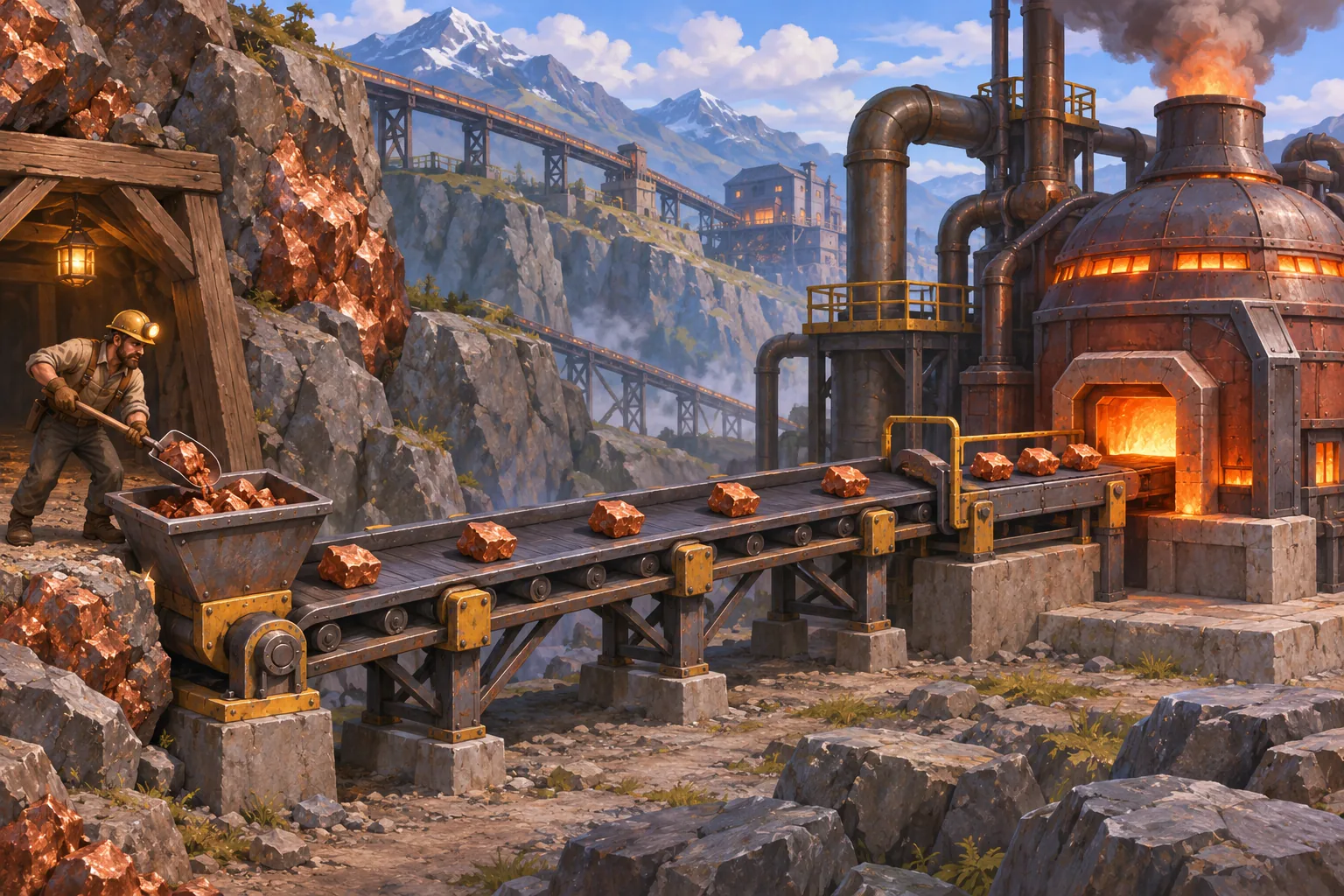
The first version kept miner output fixed while the smelter was paused, causing the queue to exceed capacity. Add a capacity check before each transfer and feed output back to the miner. The deterministic test checks normal accumulation, the full-buffer stop and resumed flow; it does not prove factory balance or player comprehension.
Show the bottleneck before adding another belt
Display rate per tick next to each machine and show the buffer fill level. If production repeatedly exceeds consumption, players can add storage, increase smelter throughput or build a second route. Let the ledger explain which choice removes the current bottleneck.

Test conservation on a short production loop
Start with one miner, one belt buffer and one smelter. Godot Resource can store machine rates and capacity; SEELE AI Game Maker offers a prompt-based starting point. Satisfactory supplies broad factory-automation context, not validation of Copperline's balance or usability.
Create an original factory game with a miner producing 4 ore per tick, a smelter consuming 3 and a belt buffer capped at 6. Pause the smelter, apply backpressure when full and resume by consuming queued ore first. Do not copy Satisfactory locations, machines or art. Test conservation across each tick.
Start an original factory game in SEELE · Satisfactory on Steam
Frequently asked questions
How should a factory game handle a machine that stops?
Keep the buffer capacity explicit and stop upstream production when no space remains. Copperline's six-unit belt holds ore until the smelter resumes, and the miner slows instead of discarding material. Showing this backpressure makes congestion understandable and protects the resource total.
How can players find a factory bottleneck?
Display production and consumption rates beside the connected machines, then show how much material is queued. In Copperline, a miner makes four units per tick while the smelter consumes three, so the queue grows by one each tick. Players can compare storage or throughput changes.
What should a first logistics prototype test?
Test resource conservation with both machines running, with the smelter paused and the buffer full, and after production resumes. Verify that queued ore is consumed before new output enters. This checks transfer rules, not whether the rates feel satisfying in a playable factory.