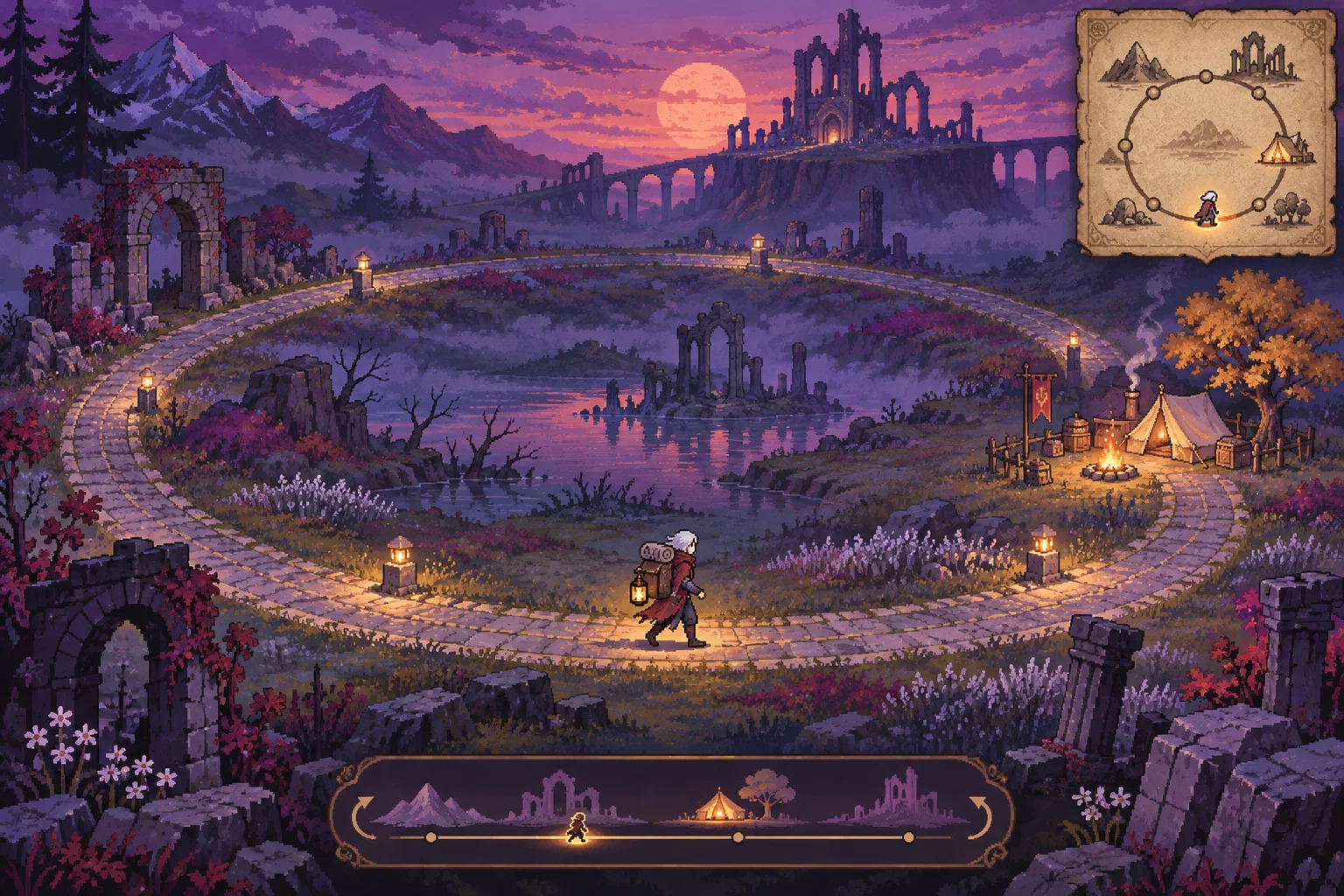
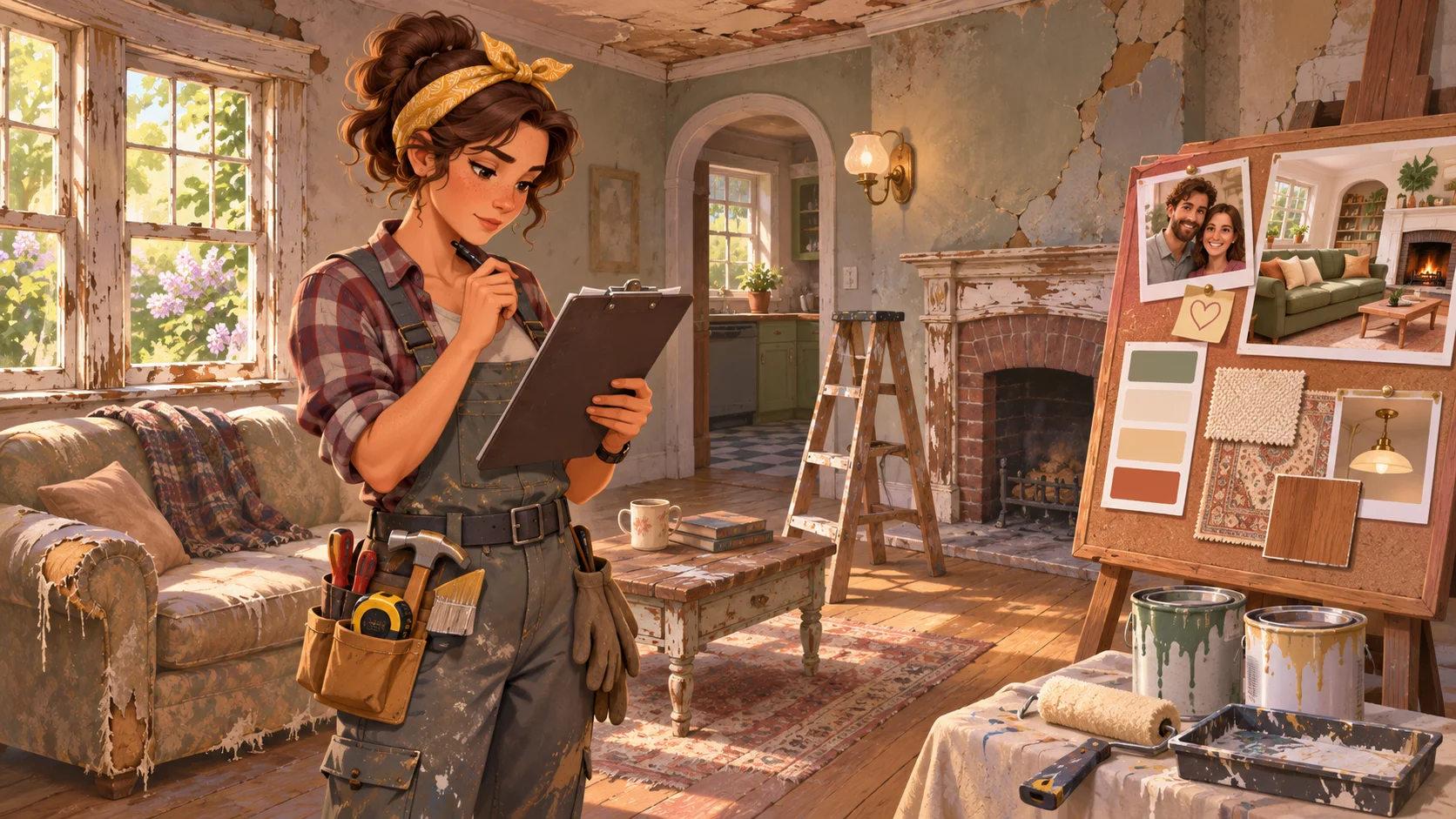
Shop progression feels rewarding when each improvement changes how the player runs the business and connects back to the adventure that supplies it. In an original shopkeeping RPG inspired at a high level by Moonlighter, turn earned funds into choices: add capacity, offer a service, change what customers can browse, or unlock a new route for expeditions. Each tier should alter the player’s routine in a visible way.
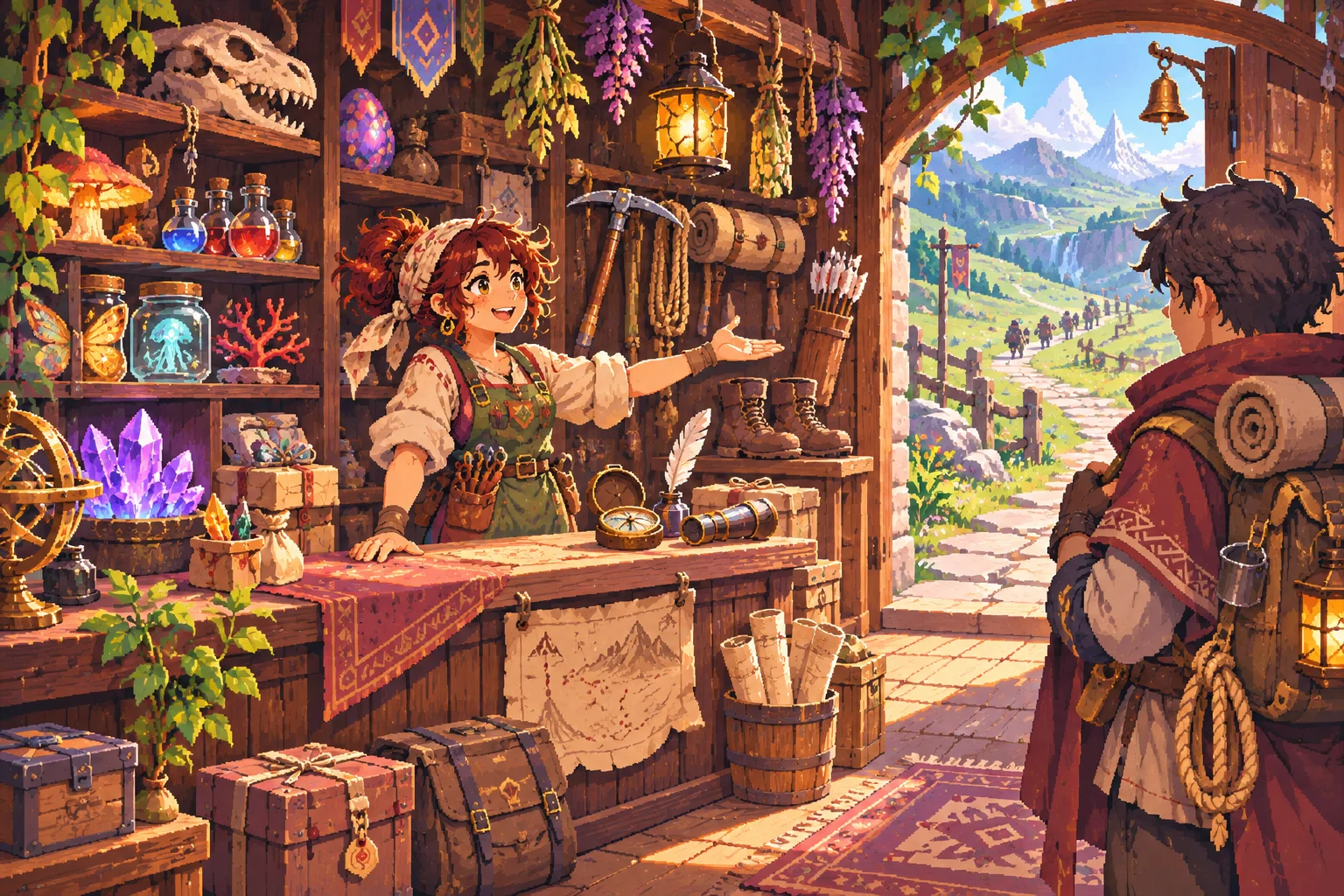
Connect shop growth to the adventure loop
Map the loop before choosing upgrades: explore, collect goods, decide what to keep or sell, serve customers, earn funds, then invest in the next run. A shop upgrade should feed one of those steps. More display space can let the player offer additional items; a service counter might provide a new reason for villagers to visit; an expedition board can open a different destination or gathering opportunity.
The official Moonlighter listing describes a shopkeeper who sells items, sets prices, manages gold reserves, recruits assistants, and upgrades the store while also exploring for loot. This is broad product context; the progression tiers below are original design examples rather than claims about Moonlighter’s systems.
Choose what the upgrade changes in the player’s day. Does the player need to arrange more stock, make a new pricing decision, delegate a task, or prepare for a different kind of expedition? If an upgrade only adds a decorative room with no new choice or feedback, it may be better as a cosmetic reward rather than a progression tier.
Define upgrade tiers with distinct effects
Give every tier a clear effect and a visible prerequisite. An early shelf expansion can raise the number of items on sale. A later service desk might let customers request a category of goods. A staffing upgrade can shorten a routine interaction while the player spends time elsewhere. These effects change capacity, options, or time, so players can understand why the investment matters.
Separate upgrades that affect different parts of the loop. Capacity lets the player bring more goods to market; a service adds another customer interaction; a route unlock changes which items can be found. Offer more than one path when possible, so the shop’s growth can reflect the player’s preferred style. Avoid making one upgrade mandatory for basic operation unless the game clearly teaches that expectation.
Track the tier in data: requirement, cost, effect, unlock state, and any later tier it enables. Show this information before purchase. If a store expansion consumes rare materials, explain where those materials come from and whether buying it delays another goal. The player should be able to make a deliberate choice, not discover after spending that the upgrade has no effect in the current run.
Show costs and unlocked choices
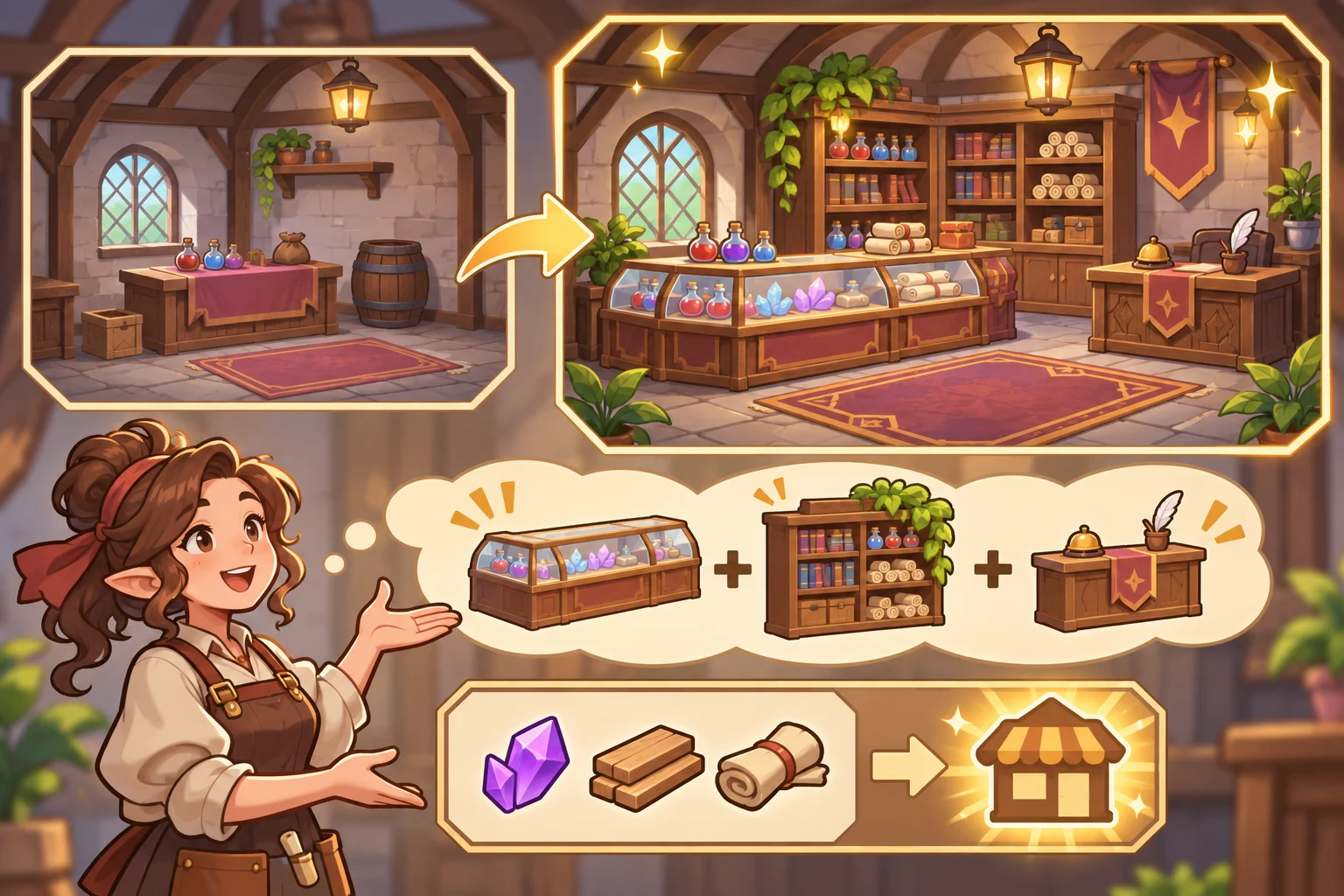
Make upgrade costs comparable with other uses for the same money. If the player can buy supplies, improve equipment, or expand the store, place those choices in context. You can preview the effect, prerequisite, and approximate payoff before purchase. Avoid promising exact customer demand if it is intentionally variable; instead show what new options become available and let the player test them.
Connect new shop options to adventure outcomes. A new display can handle fragile goods, while a special order might reward collecting a material in a newly opened area. This gives the player a reason to explore and a way to notice that the shop has grown. Make sure the new interaction appears in the business space itself through a changed counter, menu, customer request, or staff behavior.
Let progression acknowledge partial success. A player who has not earned enough for a major expansion might still unlock a smaller service or a cosmetic change that communicates progress. Avoid requiring excessive repetition of the same profitable activity; varied goods, customer preferences, and exploration rewards can make the economy feel connected rather than grindy.
Test pacing and customer value
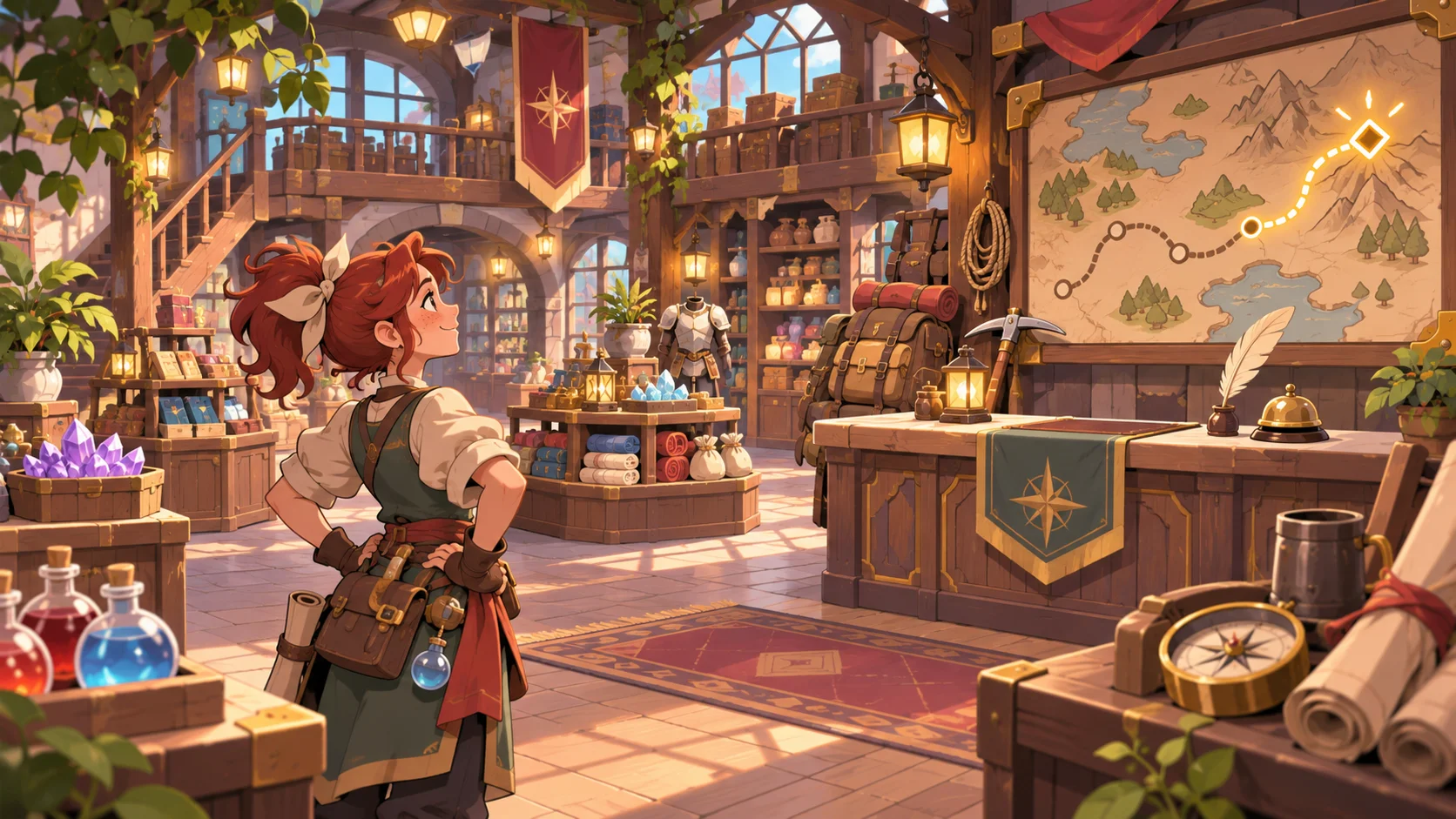
Test a short progression from the starting shop through several upgrades. Record how long it takes to afford each tier, what the player gives up to buy it, and which new action they try first. If a tier is purchased immediately every time, it may be a mandatory upgrade masquerading as a choice. If it is never selected, its effect may be hard to understand or less valuable than its cost.
Check the economy under different play styles. One player may explore often and sell a wide range of goods; another may focus on a smaller set of high-value items. Both should have a readable route forward. Test whether customer requests, stock capacity, and new routes reinforce one another without producing a runaway money loop or blocking players who missed a particular item.
AI can help draft upgrade variants or a progression table for an original prototype, but it cannot judge whether the pacing feels satisfying. Start a shopkeeping RPG prototype with Seele’s AI game maker, then test each tier in play and revise costs or effects using observed decisions.
Frequently asked questions
How do you design shop progression in an RPG?
Connect each upgrade to a meaningful part of the player’s routine, such as stocking goods, serving customers, earning funds, or preparing an expedition. Define the cost and unlock condition, then show what new choice becomes available. Test a progression path to ensure that players can understand its value and reach the next tier at a reasonable pace.
What should a shop upgrade change?
An upgrade can change store capacity, customer services, staff options, item presentation, or access to new business choices. Pick a focused effect and communicate it before the player spends resources. A tier should affect the player’s decisions or routine, while purely visual improvements can be offered as cosmetic rewards.
How do shop upgrades connect to dungeon rewards?
Use new shop options to create demand for goods, materials, or services that come from exploration. A new display might support a different category, or a special order could give the player a reason to visit a newly available area. Show the link so that business growth and adventure progress strengthen one another.
How can AI help prototype shop progression?
Ask AI to draft original tier ideas, costs, prerequisites, and effects in a table, then check each entry against your economy rules. Use the result as a starting specification for a prototype and test it with different play styles. Real player choices and pacing observations are needed before deciding that progression is balanced.