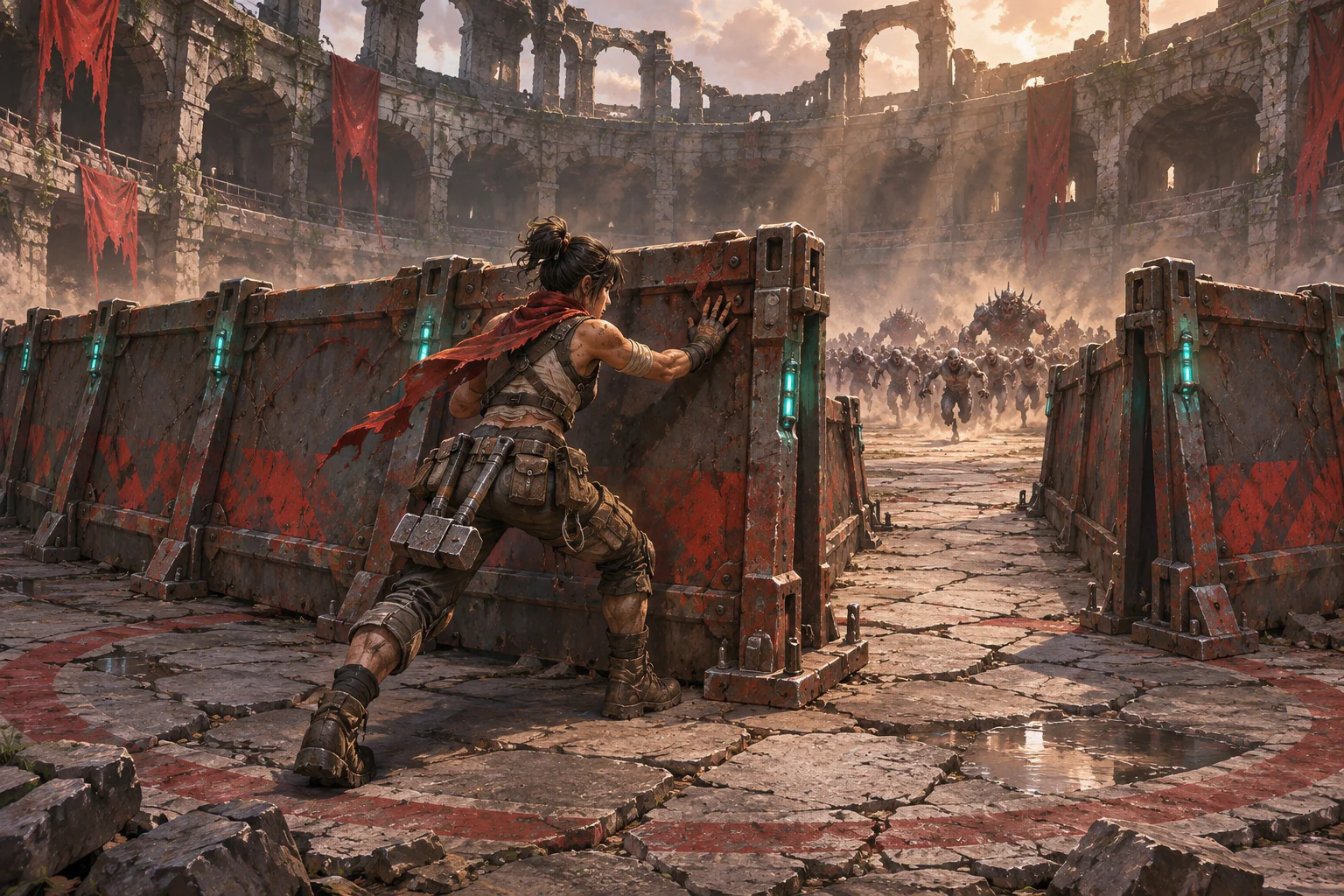
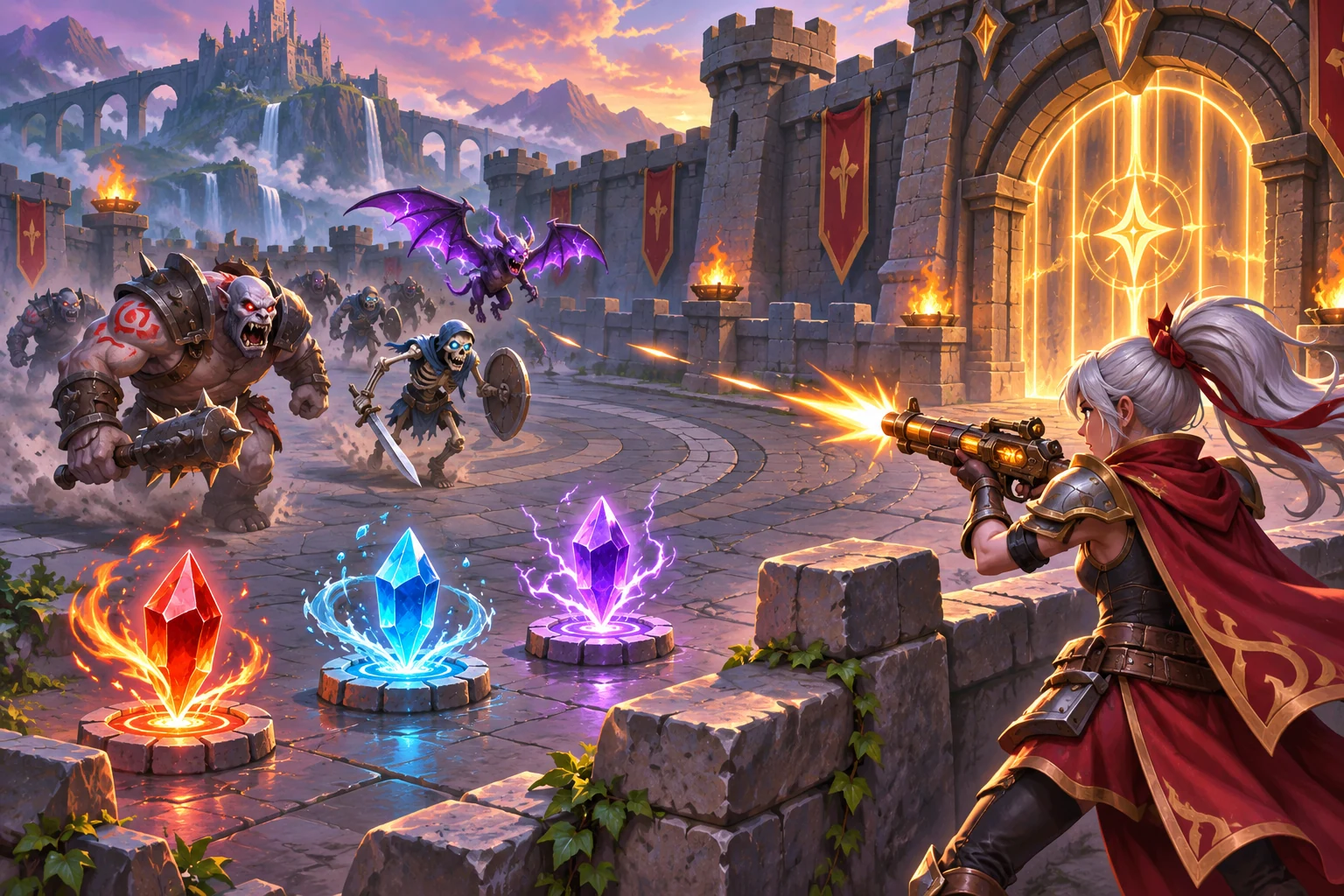
Wave progression gives an arena-survival run a rhythm: enter a threat, learn its pattern, survive pressure, then use a short recovery window to prepare for what comes next. Build that rhythm from explicit wave data rather than steadily increasing enemy health. Each wave needs a duration, spawn budget, enemy mix, pacing beats, completion rule, and a transition into the next decision.
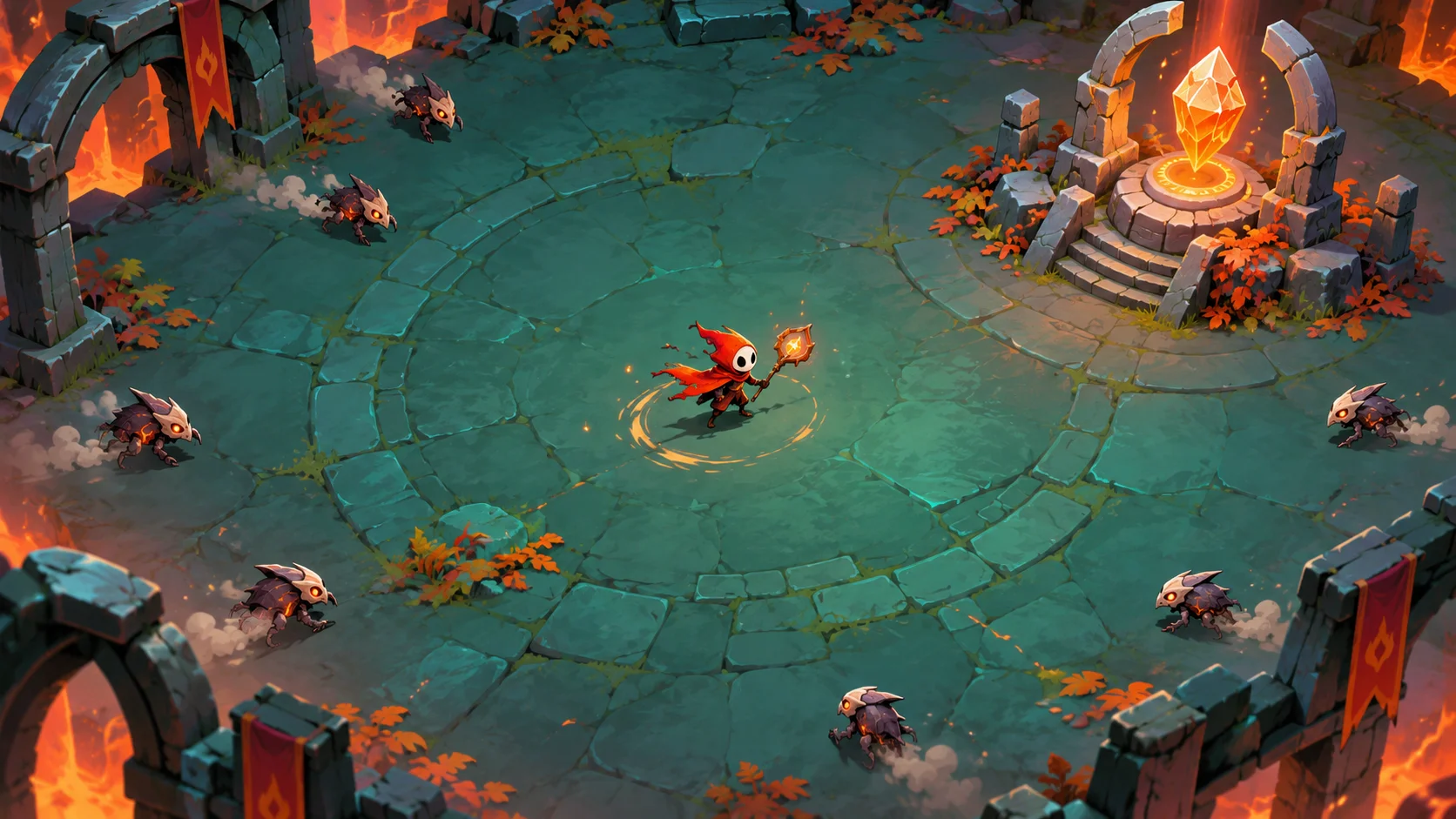
Define a wave contract
Start with a wave record that describes what the game must deliver: an index, duration, spawn schedule, enemy budget, allowed enemy roles, reward rule, and completion condition. A spawn schedule can specify a start time, enemy group, count, and interval. Keep this data separate from the code that creates enemies so you can adjust a wave without rewriting the encounter system.
Choose one clear end condition. A timed wave ends when its clock expires; an elimination wave ends when its required enemies are defeated; a hybrid can stop spawning at the timer and then ask the player to clear remaining threats. Show the player which rule is active. If the timer reaches zero while enemies remain, explain whether they disappear, continue fighting, or must be defeated.
Give each wave a contract the rest of the game can rely on: it begins once, spawns only its planned content, records its result once, and moves to the transition only when complete. If the player dies, pauses, or restarts, the system should not duplicate the spawn schedule or pay the wave reward twice.
Shape pressure within the wave
A wave can have an opening, escalation, peak, and release. The opening introduces or reintroduces threats with enough space for the player to respond. Escalation increases pressure through a new angle, enemy combination, or denser spawn beat. The peak asks the player to make a clear movement or target priority decision. The release gives the player a visible signal that the last threat is handled or that the timer is nearly done.
Use enemy roles to create pressure, not just larger numbers. A slow durable enemy can occupy space; a fast fragile enemy can force target switching; a ranged attacker can make the player leave a safe corner. Combine roles only when their behaviors remain readable. If a wave feels difficult because damage arrives from every direction at once, reduce simultaneous attack windows or adjust spawn angles before increasing player health.
A simple wave table can make the intended curve visible:
| Wave phase | Encounter job | Pressure change | Player learning |
|---|---|---|---|
| Early | Teach movement and basic threats | Low density, longer gaps | Learn safe space and attack range |
| Middle | Combine familiar roles | More angles or shorter gaps | Choose targets and route through arena |
| Late | Test the build under pressure | Higher density or a distinct threat | Use upgrades and prioritize danger |
This is a planning tool, not a fixed formula. A later wave can create challenge with a new pattern instead of more enemies. Keep at least one readable response available: a dodge lane, a moment to reposition, or a way to remove the most urgent threat.
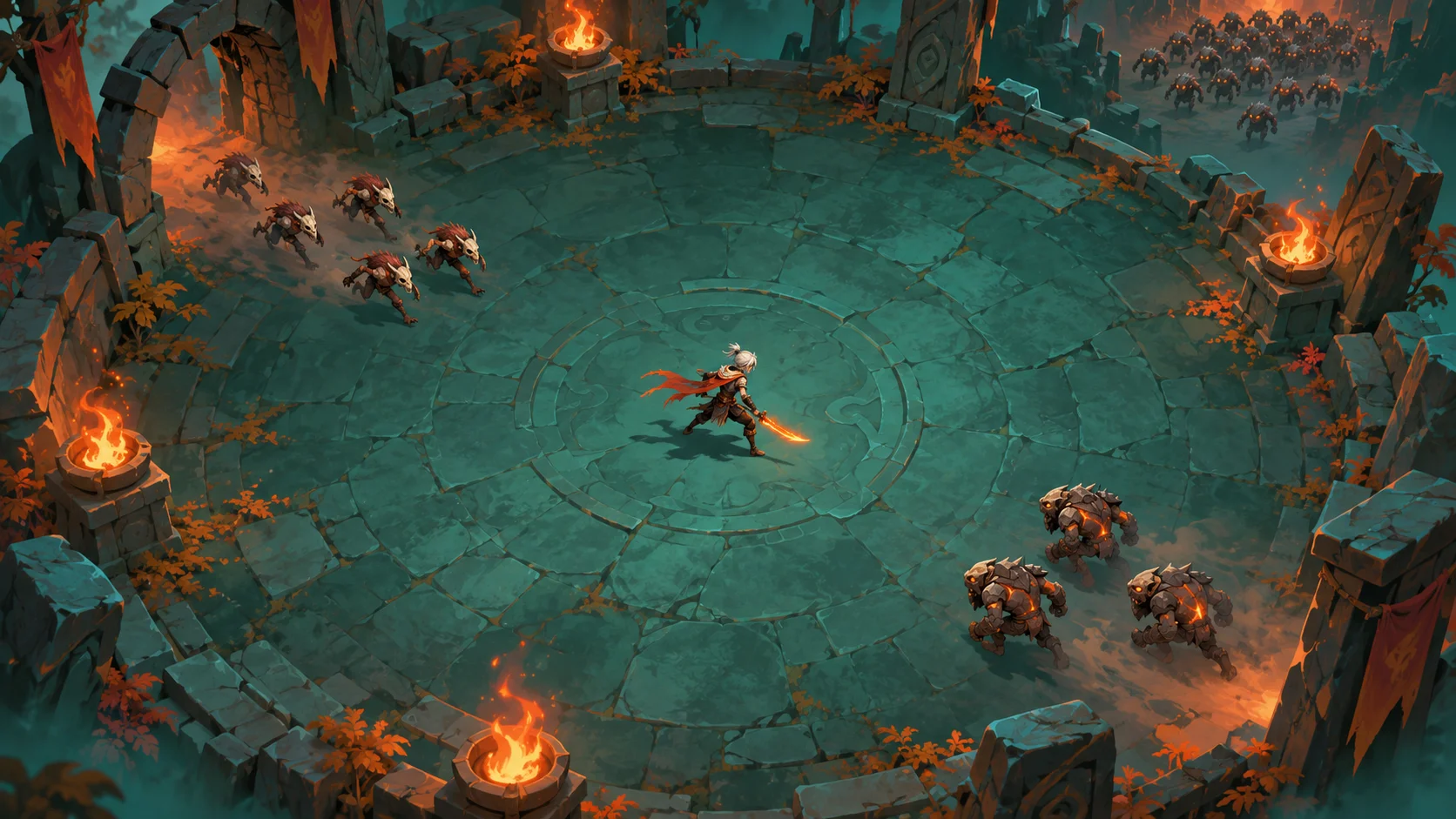
Connect combat to between-wave growth
The transition after a wave is part of progression, not empty downtime. It can collect dropped resources, offer an upgrade, let the player recover, or simply confirm the next wave’s preview. Decide what the player can do and how long the decision lasts. If a choice is permanent, show its cost and effect before confirming it.
Make upgrades respond to different builds. A damage option can help a slow weapon setup; movement or defense can help a fragile character; a resource bonus can support a longer-term economy. Avoid presenting several upgrades that all improve the same stat in slightly different language. Each choice should change what the player does, what risk they accept, or how they prepare for the next wave.
Show the next wave’s broad pressure before the player commits. A preview such as “fast enemies from two sides” gives a reason to choose movement or area control without revealing every detail. The preview should be accurate enough to support planning. If the game uses randomness, communicate what is fixed and what remains variable.
Keep the transition boundary transactional too. Apply the completed wave reward once, close the current spawn schedule, accept the upgrade choice, and then initialize the next wave. On restart or load, restore the correct boundary state so a player cannot duplicate rewards by repeating the transition.
Validate difficulty and stability
Test a fixed set of seeds and record time to defeat, damage taken, enemies alive at the timer, resource gain, and upgrade choice. These values do not tell you whether a wave is fun, but they reveal abrupt spikes and broken schedules. Replay the same seed after a balance change so you can compare the result instead of relying on memory.
Run cases for an empty spawn list, an enemy that leaves the arena, a player death during a wave, a paused timer, a wave transition triggered twice, and a reward collected after restart. Verify that each wave starts once, every enemy is either defeated or handled by the completion rule, and the next wave cannot begin while the current one still owns active state.
Playtest readability separately from difficulty. Ask players what threat they noticed first and where they planned to move. If they cannot tell why they took damage, improve attack cues or spawn timing. If a wave is easy but visually crowded, lower clutter before raising its budget. If skilled players never need to move, change enemy roles or arena pressure rather than only adding health.
The official Brotato listing describes a top-down arena shooter roguelite built around surviving timed waves, with wave durations varying from 20 to 90 seconds in that game. Those values are specific to its design. For your own game, select durations that fit your movement speed, enemy behavior, upgrade cadence, and desired session length. SEELE’s documented game-creation capability can help you start from a natural-language game idea; treat the resulting prototype as a starting point and test the wave rules you intend to ship.
Frequently asked questions
How long should a survival wave last?
Choose a duration that gives your encounter enough time to introduce, escalate, and resolve its pressure. Test it against player movement, enemy travel time, and the number of decisions a wave asks for. The official Brotato listing gives a game-specific range of 20 to 90 seconds; use that as a reference point only, not a universal target for every arena game.
How do you increase difficulty without only adding health?
Change the problem the player must solve: introduce a new enemy role, vary arrival angles, shorten safe gaps, or combine familiar threats in a readable way. Preserve a response such as a dodge lane or target priority. If difficulty rises only through health, encounters may become longer without creating new decisions.
What should happen between waves?
Use the break to deliver the completed reward and offer a clear next action, such as choosing an upgrade, recovering, or reviewing the next wave’s broad threat. Keep it long enough for a meaningful choice and short enough to preserve momentum. Apply rewards once and initialize the next wave only after the transition is confirmed.
How can I test a wave progression system?
Replay saved seeds and track wave duration, damage, enemies remaining, resource gain, and upgrade choices. Test edge cases such as death, pause, restart, empty spawns, and duplicate transition events. Then ask players which threat they noticed and where they intended to move; structural metrics cannot replace a check that the encounter reads clearly.
Build a small sequence of waves, test its state boundaries, and adjust pressure through enemy roles and timing before adding more content. Explore an AI game creation starting point to shape an original arena-survival concept into a prototype.