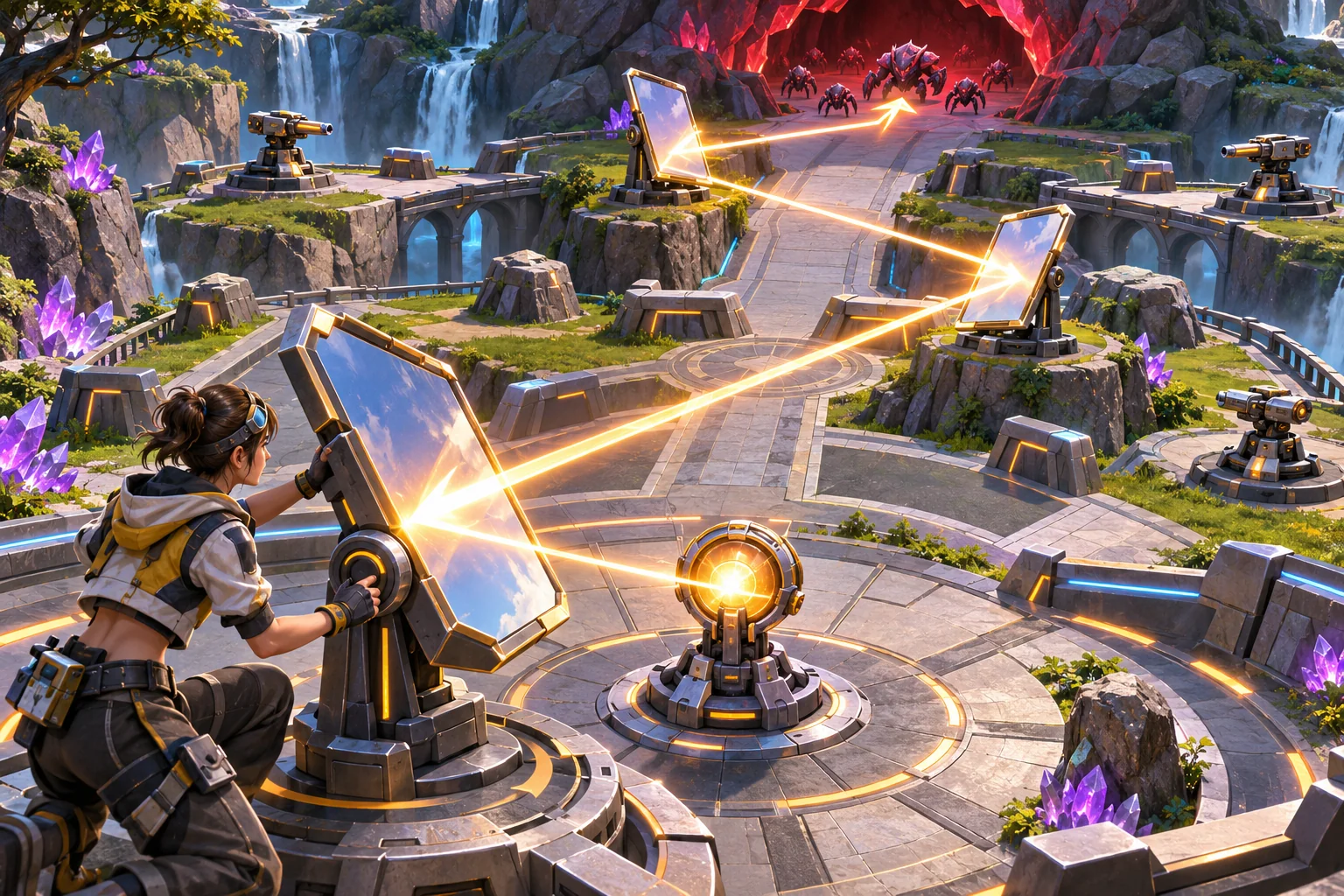
In the fictional Emberwall arena, wave one leaves the player with two Fire, two Water, and one Lightning shard. During the intermission, craft Storm from Water plus Lightning and Steam from Fire plus Water, consuming each shard. Wave two sends three enemies with three health each into a tight cluster. Storm deals two damage to up to three linked enemies, leaving each at one health; Steam deals three damage in a radius of one and clears the group. Both casts finish before the five-second breach, so the gate stays at integrity 5. A basic-bolt control cannot clear the cluster in time. Emberwall, recipes, and outcomes are fictional; the local test checks only these authored rules.
Collect elemental shards during the attack
Keep the combat phase focused on movement, aiming, and collecting. In wave one, award exactly two Fire shards, two Water shards, and one Lightning shard when the final enemy falls. Show the inventory as distinct counters and keep those collected elements until the next intermission. Do not craft while enemies are active; the player must survive the wave before using its materials.
At the wave boundary, freeze enemy motion and open a short preparation panel. Display recipe costs before the player confirms a spell. Storm uses one Water and one Lightning; Steam uses one Fire and one Water. Crafting both consumes the full Water supply and the single Lightning shard, leaving one Fire. This makes recipe choice visible and prevents an element from being spent twice.

Craft recipes only in the preparation window
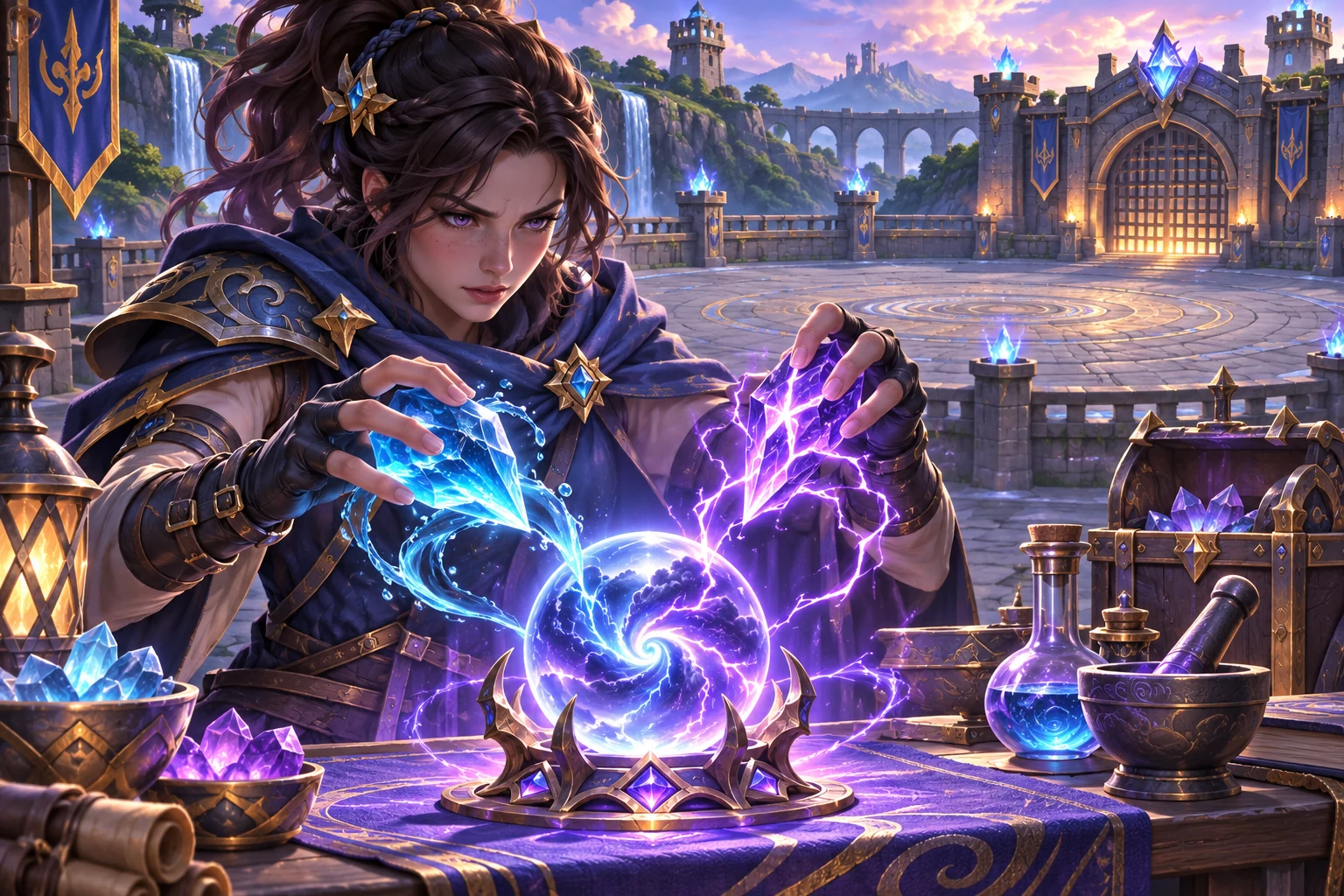
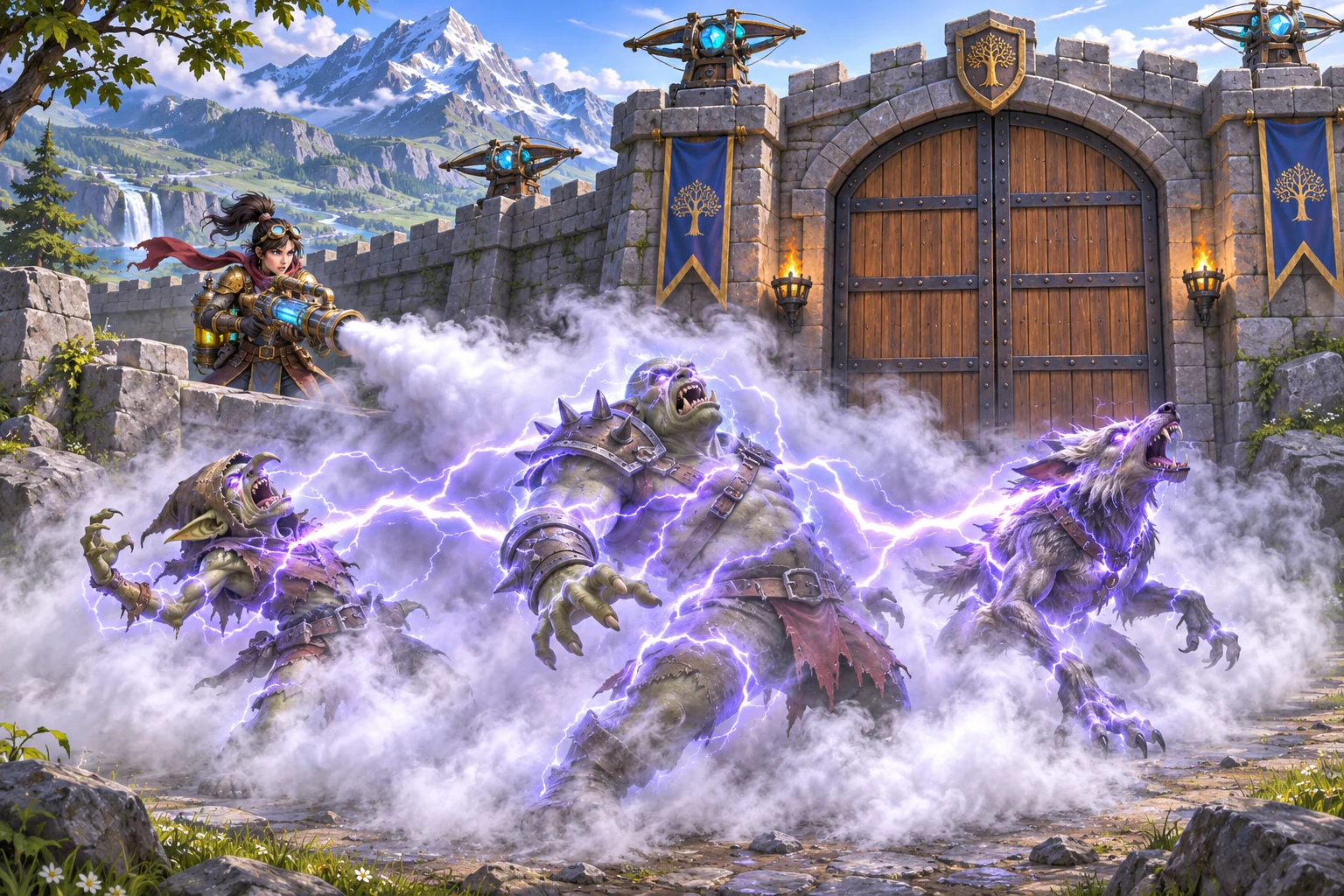
Define Storm as a chain spell that deals two damage to up to three linked enemies. Define Steam as a radius-one burst that deals three damage to every enemy in range. Both are single-use casts. Resolve Storm first against a cluster of three enemies with three health each. It leaves all three at one health; a Steam burst centered on the group then defeats them together.
Keep the preparation window between waves rather than pausing combat. Show the remaining shards, each recipe, the crafted spell charges, and the next wave preview. Once the player starts wave two, lock crafting until the next boundary. That keeps the elemental system readable and prevents mid-wave inventory changes from affecting a spell already selected.
Compare crafted spells with a basic-bolt control
Run the crafted case against three clustered enemies, each with three health and a five-second breach timer. Storm reduces each to one health; Steam clears all three before the timer expires. The gate begins at integrity 5 and takes no damage. Record the shards before crafting, the recipes consumed, cast order, enemy health after each cast, and gate integrity at the end.
Repeat the wave with only a basic bolt that deals one damage per second to one target. It takes three seconds to defeat one enemy, leaving two able to breach at five seconds. If each breach costs two gate integrity, the gate falls from 5 to 1 and the control fails. This comparison tests whether collected elements create a meaningful between-wave preparation choice. All names and outcomes are fictional; the local test verifies only the specified recipe and damage math.
Ask an AI game maker to test element-combination spells
Create a wave-defense shooter in fictional Emberwall. Wave one awards exactly Fire 2, Water 2, Lightning 1. Craft only between waves. Storm costs Water 1 plus Lightning 1 and deals 2 damage to up to three linked enemies. Steam costs Fire 1 plus Water 1 and deals 3 damage in radius 1. Wave two has three clustered enemies with 3 health each and a breach timer of 5 seconds; the gate starts at integrity 5. Cast Storm, then Steam on the cluster; all enemies should fall before breach and gate integrity stays 5. Compare a basic bolt that deals 1 damage per second to one target; two enemies breach and gate falls to 1. Show shard costs, charges, health, timer, and gate state.
Verify the intermission inventory Fire 2, Water 2, Lightning 1. Craft Storm and Steam once each with no negative or reused shards. Against three 3-health enemies, Storm leaves 1 each and radius-one Steam clears the group before five seconds. In the bolt control, one target falls at three seconds, two breach at five, and the gate ends at 1.
FAQ
How should a wave-defense game use collected elements?
Give each element a clear recipe role and show its cost before crafting. In this example, Water pairs with Lightning for a chain spell and with Fire for a nearby burst. Award shards during a wave, then let the player combine them in a separate preparation window before the next attack begins.
When should players craft spells in a wave-defense shooter?
Use an intermission after the last enemy is defeated and before the next wave starts. Freeze combat during that window, show the inventory and upcoming threat, and lock crafting once the wave begins. This gives players time to plan without changing a live encounter.
How can I test whether spell crafting is useful?
Compare a crafted-spell run with a basic-weapon control against the same enemy group and timer. Record element costs, spell effects, enemy health, breach time, and gate integrity. The mechanic is useful only if the crafted choice changes a measurable outcome under the same conditions.