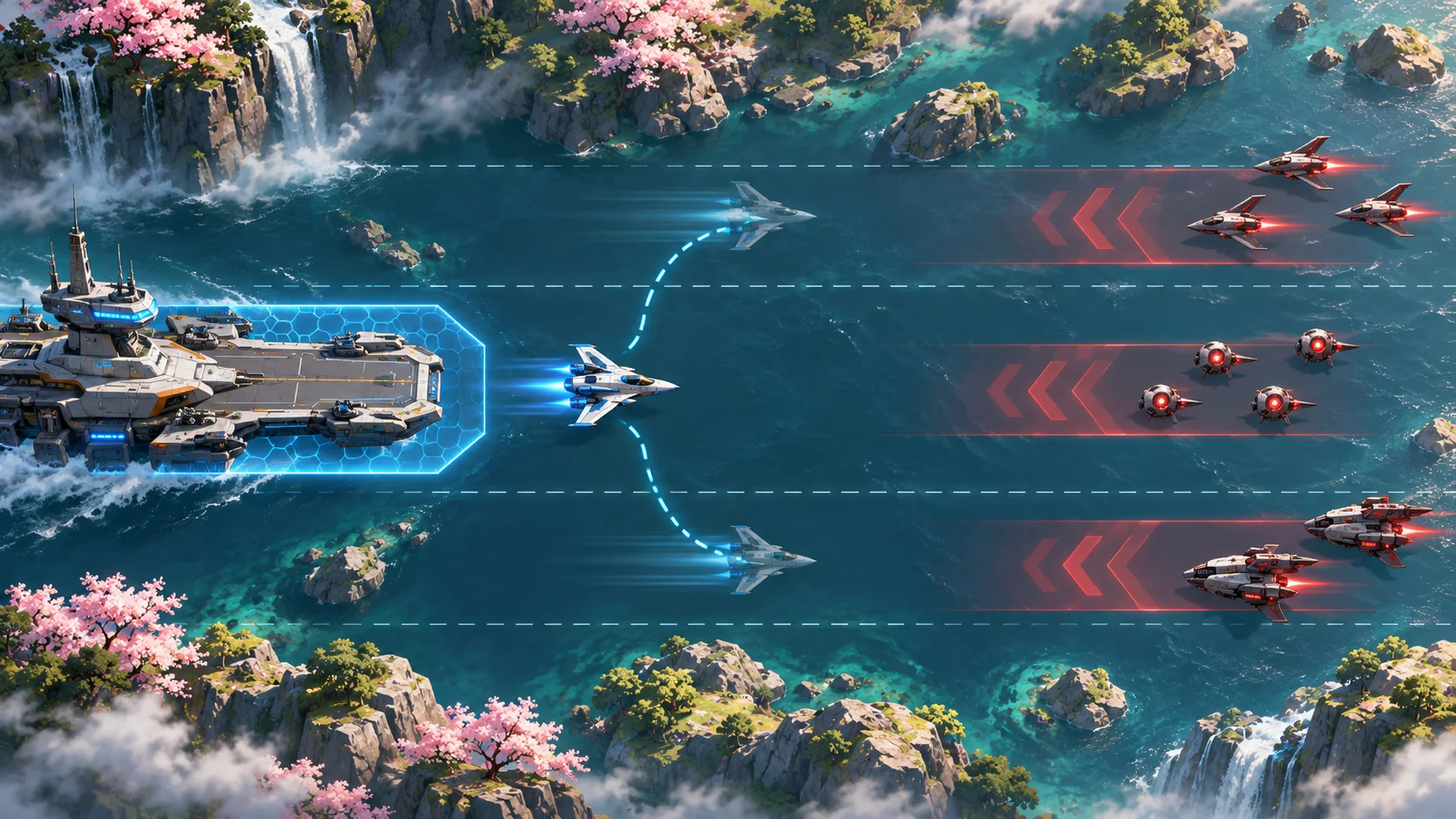
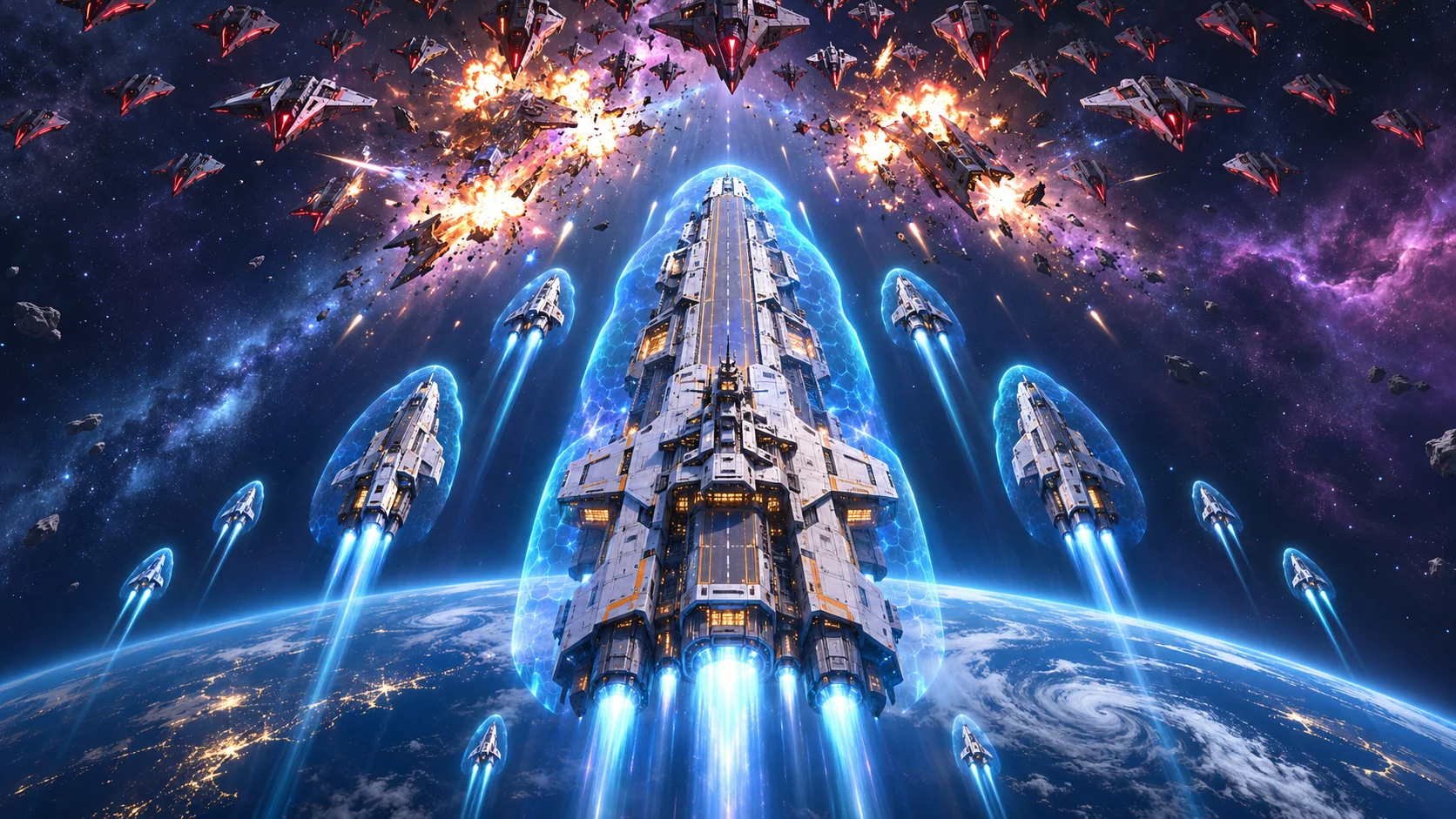
In Longhaul, the base is not a static health bar at the bottom of the screen. It advances one column through the battlefield each beat, and the escort fighter stays beside it. The player chooses one of three vertical lanes before each shot, so the lane path must line up with enemy formations that appear ahead of the carrier.
A four-column wave uses three one-hit enemies: an interceptor in the top lane at column 2, a bomber in the middle lane at column 3, and a skimmer in the bottom lane at column 4. The fighter starts centered, can change one lane per beat and fires into the next column. The path center→top→middle→bottom clears all three before the carrier arrives, preserving its six shield points.
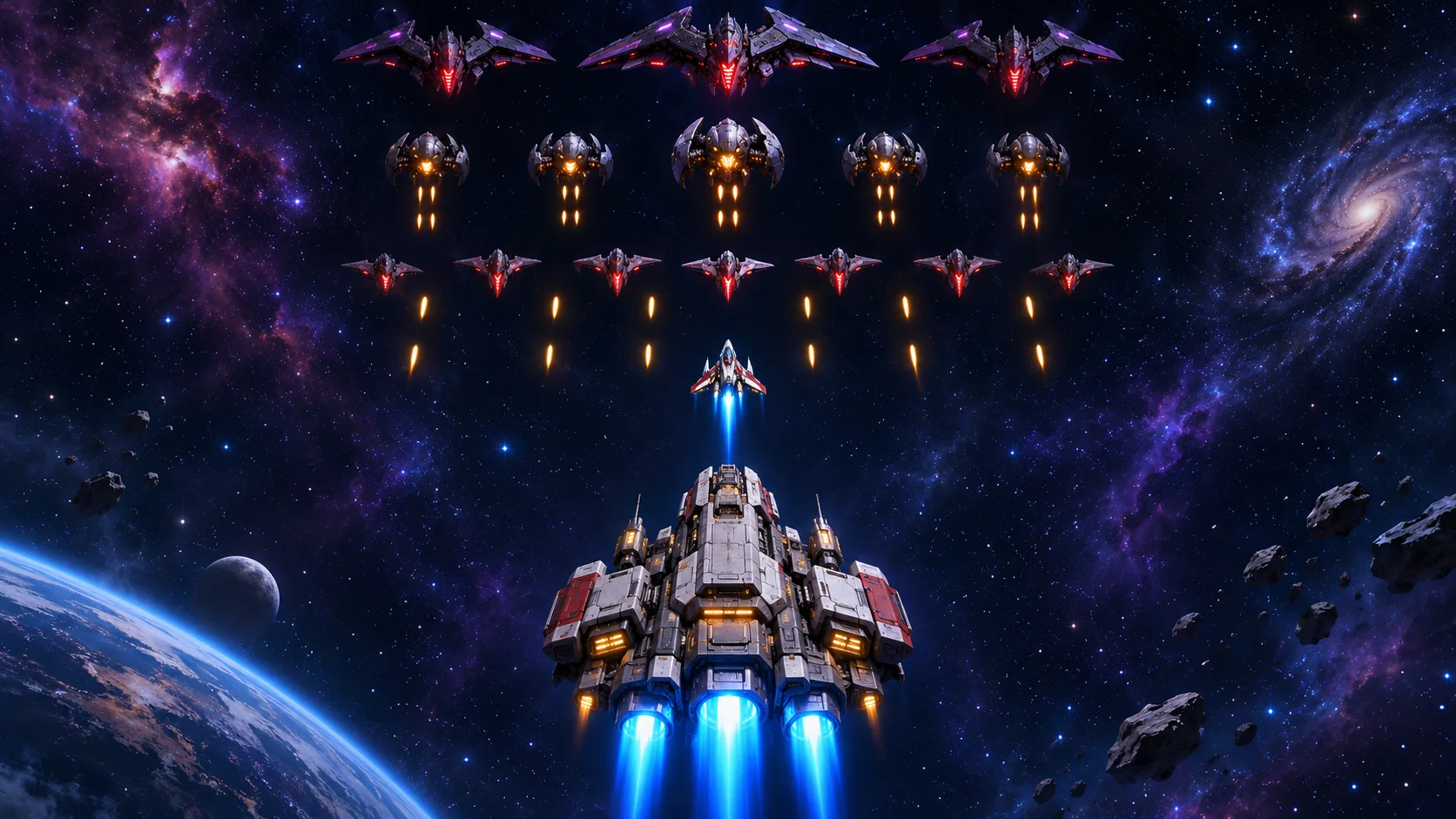
Make the carrier part of the firing loop
Design Longhaul as a deterministic vertical shooter with three lanes—top, middle and bottom—and five columns numbered 0 through 4. The carrier starts at column 0 in the middle lane with 6 shield. The escort fighter occupies the same column, one formation cell ahead of the carrier, and can hold its lane or move one lane up or down per beat. At each beat, choose the fighter lane and fire once into that lane of the next column; a matching one-hit enemy is destroyed before the carrier advances one column. If an enemy remains in the lane when the carrier reaches its column, it fires once and removes 2 shield. Enemies appear at top/column 2, middle/column 3 and bottom/column 4. The run clears when the carrier reaches column 4 with shield above 0 and all three enemies are gone. If shield reaches 0, the carrier is destroyed; restart restores column 0, middle lane and 6 shield. Show the carrier position, fighter lane, next enemy column, shot resolution and shield after every beat.
| System | Prototype rule |
|---|---|
| Field | Three vertical lanes and columns 0–4; the carrier starts at column 0, middle lane. |
| Carrier | Moves one column forward after each beat; starts with 6 shield. |
| Fighter | Stays in formation at the carrier column; one lane change per beat. |
| Fire | Choose a lane and fire into the next column; matching one-hit enemy is destroyed before the carrier moves. |
| Wave | Interceptor at top/column 2; bomber at middle/column 3; skimmer at bottom/column 4. |
| Enemy attack | Any surviving enemy in the carrier’s arriving column deals 2 shield damage. |
| Clear | Reach column 4 with all enemies destroyed and shield above 0. |
| Failure | Shield 0 destroys the carrier; restart resets field and shield. |
| Interface | Show next column, enemy lanes, fighter lane, shot result, carrier position and shield. |
Define columns, lanes and shield rules
Start at column 0, middle lane, shield 6. Beat 1 moves the fighter one lane up to top and fires into column 1; no target is there, so the shot misses. The carrier advances to column 1. Beat 2 holds top and fires into column 2, destroying the interceptor before the carrier enters that column. Beat 3 moves one lane down to middle and destroys the bomber at column 3. Beat 4 moves one lane down to bottom and destroys the skimmer at column 4 before the carrier arrives. The carrier reaches column 4 with shield 6 and no enemies remaining. Each lane change is within the one-lane limit; no enemy fires. The first beat is a deliberate aim setup, not a failed shot test. This is an authored state trace, not a playable or user test.
| Beat | Expected field state |
|---|---|
| Start | Carrier column 0; fighter middle; shield 6. |
| 1 · Middle→top | Fire into column 1; no target; carrier advances to column 1. |
| 2 · Hold top | Destroy interceptor at column 2; carrier advances safely. |
| 3 · Top→middle | Destroy bomber at column 3; carrier advances safely. |
| 4 · Middle→bottom | Destroy skimmer at column 4 before arrival. |
| Clear | Carrier reaches column 4; shield 6; no enemies remain. |
Trace the four-beat escort route
Ask the generator to advance the carrier after resolving each shot, not before it. The fighter moves at most one lane per beat. That order lets a successful interception prevent the base from taking damage in the same column.
Create a deterministic vertical shoot-em-up called Longhaul. Show three lanes and columns 0–4. The carrier starts at column 0 in the middle lane with 6 shield and advances one column after each beat. Keep the escort fighter at the carrier column. Each beat let the player choose hold, one lane up or one lane down, then fire into that lane in the next column before the carrier moves. One matching hit destroys an enemy. Put a one-hit interceptor in top/column 2, bomber in middle/column 3 and skimmer in bottom/column 4. Any enemy still present when the carrier reaches its column deals 2 shield damage. Clear by reaching column 4 with all enemies destroyed and shield above 0; restart restores the start state. Replay: beat 1 aim top at column 1; beat 2 destroy top/2; beat 3 shift to middle and destroy middle/3; beat 4 shift to bottom and destroy bottom/4. Show lane limit, shot order, carrier motion and shield trace.Prompt AI to build the moving-base shooter
The first firing draft advanced the base before checking the shot, so even a correctly aimed interception still damaged the carrier. The revised beat order resolves the selected shot in the next column first, then moves the carrier and lets only surviving enemies attack. The fighter’s one-lane shift limit is also explicit, making the planned top→middle→bottom sequence legal. This is a design revision in the authored specification, not a measured playtest.
Revise the lane plan around enemy columns
Build the three-lane field and moving carrier as separate positions. Resolve firing before the carrier advances, then apply attacks from enemies that survived in the arriving column. Replay all four beats and confirm the fighter never changes more than one lane, the three threats are removed at columns 2–4, and shield stays at 6. Godot Area2D can detect overlaps for projectile and target objects, but this package does not include an implemented hit test. Use the SEELE vertical-shooter brief for scope and wave definitions, then send the bounded rules to AI Game Maker.
Use SEELE’s vertical-shooter design brief.
Review Godot’s official Area2D collision reference.
Frequently asked questions
What does the moving base change in a vertical shooter?
The carrier advances through the same columns as the enemy wave instead of staying at the screen edge. Its position makes each missed formation dangerous, while its lane-linked escort gives the player a route decision before the base reaches the next column.
Why does the shot resolve before the carrier moves?
That order gives a successful interception a visible defensive effect. A matching enemy is removed before the carrier enters its column; only a threat left alive can fire and remove shield. This makes the lane choice and shot timing legible in the beat log.
How do I keep lane switching fair?
Limit the fighter to one adjacent lane change per beat and show the upcoming enemy column. The sample wave requires top, then middle, then bottom, so every transition is legal and readable before the carrier advances. The display should highlight legal next lanes before each firing decision.
Has Longhaul been built or playtested?
No. The three lanes, column positions, carrier shield, one-hit enemies, shot order and four-beat route are authored prototype specifications. This package does not claim an implemented game, browser test, user test or measured balance. Its local previews are static HTML and the outcome is an authored state trace.