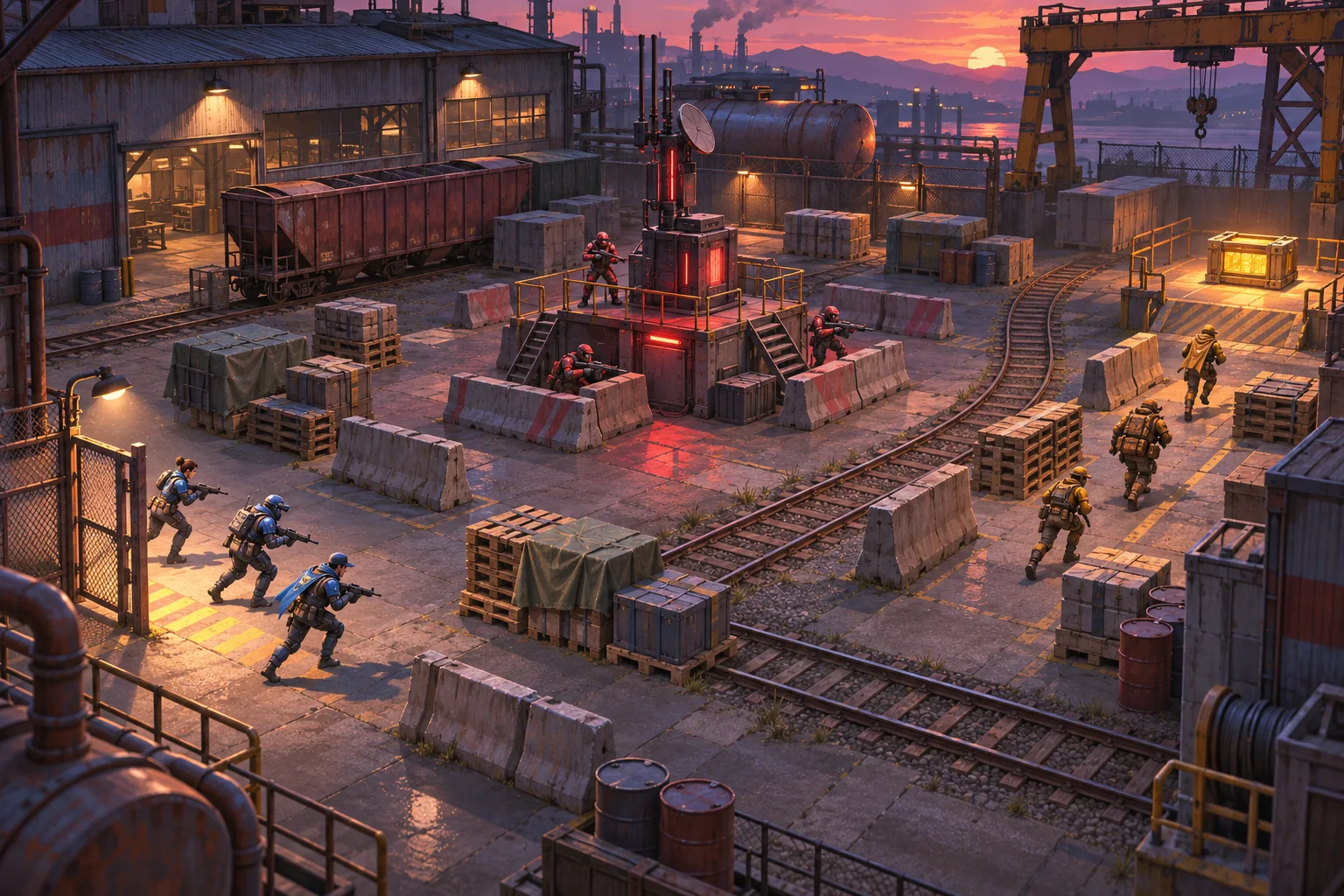
A mobile base can make a turn-based shooter feel different from a squad that only walks between cover. The base is both transport and shelter, so moving it changes where allies can safely stand and how much time remains to fire. To test that loop, use one encounter with three action points, a base with four integrity, and an enemy that telegraphs a strike on the base’s current lane.
Show the shared action budget before the turn
Give the player three action points for the round. Moving the base from tile A to tile B costs two; each shot costs one. Tile A is covered now, but a marked enemy will hit that lane at the end of the round. Tile B is behind the next cover position, outside the marked strike. The player can move and fire once, or stay and fire twice before the strike lands.
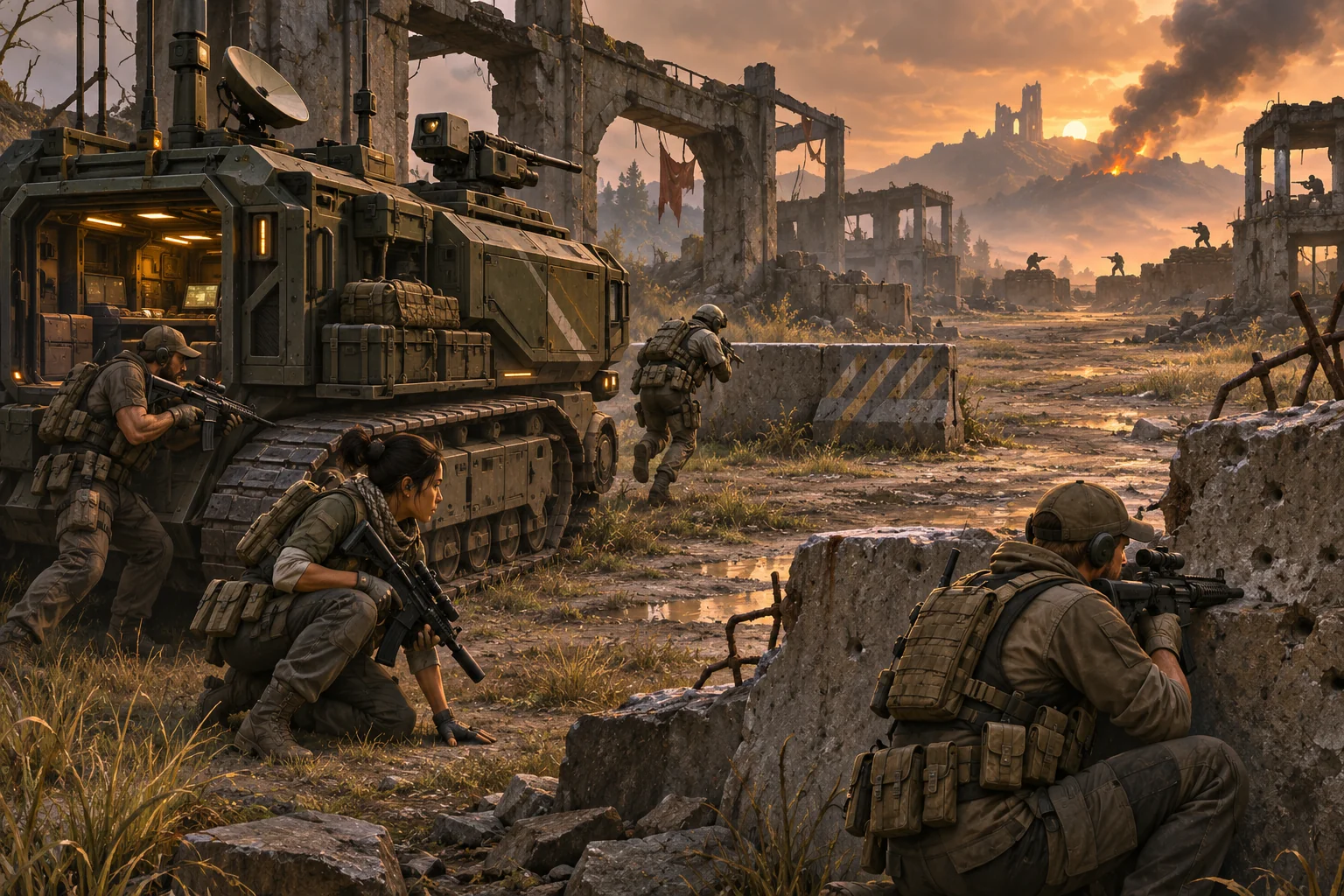
Keep the first map small: two base positions, one exposed lane, one telegraph and one enemy target. Show the base marker, integrity, remaining action points and the attack area at the same time. Mark all values as prototype rules so players understand that the numbers are tunable rather than universal shooter balance.
Make repositioning trade a shot for safer cover They can learn the tradeoff from a consistent example.
Moving is not a free defensive bonus. Spending two points to reach tile B leaves one point for a shot. The squad gives up a second attack now to keep the base intact and retain cover for the next round. If it stays at A, it can take two shots, but the telegraphed attack removes two of the base’s four integrity and disables squad cover next round.
Preview that consequence before the player commits. Do not resolve a shot against a target that has already moved unless the prototype explicitly supports tracking fire. Keep the base’s location and integrity visible after the round, and make the reset restore the same enemy telegraph and action budget.
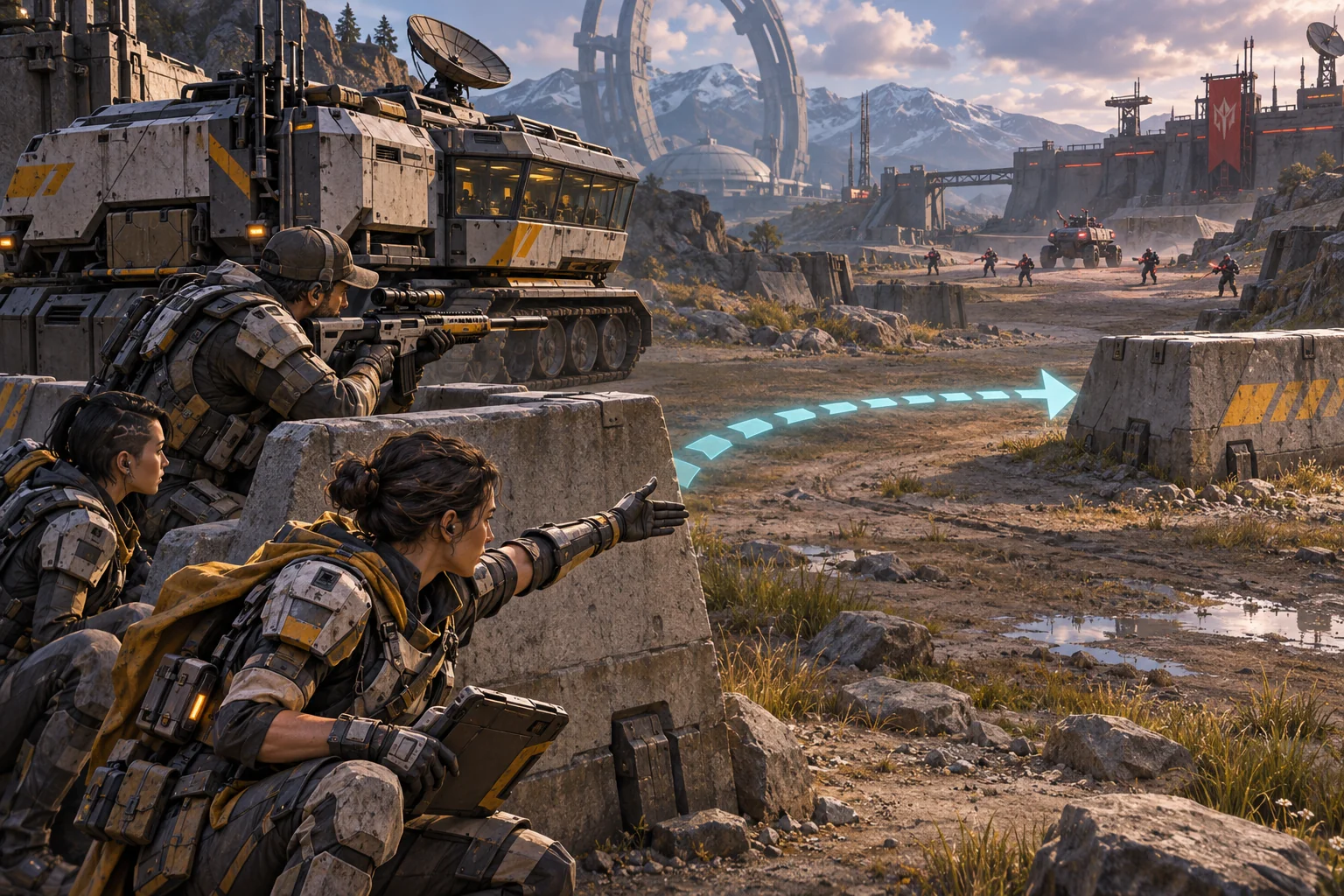
Replay one round with a fixed action budget
The local replay starts with three action points and four base integrity. In the move-then-fire case, moving costs two points and one shot costs the last point. The base leaves the marked lane, takes no damage, and ends with four integrity. In the fire-twice case, both shots use two points; the remaining point cannot move the base under this rule. The enemy strike hits tile A, lowers integrity to two and removes the squad’s cover next round.
| Choice | Actions used | Shots | Strike result | Next-round cover |
|---|---|---|---|---|
| Move, then fire | 2 + 1 | 1 | Base avoids marked lane | Preserved |
| Fire twice, stay | 1 + 1 | 2 | Integrity 4 → 2 | Disabled |
This deterministic check validates only action costs, position and the telegraphed strike. It does not model hit chance, enemy decision-making, pathfinding or a full combat encounter. Keep those systems out of the first test so players can see why an extra shot has a defensive cost.
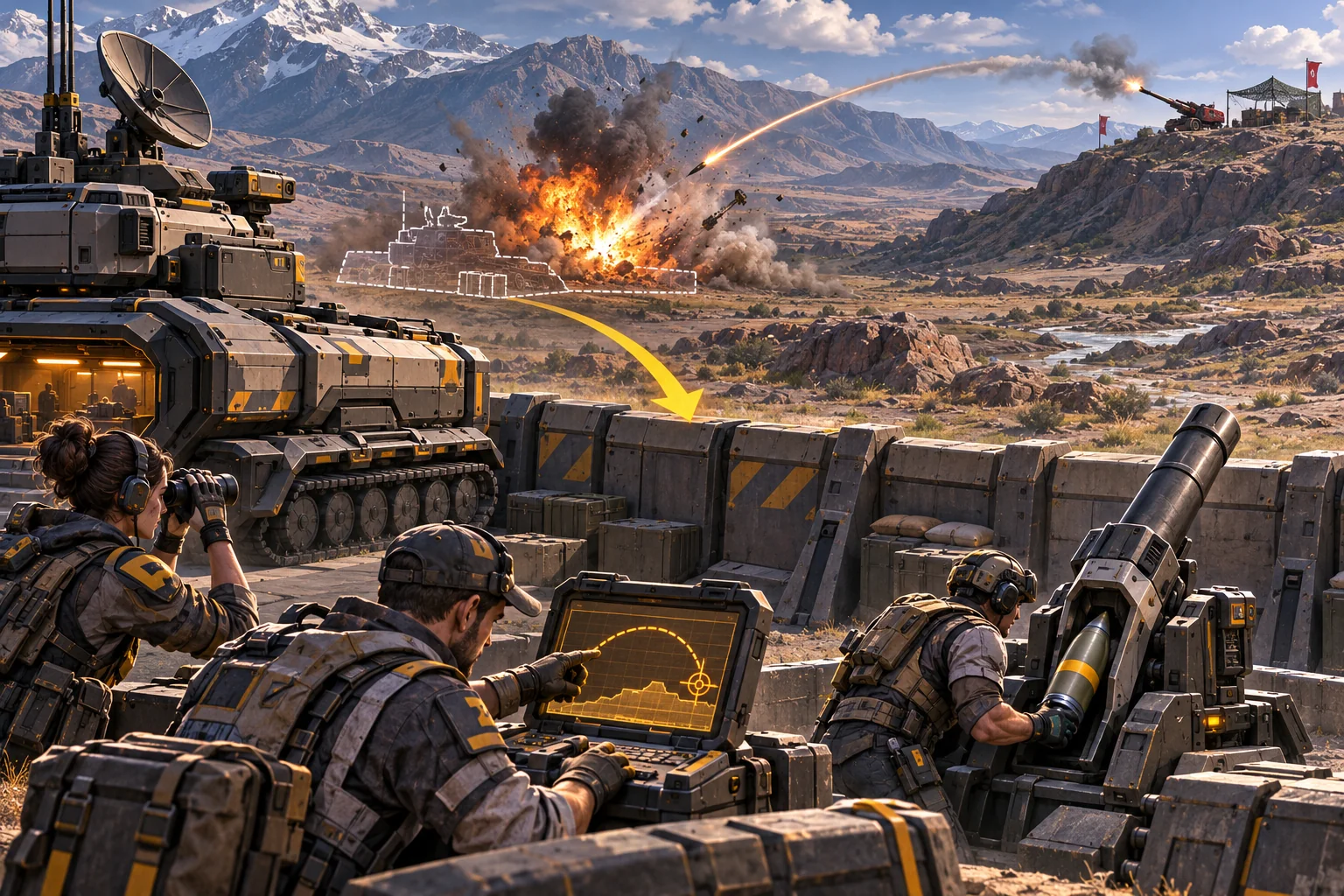
Build one mobile-base encounter before adding weapons
Ask an AI game maker for a turn-based shooter prototype with a small grid, a base marker, three action points, four integrity, one marked enemy lane and a reset button. Let the player spend two points to move the base or one point per shot. Resolve the telegraphed strike after the player’s turn and show the base’s integrity and cover state afterward.
Once the movement-versus-fire choice is clear, add one weapon or enemy behavior at a time. Replay the same encounter after each change. This makes it easier to see whether a new system adds a tactical decision or merely changes the outcome unpredictably.
Make a turn-based shooter prototype about a squad with a mobile combat base. Use a small grid, three action points per round and a base with four integrity. The base begins at covered tile A; an enemy telegraphs a strike on lane A for the end of the round. Moving to covered tile B costs two points, and each shot costs one. The player can move then fire once to avoid the strike, or stay and fire twice; if it stays, the strike removes two integrity and disables squad cover next round. Show position, remaining actions, integrity and telegraphed lane. Add a reset for the same encounter. Keep hit chance and enemy AI out of scope.
Start a turn-based shooter prototype in SEELE
Frequently asked questions
What makes the base part of the core loop?
Its location affects both safety and the actions available for attacks. Moving it spends action points, changes the squad’s cover and can avoid a telegraphed strike. Keep these consequences visible so the base is more than a moving backdrop. during play.
Why not let the squad move independently?
Independent movement may be a useful later mechanic, but it would blur this first test. Begin with the base as the shared position that defines the squad’s cover. Add separate movement only after the player understands the base’s cost and protection.
What should the first replay verify?
Check that the move costs two points, a shot costs one, and the strike resolves against the marked lane after the turn. Confirm that repositioning avoids the hit, while staying allows another shot but reduces base integrity and disables cover. This does not establish combat balance. on its own.