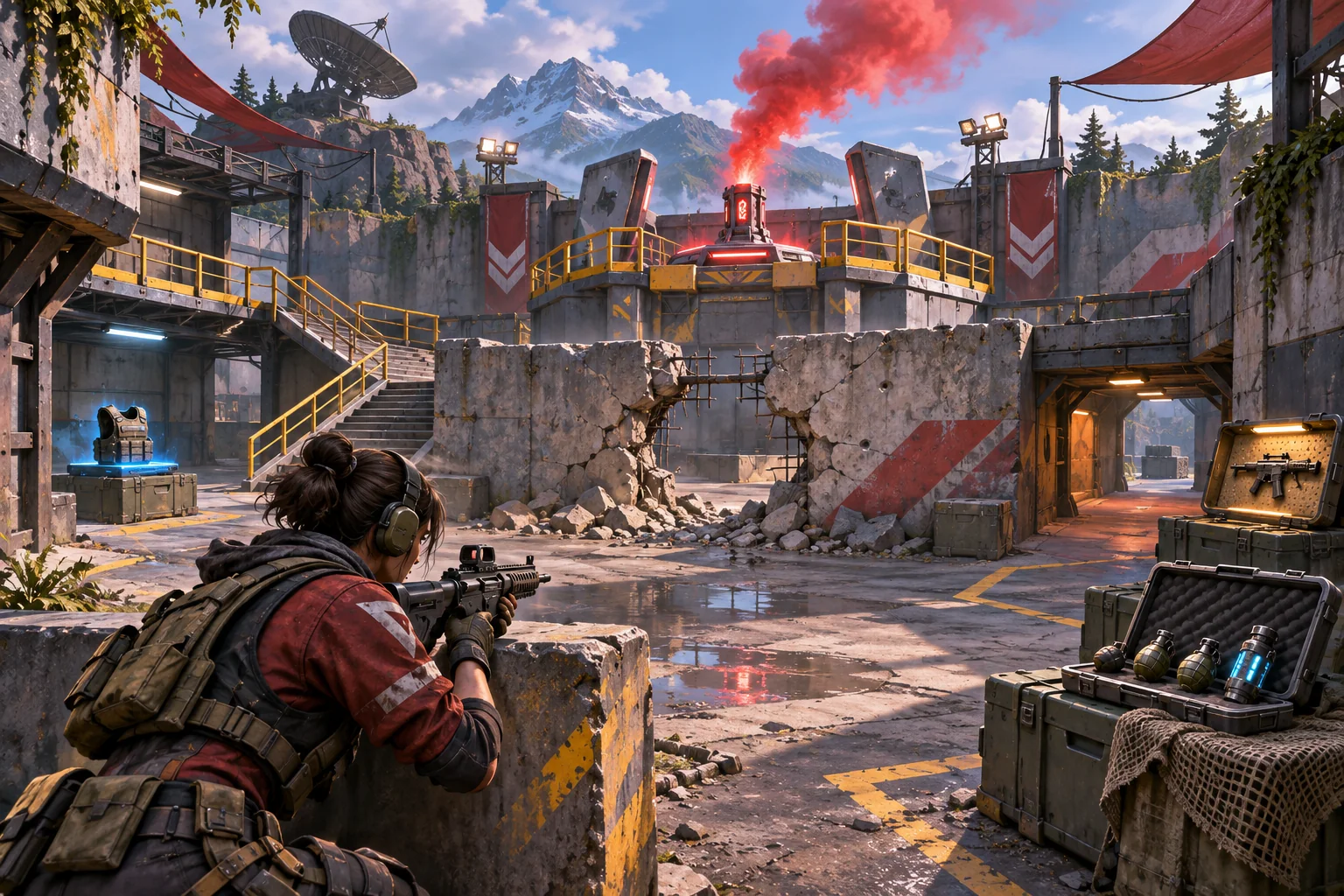
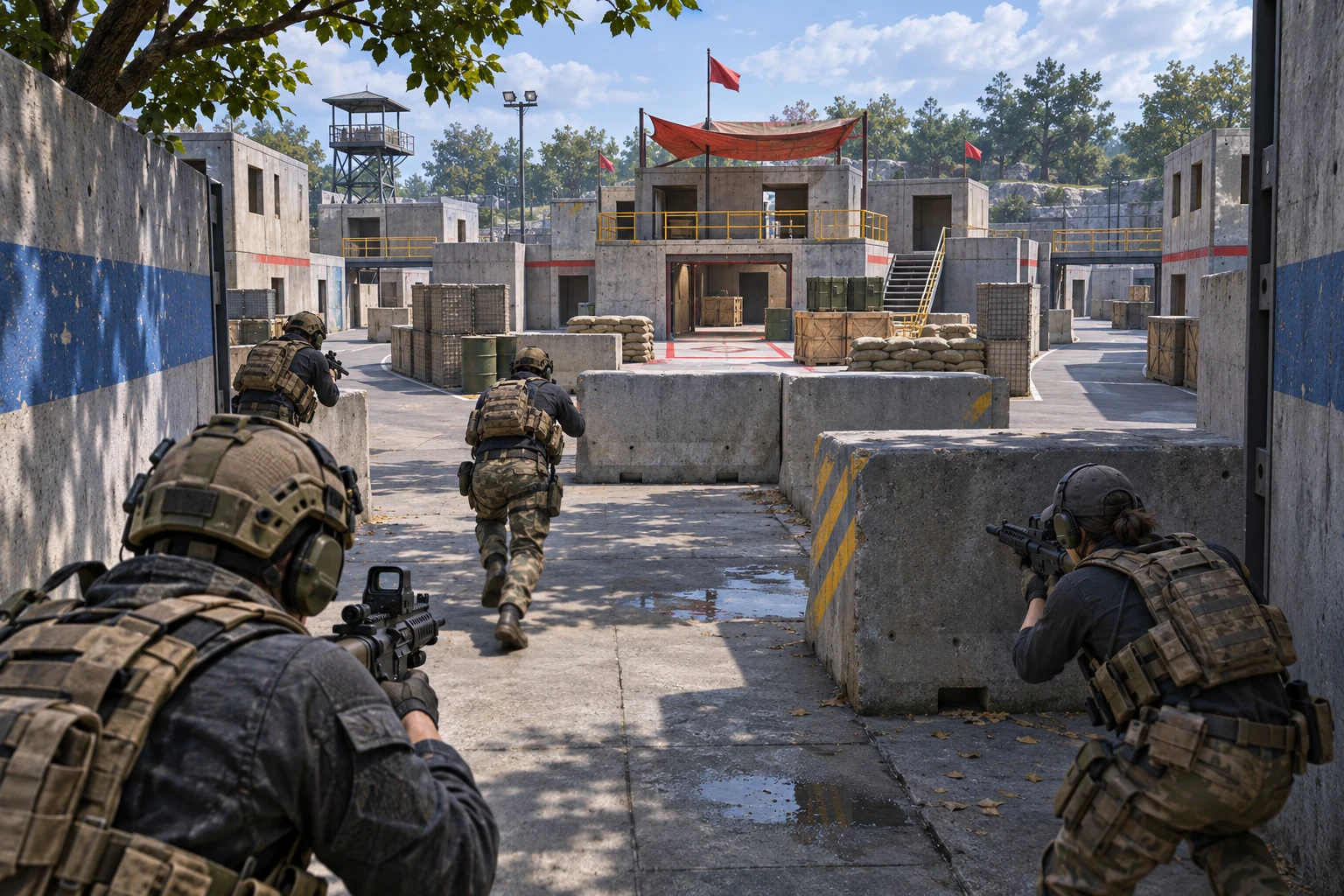
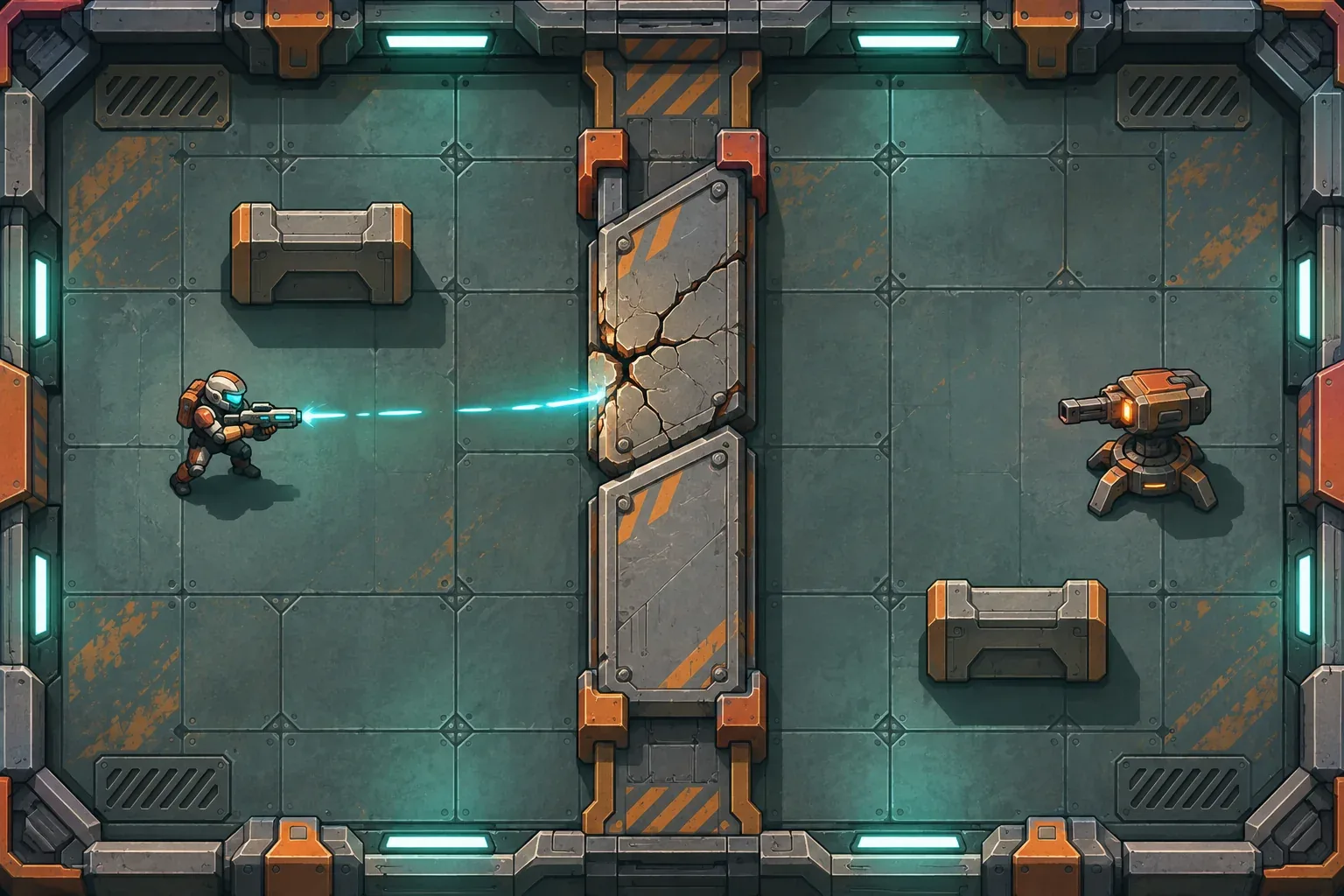
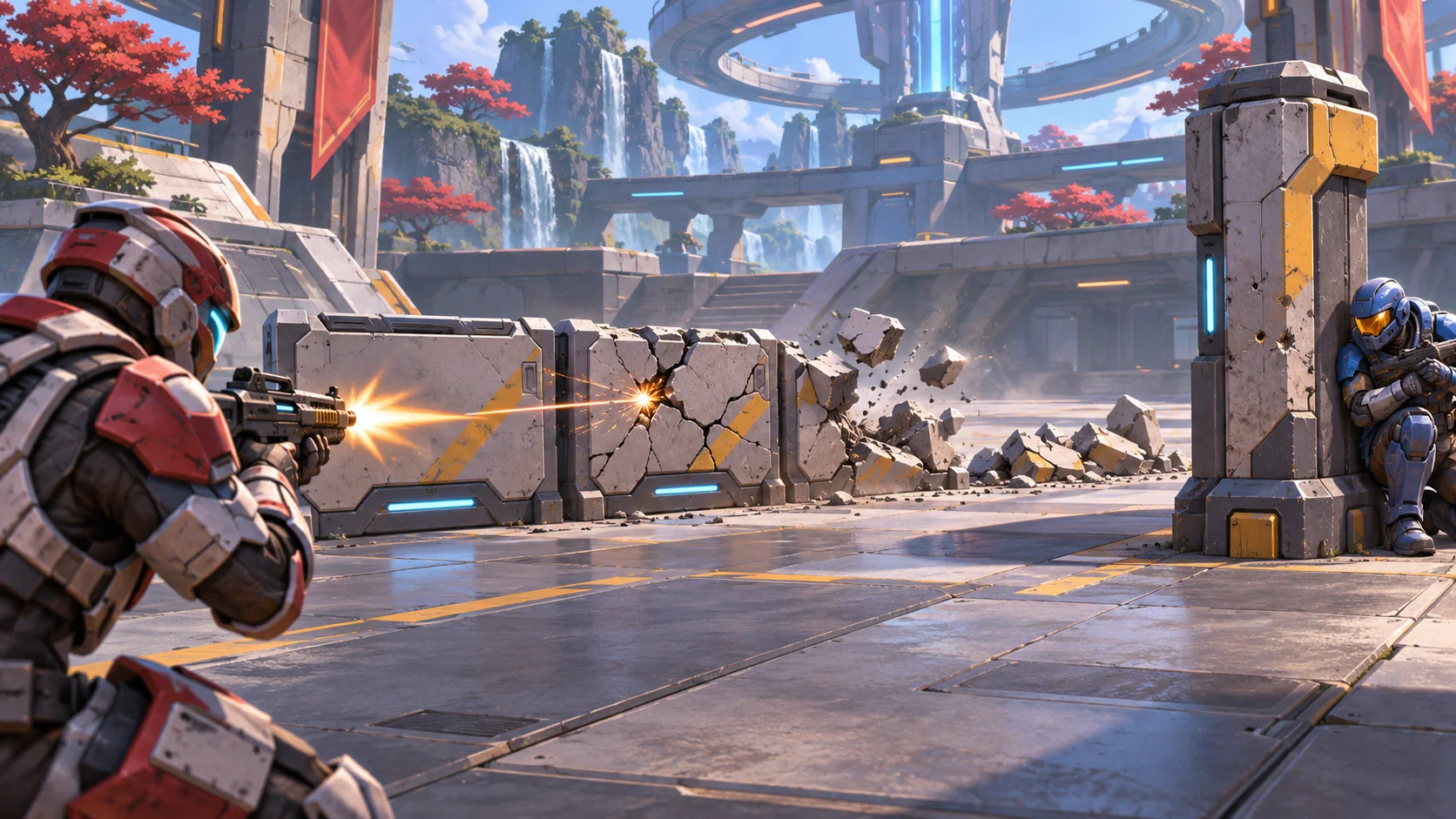
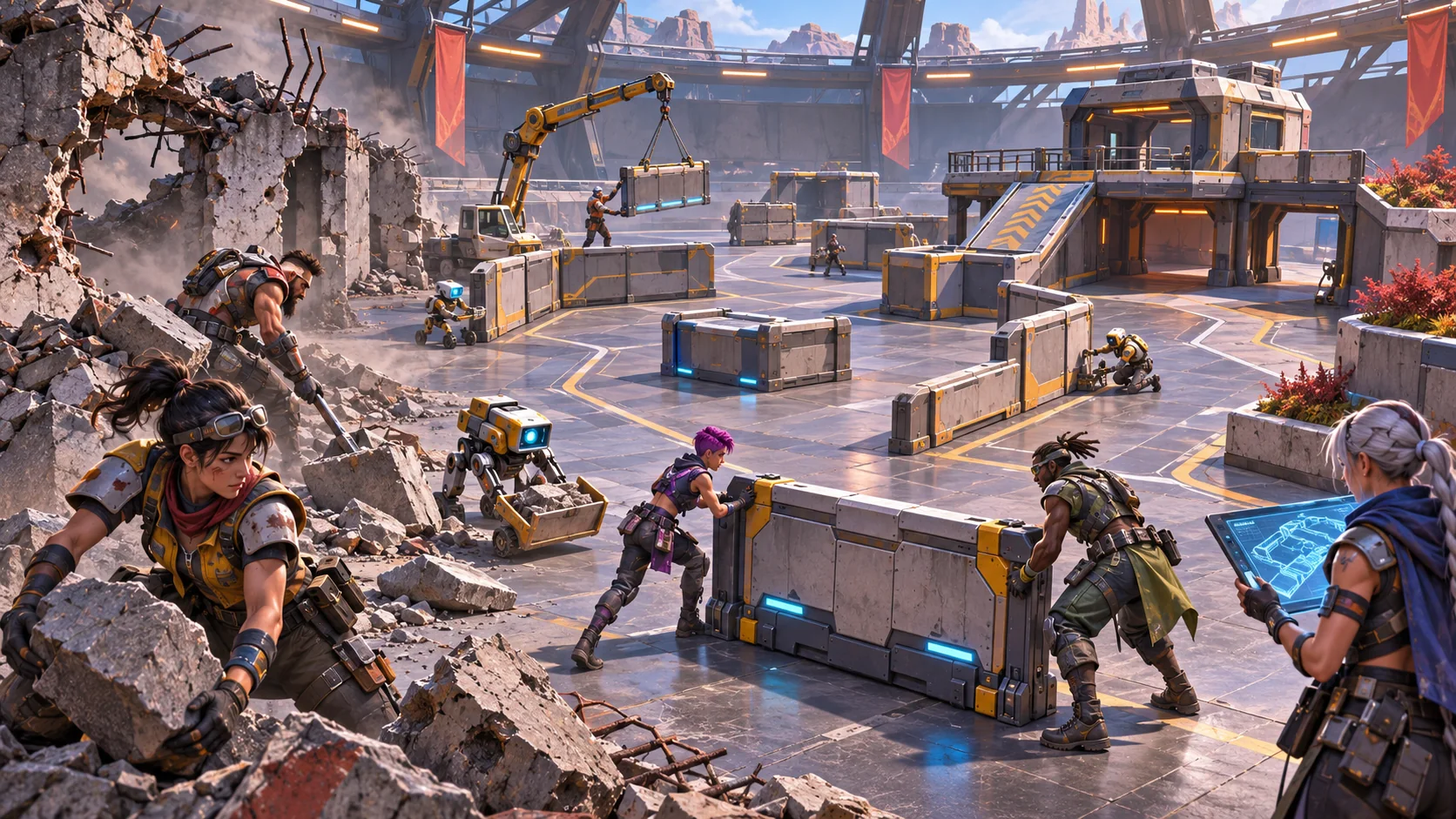
In Ashline Arena, destroyed cover matters after the fight ends. A barrier moves from intact to cracked to rubble as it takes damage. Once an encounter is clear, the player enters a rebuild phase, spends three salvage points on modular walls and shutters, and changes which lanes are open for the next wave.
The first arena has North, Center and South lanes between the West squad entrance and East enemy entrance. A two-hit barrier blocks Center near the east side. The player fires twice: health 2→1→0, leaving passable rubble. After the encounter, three salvage points buy a three-health Heavy Wall for Center and a one-health Shutter for South. The next wave enters from East and can only route through North. The trace keeps map changes between encounters, never during an active fight.
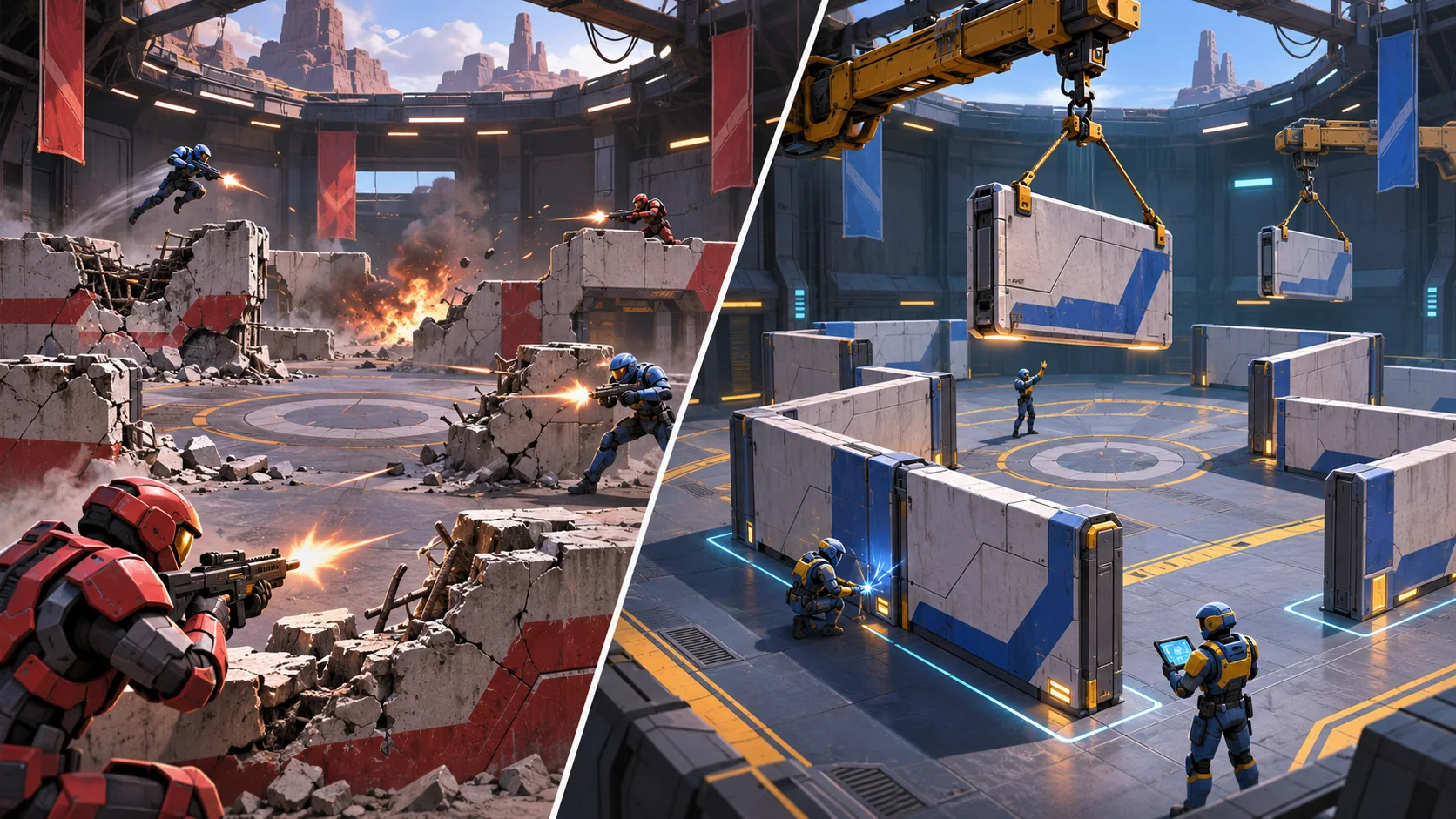
Give cover readable damage and rubble states
Keep arena geometry, barrier health, player and enemy lanes, and salvage budget in explicit state. Combat can damage barriers; the rebuild phase starts only after an encounter is complete. The rebuilt map then becomes the starting layout for the next encounter.
| State | Rule and result |
|---|---|
| Barrier health | A Heavy Wall starts at 2 health in the Center lane; each direct hit removes 1. |
| Damage stages | At 2 the barrier is intact, at 1 it is cracked, and at 0 it becomes passable rubble. |
| Combat phase | Players and enemies move and fire on the current layout. They cannot place or repair wall modules mid-encounter. |
| Rebuild phase | After the encounter is cleared, spend at most 3 salvage points on modules and choose their lane and orientation. |
| Modules | Heavy Wall costs 2 and has 3 health. Shutter costs 1 and blocks one lane with 1 health. |
| Next encounter | Use the rebuilt map as-is. East enemies route through any open lane toward the West objective. |
| Invalid plan | Reject overlaps and layouts with no open route. Do not charge salvage until the entire rebuild is valid. |
Trace a breach and a between-fight rebuild
The first map has three parallel lanes from West to East. A Heavy Barrier at Center-East starts at health 2. During Encounter 1, the player fires twice at it: 2→1 becomes cracked, then 1→0 becomes passable rubble. The encounter is cleared; the map cannot be rebuilt before this boundary. Rebuild starts with 3 salvage points. Place a Heavy Wall at Center-East for 2 points and a Shutter across South for 1; both placements validate without overlap, so the budget becomes 0. North remains open. Encounter 2 starts on this saved layout. Enemies enter from East and seek the West objective; Center and South are blocked, so their only route is North. Counterexample: try to put a second wall in the same Center cell. Reject the whole placement plan and keep all 3 points until the player submits a valid layout. A mid-fight rebuild request also fails and changes neither geometry nor budget. The two encounters therefore have distinct, inspectable maps, and the player’s rebuild choice changes the next route rather than granting an untracked combat bonus.
| Turn or state | Expected result |
|---|---|
| Encounter 1 starts | North, Center and South connect West to East; Center-East Heavy Barrier health 2. |
| Hit the barrier once | Health 2→1; draw cracked stage and keep the lane blocked. |
| Hit it again | Health 1→0; change to passable rubble and open Center-East. |
| Clear Encounter 1 | Open the rebuild phase with 3 salvage points; combat is over. |
| Place Heavy Wall, cost 2 | Rebuild Center-East to health 3; remaining budget 1. |
| Place South Shutter, cost 1 | Block South; remaining budget 0; North stays open. |
| Start Encounter 2 | East enemies route through North toward West; use the rebuilt map. |
| Overlap another wall | Reject the full plan, spend 0 and preserve the valid layout and budget. |
Ask AI for a small destructible arena
Keep the first build to three lanes, one damageable barrier, two build modules and two encounters. Ask SEELE to show the map before combat, after each hit, during rebuild validation and when the next wave enters.
Create a compact destructible-arena shooter called Ashline Arena. The board has North, Center and South lanes between a West squad entrance and East enemy entrance. Start with a Heavy Barrier at Center-East with 2 health. Direct hits change its state from intact at 2 to cracked at 1 to passable rubble at 0. During combat, actors can move and fire but cannot rebuild. Only after the encounter is cleared, start a rebuild phase with 3 salvage points. A Heavy Wall costs 2 and has 3 health; a Shutter costs 1 and blocks one lane with 1 health. The player chooses lane and orientation. Validate the entire plan before spending: reject overlaps and any layout with no open route. Show a deterministic trace: Encounter 1 fires twice at the barrier, changing 2→1→0; clear the encounter; place a Heavy Wall at Center-East for 2 and a South Shutter for 1. Start Encounter 2 on the rebuilt map. Enemies enter from East and seek West; Center and South are blocked, so the only route is North. Include an overlapping second wall and a mid-fight rebuild request as rejected examples with no map or budget change. Show the map, barrier health, phase and salvage budget after every action. Keep all enemy balance and values fictional; no dynamic rebuilding is allowed during combat.Show combat and rebuild boundaries
Use distinct visual states for intact, cracked and rubble barriers. Rubble is passable in this trace, so show the newly opened edge on the map instead of leaving an invisible collision behind. Keep the health value next to the barrier and update it once per hit.
Separate the encounter and rebuild phases in the interface. The three-point budget appears only after the first fight clears; wall placement during combat is rejected. Validate all modules together so one overlapping piece cannot spend part of the budget before the rest of the layout is accepted.
After two encounters work, add different wall materials or objective rooms. Preserve the between-fight map snapshot and show how enemy routing changes. Do not add random wall repairs until the deterministic trace remains easy to replay and explain.
Expand the arena after both fights work
The central loop connects combat damage to a planning choice: fight through the current arena, then rebuild its lanes before the next encounter. Once the map snapshot, salvage spend and route are consistent, expand module types without moving cover during combat.
Read Godot Resource documentation.
Read Godot saving-game documentation.
Frequently asked questions
Can players rebuild cover during a fight?
No. Combat uses a fixed arena layout. Rebuild begins only after an encounter has been cleared, so line-of-sight and enemy routing stay stable while actors move and fire. A rebuild request during combat is rejected without changing the map or salvage total.
What does rubble do after a wall is destroyed?
In this prototype, zero health converts the barrier to passable rubble and opens that lane edge. The state change is visible in the map and remains until the between-fight rebuild phase replaces it. If another design treats rubble as blocking, give that rule its own state and test.
Start a local game prototype with SEELE.
How does the three-point budget work?
At the rebuild boundary, the player spends up to three points on validated modules: Heavy Wall costs two and Shutter costs one. Check every position and route before charging. In the trace, both modules fit and use all three points, leaving North open for the next wave.
Is the arena balance tested?
No. Ashline Arena and its damage, salvage and module values are fictional design examples, not tested combat balance. Replay both encounters by hand and adjust enemy pressure and cover health. Keep the rule that a valid rebuild changes the following map explicit.