A destructible-arena shooter needs one rule to stay consistent: when cover breaks, the combat space changes. A wall can stop a shot, then disappear and expose both combatants. Prompts for that game should specify durability, collision, line of sight, and turn order together so the visual damage also produces a readable tactical choice.
The rules and encounter below are fictional design examples. The prompts are unrun drafts; no playable build or tested result is claimed.
Define what destruction changes
Before asking for rubble effects, decide what the object does in the game. A destructible prop might block bullets but not movement; a bulkhead might block both; loose debris could remain as cover. If the prompt leaves these states undefined, the same wall may look broken while still stopping shots—or vanish visually while the collision remains.
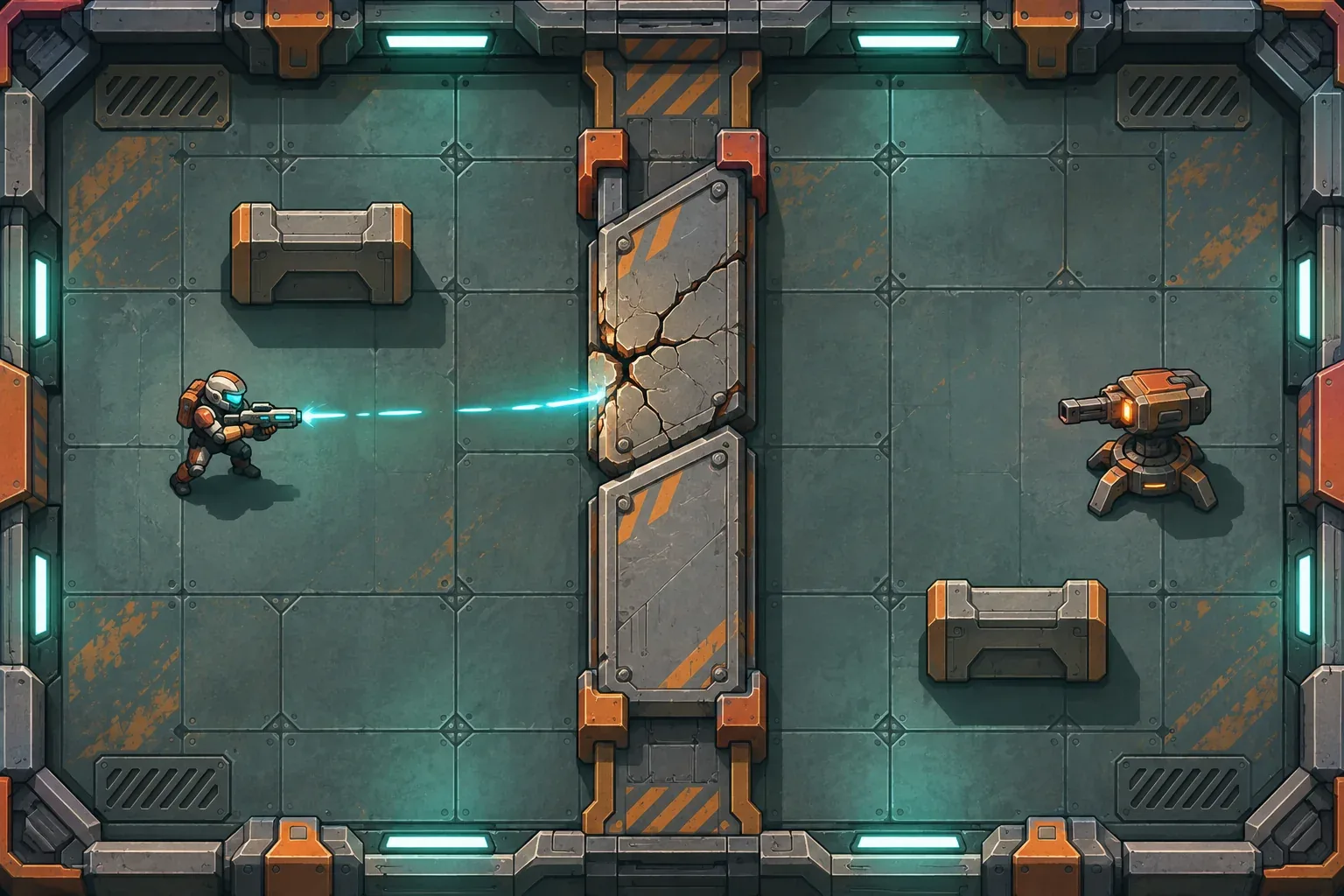
For a first pass, use one breakable object type and one enemy. The fictional arena in this guide is a 7-by-5 top-down room. A two-integrity bulkhead separates a player on the west side from a sentry on the east. One blaster hit deals two damage to the first object in its lane. The intact bulkhead stops the shot and blocks movement. At zero integrity, it disappears, allowing both movement and line of sight through that tile.
| Object state | Shot behavior | Movement and sight |
|---|---|---|
| Intact bulkhead, 2 integrity | Stops the first shot; loses 2 integrity | Blocks movement and line of sight |
| Destroyed, 0 integrity | No longer intercepts shots | Tile opens for movement and line of sight |
| Other cover blocks | Remain solid and unchanged | Continue blocking their occupied tiles |
This narrow contract makes an important choice explicit: destruction changes the map topology, not only the artwork. Add a second material only after the first one behaves consistently. If concrete later takes three hits while sheet metal takes one, define those durability values and resulting states separately rather than letting appearance imply hidden rules.
Connect cover to line of sight
Breaking a wall can create an attack lane for the player and the enemy at the same time. That is the tactical payoff—and the risk. Choose an action order so the opening does not produce ambiguous results. In this example, the player takes one action, the game updates the map immediately, and the sentry fires at the end of the turn only if it has a clear line to the player.
Keep the projectile rule just as direct: a shot hits the first object in its lane. It cannot pass through an intact bulkhead, and this first prototype has no splash damage or chain reaction. When the barrier reaches zero, the lane opens before the enemy response. The sentry's attack therefore begins on that turn, not one turn later.
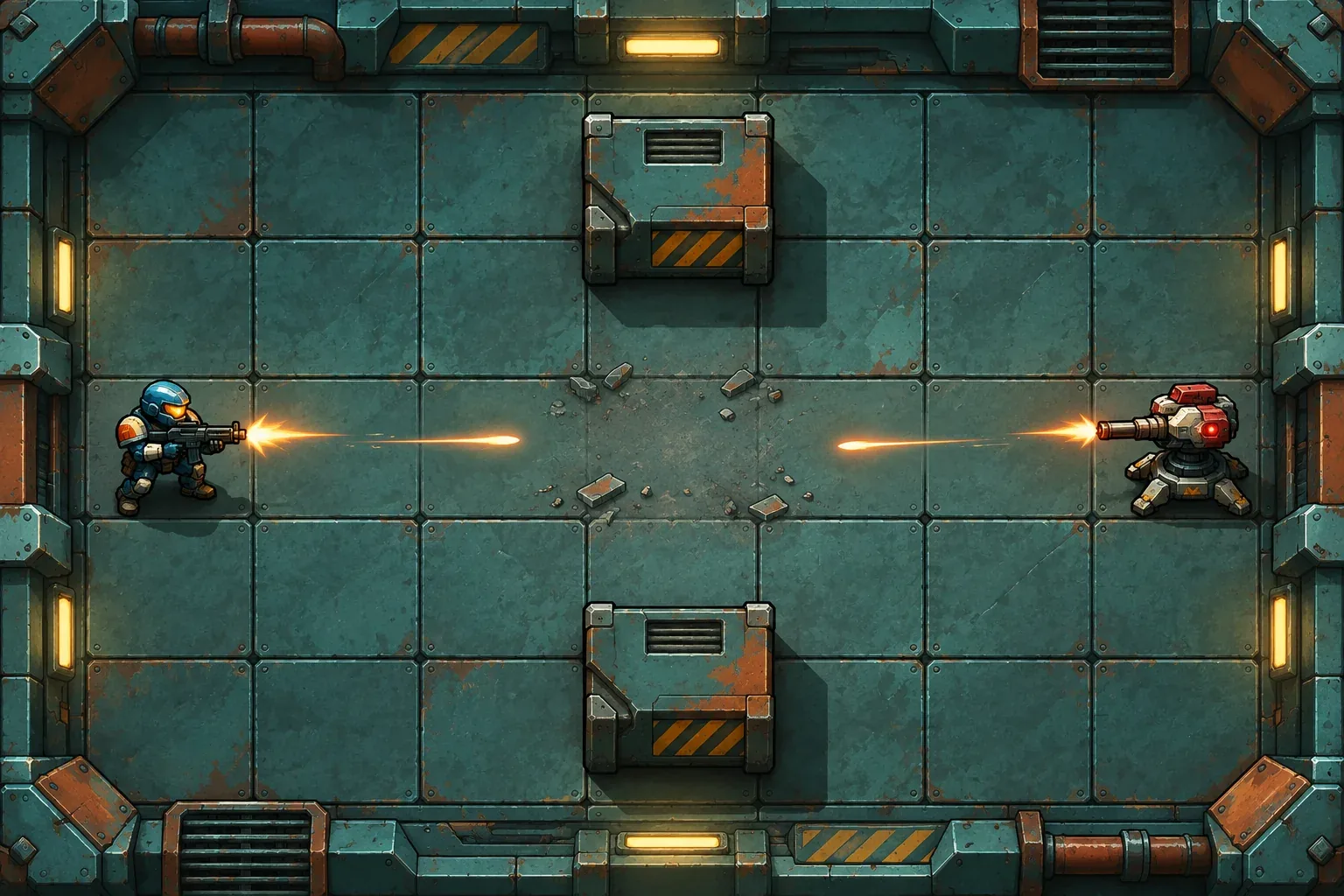
Separate visual feedback from state changes. A crack can show that the barrier has taken damage; a distinct destroyed state should show that it no longer blocks the tile. Keep the short break animation from delaying the collision and sight update. This gives a player a clear answer to “Can I move or shoot through here now?”
A later version might leave rubble that blocks movement but not bullets. That can create a different tactical choice, but it is a second rule. Add it only when the first version has reliable hit detection, enemy timing, and reset behavior.
Trace a fictional breach
Use a small hand-checkable encounter to see whether the destruction rule changes a decision. The player starts at 5 HP; the sentry has 4 HP and deals 1 damage at the end of a turn if the lane is clear. The blaster deals 2 damage per shot. All values are fictional design choices, not playtest results.
| Turn | Player action | Map and enemy result | Player result |
|---|---|---|---|
| 1 | Shoot the bulkhead | Integrity 2→0; tile opens; sentry fires for 1 | HP 5→4 |
| 2 | Shoot the sentry | Sentry HP 4→2; it fires for 1 | HP 4→3 |
| 3 | Shoot the sentry | Sentry HP 2→0 before it can respond | HP stays 3 |
The encounter exposes a tradeoff: the first shot opens a route to the target but also gives the sentry a shot. If the player has another option—move behind intact cover, retreat, or spend a turn breaking a different barrier—the choice becomes more than “destroy everything.” Keep alternatives small in the first prototype, then add tactical variety after the basic turn log is easy to follow.
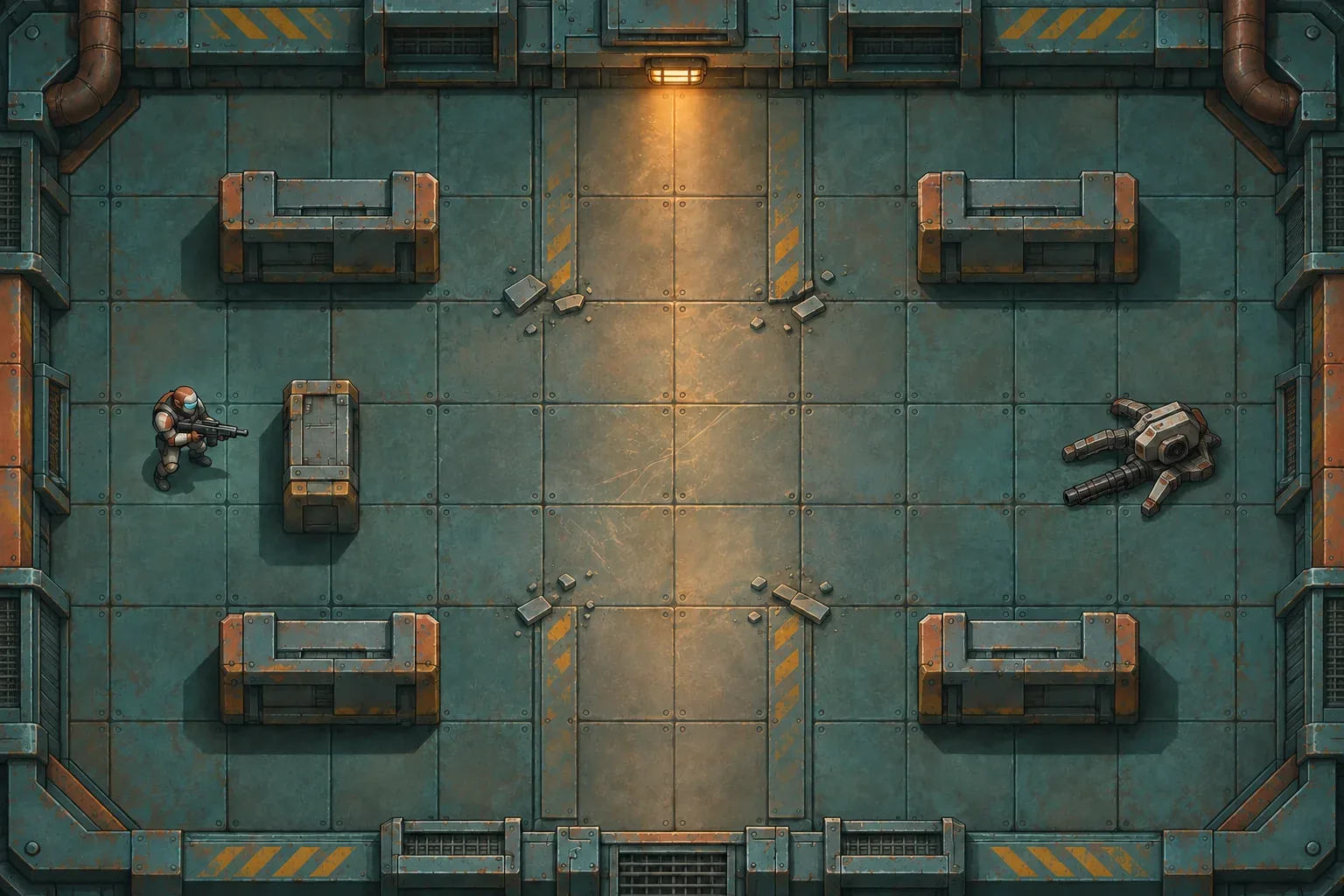
For review, check each state separately: the barrier reaches zero after one shot; the lane opens immediately; the sentry responds only after that opening; the second sentry shot removes its last two HP before another response; and reset restores the original values. A screenshot can show the layout, but it cannot confirm collision, turn order, or damage by itself.
Stage prompts and acceptance checks
Build the prompt in stages. Ask for the room and state rules first, then connect the damage event to collision and enemy behavior. Only after those pieces are clear should you request effects or extra materials. Keeping each change narrow helps you spot whether new visual polish has altered the rule you meant to preserve.
Prompt 1: establish the arena contract
Create a compact top-down 2D arena shooter in one 7-by-5 tile room. Put the player west of one two-integrity bulkhead and a 4-HP sentry east of it. The player starts at 5 HP. A blaster shot deals 2 damage to the first object in its lane. An intact bulkhead blocks shots and movement. At 0 integrity, remove that tile so movement and line of sight can pass through. Use one player action per turn. Do not add splash damage, chain reactions, or other breakable objects. Show the map and state rules before adding visual polish.Prompt 2: make turn order explicit
Keep the existing arena and rules unchanged. Resolve one player action first, update object integrity and line of sight immediately, then let the sentry respond only if it has a clear line to the player at end of turn. The sentry deals 1 damage. A shot hits the first object in its lane and cannot pass through intact cover. Return a combat log with bulkhead integrity, sentry HP, and player HP after each action. Do not add armor, healing, or attacks through an intact barrier.Prompt 3: add feedback, then check states
Keep the same top-down camera, room, player, sentry, and turn rules. Give the intact and damaged bulkhead distinct silhouettes; at 0 integrity, remove it and make the tile passable in the same update. Use brief debris that does not hide the lane. Prepare checks for: blocked shot while intact; integrity reaching 0; movement and line of sight opening immediately; sentry response only after a clear lane; sentry HP 4 to 2 to 0; and reset restoring player 5 HP, sentry 4 HP, and bulkhead 2 integrity. Report expected and observed states separately. Do not label a check as passed unless it was run.These prompts are unrun drafts. When you adapt them, save the exact prompt, tool, date, output, and revision. Then test the intact barrier, the breaking hit, the newly opened lane, enemy response timing, and reset in the playable build. Keep observed results separate from expected values; a prompt or diagram alone cannot establish that the mechanic works.
- Hit check: the shot damages only the first object in its lane.
- Break check: at zero integrity, collision and line of sight update on the same turn.
- Enemy check: the sentry fires only after the player action and only with clear sight.
- Defeat check: a sentry at zero HP does not attack again.
- Reset check: player, sentry, and bulkhead return to their stated starting values.
For broader game-creation context, SEELE's official AI Game Maker page describes prompt-based 2D and 3D creation, browser testing of a playable first version, and refinement with follow-up prompts. That product description does not mean the fictional rules or prompts here have been generated or tested.
Destructible-arena shooter prompt FAQs
What should a destructible arena track first?
Start with each object's durability, what damage reaches it, and what changes when it breaks: collision, movement, and line of sight. Add more object types after those rules agree.
Should destroyed cover block shots?
Choose one visible rule. In the fictional example here, the bulkhead disappears at zero integrity, opening both movement and line of sight.
How can breaking cover create a tactical choice?
An opening can expose the enemy and the player at once. Resolve enemy attacks after the player action so the new sight line has a clear cost.
How many destructible objects should a first prototype use?
One object type and one arena are enough to check damage, collision, visibility, and reset behavior before adding chain reactions or more materials.
Are these prompts or combat rules tested?
No. They are unrun drafts, and the arena math is a fictional hand-calculated example. No playable result or test pass is claimed.
Make your own destructible-arena shooter
Start with one barrier, one enemy, and a turn log that shows exactly when the map opens. Confirm hit order, line of sight, and reset before you expand to multiple materials or chain reactions. Use the SEELE AI Game Maker as general game-creation context, then adapt the draft prompts to your own arena and verify the resulting mechanic in a playable build.