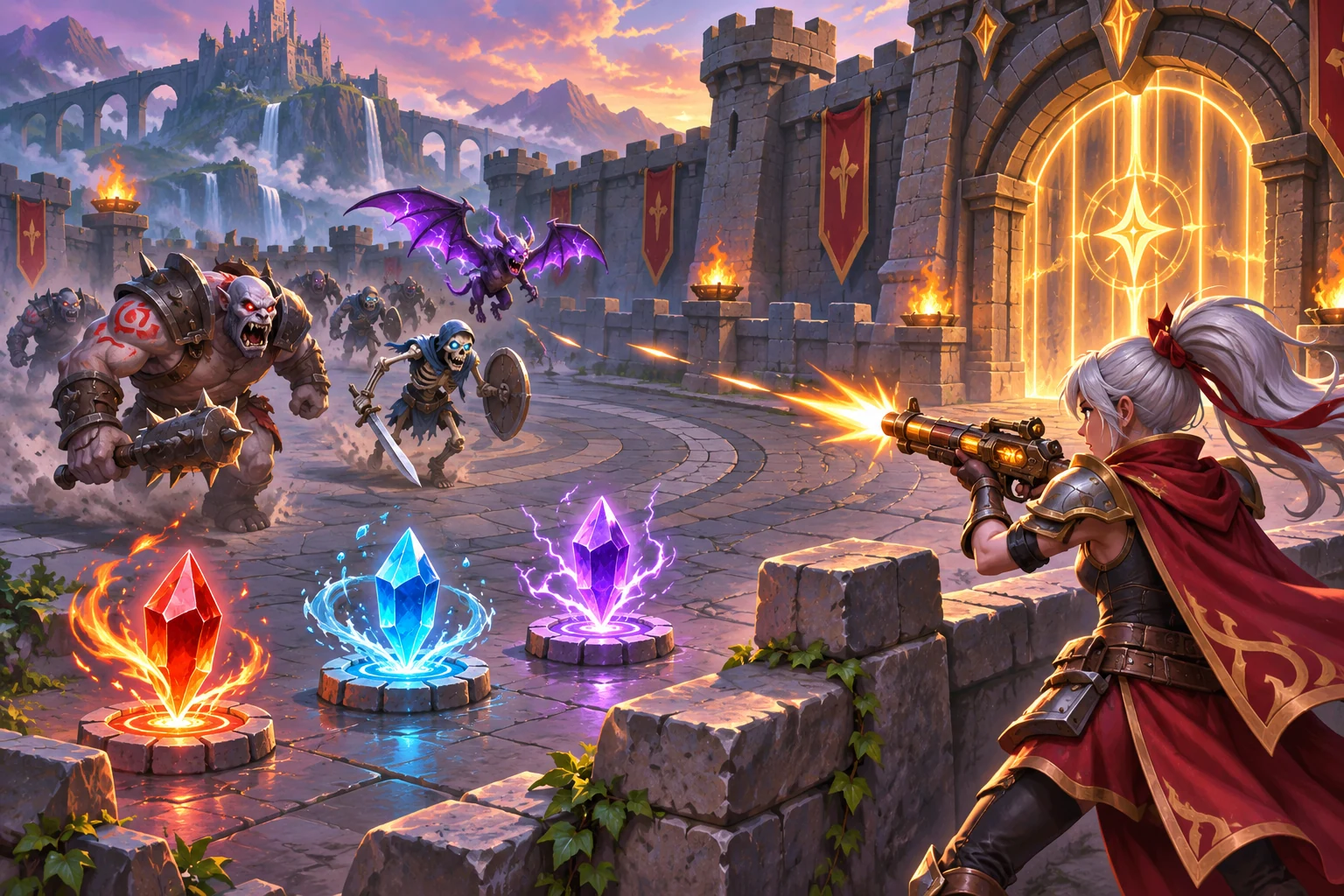
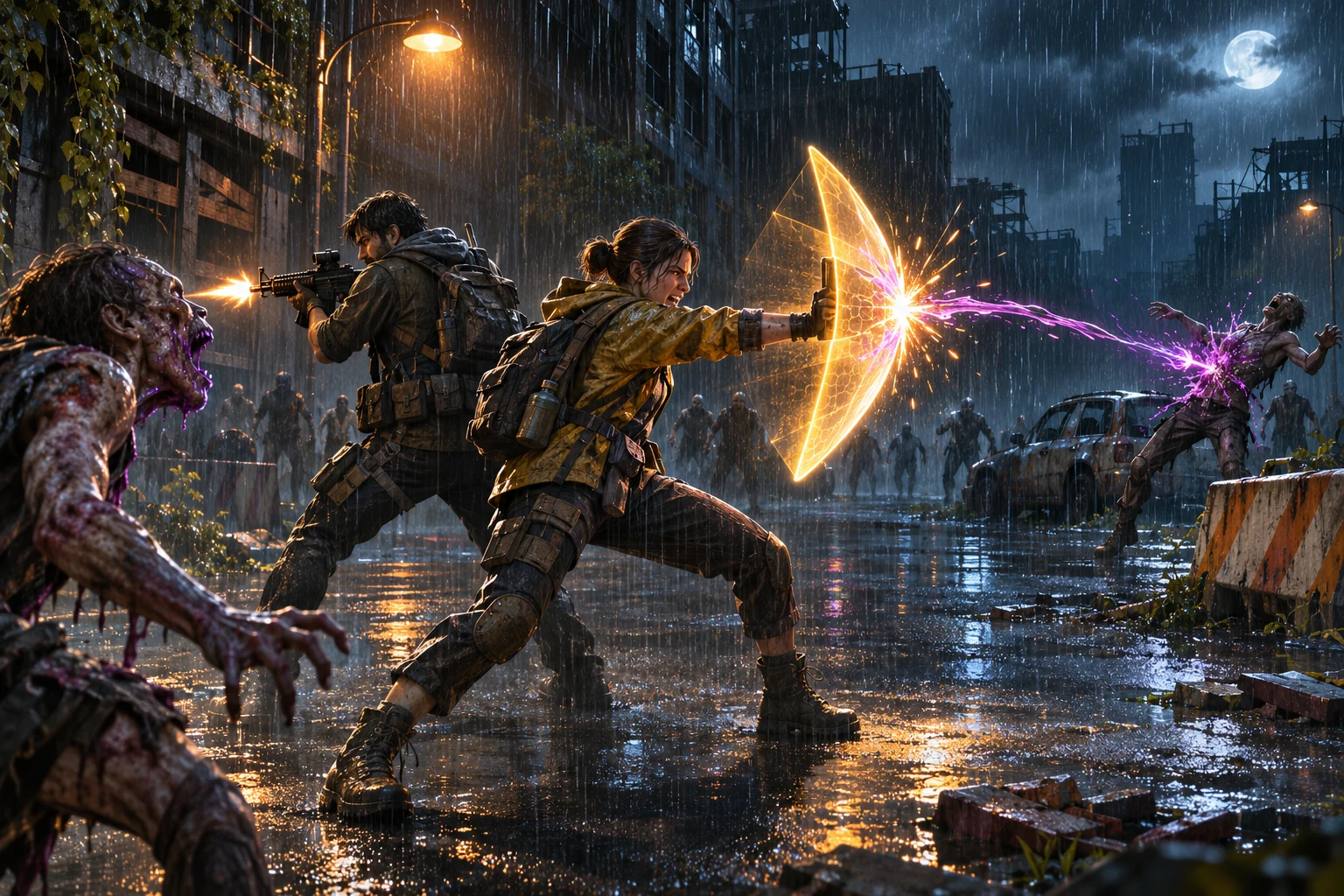
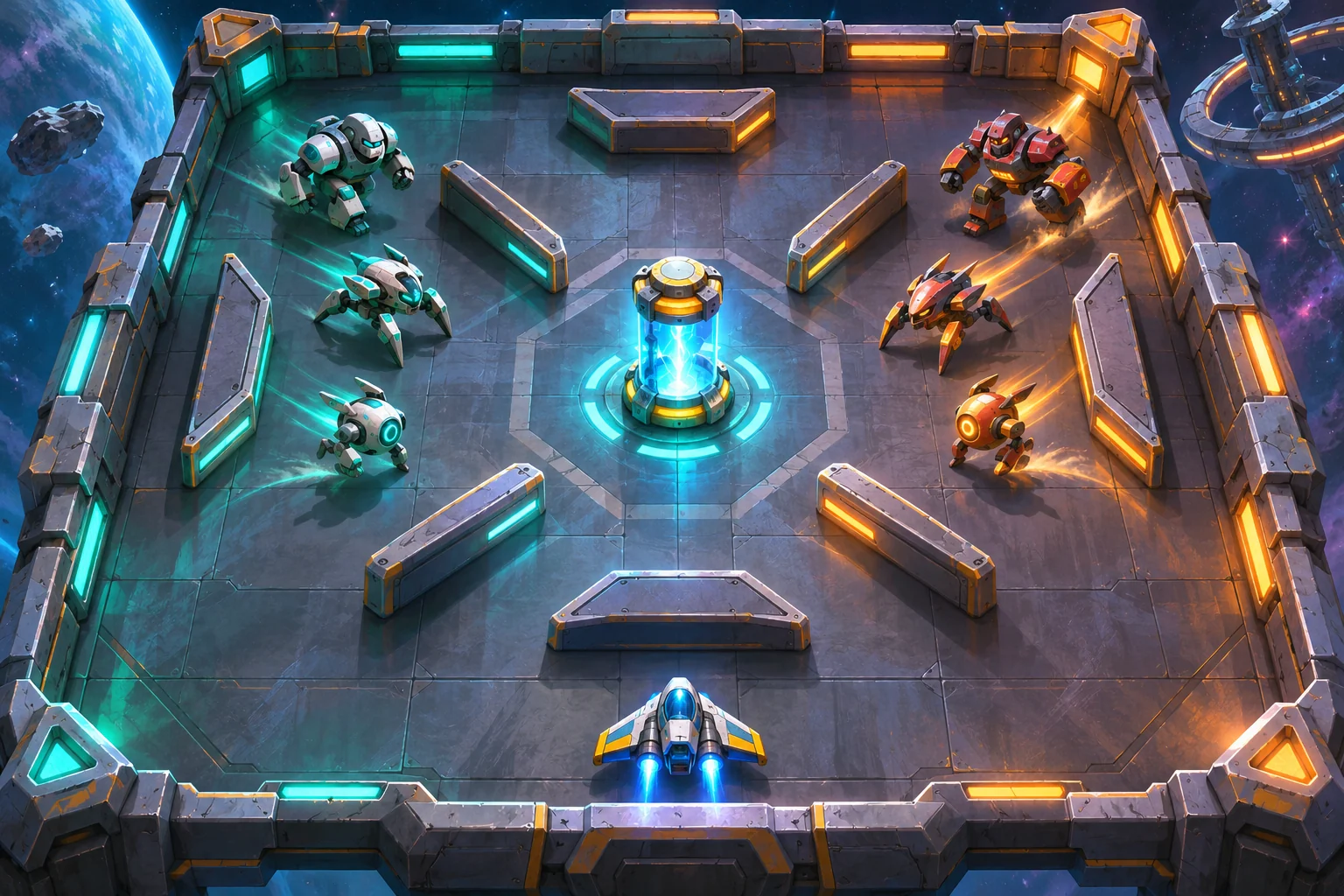
In Return Fire, enemy projectiles can become a weapon if players redirect them toward their source or another threat. Between waves, the team adjusts shield angles and places short-lived reflectors. During combat, a successful deflection sends an attack along the prepared lane. Defense changes how projectiles travel through the arena, so surviving is about more than aiming at enemies: players shape useful return-fire paths before the next wave.
Make redirection part of wave defense
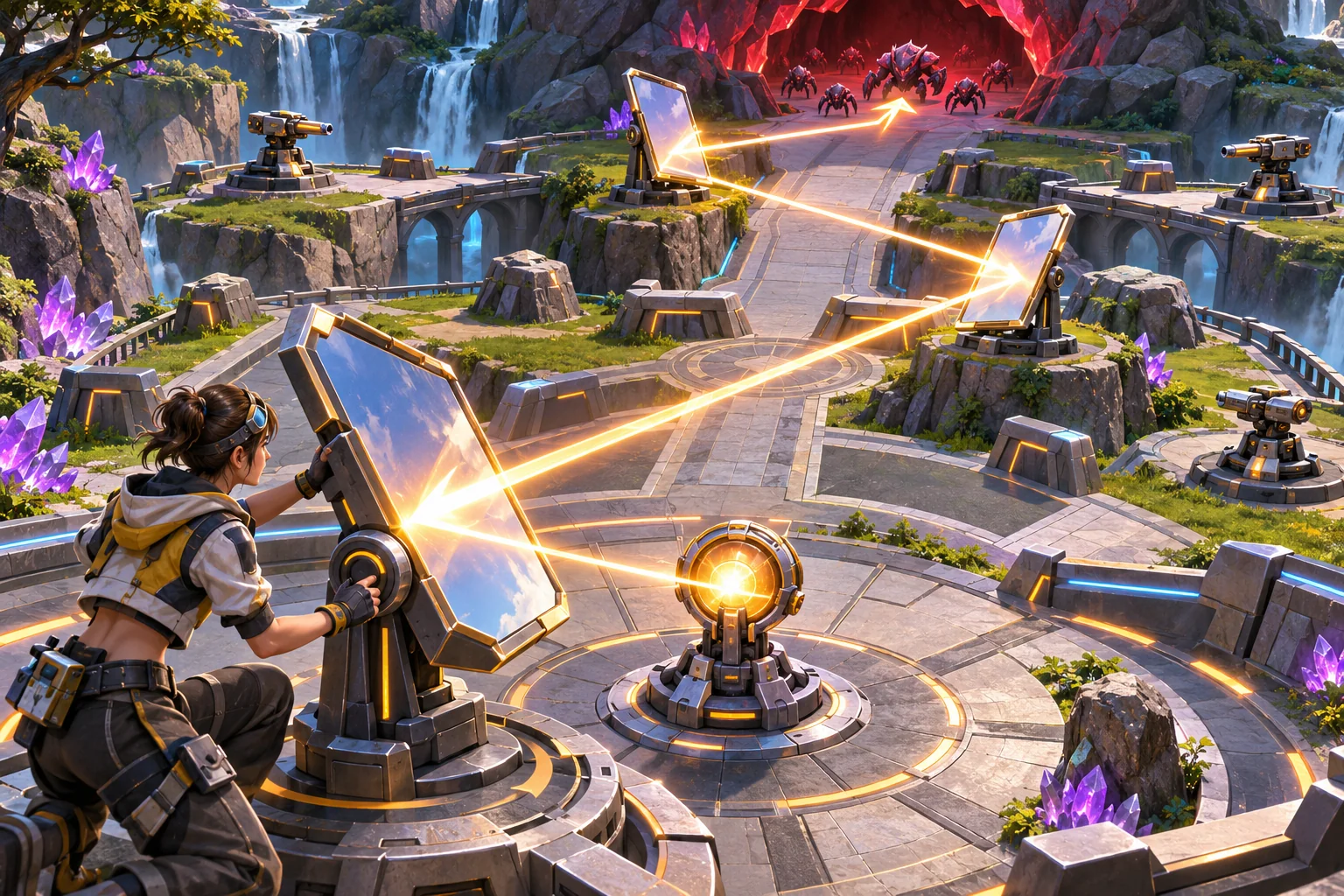
Show the incoming projectile, shield direction and predicted outgoing path before impact. Start with a single lane and one enemy type so players can see whether their setup worked. Between waves, allow the team to adjust shield angle or move a reflector. Keep the gate or base behind the defender clearly protected.
| Defense action | Projectile result | Tactical use |
|---|---|---|
| Block without aiming | Attack stops | Protect the base |
| Angle shield at source | Attack returns toward enemy | Punish a telegraphed lane |
| Place reflector | Path bends through the arena | Reach a second threat |
A deflection should not guarantee damage. If the outgoing path misses, show where it traveled and let the player revise the setup before the next wave. This makes redirection a plan the player learns, not an automatic counter.
Prepare a return-fire lane between waves
Use the pause between waves to preview enemy lanes, shield angles and reflector placements. Players can create a simple path toward a source or a more complex route toward a second enemy. Keep reflector count limited and show the path clearly, so preparation remains a tactical choice instead of a maze of hidden bounces.
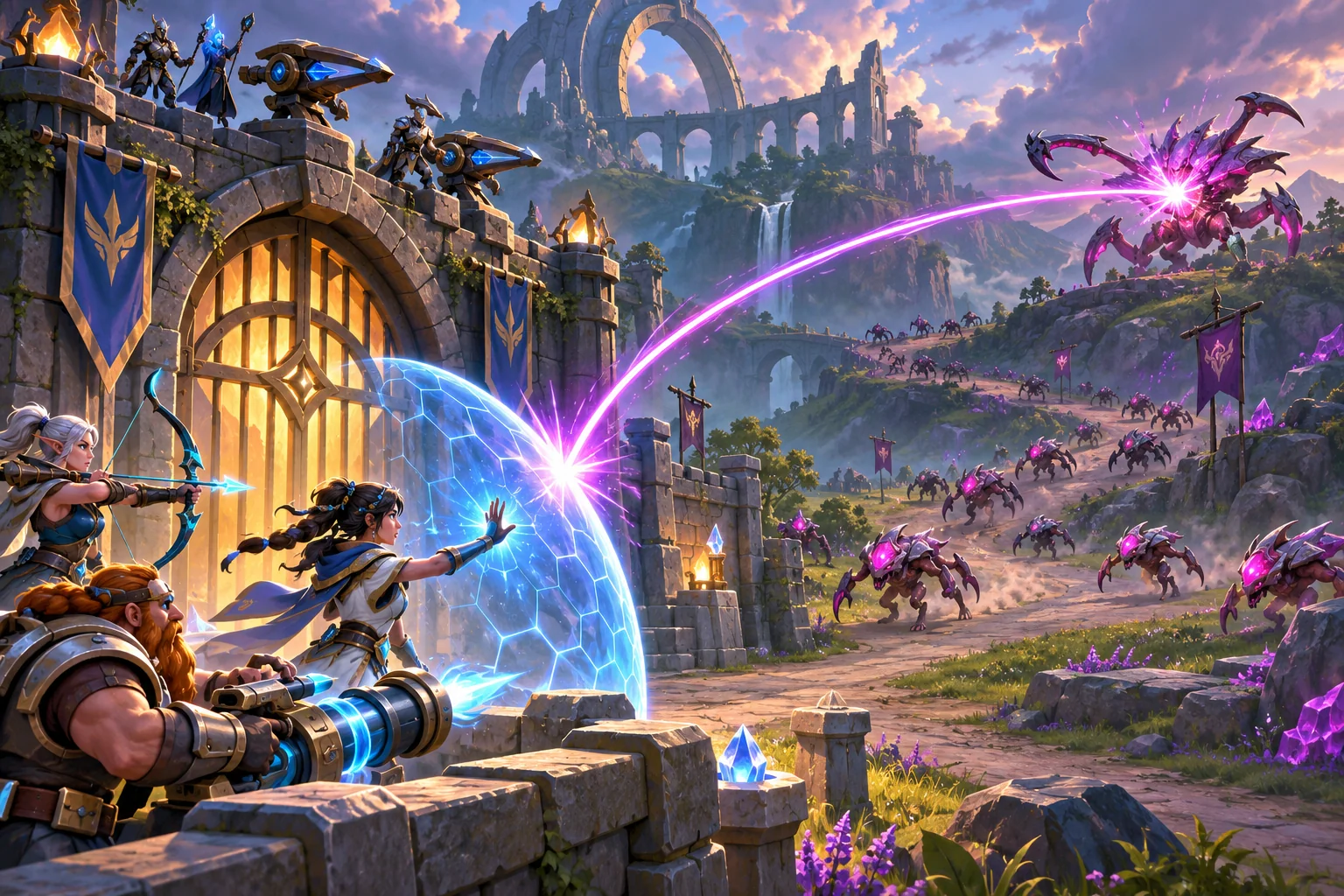
During a wave, keep the player responsible for timing the block. Preparation sets direction, but a mistimed shield can still let an attack through. Separate those rules in the interface: show the planned path before combat and the deflection result at impact.
Replay the deflection-angle adjustment
The deterministic local geometry check starts with a projectile redirected from the origin toward an enemy at (4,3). A default upward reflection misses. A shield direction aimed along the normalized target vector (0.8,0.6) intersects the target’s 0.5-unit hit radius; a leftward vector still misses. This verifies direction and a simple ray-target intersection only, not shield timing, hitboxes or wave balance.
| Shield direction | Target intersection | Result |
|---|---|---|
| Upward default | No | Attack misses |
| Aimed vector (0.8, 0.6) | Yes | Attack reaches enemy |
| Leftward | No | Attack misses |
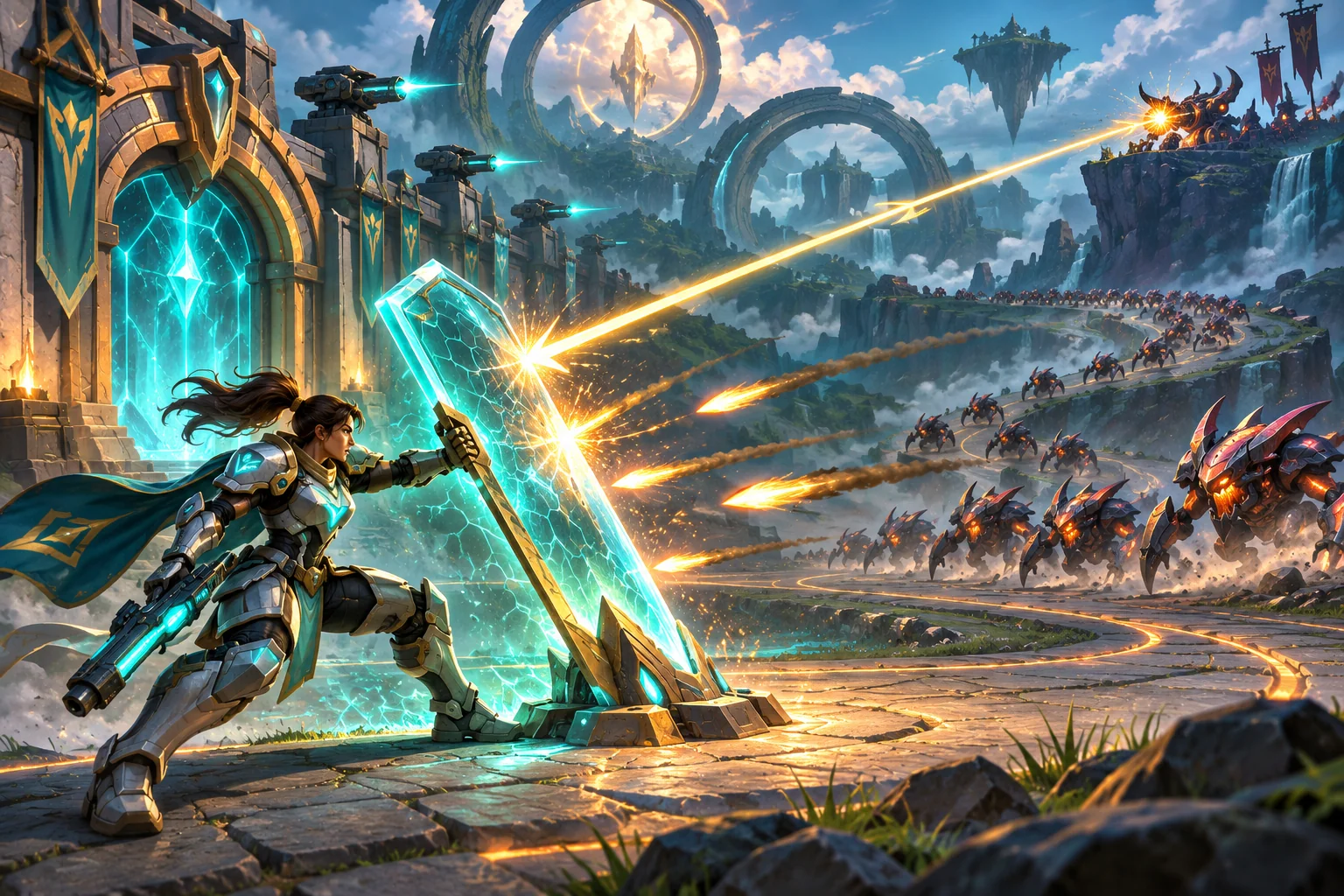
In a playable build, test block timing, shield collision edges and whether the predicted path matches what players see. Then tune enemy lanes and reflector count. The local geometry check does not establish whether deflections feel fair or waves are balanced.
Start with one wave and one shield
Ask an AI game maker for a compact arena, one defended gate, telegraphed projectiles, a directional shield and one between-wave setup phase. Let players preview a return-fire lane and test it against a single enemy. Add more reflectors only after the first deflection is readable and repeatable.
Create Return Fire, a wave-defense shooter prototype where players can redirect enemy attacks. Build one arena with a protected gate, a telegraphed projectile, a directional shield and a setup pause between waves. Show incoming direction and predicted reflected path. Let players angle the shield toward an enemy or place one reflector. A successful block sends the projectile along the prepared path; a miss shows its trajectory. Keep timing skill-based, add a safe reset and start with one enemy lane.
Start a wave-defense shooter prototype in SEELE
Frequently asked questions
How can players redirect enemy attacks in a wave-defense game?
Show the incoming path, let players prepare a shield angle or reflector, and send a blocked projectile along that direction. The return path should be visible before impact. A deflection can miss, so players learn to plan lanes instead of receiving automatic damage.
Should every redirected projectile hit an enemy?
No. The shield controls direction, but the path still has to intersect a target. This preserves positioning choices and makes reflector placement meaningful. Show the miss path clearly so players can adjust their setup for the next wave and try a different bounce angle.
What should I test in a redirectable-attack prototype?
Use fixed projectile and enemy positions to check whether shield vectors intersect intended targets. Then test timing, collision edges and readability in a playable wave. A local geometry check verifies the path, not combat feel or difficulty. Observe complete waves with players before tuning values.