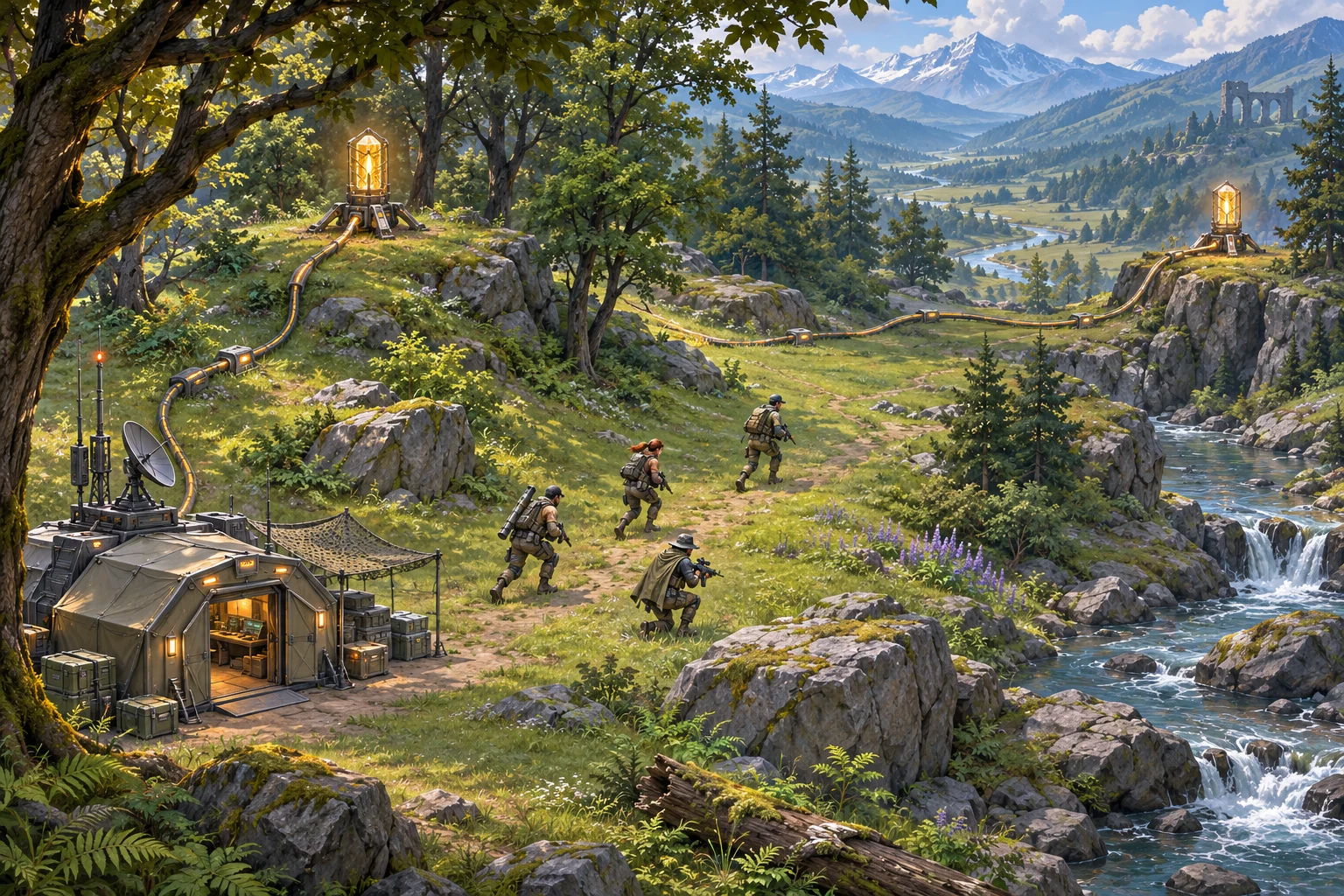
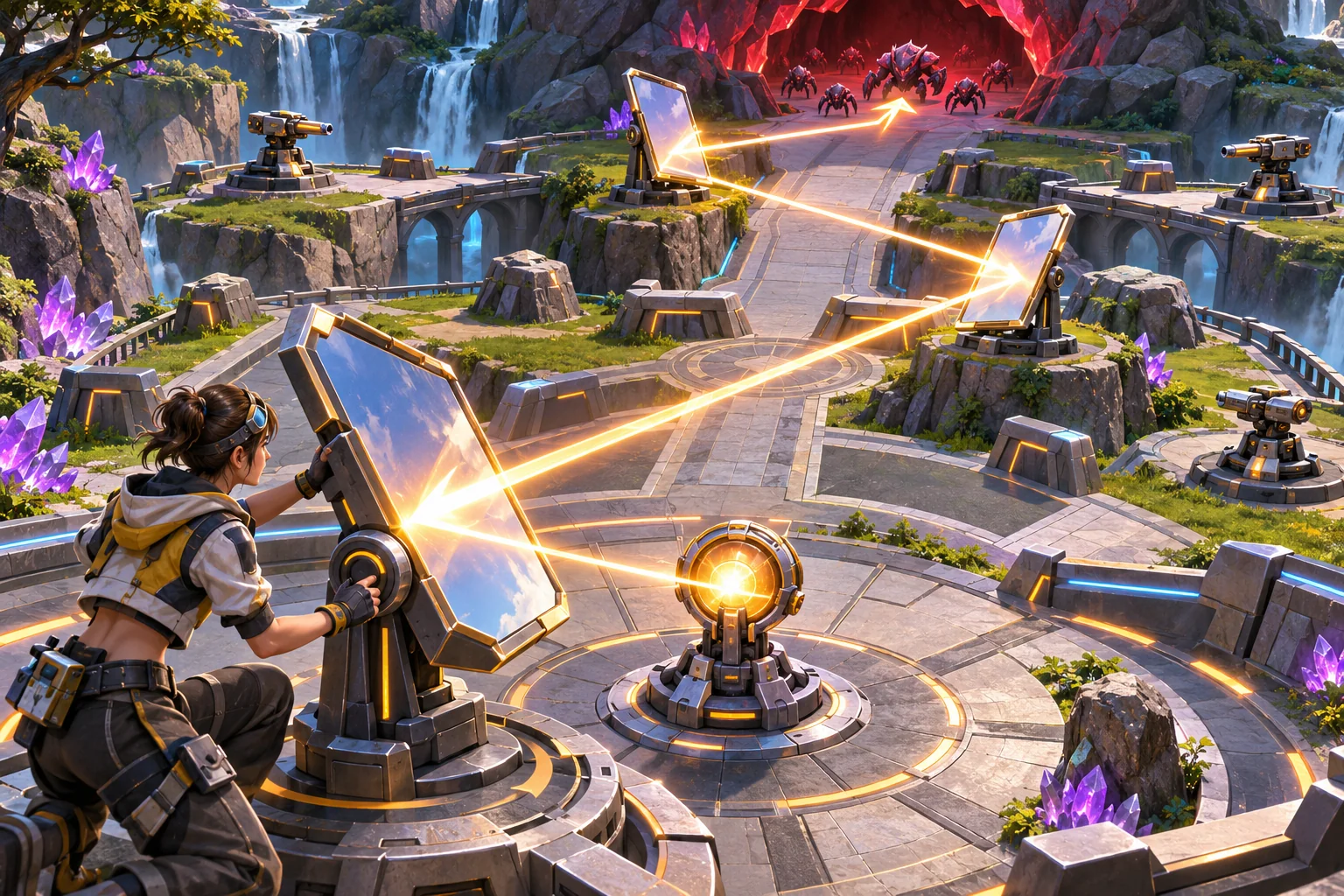
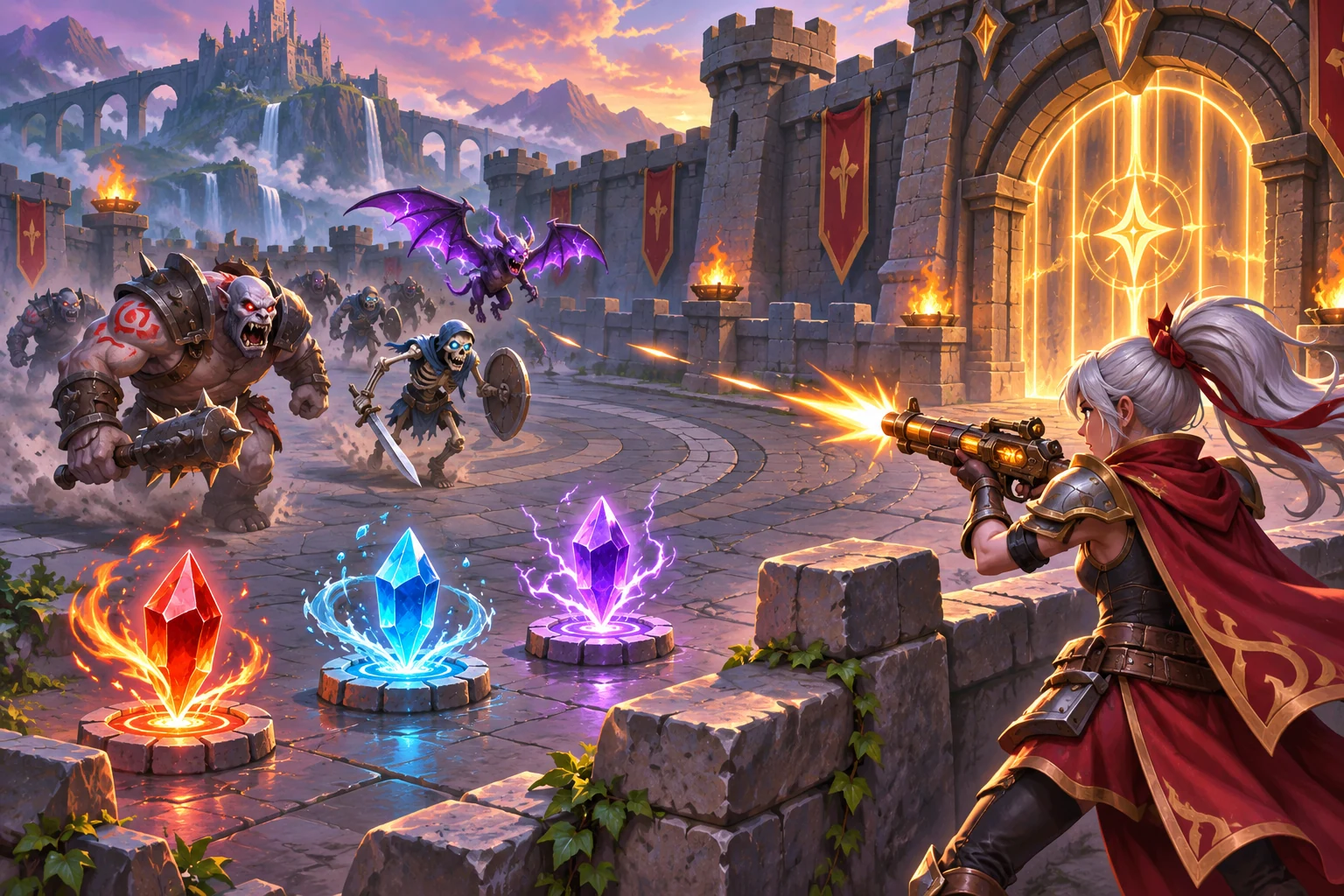
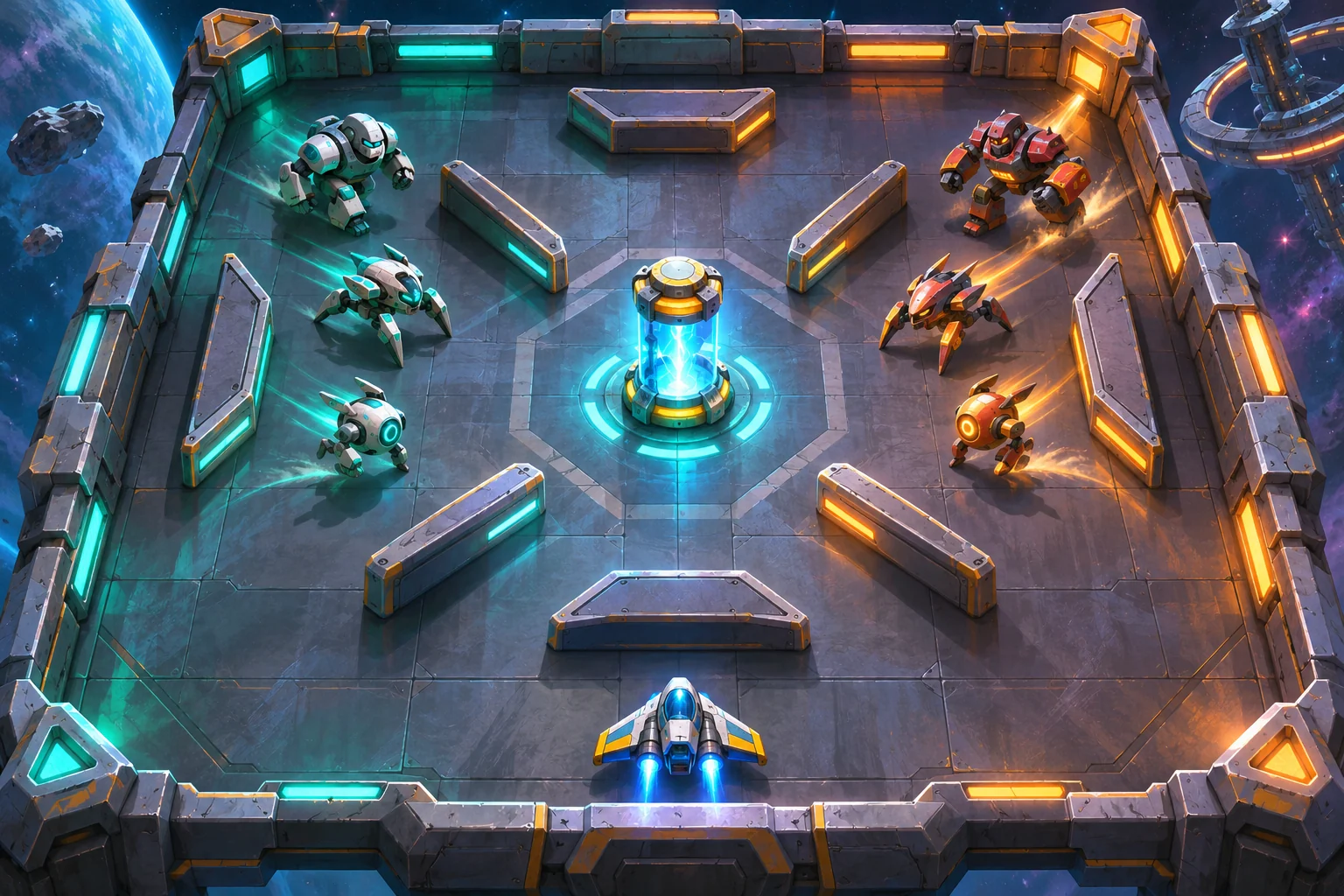
A ricochet shooter becomes more interesting when enemies react to one another instead of taking turns attacking the player. In the fictional arena game Rebound Circuit, two rival crews chase a single energy battery in the center of a 5×5 room. The first crew to claim it gains a shield, while the other must contest the pickup or redirect its next move.
Keep the rules visible: enemies move toward the same resource, a collision decides who gets it, and a shot that bounces once can push a rival off the tile. Replay a fixed opening with competition enabled and disabled. Compare enemy positions and player hits, then test whether the player can use geometry to influence the race.
Give rival enemies one limited resource to contest
Build a 5×5 arena with one battery on the center tile, two enemy crews starting on opposite sides and the player near the lower edge. At the start of each beat, each crew moves one tile toward the battery. The first crew to enter it claims the charge and gains 2 shield. The battery respawns at a marked corner on the following beat, so the race continues instead of ending after one pickup.
If both crews enter the center on the same beat, the crew with more charge claims the battery; ties go to the crew that moved first in the visible initiative order. The other crew is pushed back one tile and loses its move for that beat. Show each crew’s target tile, charge and next action. Their shared goal creates a contest the player can read before firing.
Make one-bounce shots a way to influence the enemy contest
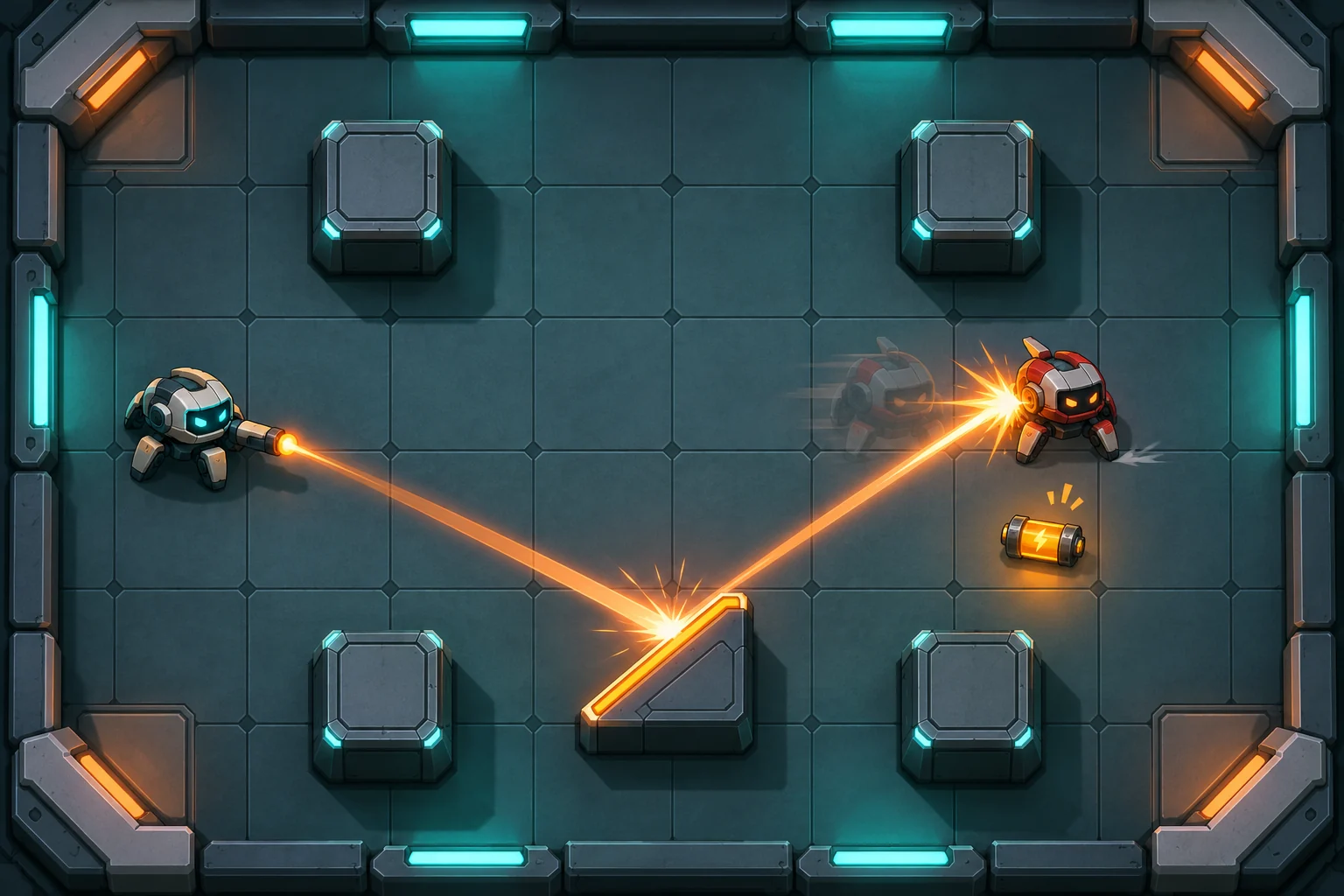
Give the player a ricochet shot that can bounce once from a marked arena bumper. A hit deals 1 damage and pushes the target one tile away from the impact direction. If the target carries the battery, the charge drops on its current tile. The shot must travel along visible grid lanes; it cannot pass through walls or bounce more than once.
Enemies also use the geometry, but keep their behavior simple. If a rival blocks their next step toward the battery, a crew fires at the nearest bumper that can send a shot toward that rival. Otherwise, it advances. Show the predicted path before both player and enemy shots resolve. The arena’s walls and bumpers now affect movement, resource control and attack timing.
Compare the same opening with competition on and off
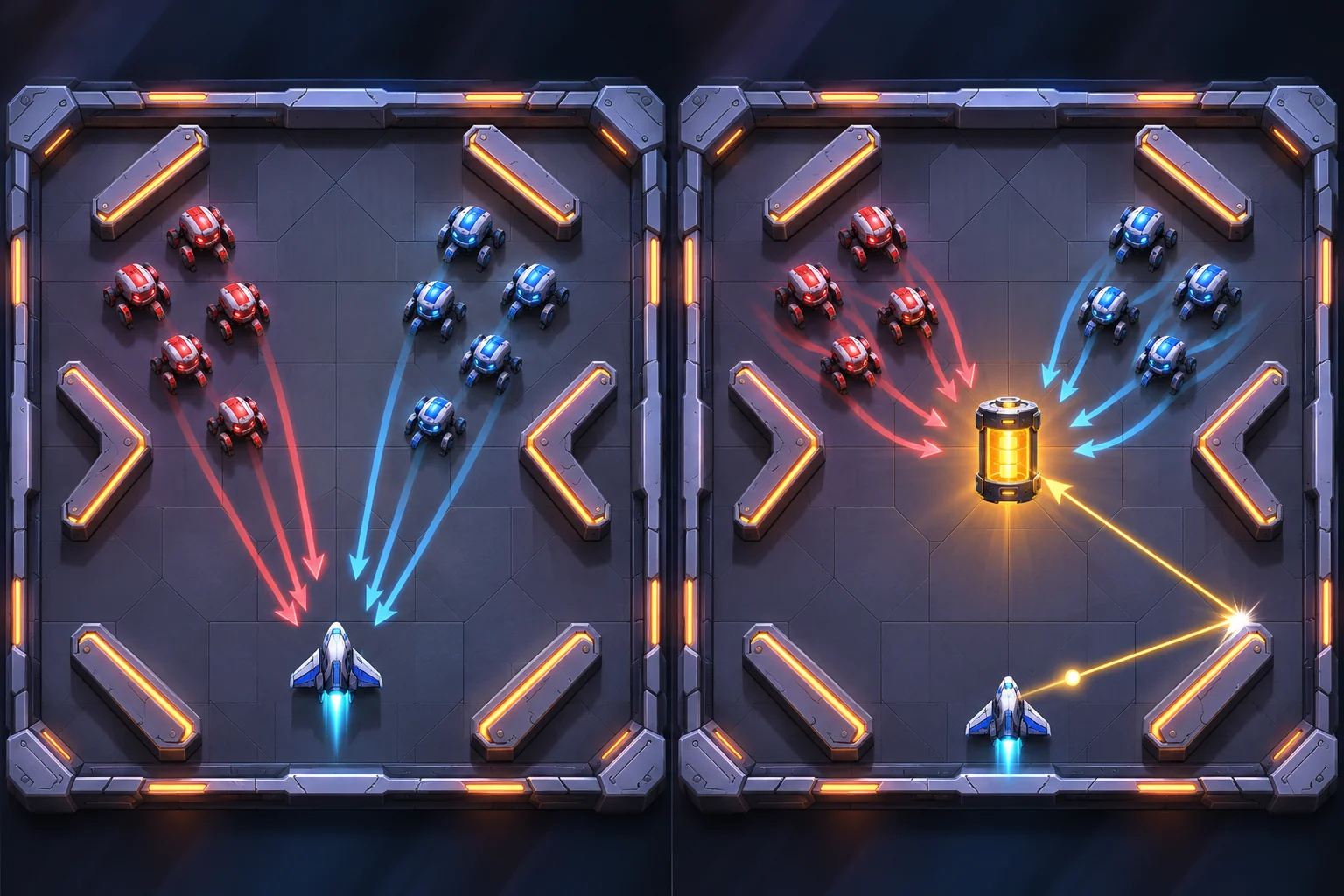
Use the same arena, enemy positions and initiative order for a two-beat replay. With competition disabled, both crews target the player and fire on beat one, causing two hits. This baseline shows the pressure from a direct attack pattern.
Enable the shared battery rule. On beat one, both crews advance toward the center instead of firing. On beat two, Amber claims the battery, gains 2 shield and displaces Violet, which loses its move. Neither crew hits the player during those two beats. The player can then bounce a shot from the west bumper, deal 1 damage to Amber and knock it off the battery, dropping the charge. This is a paper-simulated example, not a built-game result. Record player hits, resource pickups, enemy positions and successful bounces; tune initiative or respawn location if one crew always wins.
Prototype the contest before adding more weapons
Implement the grid, turn order, shared battery, single-bounce trajectory and knockback before adding new enemy types. Add a resettable two-beat replay with the same opening positions. Once the contest and shot preview are understandable, expand the arena or add a second resource with a different respawn rule.
Create a compact ricochet shooter called Rebound Circuit. Show a 5×5 grid arena, a player near the bottom edge, two rival enemy crews on opposite sides and one battery at the center. Each crew moves one tile per beat toward the battery. The first to enter gains 2 shield; the battery respawns at a marked corner on the next beat. If both arrive together, higher charge wins; ties use a visible initiative order, and the loser moves back one tile and loses its move. Give the player a shot that bounces once from a marked bumper, deals 1 damage and knocks a target one tile away; a carrier drops the battery when hit. Enemy crews advance unless a rival blocks their next step, in which case they fire a one-bounce shot at that rival. Preview all paths. Add a resettable two-beat comparison with competition on and off. Track player hits, pickups, enemy positions and successful bounces.
SEELE's official AI Game Maker page describes creating a playable first version from a prompt, testing it in a browser and refining it with follow-up prompts. Use that general workflow to inspect enemy targeting, bounce previews and resource contests; Rebound Circuit and its rules are fictional design guidance.
Build the ricochet shooter in SEELE
Frequently asked questions
How can enemies compete with one another in a shooter?
Give rival groups a shared, limited objective such as one battery or pickup. Define how they move toward it, resolve simultaneous arrivals and react when a rival blocks their path. Show the target and initiative order so players can anticipate the contest and influence it.
How do ricochet mechanics create tactical choices?
Make bounce surfaces and projectile paths visible, then let a hit change position or resource control as well as health. A shot that knocks a carrier off a contested tile can change which enemy gains a pickup. Limit bounce count so players can predict the result.
What should I measure in an enemy competition test?
Replay the same opening with rival behavior enabled and disabled. Record player hits, resource pickups, enemy positions and successful ricochets. If one crew always wins or the player cannot affect the contest, adjust initiative, bumper placement or the resource respawn tile.