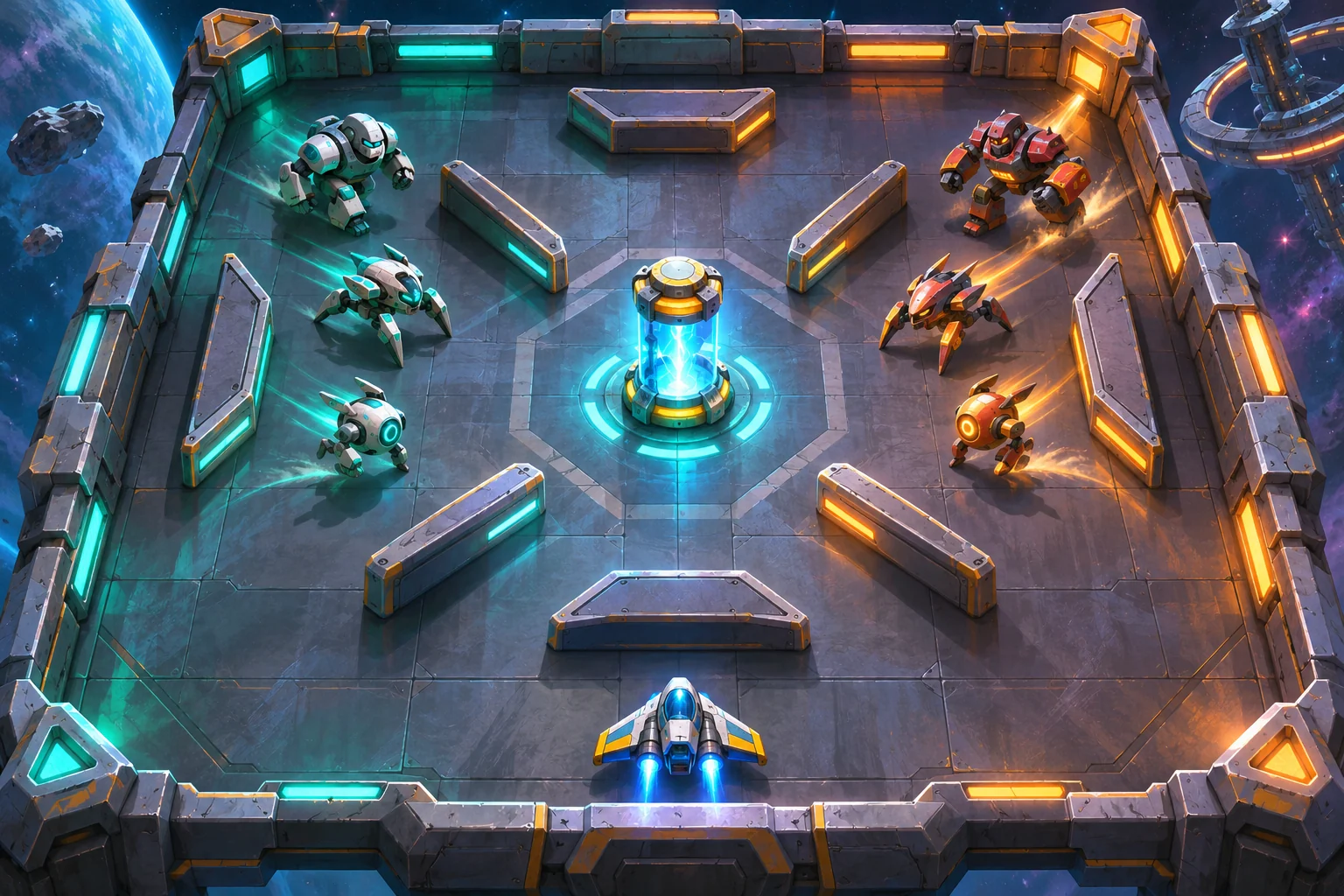
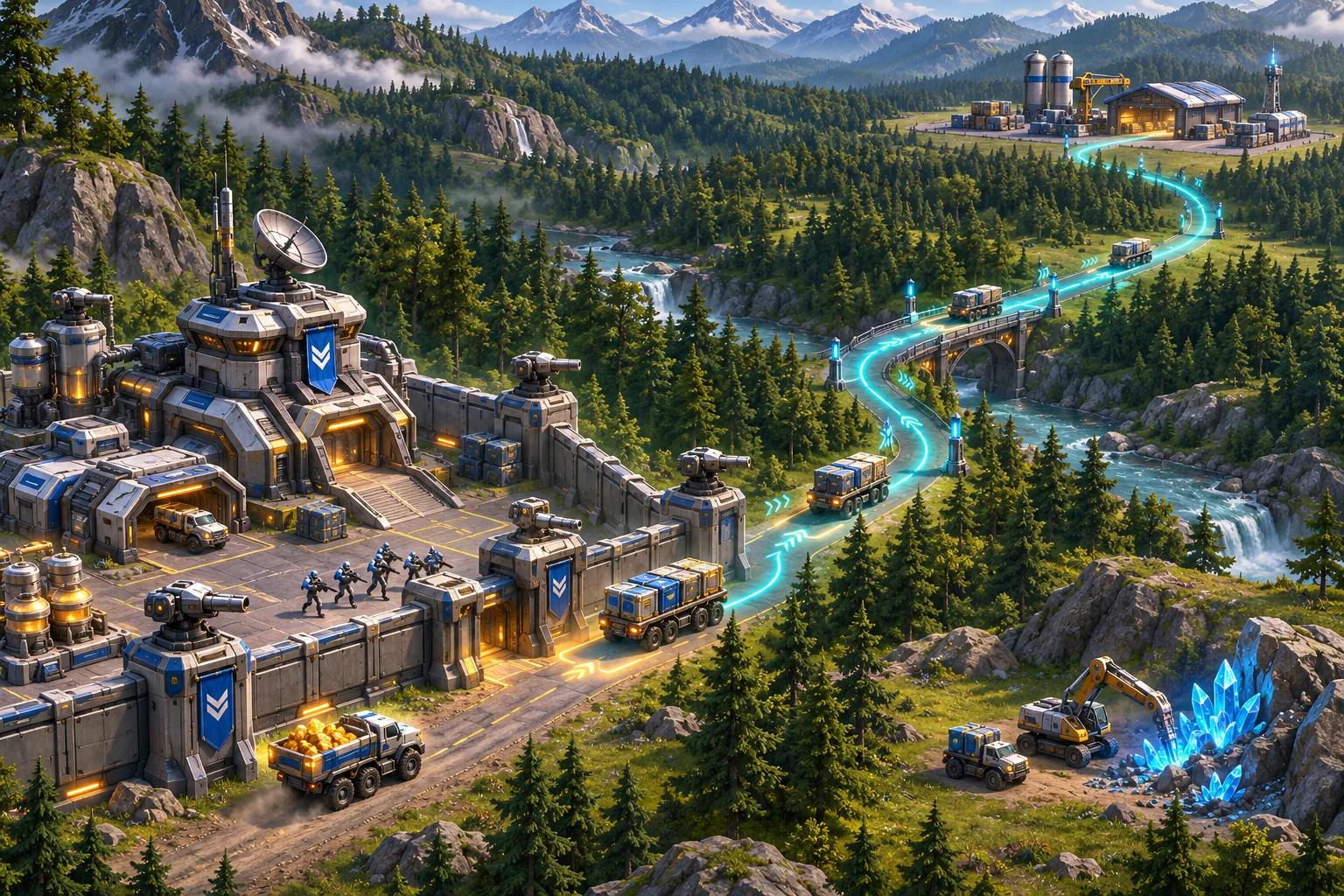
In the fictional Redfen operation, units move freely in a continuous map rather than snapping to tiles. A command post at A supplies a squad at D through relay B, with each link carrying two supply per turn. The squad has two actions and needs three supply to keep its heavy weapon online. On turn one, it reaches B and spends one action to brace. An enemy cuts B-D before turn two. A repair team can spend one action to connect B-C-D, a longer path that restores the two-supply flow. Without repair, the squad receives zero supply and the heavy weapon shuts down. The test checks distance-based movement, action budget, network reachability, and supply delivery. Redfen and all values are fictional; the local test verifies only these rules.
Model free movement separately from supply links
Use continuous positions for squad movement and a separate graph for logistics. Command post A connects to relay B; B connects directly to squad node D. Each active edge carries two supply per turn. Units can move anywhere within their movement radius, but supply follows only active links. The squad at D needs three supply to keep its heavy weapon online, so the direct two-unit route is insufficient unless a second source is added or the network is redesigned.
For this test, start with the alternate supply at A totaling four units and require the squad to receive at least three. The shortest route A-B-D carries two per edge, so it delivers two. Add parallel capacity at A-B for a total of four, then the squad receives four and its weapon remains active. Keep action spending separate from movement distance so pathing cannot silently consume the repair action.
Let an enemy cut a link and force a route choice
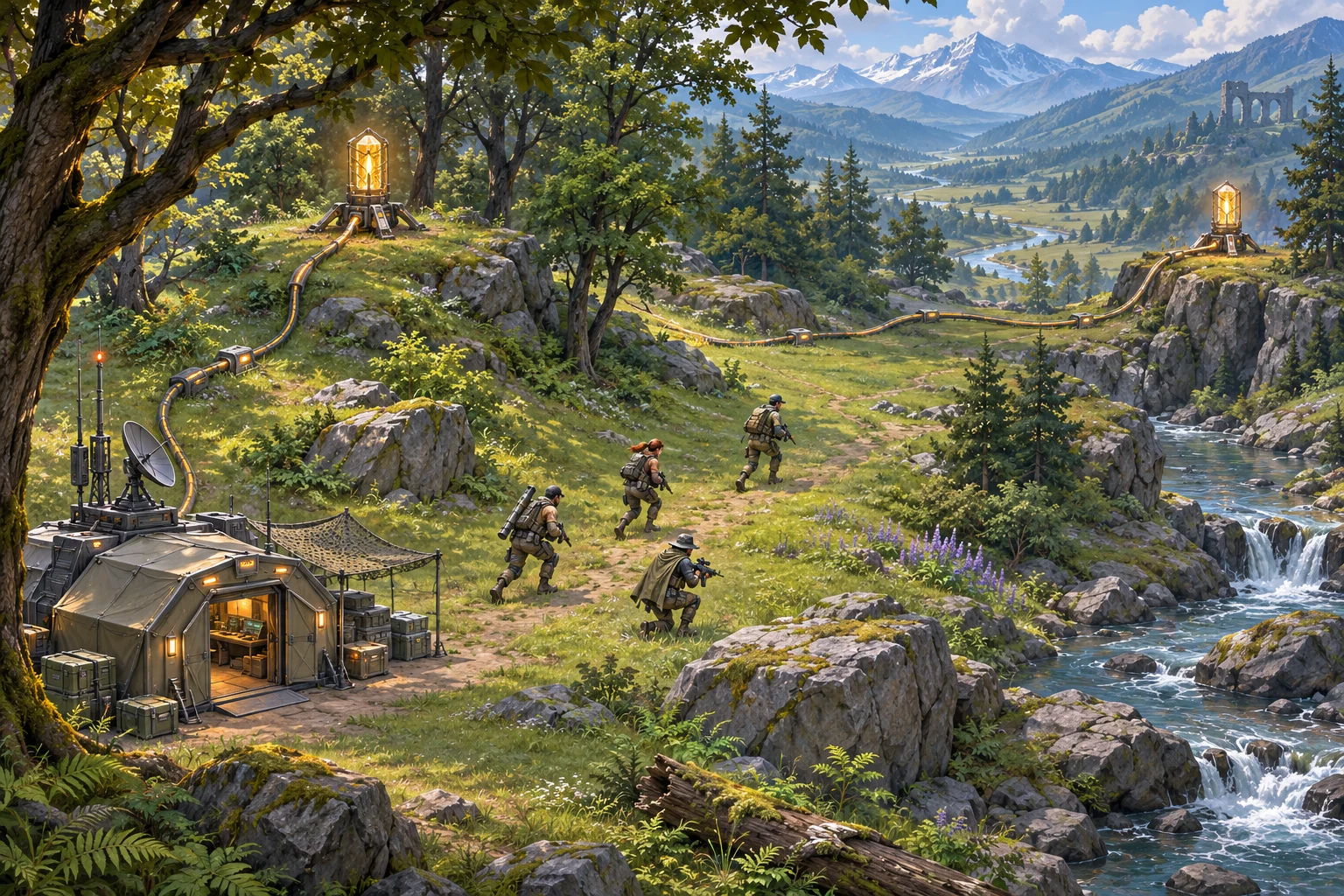
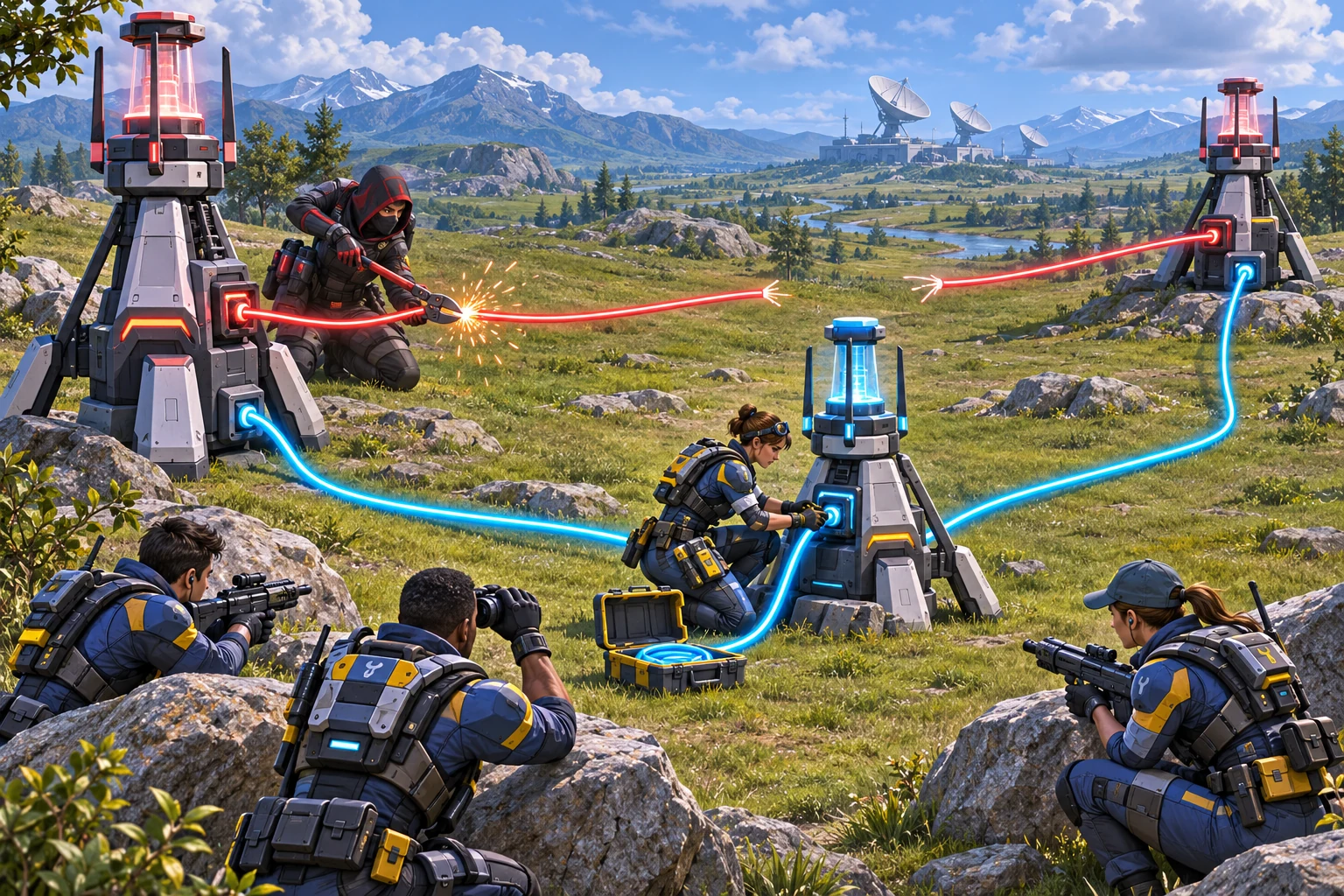
At the end of turn one, the enemy severs B-D. The squad stays at continuous position D, but the network graph marks the edge inactive. On turn two, the direct route delivers zero. A repair team uses one of the squad’s two actions to connect B-C and C-D, creating a detour. Each new edge carries two supply; with the parallel A-B capacity, the detour delivers four to D.
Show the cut link, repair cost, alternate route, and delivered amount on the map. Do not move the squad back to a grid or teleport it to a node during repair. The player should be able to keep one action for combat while spending one on the route. This makes network disruption a tactical choice under a visible action budget.
Compare a repaired route with a severed-network control
Run two turns with the repair. Turn one delivers four supply and leaves two actions; the squad braces with one. The enemy cuts B-D at the boundary. Turn two spends one action to repair the B-C-D detour, delivers four supply, and leaves one action for combat. The heavy weapon stays online because delivery exceeds its three-unit requirement.
For the control, do not repair. The disconnected network delivers zero on turn two, so the heavy weapon shuts down and the squad cannot complete its ranged objective. Log continuous unit positions, active links, action costs, supply delivered, and weapon state. Redfen and outcomes are fictional; the local test checks only these rules.

Ask an AI game maker to test a disrupted gridless supply route
Create a gridless tactics prototype in fictional Redfen. Units have continuous positions, while supply uses a separate graph. Command A connects to relay B; B-D is the direct link, with two supply per edge. Add parallel capacity on A-B so the squad at D receives four supply when connected; its heavy weapon needs three. Squad has two actions per turn. At turn boundary one, an enemy cuts B-D. On turn two, a repair action connects B-C-D, restoring four supply and leaving one action for combat. Compare no repair: delivery zero and weapon offline. Show position, links, actions, delivery, and weapon state.
Verify gridless movement does not consume repair actions. Connected network delivers four supply against a requirement of three. After B-D is cut, delivery is zero until one action repairs B-C-D; then four supply arrives and one action remains. In the no-repair control, the weapon shuts down.
FAQ
How do I design supply networks for a gridless tactics game?
Use continuous coordinates for unit movement and a separate graph for logistics. Units can move freely within their radius, while supplies travel only along active links. Show connection capacity, delivered amount, and the squad’s requirement so a player can understand why a weapon remains powered or shuts down.
How should enemy supply disruption work?
Let enemies target a visible link and mark it inactive at a clear turn boundary. Recalculate reachability and delivery before the next action phase. Provide repair or detour options with explicit action costs, then keep the squad’s position stable so the player is responding to a network change rather than a forced relocation.
How can I test an action budget and supply route together?
Record movement, action spending, active links, supply delivered, and powered equipment independently. Compare a repaired route with a no-repair control under the same enemy cut. The test should show whether the player can preserve one action for combat while restoring enough supply.