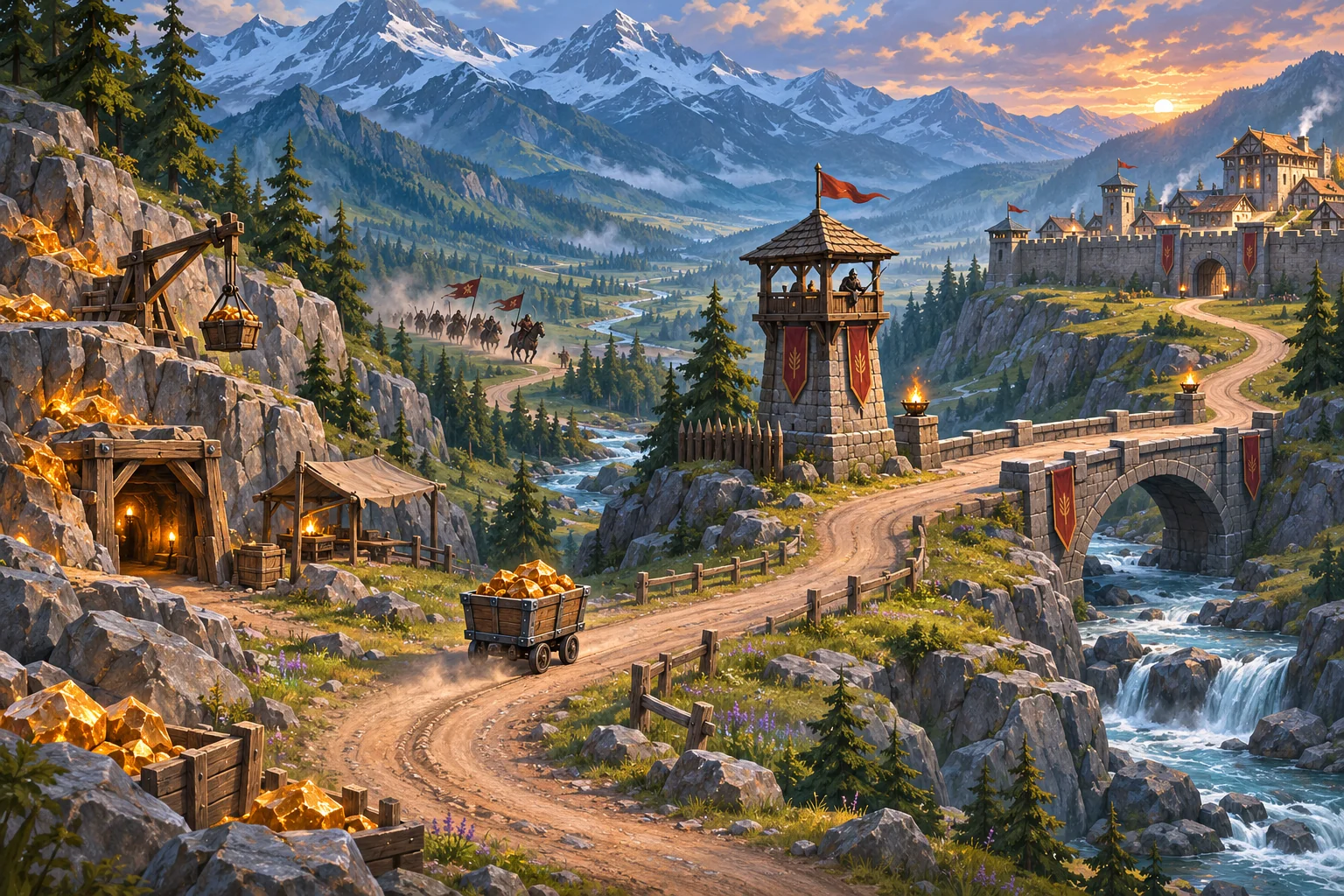
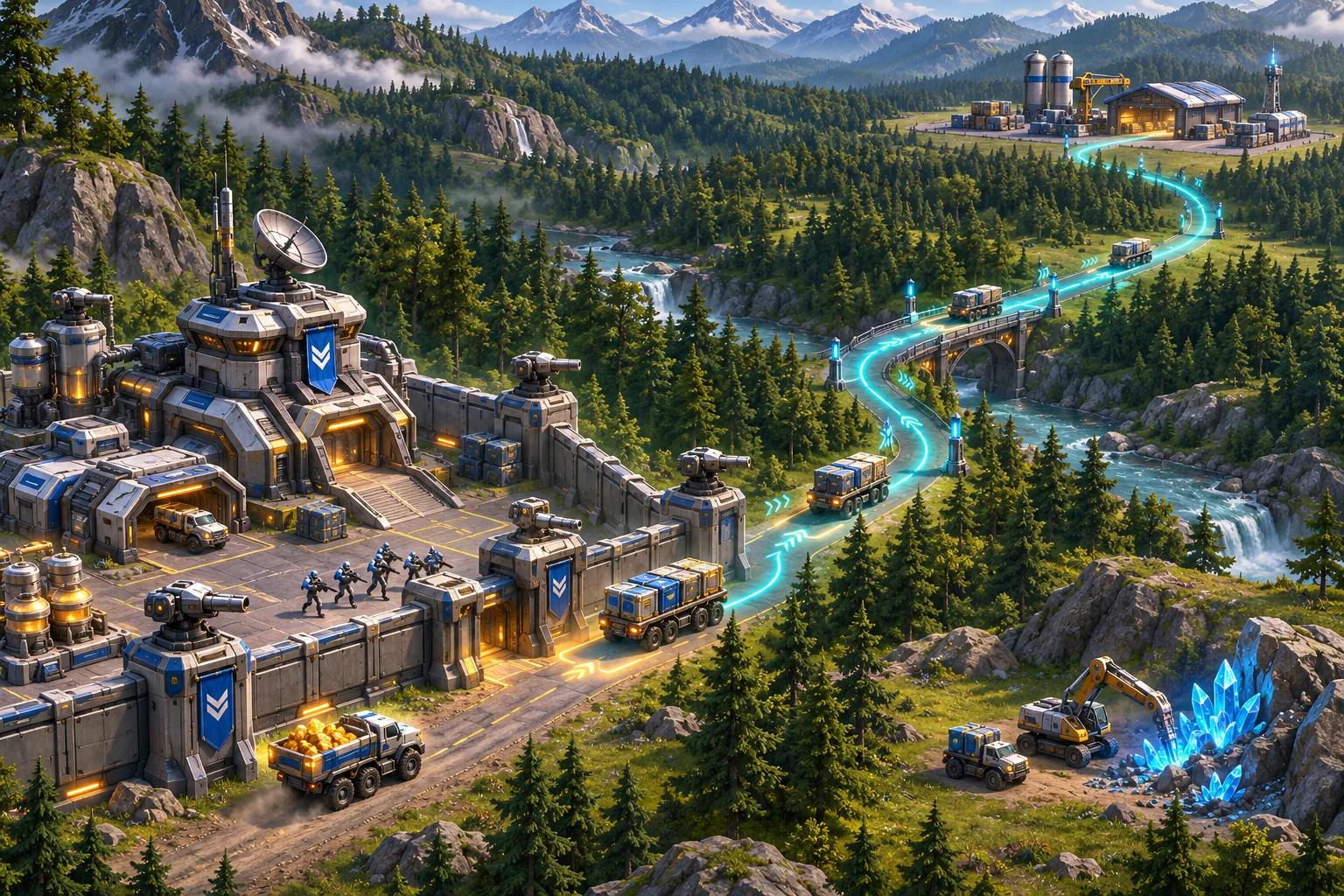
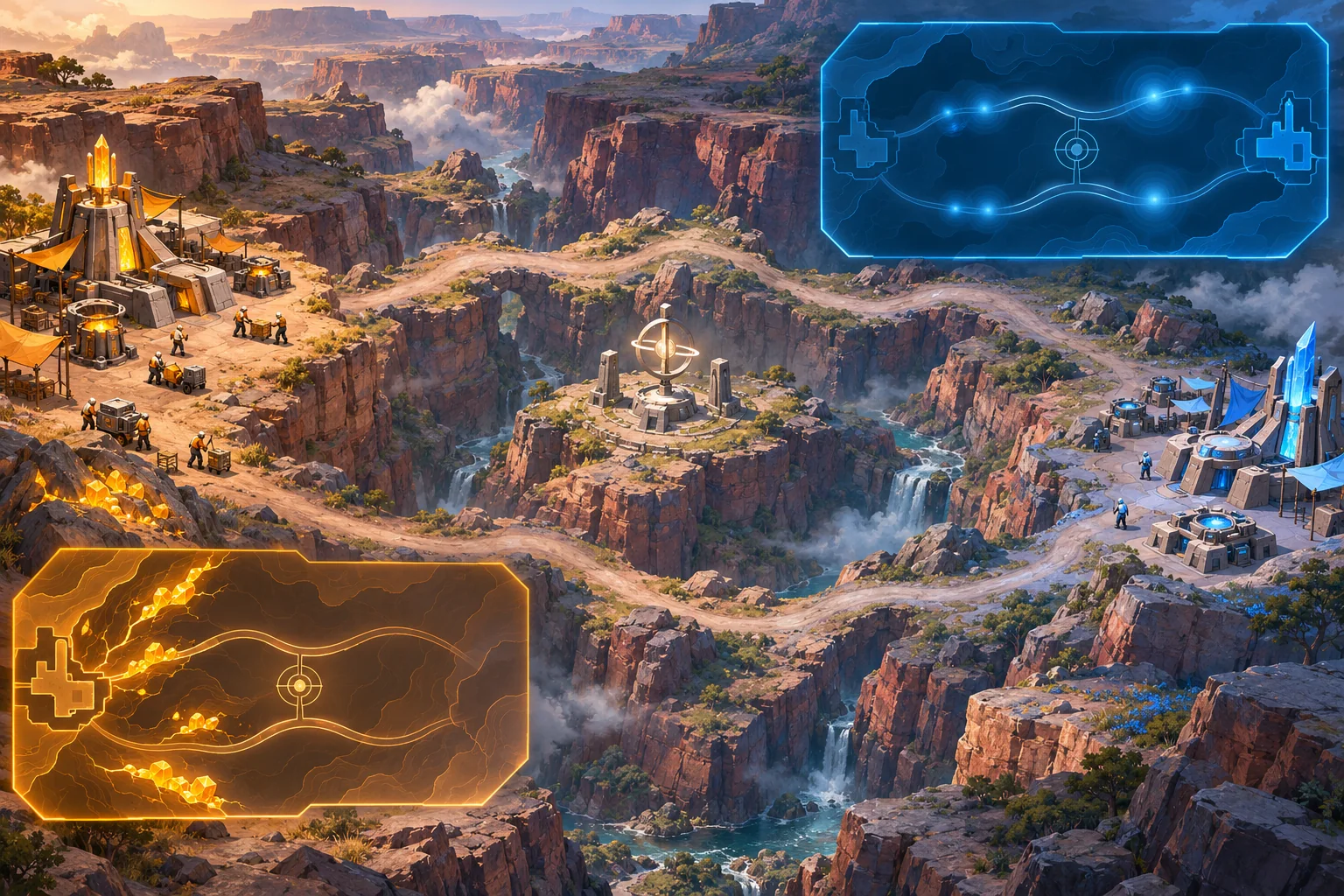
Resource collection can create map control when workers must carry each load back to a base. A deposit far from home may offer more income, but the return trip gives an opponent time and distance to contest it. This makes the route itself part of an RTS economy.
Begin with one worker, one resource node and one base. Compare a short exposed route with a longer protected route while keeping worker speed, load size and enemy pressure fixed. The deterministic travel model below checks delivery timing; it does not claim to test real-time combat or strategic balance.
Make each resource load travel home
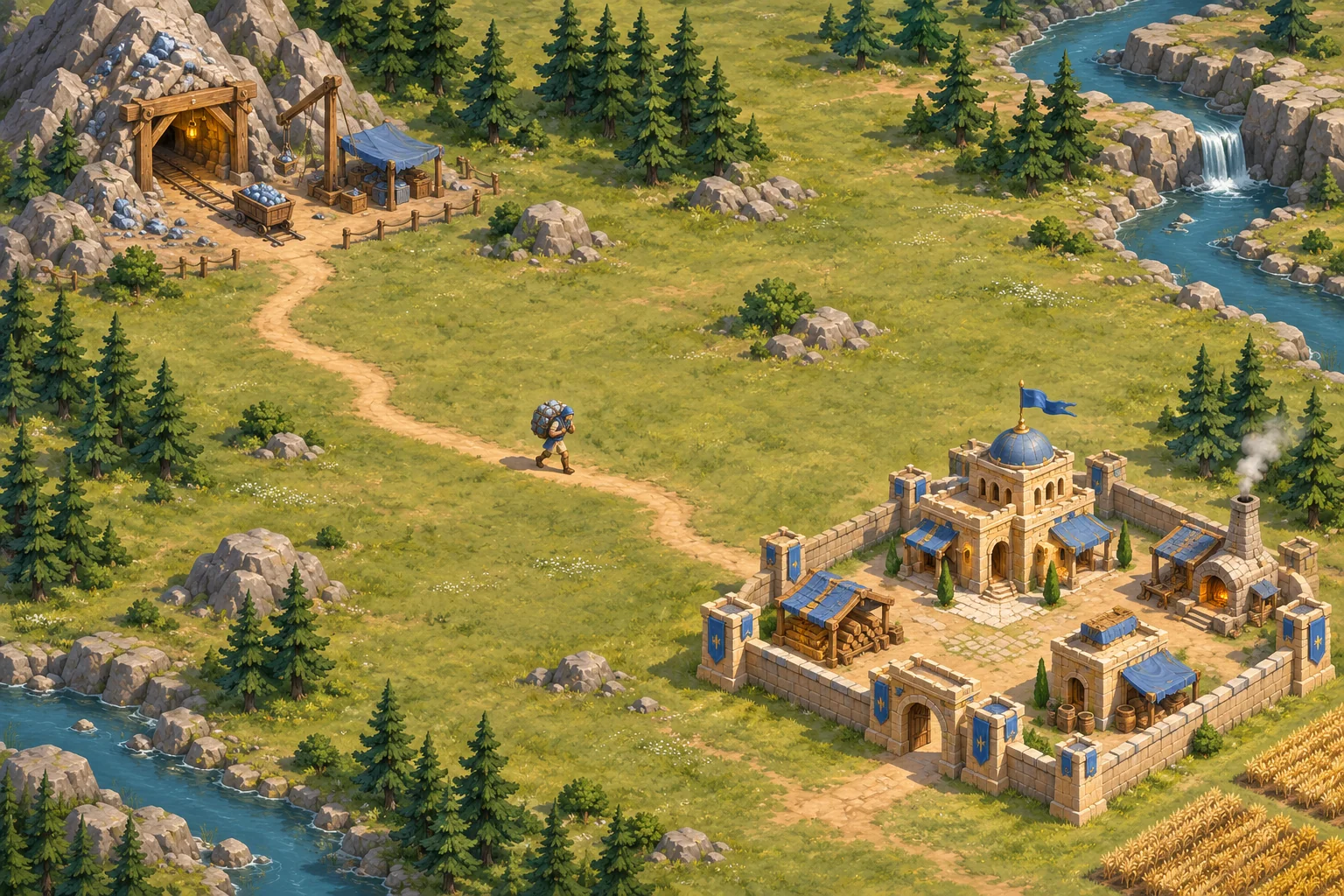
Represent a worker as carrying a finite load from a node to a drop-off point. Resources enter the player’s stock only when the worker reaches the base. Show the worker, carried amount and route so players can tell whether income is traveling or already banked.
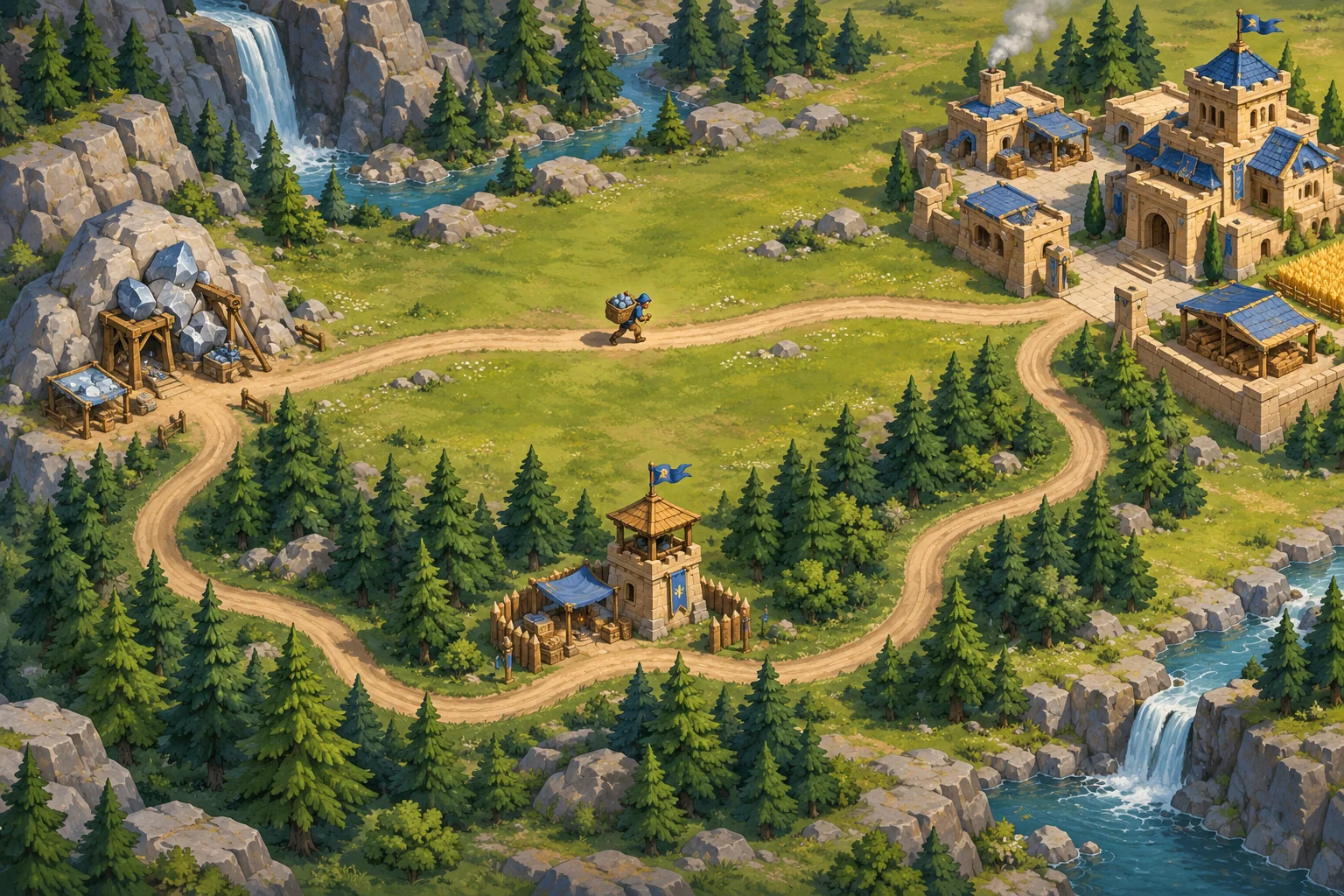
Give the map two routes: a short open lane and a longer route near defenses. An exposed path can deliver sooner while creating a window for interception. Make danger readable through distance and visible enemy reach rather than hidden penalties.
For a first pass, hold worker speed and load size constant. Change only the route length, then inspect the delivery time. Add combat interruption after the return loop is clear.
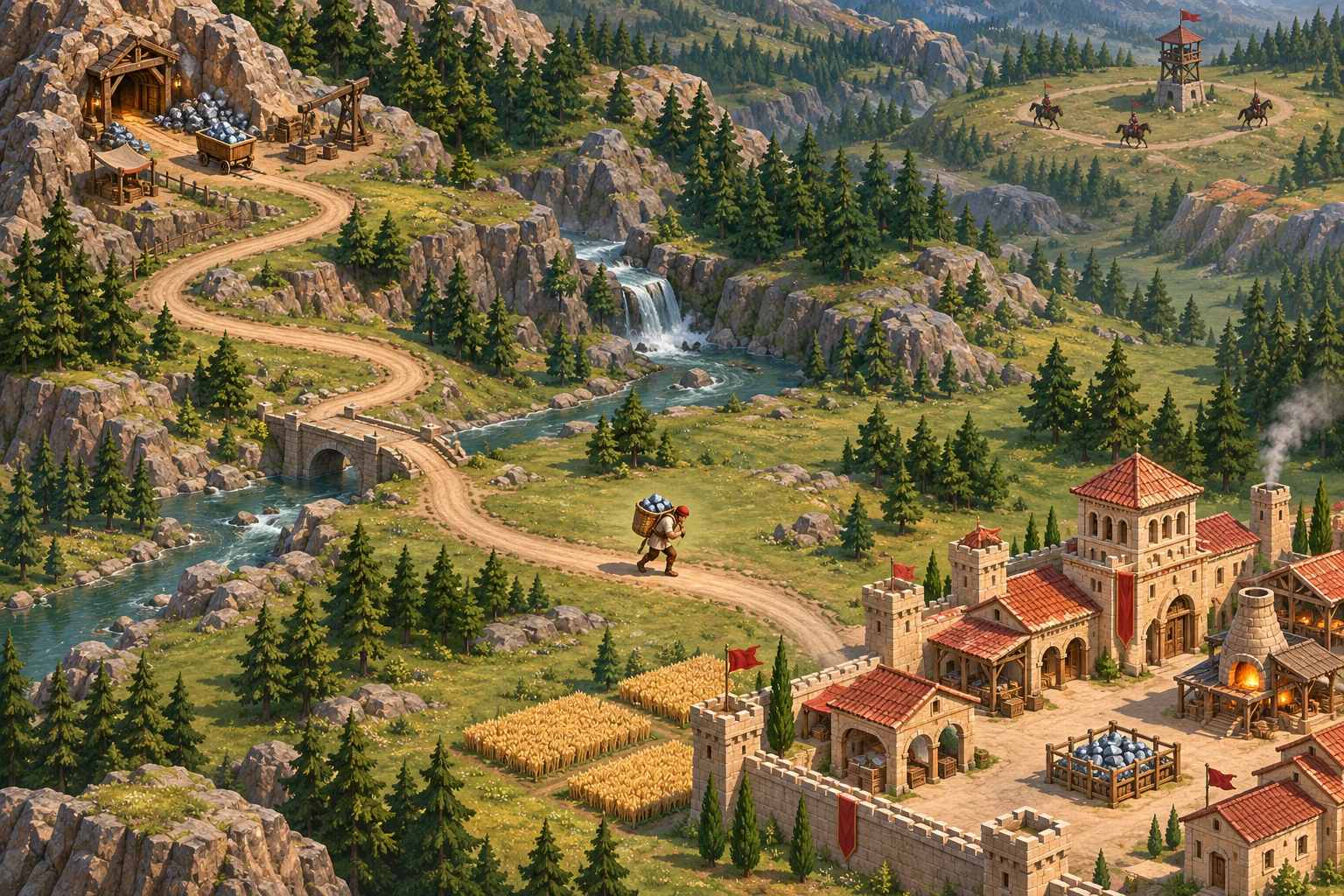
Compare route length with one change
Set worker speed to 2 tiles per second and load size to 5 ore. A 10-tile exposed route takes 5 seconds to return; a 16-tile defended route takes 8 seconds. Both carry the same amount.
Change only the exposed route by moving the node 4 tiles farther away. Its return now takes 7 seconds, nearly matching the protected route. Keep the worker speed, load and drop-off unchanged to isolate travel distance.
This deterministic model verifies route-time arithmetic only. It does not simulate pathfinding, opponent decisions, combat, resource balance or whether players can read the threat.
Ask AI to prototype the full delivery loop
Keep worker speed, load size and drop-off rules explicit.
Compare exposed and protected route lengths before adding combat.
Create a small original base-building RTS prototype with one worker, one ore node and one base. The worker carries 5 ore and moves at 2 tiles per second. The node is 10 tiles from the base by an exposed path and 16 tiles by a protected route. Show the worker carrying ore until it reaches the drop-off. Display estimated travel time and let the player choose a route. Change only the exposed route distance from 10 to 14 tiles and compare. Do not add combat, upgrades or multiple resources until delivery timing is clear.
Tune delivery before adding combat pressure
Moving resources make territory matter through the time and risk required to bring each load home. Keep the return trip visible and compare a short exposed lane with a longer protected path. Once delivery timing is clear, add interception as a separate layer and test it in a playable match.
Start a moving-resource RTS prototype with SEELE’s AI game maker
Frequently asked questions
When should harvested resources count toward the stockpile?
For a carried-load loop, add resources when the worker reaches the base or designated drop-off. Show carried resources separately from banked stock so players can see that an interrupted trip has a cost. If resources count immediately at the node, the return route no longer affects the economy in the same way.
How can I make a route risky without hiding information?
Expose the route on the map and show relevant enemy reach or patrols. Let the player compare distance and known danger before choosing. Avoid invisible random losses during the first prototype; they make it hard to tell whether a route decision or an opaque rule caused the outcome. Keep both route options visible during the decision.
Does the travel model test RTS balance?
No. It checks travel-time arithmetic for fixed worker speed and route length. It does not test combat interception, economy pacing, opponent strategy or interface readability. Those questions need a playable prototype with representative matches. Test separate scenarios for route safety, income pacing and opponent pressure.