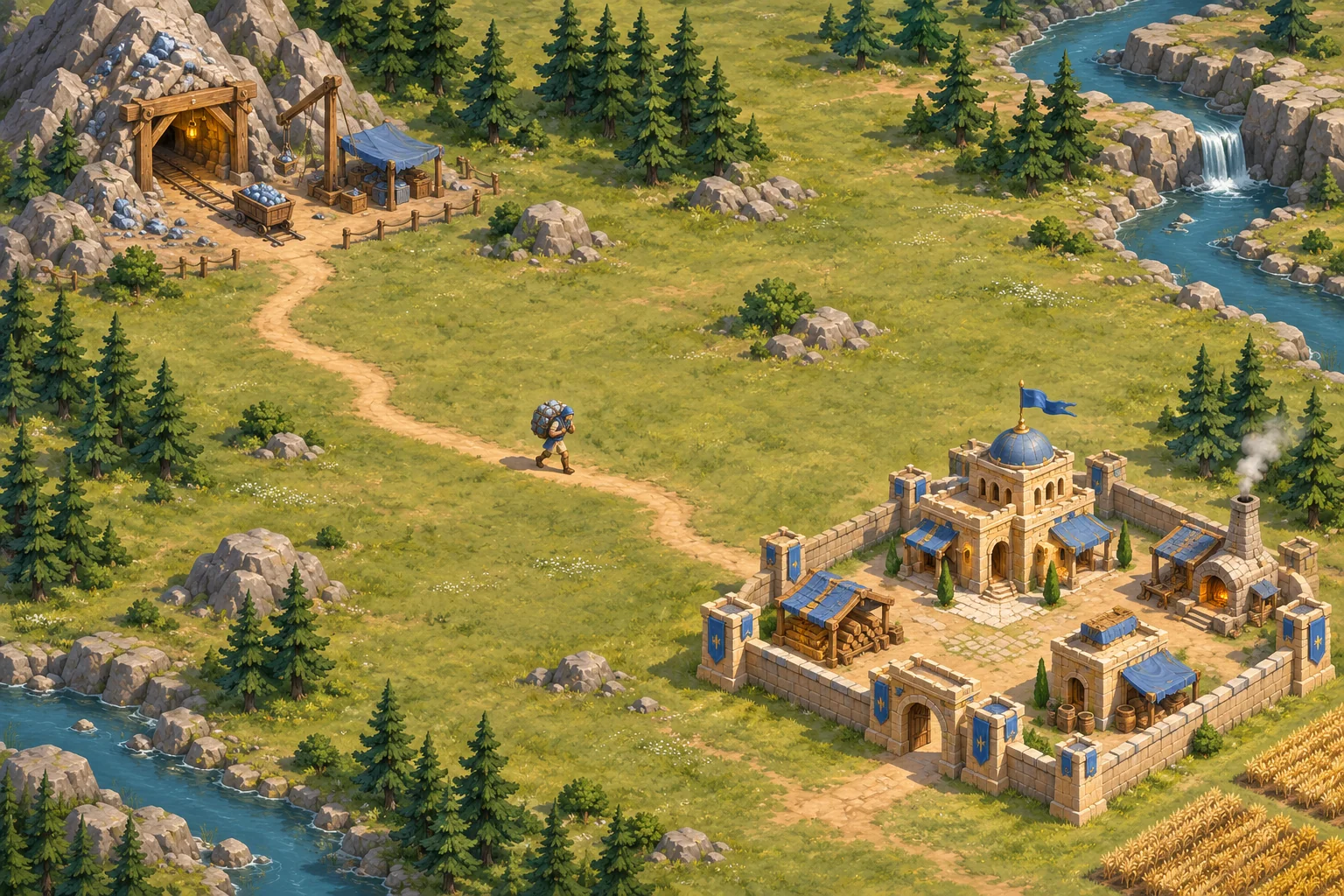
A moving supply route can turn tower placement into a timing problem. Instead of receiving every resource automatically, the player escorts a cart from a quarry across the map. Enemies can reach the same crossing and steal its cargo before it arrives at the base. The next tower depends on whether the current route stays open.
Start with one cart, one fixed enemy wave and a short route. Compare the cargo outcome with and without a defensive tower at the crossing. This deterministic model checks route timing and resource delivery only; it does not establish that the tower-defense loop is balanced or exciting to play.

Make tower placement protect a moving supply route
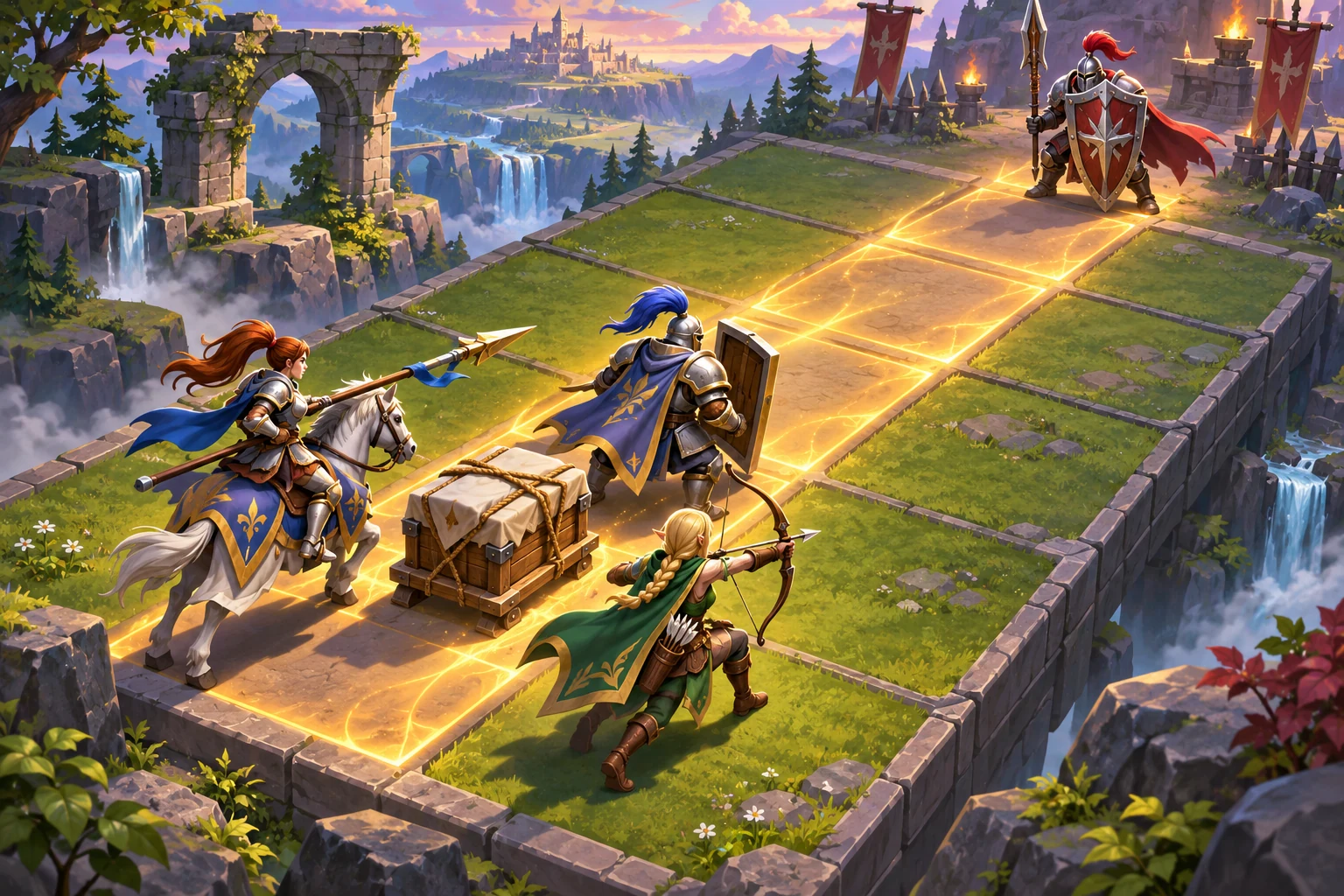
Show the cart's path as connected map tiles, with its cargo and travel speed visible. Place an enemy approach across one route tile. When both reach the crossing, the tower's range and attack timing decide whether the enemy is removed before it can raid the cart.
Keep delivered resources separate from cargo still on the road. A cart carrying four ore adds nothing to the base bank until it arrives. If an enemy reaches it first, mark the cargo as lost and leave the bank unchanged. This makes the defensive result legible and prevents players from spending supplies that have not arrived.
Give the player a planning phase to place towers along the route before the wave begins. Hold enemy speed, cart speed, map and cargo fixed while checking one placement. Add split paths or multiple shipments only after a single crossing makes the tradeoff clear.
See Godot's Resource documentation for reusable route, cargo and tower-state data definitions.
Protect one cart at the crossing
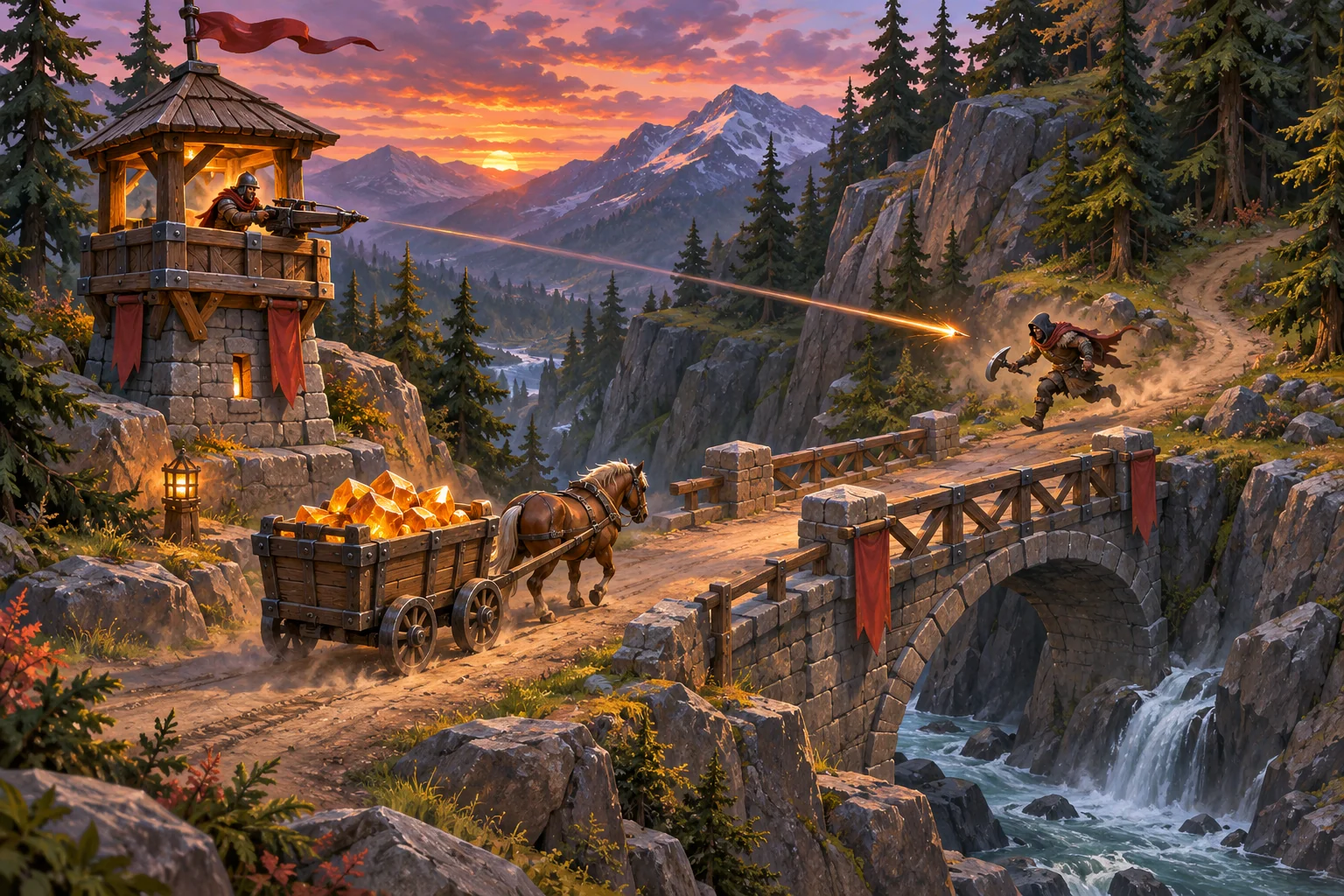
The quarry cart carries four ore and needs four movement steps to reach the base. A raider starts on a route that reaches the crossing after two steps. With no tower on the crossing, the raider reaches the cart first, steals the shipment and leaves the base bank at zero.
Change only one placement: add a tower whose range covers the crossing. In the fixed timing model, its shot removes the raider on step one, before the cart and enemy would meet. The cart completes its four steps and deposits four ore. Keep the wave, route and unit speeds unchanged for this comparison.
This path check verifies the stated encounter order and delivery rule. It does not test whether players can read the route, whether the tower cost is fair or how the game feels over repeated waves. Playtest different map layouts and shipment values before balancing the economy.
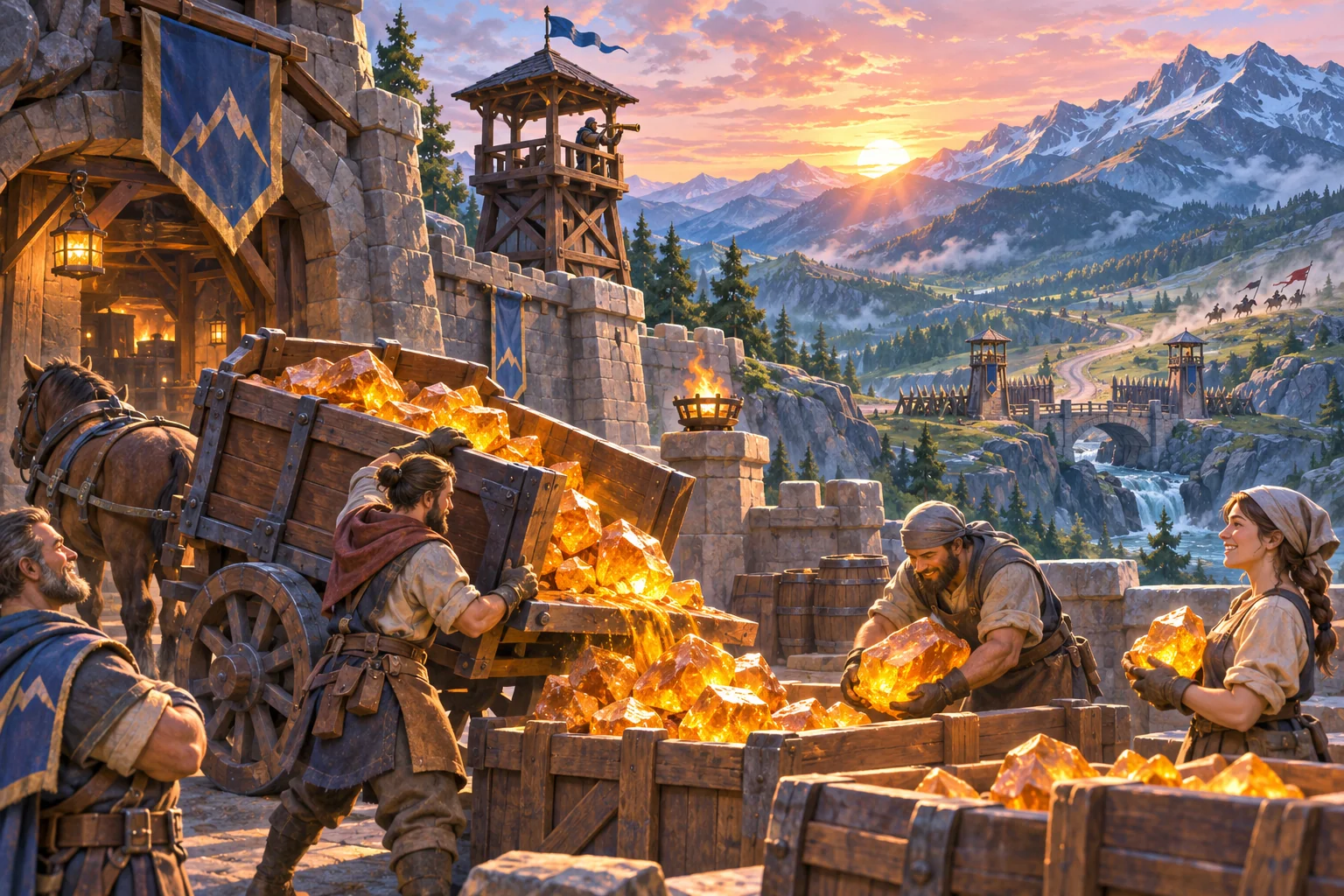
Ask AI to prototype a moving-resource defense map
Show cargo, cart path, enemy arrival and tower range before launching the wave.
Change only the tower placement while keeping route and unit speeds fixed.
Create an original tower-defense prototype where a cart carries 4 ore from a quarry to a base across a 4-step route. A raider reaches a shared crossing after 2 steps and steals the cart if it arrives first. Compare no tower at the crossing with a tower that shoots the raider on step 1. Keep the map, cart speed, enemy speed and wave fixed. Deposit ore only when the cart reaches base. Show cargo in transit separately from banked resources. Do not claim this timing model proves game balance or player enjoyment.
Let delivery change what the next wave can afford
Moving resources make the map part of the economy. Show where cargo travels, when it becomes spendable and which routes enemies can threaten. Once one protected crossing produces a clear difference, expand to alternate routes and tower choices, then test the resource curve across a full series of waves.
Prototype a tower defense game with SEELE's AI game maker
Frequently asked questions
How do moving resources change tower-defense strategy?
They make players defend the route as well as the base. A tower can protect a shipment at a crossing, while an unattended cart may be delayed or stolen. Show cargo and arrival timing so the player can plan around what is actually traveling.
When should moving cargo count as spendable resources?
A clear starting rule is to add cargo to the bank only after it reaches the base. Keep in-transit supplies separate from spendable stock, and show what happens if the shipment is lost. This makes the economy state easier to follow.
Does a route-timing model prove the defense is balanced?
No. It verifies that a specified tower can intercept an enemy before a cart reaches a crossing. It cannot show whether tower costs, wave difficulty or route readability feel fair. Playtest several maps and shipment values before judging balance. Check cargo state at multiple crossings before adding faster waves.